Practical answer first: use price alerts to learn typical fare and package ranges, but never let an alert trigger an automatic booking — instead, treat alerts as market information and only book after comparing inclusions, baggage allowance, and final terms. Travelers with extra luggage need to focus on how and where baggage is accounted for—within a flight fare, a hotel transfer, or a packaged add-on. Bundles can be convenient, but convenience can hide restrictive baggage rules or transfer limitations that add cost. Start alerts early for both standalone flights and bundled packages, then walk through a checklist comparing the same dates, passenger counts, and baggage needs before committing. Always verify the exact baggage allowance, change and cancellation rules, and how extra bags can be added on the provider's final booking page before you pay.
Test package value fairly
| Booking approach | Best for | Tradeoff to check |
|---|---|---|
| Book flight and hotel separately | Travelers who want maximum control over baggage rules and who will compare baggage options by carrier | More time researching; may miss bundled conveniences like transfers or insurance |
| Buy an all-in-one package with included transfers | Travelers prioritizing door-to-door logistics and convenience over granular baggage control | May hide baggage limitations or weight limits in transfer terms; harder to modify individual elements |
| Book flights with a higher fare that includes bags, plus separate hotel | Those who value predictable baggage allowances while keeping hotel choice flexible | Higher flight fare might offset perceived savings; must still arrange transfers separately |
| Purchase a package then add official carrier baggage upgrades | Travelers who find a package that matches dates but need to explicitly upgrade baggage on the carrier | Requires careful verification of carrier policies and potential double-handling when vendors and carriers have different processes |
Check current package and separate options
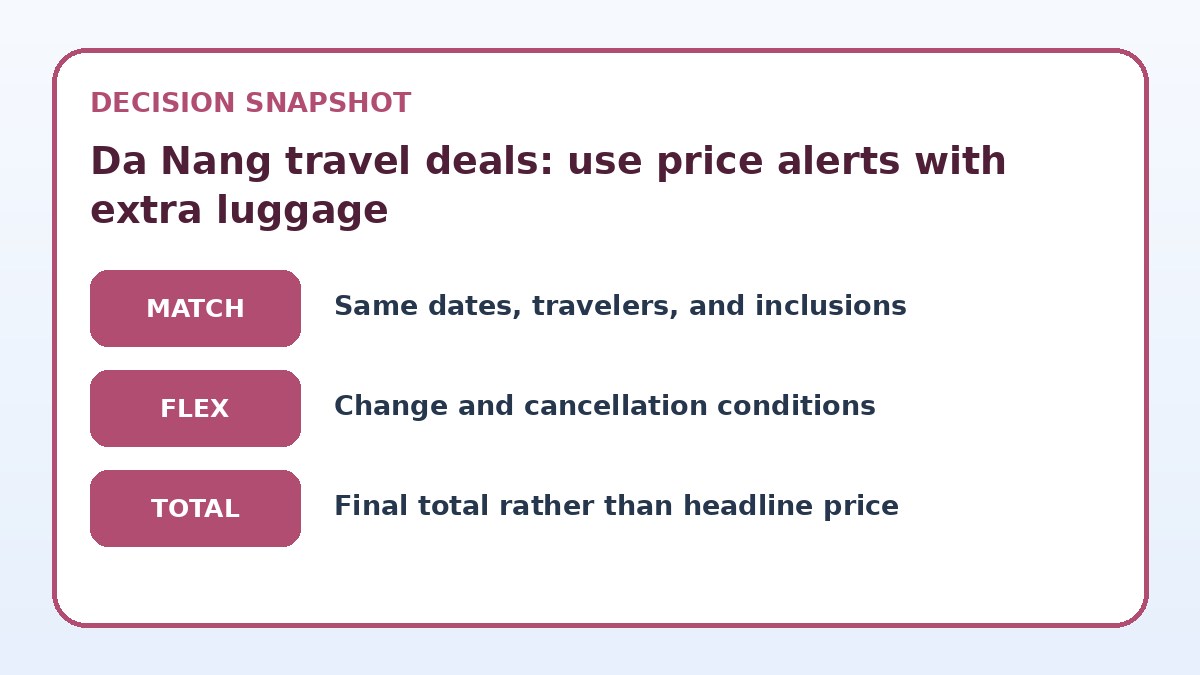
Use identical dates, travelers, room needs, baggage, and flexibility so the comparison stays meaningful.
What to compare before judging a bundle useful
Before treating a package as a money-saver, compare apples to apples: the same travel dates, number of passengers, and explicit baggage allowances. Many bundles advertise lower base fares but show baggage limits only in small print or on later pages. For a traveler with extra luggage, that hidden cost can erase any perceived saving. Open the provider’s final booking page to confirm whether checked bags are included for each passenger and whether the same allowance applies on codeshare or connecting flights within the package.
Also check which elements are refundable or changeable and whether third-party services like transfers or local carriers are part of the contract or merely recommended. Bundles often include transfers, excursions, or add-ons that look useful until you read the terms: some transfers have strict pickup times or weight limits, and excursion tickets can be non-transferable. If luggage size or timing matters, contact the provider’s final booking support or review their baggage policy links directly rather than relying on marketing copy.
Inclusions: flights, baggage, transfers and extras
List every inclusion explicitly when comparing options. For flights, note whether checked bags are included per passenger and whether those allowances apply to every segment of the itinerary. For hotels and transfers, check whether transfers are private or shared and whether there are weight or piece limits. Bundles sometimes include “transfer” but specify shared shuttle service with strict luggage space; that can force you to pay for a private transfer afterwards.
Pay attention to smaller inclusions that affect mobility and cost, like oversized baggage fees, sports equipment surcharges, or the need for multiple suitcases. If an alert points to a package that looks competitive, add up the true total by estimating extra-baggage charges if the quoted allowance is insufficient. Where possible, verify how extra pieces are purchased: some airlines allow pre-paid extra bags at a lower rate on the booking page, while other vendors redirect you to a third party with different pricing.
Look past the headline total
Compare inclusions and change conditions before deciding whether a package is genuinely useful for this trip.
Deal comparison checklist
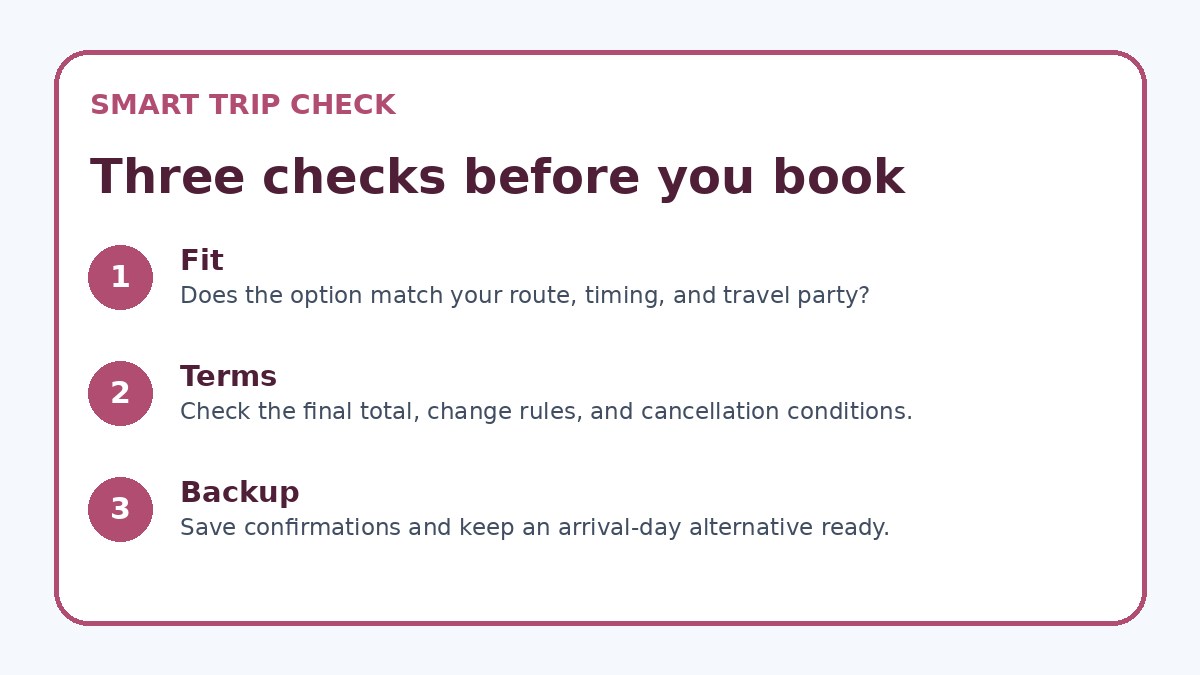
- Set separate price alerts for standalone flights, hotel rooms, and packaged deals to compare identical travel dates and passenger counts.
- When an alert fires, open the provider’s final booking page and confirm checked baggage allowance per passenger for each segment.
- Compare total door-to-door cost including confirmed extra-baggage fees, transfer upgrade costs, and local transport for your luggage.
- Check change and cancellation rules in writing for each element—flights, transfers, and hotel—before entering payment details.
- If a package includes transfers, verify pickup logistics and luggage limits or ask for a private transfer quote in writing.
- Document any promises (baggage allowance, transfer type) with screenshots or booking references and keep vendor contact details for quick clarification.
Flexibility and traveler-specific value
Flexibility matters more for travelers with extra luggage because itineraries can change if you need different transport or a larger vehicle. Compare change and cancellation policies side by side and weigh them against the hassle and cost of rebooking a more suitable transfer or a larger car locally. If a bundle’s change fees are steep but the base price is lower, the apparent saving may disappear the moment you need to swap dates or upgrade to a private transfer to accommodate luggage.
Consider traveler-specific value beyond price: does the package save you time at the airport with meet-and-greet service, or does it force you into a shuttle that won’t accept large cases? For some travelers, paying a little more for confirmed private transfer and a higher baggage allowance is a net win because it reduces stress and unpredictable local costs. Use alerts to spot options with the flexibility you require, then verify each element on the provider’s booking page before paying.
Final terms: what to verify on the booking page
When an alert prompts you to act, the final booking page is where you confirm facts. Verify exact baggage dimensions and weight limits, whether luggage is counted per piece or by total weight, how many bags are included per passenger, and the charge for additional pieces. Confirm whether transfers listed in the package accommodate oversized luggage or whether private transfer options are available at a clear price. Also look for the provider’s change and cancellation deadlines and any associated fees.
If flights are operated by partners or codeshares, confirm baggage rules for the operating carrier as they can differ from the marketing carrier. Check where any refundable amount appears and the process for refunds, and read how extras are added at checkout. If anything is unclear, use the provider’s support contact before you input payment. Trip.com can be one place to compare current availability and terms, but always validate baggage and terms on the seller’s final booking screen.
Travel Deals & Booking Strategy questions travelers ask
How should I set price alerts so they help rather than trigger impulse booking?
Create separate alerts for flights, hotels, and full packages and set realistic price thresholds based on your research. Use alerts as prompts to run a comparison checklist rather than as a signal to buy immediately. When an alert hits, check the final booking pages for baggage details, transfer terms, and change policies. If the alert comes from a meta-search or reseller, also visit the operator’s official booking page to confirm baggage rules and exact refund/change terms before you commit.
If a package doesn’t clearly list baggage allowances, what’s the safest approach?
Treat missing baggage information as a red flag: contact the vendor to request exact allowances in writing or insist on the option to add baggage on the airline’s booking page. If the vendor won’t provide clear baggage details, compare the package’s total cost plus the likely extra-baggage fees you’d incur if you booked flights separately. Often the safest choice is to book the flight fare class that explicitly covers the bags you need, then arrange hotel and transfers separately.
Can transfers included in packages handle oversized or multiple bags?
Transfers vary: some shared shuttles have strict luggage space and size limits, while private transfers typically allow more and larger bags. Always confirm transfer type and any stated weight or piece limits on the package’s final booking page and ask the provider directly about oversized items. If the package lacks clarity, get a quote for a private transfer so you can compare total costs and avoid last-minute upgrades at higher airport rates.
Final decision note
For travelers to Da Nang with extra luggage, price alerts are a valuable intelligence tool when used deliberately. Treat alerts as signals to compare identical itineraries and baggage needs across standalone and bundled options rather than as a reason to book on impulse. Focus on explicit baggage allowances, transfer types, and change policies on the vendor’s final booking page before you pay. If any detail about baggage, transfer capacity, or partner-operated flights is unclear, contact the provider and keep written confirmation. That disciplined approach turns alerts into planning power without risking hidden costs or inconvenient surprises.
Continue planning
Check current options and final conditions
Use the provider page to confirm live availability, the final total, cancellation terms, and every condition that matters to your trip.
This evergreen planning guide was created with AI-assisted drafting and a structured quality review. It does not display live prices, schedules, availability, visa guidance, or provider rankings. Verify current details before booking. Some links are affiliate links; we may earn a commission at no additional cost to you.