If you're planning New York City to Toronto flights with kids, decide first whether flexibility or convenience matters more to your family. For households prioritizing routine — nap windows, school schedules, mobility needs or minimizing transfers — pick the itinerary that keeps airport time short and connections simple. If your family values saving money, handling delays easily, or keeping travel days adaptable, choose options with flexible change/cancellation policies and more departure choices, even if that means more time in transit. This article explains the tradeoffs and offers decision rules: how to compare direct versus connecting options, when to accept convoluted schedules for lower fares, and which practical checks to run on booking pages before you confirm. Use these tips to pick a plan that fits how your family functions on travel days rather than chasing an assumed single “best” flight.
Weighing flexibility versus convenience for family rhythms
Families travel differently than solo business passengers: naps, meal routines, stroller logistics and the need for predictable arrival times shape choices. Convenience typically means fewer connections, shorter layovers, and departures that fit everyone’s sleep and activity patterns. That often translates to paying a premium for direct flights or selecting flights that depart during quiet parts of the day to reduce airport stress. When convenience is the priority, focus searches on total journey time from your door to your destination, and factor in transfers, transit to and from airports, and likely security lines.
Flexibility matters when schedules could change suddenly — a sick child, last-minute work, or unexpected school obligations. Flexible itineraries give you options to move to an earlier or later flight without excessive cost or complex rebooking processes. Consider the family’s tolerance for variable travel times: flexible fares may allow cheaper or more plentiful options but usually require extra time and monitoring. Decide which scenarios would force you to change plans and how much you’d pay for the peace of mind that comes with flexible ticket terms.
Comparing direct and connecting flight choices
When comparing direct and connecting flights, don’t let airborne time alone decide the winner. A direct flight removes the stress of reboarding, collecting checked bags, and making tight connections — big benefits if you travel with young children or lots of gear. However, direct flights may have fewer daily departures and a narrower range of times, limiting flexibility. If you need a very specific departure time to match a child’s routine, a direct option can be worth paying for, provided the airport transfer and check-in time are reasonable.
Connecting flights can expand departure windows and sometimes offer lower base fares, but they introduce additional variables: the risk of missed connections, the need to manage carry-on items, and extra time walking between gates or terminals. If you choose a connection, prioritize longer layovers that still fit family endurance, and verify whether you must re-clear security or collect and recheck bags. Balance the number of connections against how well your family copes with transitions and unplanned delays.
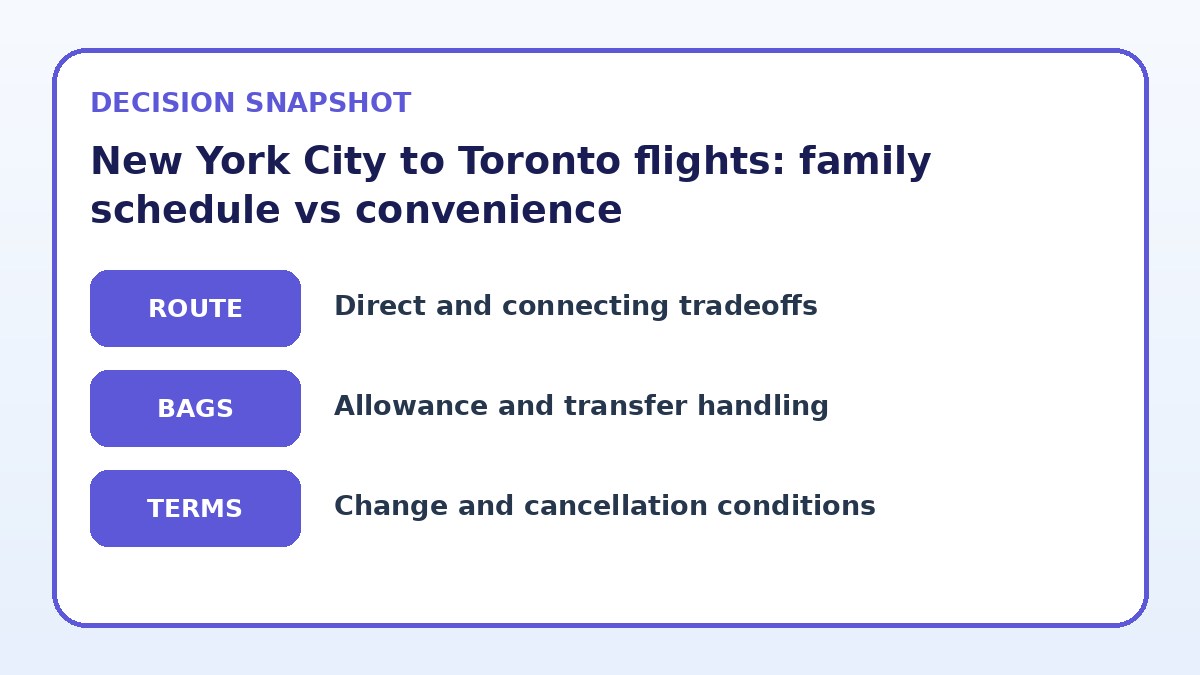
| Approach | Best for | Tradeoff to check |
|---|---|---|
| Direct flights with fixed times | Families needing short transfer times and predictable door-to-door duration | Fewer daily departures and potentially higher fares or less flexibility to change times |
| Connecting flights with flexible ticket rules | Families prioritizing changeability and a wider choice of departure times | Longer total travel time and added stress managing transfers, luggage, and layovers |
| Cheaper basic fares with carry-on limits | Families who travel light and can manage with minimal checked luggage | Additional fees for checked bags or seat selection can erode initial savings |
| Higher-fare, family-focused options (extra legroom, seat guarantees) | Families who prefer comfort and guaranteed seating together without last-minute scrambling | Higher upfront cost that may not be necessary for shorter itineraries or resilient children |
Practical booking checks and what to confirm
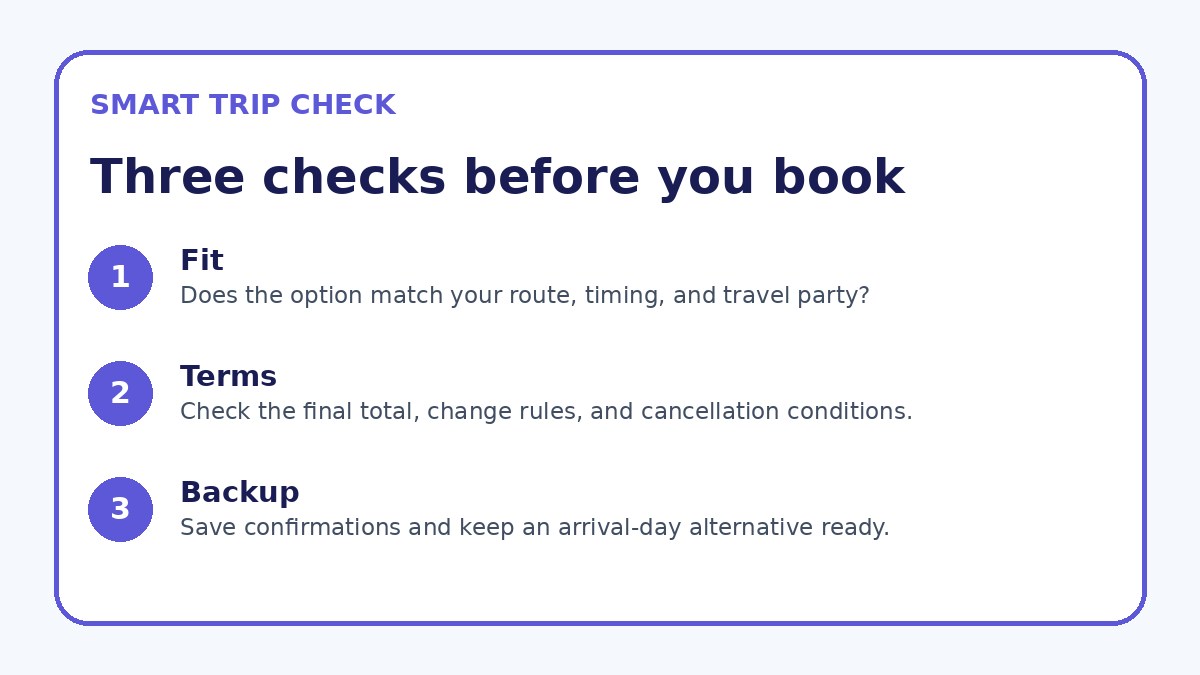
Before you hit pay, verify specifics on the airline’s final booking page: exact change and cancellation fees, baggage allowances (including strollers and car seats), seat assignment rules, and whether meals or early boarding are included. For family comfort, check seat maps for the ability to sit together and note whether bulkhead or extra-legroom seats are available and how they’re allocated. If accessible services, bassinets, or assistance with strollers matter, confirm those options and any documentation required at the carrier level.
Also confirm airport logistics: which terminal you’ll use, official recommended arrival times for families, and typical transfer methods between airports and the city. When booking a connecting itinerary, ensure layover time allows for immigration and security procedures if transferring across borders or terminals. If using a third-party site to compare options, always click through to the carrier’s own page to validate policy details — Trip.com can be one place to compare availability, but verify critical rules on the airline’s final booking screen.
Before you book
- Decide whether total door-to-door time or the ability to change flights is your top priority for this trip.
- Search for both direct and connecting itineraries, then compare total travel time, number of transfers, and departure windows.
- Click through to the airline’s booking page to confirm baggage policies, change fees, and seat-assignment rules before paying.
- Confirm airport terminals and estimate ground transfer times to and from your New York City departure point and Toronto arrival.
- Reserve seats together or buy priority boarding early if keeping kids comfortable during boarding is important to your family.
- Pack a carry-on kit with snacks, spare clothes, chargers, and quiet activities to handle delays or longer layovers.
Packing, on-trip routines and ease-of-travel tips
Pack to reduce gate-time friction: an organized carry-on with snacks, a small basic first-aid kit, spare clothes for young children, and quiet activities will make longer transits less taxing. If you’ll check bags, keep a change of clothes and essentials in carry-ons in case luggage is delayed. For families who value convenience, invest in lightweight, easily collapsible strollers or baby carriers accepted at gates, and confirm the airline’s rules on gate-checking versus checked strollers.
Plan travel-day routines around airport services: know where family lanes, nursing rooms, and play areas are at your origin and arrival airports if those are important for reducing stress. Arrive with realistic buffer time, especially when traveling during school-term transitions or holiday weekends. If you need a specific schedule for medical reasons or school commitments, buy a ticket that aligns with that window rather than assuming you can change later without significant cost.
Frequently asked questions
Should a family always choose a direct flight from New York City to Toronto?
Not always. Direct flights reduce the complexity of transfers and are often the least disruptive for young children, but they can be more expensive and offer fewer daily choices. If your family needs a specific departure time that direct options don’t provide, or if you need the option to change flights with little cost, a connecting itinerary could be the better fit. Evaluate total door-to-door time, the number of transitions, and the fare rules rather than assuming direct is best in every situation.
How much layover time should families allow when choosing connecting flights?
Aim for layovers that leave comfortable margins for immigration, security, bathroom breaks and managing kids’ needs — typically longer than what a solo traveler might accept. If a connection requires changing terminals, collecting and rechecking bags, or clearing customs and security again, build more time into your itinerary. Verify the airport layout and recommended minimum connection times with the airline, and consider extra buffer for unfamiliar airports or travel during peak periods.
What fare features matter most for families booking these flights?
Look for flexible change and cancellation terms, clear baggage allowances for strollers and car seats, and seat selection policies that allow families to sit together. Priority boarding or family boarding can reduce the stress of finding space for carry-ons and organizing children before takeoff. Also confirm how refunds or rebooking are handled if illness or school obligations force a late change — those policy details should be checked on the carrier’s final booking page before you complete the purchase.
Final planning note
Balancing schedule flexibility and convenience for New York City to Toronto flights comes down to how your family functions on travel days. If predictable routines and minimal transitions trump cost, prioritize fewer connections and shorter total travel times. If changing plans is likely or you need a wider choice of departure times, accept longer transits in exchange for flexible fares and ample layover time. Always validate baggage rules, seat arrangements, and change/cancellation policies on the airline’s booking page before you pay, and pack to reduce gate-time frustrations. With those checks done, choose the itinerary that preserves calm and routine for your family rather than chasing an abstract ‘best’ flight.
Continue planning
Check current options and final conditions
Use the provider page to confirm live availability, the final total, cancellation terms, and every condition that matters to your trip.
This evergreen planning guide was created with AI-assisted drafting and a structured quality review. It does not display live prices, schedules, availability, visa guidance, or provider rankings. Verify current details before booking. Some links are affiliate links; we may earn a commission at no additional cost to you.