If you’re planning your first trip to Mexico City and want travel deals that won’t cost you if plans change, focus on cancellation flexibility first. The practical choice: prioritize fares and rates labeled refundable or flexible, and always read the provider’s cancellation and rebooking policy on the final checkout page before you commit. Nonrefundable, basic or heavily restricted fares often look cheaper upfront but can become costly if your dates shift. Balance the savings against the likelihood you’ll need to change plans—if there’s any chance your trip will move, choose options with clear, refundable or transferable terms, or buy flexible fares and refundable rates when they match your risk tolerance. For comparison shopping, look at the same itinerary across airline and hotel booking pages and consider Trip.com as one of several places to compare current availability and terms.
See current options before you compare the details
Availability and final conditions change. Open Trip.com now or keep reading for the practical comparison.
How to compare flight cancellation flexibility
Start by splitting flight options into refundable, changeable-with-fee, and nonrefundable. Don’t assume the lowest fare is change-friendly; many budget and basic economy fares lock your ticket or only offer credit toward future travel subject to conditions. On each fare’s booking page, find the section titled “fare rules,” “cancellation policy,” or similar. These rules tell you whether you receive a full refund, travel credit, or only the ability to change dates for a fee. Airline policies and government taxes may affect whether a cash refund is possible, so read the final confirmation carefully before paying.
When comparing connecting versus one-stop itineraries, check cancellation and rebooking rules for the total ticket rather than the individual segments. If the ticket includes separate carriers under a code-share or interline agreement, rules may differ and refunds can be more complex to obtain. Also check any change fee waivers—some airlines waive fees within certain timeframes or for higher fare classes. If a flexible fare is important, filter results by refundable or flexible options on booking sites and verify the full fare rules on the airline’s official purchase screen and confirmation email.
What to look for in hotel cancellation policies
Hotel listings often advertise “free cancellation” but the devil is in the fine print. Determine whether the free cancellation applies until a specific hour the day before arrival, several days in advance, or not at all. Some hotels require a partial or full prepayment that becomes nonrefundable after a short window; others allow free cancellation up to the day of check-in. Check the provider’s cancellation page to see if deposits are refundable, whether credit-card holds apply, and how long refunds can take to post. If a third-party site is used, confirm whether refunds are processed by the hotel or the booking site.
Also review policies for group bookings, special rates, and nonstandard room types—these often carry stricter rules. If you value flexibility but find refundable rates expensive, consider booking a flexible rate and then monitoring prices; some hotels allow free rebooking to a lower rate when permitted by their terms, but you must request the change. Always save or screenshot the cancellation terms shown at checkout and the reservation confirmation so you have proof of the allowed cancellation window and any applicable fees.
| Approach | Best for | Tradeoff to check |
|---|---|---|
| Refundable fares and rates | Travelers who want maximum peace of mind and expect possible changes | Higher upfront cost versus easier refunds and fewer restrictions |
| Changeable fares with fees | Those who might change dates but want lower base fares | Lower initial price but potential change fees and fare differences |
| Nonrefundable budget options | Stable plans and travelers prioritizing lowest initial cost | Lowest price but limited or no refunds and possibly costly changes |
| Third-party bookings with protection add-ons | Shoppers who want consolidated comparison and optional protections | Convenience and add-ons can hide extra fees; refund handling may be slower |
Ready to check the option that fits your plan?
Use your exact dates and traveler details so the provider page can show the current total and conditions.
Third-party platforms, travel insurance, and protection options
Third-party booking platforms can simplify comparison but add another party to the cancellation equation. When booking through an agency or an online travel site, verify whether cancellations and refunds are handled by the platform or the airline/hotel. If a problem arises, you’ll need to know whose customer service to contact. Look for explicit statements about refund processing times, administrative fees the platform might charge, and whether the booking is cancellable on the provider’s site or only through the intermediary. Consider checking the same itinerary directly with the airline or hotel to compare identical terms and ensure consistency.
Travel insurance or bundled trip protection can fill gaps, but read policy definitions carefully: many policies cover unforeseen events like illness or severe weather, while others offer 'cancel for any reason' coverage at higher cost. If you plan to rely on insurance for cancellations, verify the claim process, deadlines for filing, and what documentation is required. Note that insurance may not cover cancellations that fall within a provider’s clearly stated nonrefundable terms, so insurance should complement—not replace—an understanding of the booking’s cancellation rules.
Before you book
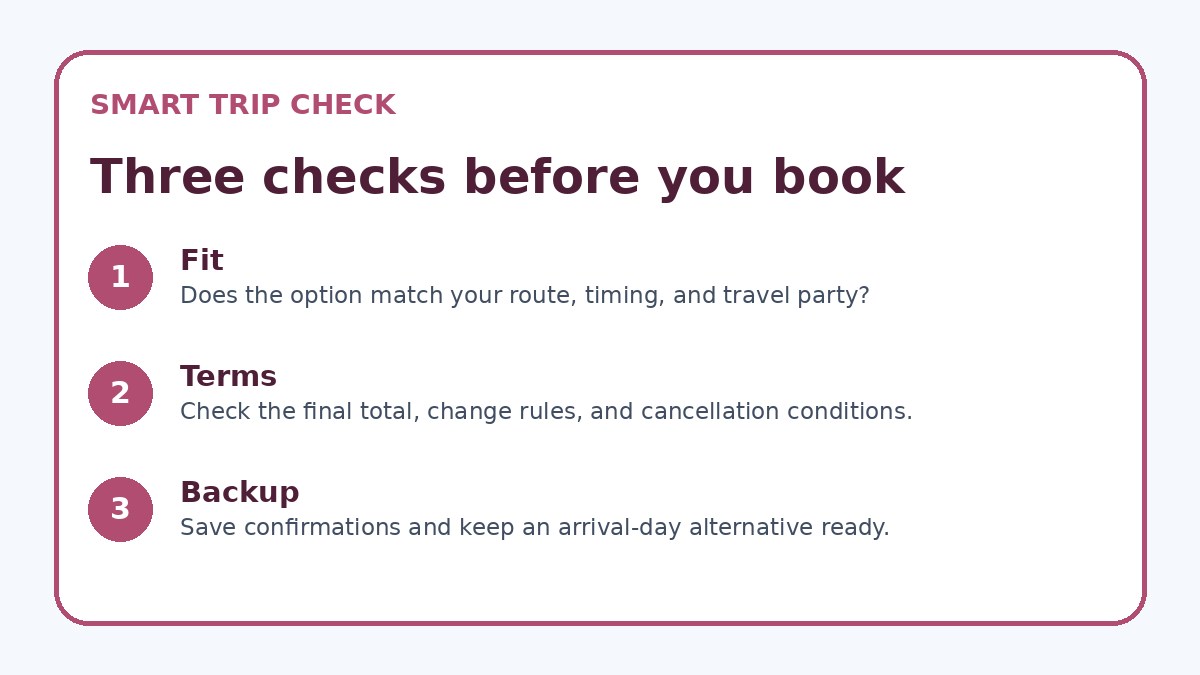
- On the final booking page, read and save the full cancellation policy and any fare rules before completing payment.
- Compare the same flight or hotel terms on the provider’s official site to confirm wording and refund handling.
- If booking through a third party, note who processes refunds and the contact method for changes or disputes.
- Decide whether to buy travel insurance or a protection plan; confirm what events it actually covers and claim deadlines.
- For hotels, screenshot the cancellation cutoff time and any deposit conditions that could make a reservation nonrefundable.
- Before confirming, calculate the worst-case cancellation cost and compare that to the price premium for fully refundable options.
Decision tradeoffs: saving now versus flexibility later
Choosing a nonrefundable cheaper option can make sense if your plans are firm and you have low risk of change. The tradeoff is clear: you save money up front but accept limited recourse if you must cancel. Refund processing time, credit issuance, and administrative fees can reduce the practical value of any refund. For many first-time visitors to Mexico City, the right middle ground is a moderate flexible fare or refundable hotel rate that lowers stress and preserves options while still offering some savings compared with fully open-ended premium tickets.
If budget is tight, consider a layered approach: buy a flexible flight or refundable hotel for the most expensive or least replaceable part of the trip, and opt for restrictive options on low-cost segments that you can more easily rebook. Another tactic is to keep an eye on the same rates after booking; if a more flexible deal appears, ask the provider about rebooking or rate adjustments. Always prioritize clarity—if a cancellation policy is unclear, contact customer service and get the answer in writing before you finalize the purchase.
Frequently asked questions
Can I rely on a travel site’s “free cancellation” label for Mexico City bookings?
A “free cancellation” label is a good starting point but always verify the detailed terms on the provider’s final booking page. Platforms differ in how they apply that label—some mean free cancellation until a specific date and hour, others apply only to certain room types or rates. If you book through a third party, check whether the hotel or airline will handle refunds or whether the intermediary does. Keep a screenshot of the exact cancellation wording shown at purchase and the confirmation email to avoid disputes later.
Is it better to buy flexible flights or get travel insurance for cancellations?
Flexible fares and travel insurance serve different roles. A flexible or refundable fare directly reduces or eliminates fees when you change or cancel with the airline. Travel insurance can reimburse you for covered reasons such as illness or travel advisories, and some policies offer 'cancel for any reason' coverage at a higher premium. If you frequently change plans, a flexible fare may be simpler; if you want protection against specific unforeseen events, insurance can add coverage. Check both the fare rules and the insurance policy’s exclusions before deciding.
How do I handle a cancellation if the booking confirmation shows different rules than the checkout page?
If the confirmation differs from what you saw at checkout, gather evidence immediately: save screenshots of the checkout terms, the confirmation email, and any relevant web pages. Contact the seller’s customer service and request clarification in writing. If you booked through an intermediary, confirm whether the provider or the platform processes refunds. Escalate if necessary by asking for a supervisor and documenting each interaction. If the discrepancy remains unresolved, check your payment card’s dispute and chargeback options, and review local consumer protection resources.
Final planning note
For first-time visitors to Mexico City, cancellation flexibility is a practical lever for reducing travel stress. Decide whether you need refundable options based on how likely plans are to change, the cost difference to upgrade to flexible fares, and how refunds are processed by the booking channel. Use direct provider pages and reliable third-party comparisons—including Trip.com as one option—to verify exact cancellation windows, fees, and who handles refunds. Keep records of the policy shown at purchase and the confirmation, consider targeted insurance if gaps remain, and prioritize clear, written terms over promotional labels when you finalize bookings.
Continue planning
Check current options and final conditions
Use the provider page to confirm live availability, the final total, cancellation terms, and every condition that matters to your trip.
This evergreen planning guide was created with AI-assisted drafting and a structured quality review. It does not display live prices, schedules, availability, visa guidance, or provider rankings. Verify current details before booking. Some links are affiliate links; we may earn a commission at no additional cost to you.