If you’re traveling from Sydney to Melbourne with extra luggage, the core decision is balancing fare flexibility against the cost and convenience of carrying more bags. Flexible fares and add-on baggage both reduce the risk of penalty charges if your plans change, but they typically cost more upfront. Conversely, a cheaper restricted fare plus paid luggage can save money if your trip is fixed, though the cancellation and change penalties may be steep. This guide gives the practical checklist and the questions to ask on the carrier’s final booking page — about changes, cancellations, how checked and excess baggage are treated, and whether baggage fees are refundable or transferable. Before you shop, prepare exact travel dates, passenger ages, frequent flyer numbers, and a realistic luggage plan (number and weight of bags) so you can compare real booking options and penalties accurately.
See live routes for your exact travel day
Compare direct and connecting choices with the same baggage and traveler details.
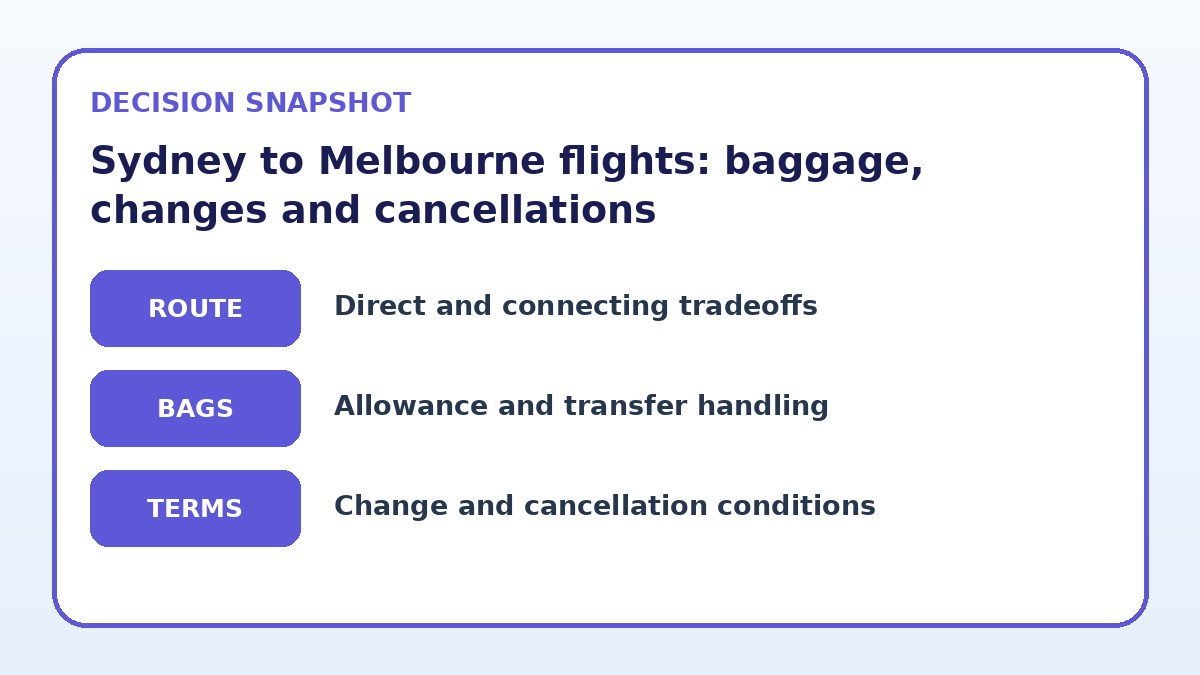
Routing and connection risk for baggage
On the Sydney to Melbourne route you’ll typically compare direct flights versus itineraries with an extra connection. For travelers carrying extra luggage, a direct flight reduces the touchpoints where bags can be delayed, mishandled, or incur recheck requirements. If a connection is offered, check whether the carrier will transfer checked bags automatically between legs or whether you must collect and recheck them — if the latter, connections add time and the risk of missed flights or extra handling fees.
When comparing routes in the booking flow, inspect the baggage transfer statement and minimum connection time. If you must recheck baggage during a connection, build a larger buffer between flights or favor itineraries where both legs are on the same ticket and operated by partner airlines that explicitly accept through-checked luggage. Where the booking page is unclear, contact the airline’s baggage or reservations team and save the response. This is particularly important if you have oversized items, sports equipment, or more than the standard number of bags.
Baggage rules and how they affect changes
Different fare classes often include different baggage allowances and rules about refunds or transfers when a booking changes. When a change results in a fare class upgrade or downgrade, baggage entitlements can change too: an upgraded ticket may add allowance, while downgrading or reissuing to a lower fare might remove included bags and trigger excess-baggage fees. Verify on the airline’s final booking page whether your original baggage allowance stays attached to the booking after a change or whether you’ll need to re-purchase allowance for the new fare.
Also check whether paid extra baggage is refundable if you cancel or change your trip. Some carriers treat add-on baggage as a separate refundable item if canceled within a set window; others make add-ons non-refundable. Ask specifically about transferring add-on baggage to a new booking or another passenger if you anticipate name changes or swapping itineraries. Save screenshots or confirmation emails showing the baggage terms, so you have documentation if you need to dispute fees later.
Compare flight-selection strategies
| Flight strategy | Best for | Risk to check |
|---|---|---|
| Buy a flexible/refundable fare with included baggage | Travelers who expect schedule changes or need peace of mind with heavy luggage | Higher upfront fare but lower risk of surprise rebooking and baggage charges later |
| Buy a low-cost restricted fare and add paid checked bags | Fixed-date travelers who want lower initial costs and can commit to the schedule | Lower ticket price but potentially large change/cancellation fees and lost add-on fees |
| Use a basic fare and rely on carry-on plus paid excess at the airport | Light packers or last-minute priorities where upfront cost is most important | Risk of steep pay-at-counter fees or having to gate-check bags if cabin space is limited |
| Buy a flexible fare for one direction and cheaper fare for the return | One-way schedule uncertainty (e.g., open-ended return) while limiting total cost | Partial flexibility reduces overall cost but adds complexity and may complicate baggage rules |
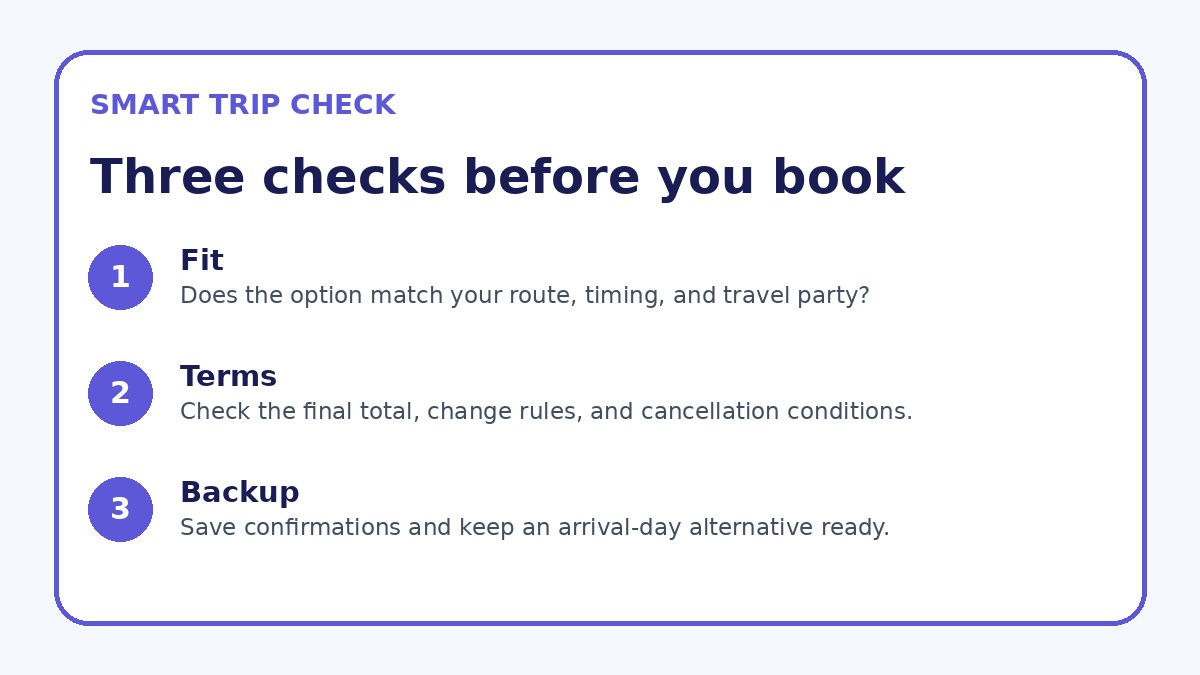
Recheck the complete itinerary
Confirm airports, connection handling, baggage, and change conditions before deciding.
Schedule fit: when flexibility matters most
Decide how likely you are to change dates, times, or passenger names. Business travelers with uncertain return dates, multi-leg itineraries, or those relying on weather-dependent plans should prioritize flexible fares or refundable options that include baggage. If you’re reasonably certain of the schedule and want to lower costs, a restricted fare plus bought baggage may be fine — but accept that you might pay higher fees if changes become necessary.
When reviewing schedules, compare the cost of flexible fares (which reduce or waive change fees) versus the potential costs of rebooking under a restricted fare in the worst-case scenario. Consider whether travel insurance that covers trip interruption or baggage problems will mitigate risk, and whether the airline’s policy allows same-day free changes or standby options. Always confirm the carrier’s exact change processing steps and whether baggage allowances are recalculated at reissue.
Flight details to verify
- Confirm exact travel dates, passenger names and ages, frequent-flyer numbers, and planned bag counts before pricing options.
- On the airline booking page, read the fare rules section for 'changes', 'cancellations', and 'baggage' and save screenshots of the fine print.
- Check whether included checked baggage remains attached to a reissued ticket or whether you must repurchase allowance after a change.
- Ask the airline or agent whether paid add-on baggage is refundable, transferable, or forfeited with a canceled ticket.
- Compare total worst-case costs: flexible fare price, potential fare difference on reissue, and any forfeited baggage fees if canceling.
- If your itinerary includes a connection, verify baggage transfer rules and minimum connection time to avoid recheck or missed-flight risk.
Fare conditions, refunds and what to verify on booking
On the airline’s final booking page, you must verify the exact fare conditions: change fees, cancellation penalties, whether taxes are refunded, and the treatment of baggage allowances or add-ons. Look for explicit wording about whether a change incurs only a fee or both a fee and the fare difference. If the booking page lists a voucher or credit option for cancellations, read the terms to see expiry, transferability, and whether add-on baggage fees are included in the voucher value.
When in doubt, take screenshots of the fare rules and confirmation pages and ask customer service to confirm in writing. If you are comparing options on an aggregator, remember to click through to the airline’s own booking page to verify the definitive conditions. Trip.com can be used as one of several places to compare current availability and published conditions, but always confirm the final terms on the carrier’s official booking or your travel agent’s confirmation.
Flight Guide questions travelers ask
If I change my flight on a ticket that included checked bags, will I lose the allowance?
It depends on the carrier and the type of change. Some airlines keep the original baggage allowance when you rebook the same booking reference; others recalculate entitlements based on the new fare class. If you change to a lower fare class, the included baggage could be removed and you may need to purchase allowance for the new ticket. Always check the fare rules on the final booking page or get written confirmation from the airline about whether your baggage allowance will remain attached after a change.
Are paid baggage fees refundable if I cancel my Sydney to Melbourne flight?
Refundability of paid baggage fees varies by airline and by how the cancellation is processed. Some carriers will refund add-on fees when a ticket is fully refunded, while others treat add-ons as non-refundable. If a cancellation yields a travel credit or voucher, the add-on value may be included or excluded according to the carrier’s policy. Before purchasing add-on baggage, read the cancellation terms and, if unclear, ask the airline to confirm whether baggage fees will be returned in cash, voucher, or not at all.
What should I do if my booked itinerary has a connection and my bags are not through-checked?
If your bags are not through-checked, plan extra time at the connection airport to collect and recheck them; this increases the risk of missed connections. Ideally, contact the airline ahead of travel to request through-checking or to clarify whether partner flights on the same ticket will transfer baggage. If through-check is impossible, choose a longer connection or a direct flight if carrying extra luggage is a priority. Keep documentation of baggage policies and any promises from agents in case you need to claim compensation for delays or mishandling.
Final decision note
For travelers with extra luggage on Sydney to Melbourne flights, the practical choice comes down to how much schedule flexibility you need versus how much you want to save upfront. A flexible fare that includes baggage minimizes the chance of unexpected fees and the hassle of repurchasing allowance, while a cheaper fare plus add-ons can be economical if your plans are fixed. Always prepare exact travel details, read the carrier’s fare rules for changes and baggage at the final booking page, and save the policy wording. Doing this will let you compare real worst-case costs and pick the option that protects your luggage and your wallet.
Continue planning
Check current options and final conditions
Use the provider page to confirm live availability, the final total, cancellation terms, and every condition that matters to your trip.
This evergreen planning guide was created with AI-assisted drafting and a structured quality review. It does not display live prices, schedules, availability, visa guidance, or provider rankings. Verify current details before booking. Some links are affiliate links; we may earn a commission at no additional cost to you.