If you’re visiting Bangkok for the first time, the fastest way to improve value is to be flexible about when you travel. Practical flexibility means checking a window of dates (a few days to a couple of weeks), comparing package bundles with separately booked flights and hotels, and verifying the exact inclusions and change/cancellation rules before you commit. Start by picking the neighborhood and a reasonable trip length, then run side-by-side comparisons for the same travelers and roughly the same times. This approach prevents false savings from mismatched conditions. Below you’ll find what to compare first, why inclusions and flexibility matter, how traveler preferences change the math, and a simple checklist to use before you hit “book.”

Test package value fairly
| Booking approach | Best for | Tradeoff to check |
|---|---|---|
| Full package (flight + hotel + transfers) | Travelers who want convenience and fewer separate confirmations. | May include restrictions on changes and can hide smaller savings compared with matched separate bookings. |
| Flight + hotel booked separately | Travelers seeking control over flight times, carriers, and hotel choices. | Requires more time to compare and may miss bundled extras like transfers or tours. |
| Flights from an aggregator, hotel direct | People who want to mix carrier options while keeping hotel loyalty benefits. | Different suppliers mean separate policies and potentially no single refund path for disruptions. |
| DIY low-cost carriers plus boutique stays | Budget-focused or adventurous travelers prioritizing lowest fares and unique hotels. | Low-cost fares often have strict baggage and change rules that can add costs if plans change. |
Check current package and separate options
Use identical dates, travelers, room needs, baggage, and flexibility so the comparison stays meaningful.
What to compare first before evaluating a bundle
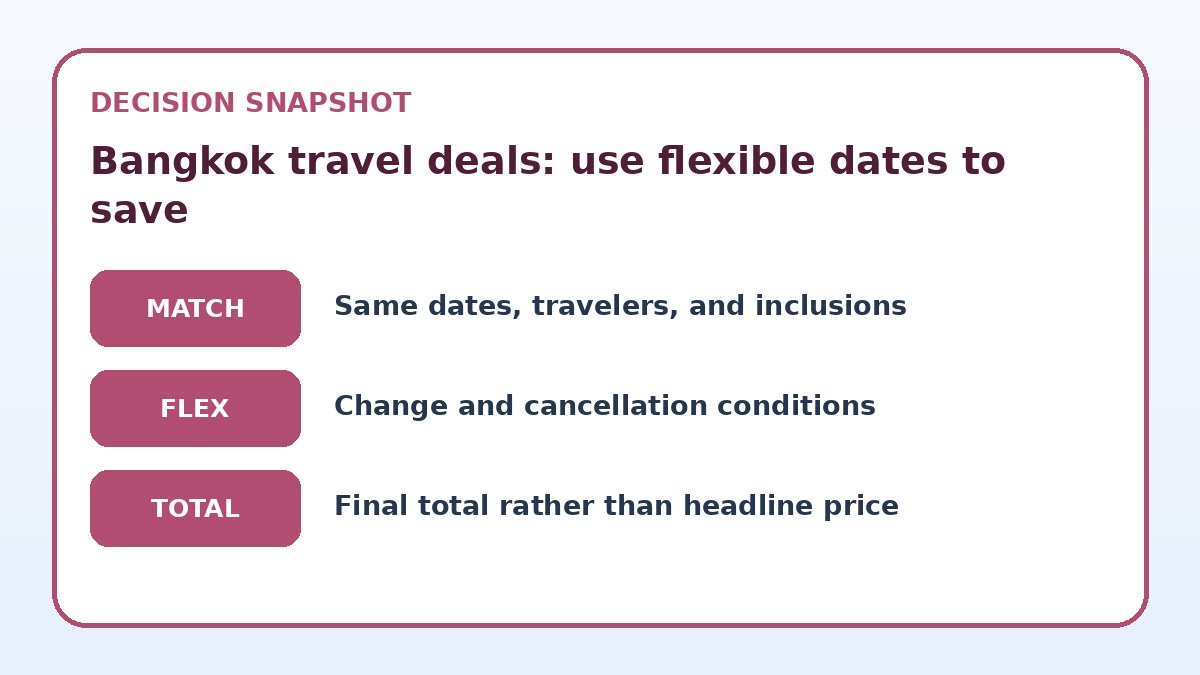
Start by fixing the elements that should remain constant when you compare offers. That means the same number of travelers, identical cabin and baggage allowances, the same nights in the same general area of Bangkok, and equivalent ground transfer choices. When you compare price, always match these variables so you’re comparing like-for-like. If you don’t, you can be fooled by a package that looks cheaper but excludes a checked bag, an airport transfer, or a refundable fare that you would want.
Next, gather baseline options: a few flight options on the closest travel dates and a shortlist of hotels in your preferred neighborhood. Use the same stay length and room type for all checks. If a package includes extras — airport transfer, sightseeing, meals — note whether those extras replace services you would otherwise buy separately. Keeping a short comparison table for these core items prevents surprise costs later and makes clear whether a bundle actually simplifies planning or just repackages separate purchases.
Inclusions and flexibility: the real value drivers
Inclusions are where many perceived deals fall apart. A package may advertise a low headline price but exclude checked bags, seat assignments, or essential transfers; conversely, a slightly higher-priced package might include those items and be better value for you. Always expand the fine print: check baggage weight/size, whether transfers are shared or private, which meals are included, and if sightseeing is a prebooked tour with a set departure time. If provider details are not explicitly listed on the search results, click through to the final booking page to verify.
Flexibility plays two roles: the booking rules and your date window. Look at change and cancellation terms for both the flight and hotel components — refundable or changeable options can justify paying more if your plans may shift. Also use a date-flexible search to reveal cheaper combinations; flying midweek, arriving a day earlier, or leaving a day later often unlocks better routings or lower-fare classes. Remember to compare the exact same dates and rules when testing a package against separate bookings to avoid false savings.
Look past the headline total
Compare inclusions and change conditions before deciding whether a package is genuinely useful for this trip.
Deal comparison checklist
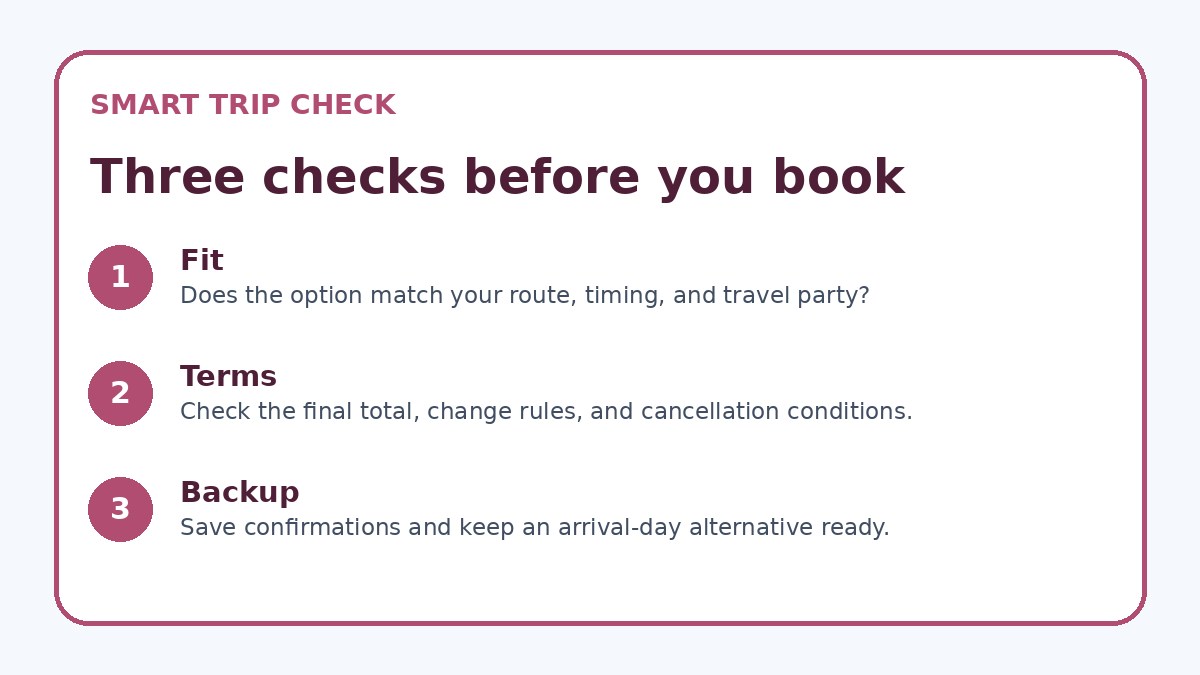
- Set a date window (e.g., ±3–7 days) and run price comparisons for flights and hotels across that window.
- Match the same traveler count, room type, fare class, and baggage allowance when comparing package vs separate bookings.
- Click through to the provider’s final checkout page and screenshot/change-save the full cancellation and change terms.
- Add the likely extras (checked bag, airport transfer, seat fees, breakfast) into the total comparison price.
- Decide which benefits matter (refundable ticket, loyalty points, guaranteed transfer) and prioritize those in your choice.
- If a package seems cheaper, verify refunds or credits apply proportionally if only one part of the booking changes or cancels.
Traveler-specific value: who benefits from bundles
Bundles tend to benefit travelers who prize convenience and certain predictable inclusions. If you want airport transfers arranged, prefer a single booking reference, or value pre-included tours, a package can be worth the slight premium. Bundles can also simplify travel for families or groups when seat selection, coordinated arrival times, and a single refund policy reduce coordination work. For first-time visitors overwhelmed by choices, a curated package with clear inclusions may reduce stress even if it’s not the lowest monetary price.
On the other hand, independent travelers or those loyal to an airline or hotel program may find separate bookings better. If you need specific flight times, want to keep loyalty benefits intact, or plan to mix low-cost carriers with boutique hotels, booking separately gives control. Also, flexibility with dates amplifies the potential savings of separate bookings because you can pick the cheapest flight days and match hotels on discount nights. The decisive test is which arrangement preserves the amenities you value while keeping rules you can accept.
Final terms, verification, and avoiding false savings
Before you finalize anything, verify the final terms on the provider’s checkout page. Confirm the exact fare class, baggage allowance, hotel room type, refund/change penalties, and what happens to vouchers or credits if one part of a package is canceled. If an element is unclear, contact customer service or check the supplier’s policy pages. If you use an aggregator, click through to the seller’s final page; aggregators sometimes display simplified rules that differ from the supplier’s full terms.
Also test the ‘same-conditions’ comparison: run the numbers for identical dates, passenger counts, and inclusions for a package and for separate bookings. Include likely extras such as checked bags and airport transfers in the totals. Avoid assuming the lowest headline price wins — a slightly higher fare with free changes or included transfers can cost less overall, especially if your schedule may shift. For quick cross-checks, you can consult major search engines or Trip.com to view live availability and the precise terms on each seller’s booking page.
Travel Deals & Booking Strategy questions travelers ask
How much date flexibility should I use when searching Bangkok travel deals?
A useful flexible window is usually a few days to a week on either side of your ideal travel dates; for longer stays or shoulder seasons, expand to two weeks to spot different fare classes and hotel rates. Test combinations like leaving midweek versus weekend, or extending a night to access a cheaper overnight flight; small shifts can change connection options and fare buckets. When searching, always record the exact dates and fare conditions for any lower-priced result so you can compare like-for-like against packages.
If a package includes an airport transfer, does that mean it’s better than booking separately?
Not necessarily. An included transfer is valuable for convenience, but you should weigh it against the overall price and the transfer type — private versus shared — and pick-up timing. Check whether the transfer suits your arrival time and whether it’s refundable or changeable independently of the rest of the package. Sometimes paying separately for a metered taxi or ride-hailing service is cheaper or more flexible if your flight schedule is uncertain.
Should I prioritize refundable fares or lower nonrefundable fares when using flexible dates?
Choose refundable or changeable fares if your plans may change and the premium is modest relative to the cost of rebooking. If you have firm dates and want to maximize savings, nonrefundable fares can be appropriate, but ensure you understand all change and cancellation fees. Always add probable extras into the cost comparison — a low fare that charges steep fees for baggage or seat selection can end up costlier than a higher fare with generous inclusions and free changes.
Final decision note
For first-time visitors to Bangkok, flexible dates are a practical lever to improve travel value. The most important habit is to compare like-for-like: same travelers, same dates, and identical inclusions when testing packages versus separate bookings. Pay close attention to baggage rules, transfer types, and change/cancellation policies on the provider’s final booking page. Use a short checklist to avoid false savings, and favor the option that preserves the amenities and flexibility you need. With a little systematic comparison, you can simplify planning while keeping control over timing, comfort, and cost.
Continue planning
Check current options and final conditions
Use the provider page to confirm live availability, the final total, cancellation terms, and every condition that matters to your trip.
This evergreen planning guide was created with AI-assisted drafting and a structured quality review. It does not display live prices, schedules, availability, visa guidance, or provider rankings. Verify current details before booking. Some links are affiliate links; we may earn a commission at no additional cost to you.