The first-hour decision after you land in Seoul should be: move collectively with a pre-booked vehicle or split into separate taxis/transit depending on luggage, meeting deadlines and whether arrival is on time. For a small business party (2–6 travellers) arriving for meetings, the quickest, lowest-stress option is usually a single arranged transfer that fits everyone and their bags — but that depends on where your meeting or hotel is, congestion at customs/immigration, and whether your flight arrives late or disrupted. This guide helps you choose between airport shuttle, private car/van, taxis, or public transport for a small team, explains the tradeoffs, and gives clear things to confirm on the booking page. Read this while you have your flight time, headcount and meeting or hotel address open — you’ll leave the airport knowing which approach matches your punctuality needs and baggage footprint.
Check options for your arrival details
Use your flight, luggage, party size, and accommodation address to compare current choices.
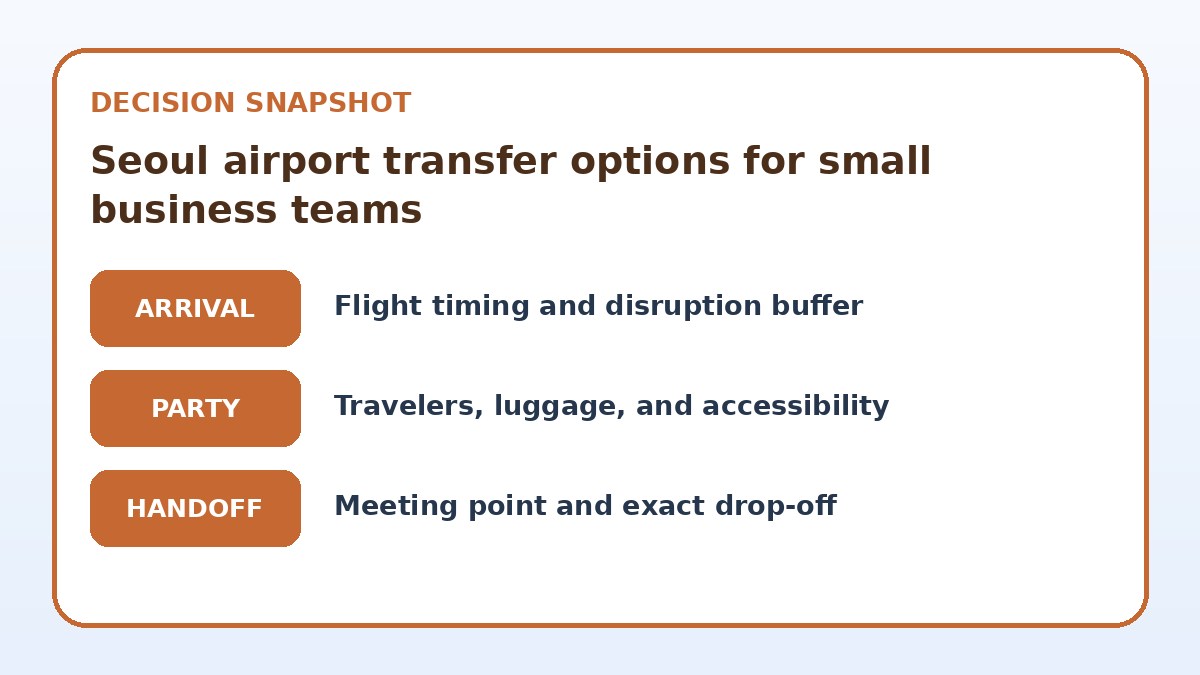
Luggage and party size: pick the right vehicle
The simplest decision variable is capacity. A standard sedan may handle three business travelers with minimal checked luggage; anything beyond that — four to six people or multiple roller bags — usually requires an SUV, minivan, or a small passenger van. When you book, list the exact number of checked bags, carry-ons and any equipment (laptops in cases, presentation boxes, or suit racks). Providers use different vehicle classes and trunk size descriptions; don’t assume “van” always means a roomy cargo area. If you need to keep luggage in the same vehicle with passengers, confirm both seat and luggage capacity on the booking page before paying.
Consider comfort and onboard productivity. Business groups often need to use transit time for calls or final meeting prep, so prioritize vehicles with uninterrupted seating and a stable interior (less cramped than a packed taxi). If confidentiality matters, a private transfer is preferable to shared shuttle services. Also check whether the vehicle has charging ports or Wi‑Fi if you expect to work in transit. These details are frequently listed by providers; verify them and the cancellation or change policy in case your headcount or luggage plan changes last minute.
Arrival details to have ready
- Confirm final headcount and list every checked bag and bulky item before booking any transfer.
- Check the vehicle class and explicit luggage capacity on the provider’s booking page and request a larger vehicle if unclear.
- Save the driver’s contact and the provider’s local office number to your phone and share them with all travellers.
- Agree on a single, named arrivals meeting point and send a map pin or terminal exit number to the group and driver.
- Plan and communicate a split plan for delays: who takes the first vehicle and who follows if you cannot wait together.
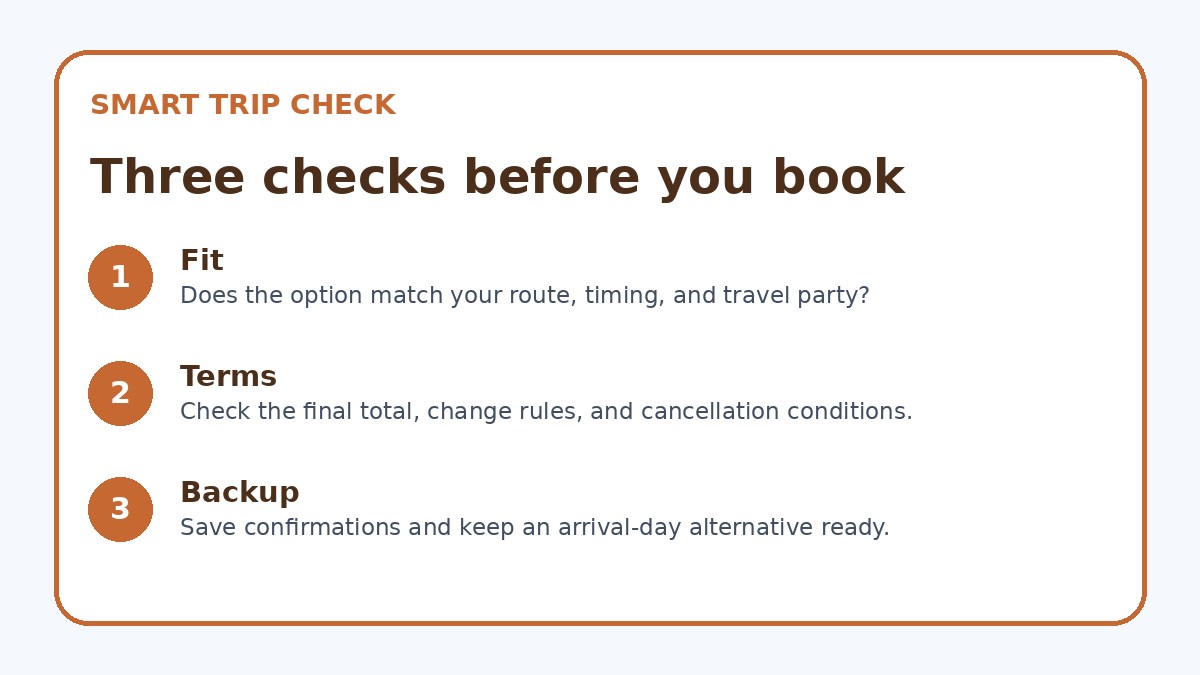
- Verify pickup wait time policy and change/cancellation terms on the booking page; print or screenshot the confirmation.
Late or disrupted arrival: backup plans that keep meetings on track
Delays and disruptions are common; plan a realistic buffer. If your arrival time is tight relative to meetings, choose an option that minimizes uncertainty. A dedicated driver with flight-tracking will typically wait for late arrivals within a specified window and adjust pickup automatically, but policies and wait times vary. If you rely on public transport or shared services, late arrivals can cascade into missed connections or crowded services. For any booked transfer, note exactly how the provider treats delays and where the driver will meet you if immigration holds you up.
Prepare fallback contacts and apps. Have a taxi app installed and tested, and save a local phone number for an English-speaking dispatch service. If your flight diverts or baggage takes unusually long, a local taxi or two smaller taxis can sometimes get a half-hour meeting back on track when a single larger vehicle cannot. Add a short plan for splitting the group: who goes first, who handles the bags, and which meetings can be postponed or joined remotely if necessary. Communicating this plan before travel avoids rushed decisions at a crowded arrivals hall.
Match the transfer to your arrival
| Arrival approach | Best for | Detail to verify |
|---|---|---|
| Pre-booked private car or van | Small groups needing punctual, direct travel to meetings with luggage and privacy. | Higher cost and need to confirm vehicle size; verify driver wait policy and exact pickup location on booking page. |
| Shared airport shuttle | Groups with flexible schedules looking to reduce per-person cost. | Can add stops and wait time; less private and may not suit tight meeting schedules or large luggage counts. |
| Metered taxis or app-based rides | Flexible small teams arriving late or with simple drop-off needs who want immediacy. | May require multiple vehicles for larger parties and uncertain trunk space; traffic and peak pricing add variability. |
| Public transport (train + subway) | Cost-conscious teams traveling light and without urgent meeting deadlines. | Transfers with luggage can be slow and crowded; reliability depends on train schedules and walking between stations. |
Make the meeting plan clear
Check the final pickup instructions, waiting conditions, and exact drop-off coverage.
Meeting-point clarity: reduce arrival hall confusion
Agree on a precise, easy-to-find meeting point in the arrivals area and share it with all travellers and the driver. International airports have multiple exits, gates and counters; choose a named landmark (a specific exit number, information desk, or a recognizable shop) and confirm whether the pickup is inside customs/immigration or outside the secure zone. If your transfer includes an airport representative who meets you inside, confirm exactly where they will be waiting and whether they will hold a sign with your name or company logo.
Exchange real-time contact details: driver’s phone, local office number, and each traveller’s local roaming number or messaging handle. If you use a ride app or a transfer service portal, ensure everyone in the party can see vehicle details and live tracking. For larger airports or terminals with strict curbside rules, clarify if the driver will pick you up at curbside, a designated bus bay, or a short walk from arrivals. Small misunderstandings at this stage are a common source of delay; clear directions save time and avoid needless stress.
Destination-side drop-off: fit to the meeting or hotel
Think beyond downtown distance: where exactly will the driver drop you off relative to your meeting room or hotel entrance? Large business complexes and conference centers may have specific drop-off points, security checkpoints, or valet arrangements that affect timing. Tell the transfer provider the exact company address, building name and which entrance you prefer. If multiple team members are headed to different addresses in the same district, consider whether a single stop is acceptable or if splitting into two vehicles reduces walking time and tight transfers between engagements.
Assess parking and traffic constraints at the destination. Some premium hotels and buildings have short-term drop zones with quick unloading but limited waiting time; confirm whether the driver can wait a few minutes if you need to drop bags or check in. For back-to-back appointments, ask whether the driver can remain on standby nearby or return at a scheduled pickup time. These practicalities affect whether a private transfer, local taxi, or a nearby public transit station is the smartest choice for your itinerary.
Airport Transfer & Local Mobility questions travelers ask
How do I decide between one large vehicle or two smaller cars for a six-person business group?
Start by counting seats and the total checked luggage volume. If six people plus six or more medium suitcases exceed a single vehicle’s trunk, two cars avoid tight fits and lost productivity. Also consider meeting logistics: splitting into two cars can be beneficial if attendees head to different addresses, but it adds management overhead and the risk of vehicles arriving separately in Seoul traffic. If privacy and in-transit working time matter, a single van is often preferred — confirm trunk and seat dimensions on the provider’s booking page to be certain.
What should I verify about the transfer provider before confirming a private pickup?
Verify the vehicle size and luggage allowance, the driver’s wait time policy for delayed flights, and where the driver will meet you (inside arrivals or curbside). Check what identification or sign the driver will use, whether flight tracking is included, and contact details for last-minute changes. Confirm cancellation and modification rules and whether the booking includes tolls or parking charges. For current availability and options you can compare, Trip.com may be useful, but always confirm operational details directly on the provider’s final booking page.
Is it better to take public transport into central Seoul for business travelers?
Public transport can be the fastest and most reliable option during peak road congestion and is cost-effective for light travellers with clear schedules. However, for teams carrying several pieces of checked luggage, needing privacy, or with immediate meetings, public transit adds transfers and walking that may not be acceptable. Evaluate door-to-door time, convenience of the nearest station to your destination, and the physical effort of moving luggage on trains and stairs. If punctuality and comfort are priorities, a private transfer often offsets its higher cost.
Final decision note
For small business groups arriving in Seoul, the practical first-hour choice is whether to prioritize punctual door-to-door transit or minimize cost and split into public or metered options. Start with headcount and luggage volume, then match that to the vehicle type that preserves meeting readiness: private transfers for tight schedules, taxis for flexible arrivals, shuttles for cost-sharing, and public transport for light, non-urgent trips. Confirm pickup logistics, driver contact, and delay policies before finalizing every booking, and keep a simple contingency plan for delays. With those checks done, you can move from the arrivals hall to your meeting with confidence and minimal stress.
Continue planning
Check current options and final conditions
Use the provider page to confirm live availability, the final total, cancellation terms, and every condition that matters to your trip.
This evergreen planning guide was created with AI-assisted drafting and a structured quality review. It does not display live prices, schedules, availability, visa guidance, or provider rankings. Verify current details before booking. Some links are affiliate links; we may earn a commission at no additional cost to you.