If you’re traveling between Sydney and Melbourne with extra or bulky luggage, the most practical choice is the option that minimizes transfers and handling while fitting your budget and schedule. For many that means favoring direct services with generous luggage allowances or private/door-to-door road options that let you keep bags with you until arrival. Train and coach services can work well when you confirm luggage policies and station access points; driving or a hired vehicle reduces handling but adds planning for rest and fuel. Read on to weigh terminal fit, luggage friction, timing flexibility and disruption backups so you can choose the route that keeps your luggage intact and stress low.
Terminal fit: where your luggage meets the journey
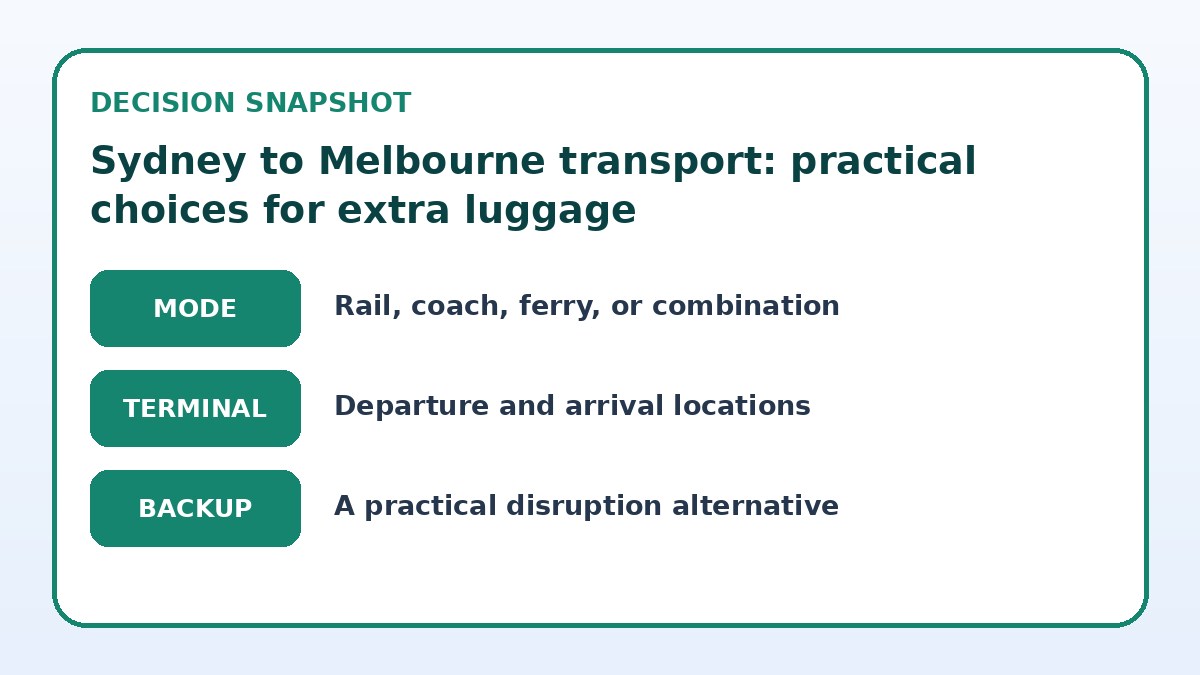
Start by mapping how each option handles bags from origin door to final door. Major rail and coach terminals in both cities are usually designed for passenger flow, but access points, platform lengths and lift availability vary. If your luggage includes very large items or equipment cases, note whether you will need to move between platforms or collect checked bags at a separate area. For door-to-door practicality, a pickup outside your accommodation that transfers straight to the terminal or vehicle eliminates repeated lifting.
When considering private hire or driving, check pickup and drop-off points against your itinerary. Some city pick-up zones restrict longer vehicles or loading time; a dedicated shuttle or prearranged meet can be easier if you declare large items in advance. If you plan to use rail or coach, contact the operator’s customer service or check their booking page to confirm permitted bag dimensions, any requirements for oversized items, and whether assistance is available at the terminals you’ll use.
Choose the end-to-end journey plan
| Journey approach | Best for | Friction to check |
|---|---|---|
| Direct train or coach with large luggage allowance | Travelers wanting minimal handling and fewer transfers | May require navigating station access and confirming luggage rules before booking |
| Private car or shuttle door-to-door | Groups or travelers with very bulky, heavy, or valuable items | Higher cost and need to confirm vehicle size and pickup/drop rules in cities |
| Self-drive in a hired vehicle | People who want full control over stops, loading and timing | Requires driving planning, parking at arrival, and continuity of luggage security |
| Mixed approach: rail/coach plus courier for oversized items | Those wanting budgets for personal travel but separate logistics for bulky cargo | Adds coordination and the courier’s pick-up/delivery windows must match your schedule |
Check live intercity options
Look beyond the ride itself and compare terminals, transfers, luggage, and arrival fit.
Luggage and transfer friction: reduce handling and hops
Minimise the number of times you lift or move your bags: each transfer is an opportunity for delay or damage. Direct train or coach options that allow you to keep your luggage with you onto the vehicle are preferable, provided platform access is manageable. If your route requires a station change, look for services with short, sheltered exchanges and step-free paths. Consider soft-sided luggage or wheeled cases for easier handling during unexpected stairs or kerbside loading.
If you must transfer between transport modes, pack a small overnight bag with essentials and valuables to reduce what you need to hunt for in transit. For fragile or expensive gear, use protective cases and clearly label items with your contact details. For very heavy or awkward loads, hiring a local courier or arranging two-person assistance for loading and unloading can be a small extra cost that saves significant hassle and risk.
Timing flexibility: choose schedules that protect baggage plans
Flexibility in travel time reduces stress when you’re handling extra luggage. Off-peak departures often mean less crowded platforms and easier boarding, while allowing for slower movement through terminals. If you are time-constrained, prioritise direct or non-stop services with the fewest intermediate stops to limit handling. For private driving options, factor in traffic windows and realistic door-to-door travel time rather than published intercity ride times alone.
When booking, allow buffer time for unexpected delays and for arranging baggage assistance if needed. If your itinerary includes onward connections—domestic flights, regional trains or ferries—give yourself enough time to re-check or transfer bags safely. Use scheduled arrival slots that leave you daylight unloading and a clear route to your accommodation, and verify pickup windows with any driver or transfer provider before confirming.
Compare the practical alternatives
Use the final page to confirm what is actually offered on your dates and save a workable fallback.
Intercity travel checklist
- Measure and weigh each bag; verify each transport option’s permitted dimensions and weight on its official booking page.
- Confirm station and terminal access: check for step-free routes, elevator locations, and kerbside pickup points at both ends.
- Arrange assistance in advance if you need staff help with heavy or oversized luggage at stations or terminals.
- Reserve a vehicle rated for your luggage dimensions if hiring a private transfer, and confirm loading time and parking permissions.
- Pack essentials and valuables in a small carry-on to keep with you in case checked or separate items are delayed.
- Identify a local courier or short-term luggage storage option near your arrival terminal as a disruption backup.
Disruption backup: practical fallbacks when plans change
Have a realistic backup for luggage if your first option is disrupted. Identify an alternate terminal or later service that accepts your baggage without additional complex handling. If you’re carrying time-sensitive or fragile cargo, arrange a courier option that can collect locally and deliver to your destination when public services are delayed. Keep electronic copies of booking confirmations and photos of packed items to speed claims or help locate misplaced luggage.
For urban disruptions, know where secure left-luggage or short-term storage exists near terminals or central areas and how it operates. If you rely on a private driver, confirm cancellation and wait-time terms in writing so you can redeploy funds if you need a different vehicle. When possible, book refundable or changeable reservations for the main leg of travel so you can move to an alternate time without risking your luggage being separated from you.
Rail & Intercity Transport questions travelers ask
Should I prefer train or coach between Sydney and Melbourne with lots of luggage?
Both rail and coach can be practical if they offer direct services and clear luggage policies, but the decision depends on your priorities. Trains often allow more space to move and leave large items near carriages, while coaches may limit underfloor space and have stricter size rules. Check each operator’s official booking page for luggage size limits, ramp or step-free access, and whether assistance is available at the specific terminals you plan to use. If transfer-free door-to-door handling is most important, consider private transfer instead.
Can I send oversized items ahead by courier and travel separately?
Yes — using a courier or freight option can simplify your personal journey by reducing what you carry, but it adds coordination. Arrange pick-up from your origin or a convenient drop-off point, verify delivery timing to match your arrival window, and insure valuable items. Confirm the courier’s packing and labelling requirements and keep tracking details and proof of ownership. This approach is useful when luggage won’t fit standard vehicle holds or when you need to travel more nimbly without heavy bags.
How do I plan for disruptions when carrying fragile or time-sensitive baggage?
Plan redundancies: book changeable tickets where possible, document your items with photos and descriptions, and know the nearest secure storage or courier services at both cities. Choose travel slots with daylight arrival when city services are more accessible and make sure contacts for drivers or transfer providers are confirmed in writing. If an operator’s site lists delay policies, save those details and take screenshots. For fragile items, use protective casing and clearly label with contact and route information to speed recovery if separated.
Final decision note
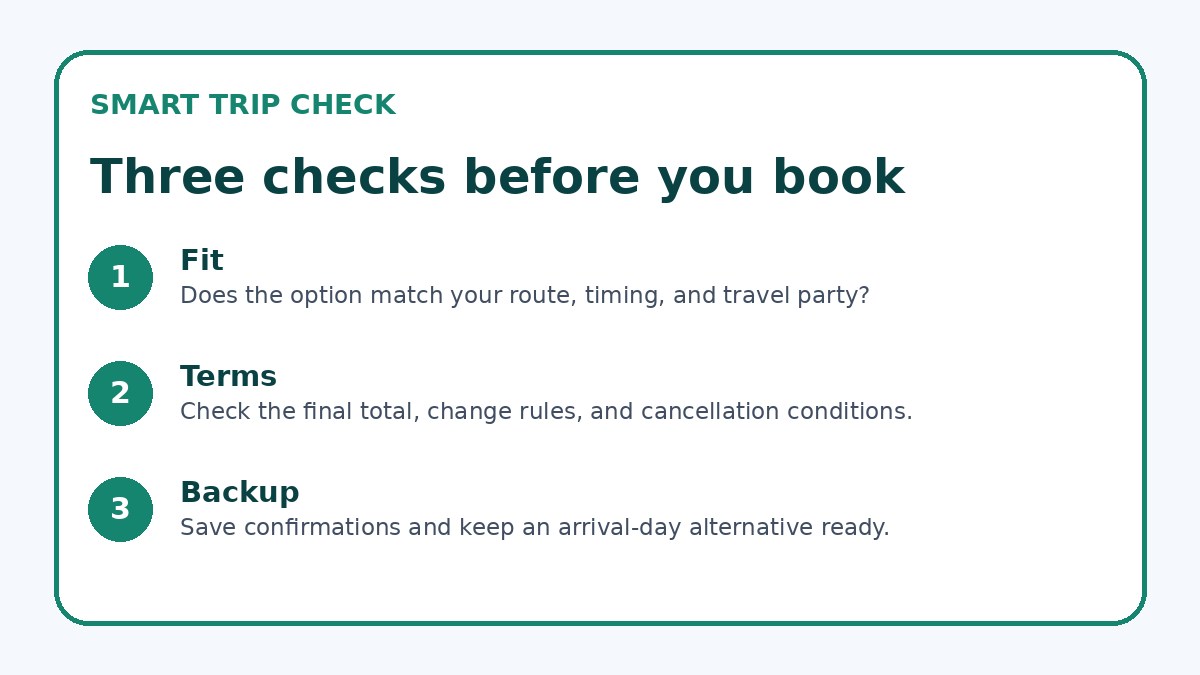
Choosing the most practical Sydney to Melbourne transport option for extra luggage comes down to limiting transfers, confirming terminal access, and having a clear disruption backup. Direct public services reduce handling when you verify luggage allowances and platform access in advance. Private hires or self-drive choices give strong door-to-door control for bulky or valuable items, at the cost of more planning around pickup, parking and vehicle size. Consider sending oversized items separately when you need to be mobile, and always confirm the provider’s final baggage rules on their booking page before you finalize plans. For current availability and comparisons, you can check a booking platform like Trip.com, and then verify terms on the chosen operator’s official site.
Continue planning
Check current options and final conditions
Use the provider page to confirm live availability, the final total, cancellation terms, and every condition that matters to your trip.
This evergreen planning guide was created with AI-assisted drafting and a structured quality review. It does not display live prices, schedules, availability, visa guidance, or provider rankings. Verify current details before booking. Some links are affiliate links; we may earn a commission at no additional cost to you.