If you want to make the most of a solo trip to Sydney, the practical question is simple: do you book as central as possible to save travel time, or pick a quieter hotel room that improves rest and privacy? For many solo travelers the right choice is a balance—stay centrally for a few nights to sightsee quickly, then move to a room-focused property for downtime. This article lays out the pros and cons of central versus comfort-first choices, the decision factors to weigh (safety, transit links, noise, facilities), and exactly what to check on a booking page. Use these guidelines to pick where to stay in Sydney so your itinerary, budget, and need for rest all fit together without unpleasant surprises.
See current options before you compare the details
Availability and final conditions change. Open Trip.com now or keep reading for the practical comparison.
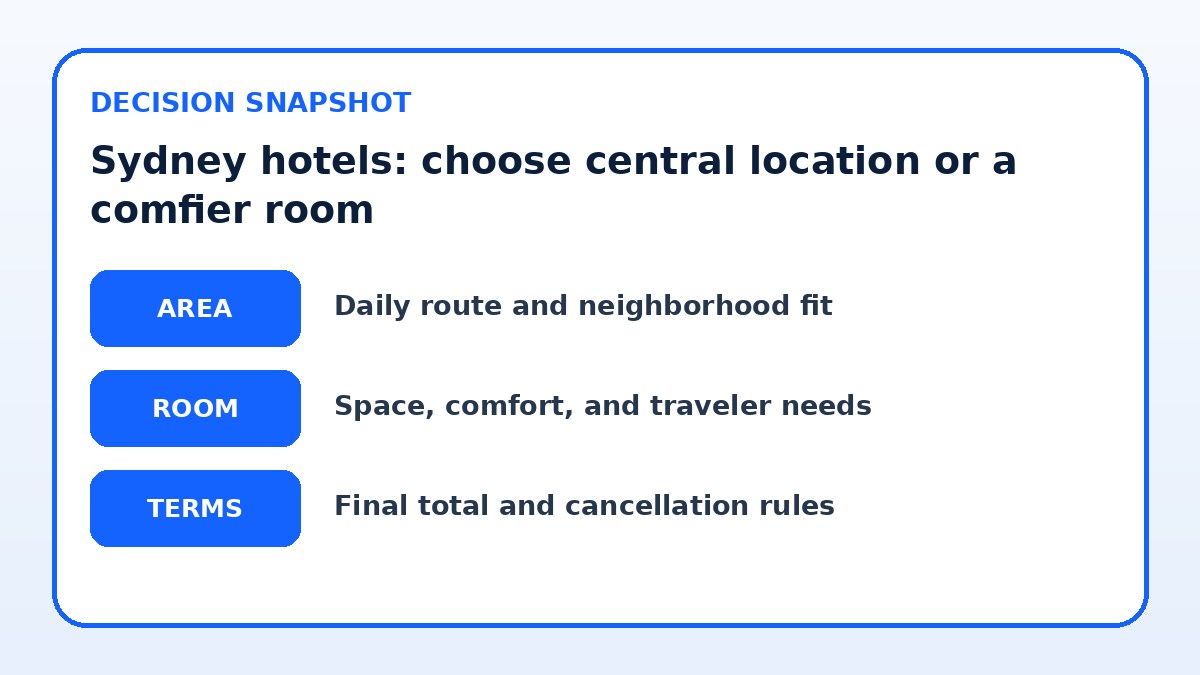
Deciding what matters most to your itinerary
Start by mapping your daily plans: how many early starts, evening returns, and cross-city trips are in your schedule? If most activities cluster around Circular Quay, the Rocks, Darling Harbour, or the CBD, a central location can meaningfully reduce travel time between activities and leave more time for museums, ferries, or walking. Solo travelers who want to maximize short stays—squeezing in many neighbourhoods across a limited number of days—gain the most from a central base, because each saved commute is time for one more experience.
If your trip prioritizes long morning surfs, day trips to the Blue Mountains, or remote work days where a quiet, comfortable room matters, a location slightly outside the core can be better. Consider whether you’ll spend evenings socialising or prefer to return early and sleep well. For photography or sunrise routines, being closer to specific harbours or beaches may matter more than central proximity to shopping districts.
Weighing transit convenience versus nightly comfort
Transit convenience is more than distance: check direct train, light rail, or frequent bus routes and how late they run. Sydney’s central and inner-suburban stations are generally well-connected, but transfer time, stairs, and luggage handling change the experience. Solo travellers should prioritise routes with fewer transfers after late nights and consider how much of your day will be lost waiting for infrequent services. Also review airport transfer options; a central location can be more convenient for a short airport link, but if you travel at odd hours, verify night transport alternatives.
Room comfort covers bed quality, soundproofing, workspace, storage, and private bathroom access. Hotels outside the CBD often offer larger rooms and better in-room desks for remote work. When noise and sleep quality affect your mood or productivity, those benefits can outweigh extra travel. Remember to check whether ‘comfort’ features—like blackout curtains, effective AC, and a reliable Wi‑Fi policy—are confirmed in the room description and recent guest feedback before you book.
| Approach | Best for | Tradeoff to check |
|---|---|---|
| Central CBD hotel | Maximizing sightseeing and short transit times | Smaller rooms and more street noise, especially near nightlife areas |
| Inner-suburb comfort hotel | Larger rooms, quieter nights, and better workspaces | Longer commutes to some attractions and possible transfer waits |
| Split-stay: central then comfort | First days of sightseeing, then restful downtime | Extra hassle and cost moving between hotels mid-trip |
| Apartment/serviced stay outside core | Extended trips needing kitchen space and privacy | Fewer daily check‑in services and sometimes less frequent cleaning support |
Ready to check the option that fits your plan?
Use your exact dates and traveler details so the provider page can show the current total and conditions.
Safety, neighbourhood vibe, and evening logistics
Safety for solo travellers involves well-lit streets, a steady flow of people at night, and easy access to transport after dark. Central areas typically have more police and tourist foot traffic, but some inner suburbs offer quieter, safer-feeling streets with local cafés and residents rather than nightlife clusters. Look at maps for the hotel’s proximity to major streets, well-known landmarks, or 24-hour services like convenience stores and medical clinics. Also factor in whether you’ll be arriving late or returning from evening events—short, busy routes are preferable to complex transfers.
Neighborhood vibe matters: some areas around the CBD can feel commercial and quiet after business hours; others near bars may be lively and noisy. If you prefer calm evenings, a mid-range neighbourhood with residential streets (Paddington, Surry Hills outskirts, or inner-city suburbs depending on exact location) might be a good compromise. Check recent photos, review comments about noise or nightlife, and, if necessary, contact the hotel to ask about their quietest room options and which floors are recommended for solo guests.
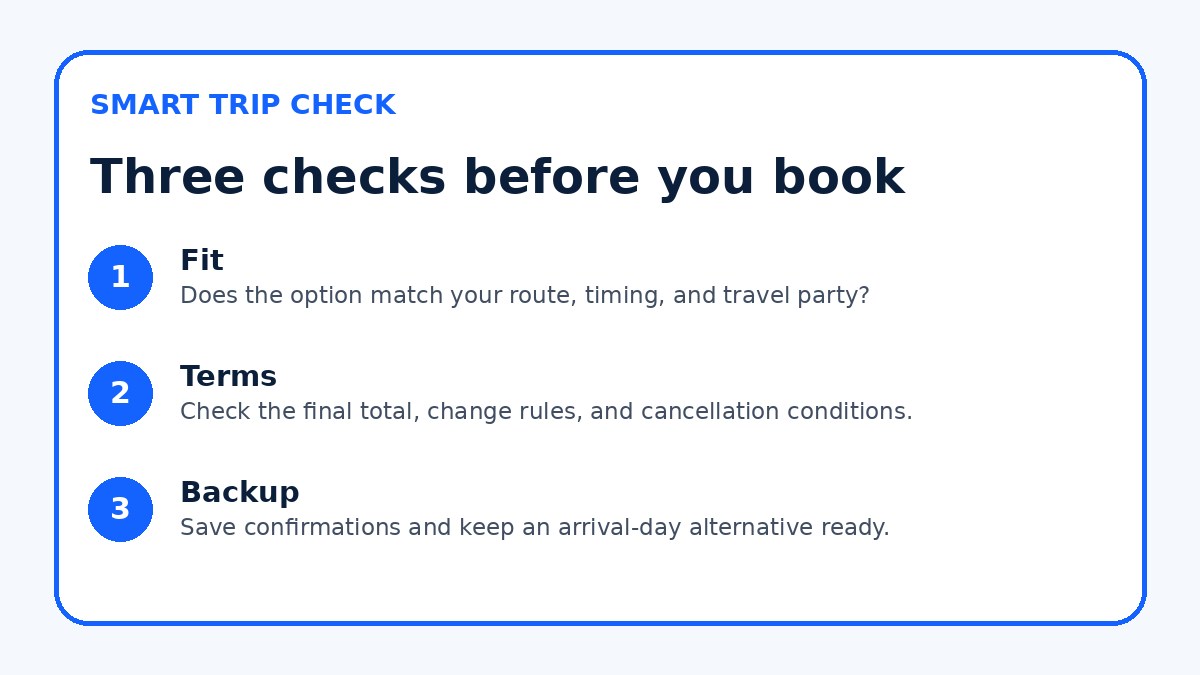
Before you book
- Use the map tool to measure door-to-door time from hotel to your top three planned activities at typical travel times.
- Confirm exact room size, bed type, and whether the room is on an upper floor or faces a busy street via the booking page or hotel message.
- Check the hotel’s description and recent reviews for explicit mentions of soundproofing, blackout curtains, and Wi‑Fi speed to match your sleep and work needs.
- Verify transit options after 10pm (train, light rail, bus, taxi rank) and plan the last-leg route from the hotel to avoid long walks alone at night.
- Ask the hotel directly if quieter rooms are available and what their process is for quiet-room requests or moves on arrival.
- Photograph the room on arrival and test lighting, plugs, and shower; if the room differs from the listing, request an alternate room or a written note from reception.
Practical checks on the booking page and at arrival
On the hotel booking page verify exact room dimensions, the bed type, floor level or lift availability, and whether the photos shown match the booked room category. Confirm cancellation flexibility and the provider’s stated cleaning and security measures, but don’t assume promotional text reflects current conditions—call or message the property for specifics about soundproofing, recent renovations, and the presence of security personnel if that matters to you. Use map view to check walking routes to the nearest transit stops, and check recent guest reviews for corroborating evidence on noise and service consistency.
At arrival, inspect the room for promised features: test windows for street noise, check Wi‑Fi speed early, and identify the nearest exit and elevator. If the room proves too noisy or cramped, ask reception about alternatives—front desk staff often hold different room types in reserve. If you change rooms, note transit times from the new location before committing to activities that evening. Document any differences between the booked description and reality with photos in case you need to discuss a partial refund or an upgrade with the property.
Frequently asked questions
Is it better to stay in the CBD or near the harbour for a first-time solo trip to Sydney?
For a first-time solo trip the CBD or Circular Quay area puts you close to major sights, ferries, and public transport, which simplifies navigation and reduces time spent transferring. That convenience matters when you want to see the Opera House, Royal Botanic Garden, and Harbour Bridge with minimal transit planning. However, harbour-side hotels can be busy and pricier; if restful nights and larger rooms are priorities, choose a nearby inner-suburb with a short commute rather than a central harbourfront address.
How do I evaluate noise risk from a hotel listing when I can’t rely solely on photos?
Look beyond photos: read recent guest mentions for words like ‘traffic’, ‘nightclub’, or ‘quiet’; prefer reviews from the last six months. Check the hotel’s placement on a street map—major roads and nightlife strips usually imply higher sound levels. On the booking page, confirm whether rooms face a courtyard or back street and ask the property whether their rooms include double-glazed windows or acoustic insulation. If noise is critical, request a room on a higher floor away from the street before arrival and confirm that request in writing if possible.
Should solo travelers split their stay between a central hotel and a quieter location?
Splitting a stay is a pragmatic way to balance sightseeing and rest—start centrally for easy access to major attractions, then move to a quieter, more comfortable property for the latter part of your trip. This approach reduces the stress of hauling luggage during busy sightseeing days while still giving you a restful base for work or early mornings. Factor the cost and time to move hotels, and book both properties with flexible check-in/out policies to maintain freedom if plans shift. Trip.com can be useful to compare current availability and conditions, but verify specifics on each provider’s final booking page.
Final planning note
There’s no single right answer for all solo travelers in Sydney—your best hotel choice is a function of itinerary, how much you value uninterrupted sleep, and whether you prefer saving transit time or enjoying a larger private space. Use a central hotel if you need quick access to attractions and public transport; choose a comfort-focused or suburban property if sleep quality, workspace, or longer stays matter more. Many travelers benefit from a split stay: central for sightseeing, then a quieter property to recharge. Before booking, verify room specifics, noise and transit details on the provider’s page, and communicate special requests to the hotel so your stay matches your expectations.
Continue planning
Check current options and final conditions
Use the provider page to confirm live availability, the final total, cancellation terms, and every condition that matters to your trip.
This evergreen planning guide was created with AI-assisted drafting and a structured quality review. It does not display live prices, schedules, availability, visa guidance, or provider rankings. Verify current details before booking. Some links are affiliate links; we may earn a commission at no additional cost to you.