If you’re a solo traveler planning a trip to Busan, the fastest way to reduce booking regret is to decide first whether location or room comfort will matter more for your days and nights. Location saves transit time and makes it easier to explore—especially around Haeundae, Gwangalli and Seomyeon—while room comfort affects sleep quality, privacy and how much you’ll use the room between excursions. Balance is personal: some solo visitors accept a compact, centrally placed room to maximize daytime wandering; others pick a quieter, larger room and tolerate longer commutes. Below I give an immediate, practical recommendation you can act on now, then unpack the tradeoffs, criteria to compare, and specific checks to run on hotel booking pages before you confirm.
Make a quick decision framework
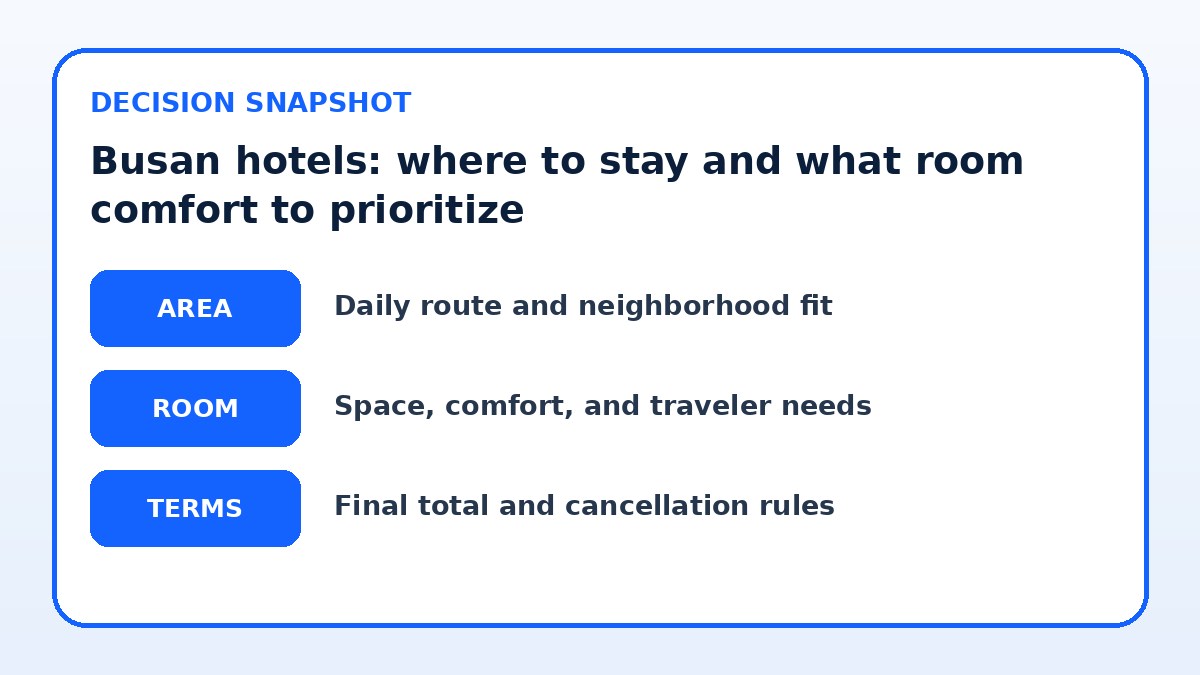
Start by asking three simple questions: how many hours per day will you be out exploring, do you need a dedicated workspace or peaceful sleep, and do you prefer social scenes or quiet streets? If you’ll be out from dawn to late evening, a compact room in a convenient neighborhood will usually free up time and lower local transport costs. If you’ll spend long stretches in the room working, resting, or simply recharging, prioritize square footage, natural light, and an uncluttered layout. Rank your priorities and use that ranking to filter search results quickly: choose ‘neighborhood’ first for high mobility or ‘room features’ first for downtime.
Translate your top priority into search filters when booking: if you value location, filter for neighborhoods near subway lines, major beaches, or transfer hubs and accept smaller rooms or capsule options. If room comfort is top, filter for room size, private bathroom, bed type, and mention of quiet or soundproof rooms; read photos carefully to judge usable space rather than total square meters. Use reviews to confirm whether the property’s description matches reality, but verify the provider’s official room facts for dimensions and included amenities on the booking page before payment.
Neighborhood tradeoffs: Haeundae, Seomyeon, Nampo and beyond
Neighborhood choice in Busan shapes most of the location-versus-comfort tradeoff. Haeundae and Gwangalli put beaches, restaurants and nightlife at your doorstep and usually shorten transit when you want to sightsee nearby; however, rooms here can be smaller or pricier for the same level of comfort. Seomyeon offers a lively shopping and transit hub with quick subway connections across the city, making it a smart choice if you want efficient day-to-day mobility. Nampo and the Jagalchi Market area give easy access to coastal attractions and a more local vibe but expect more tourist foot traffic and variable hotel sizes.
Staying a bit farther from main tourist nodes—on quieter residential streets or near smaller subway stops—can buy you larger rooms, calmer nights and often more authentic local cafés. The tradeoff is extra transit time; depending on where in the city you plan to visit, a 10–25 minute subway ride is usually acceptable and consistent. When choosing, map your likely daily loop: where you’ll eat, the attractions you’ll visit, and how late you’ll be out. If you’ll return late or solo at night frequently, prioritize well-lit streets and easy transit over minor savings.
| Approach | Best for | Tradeoff to check |
|---|---|---|
| Central compact room (Haeundae/Seomyeon) | Maximizing daytime exploration and nightlife access | Smaller room size, possible street noise, less private workspace |
| Larger quieter room in a residential area | Better sleep, remote work and longer stays | Longer transit times to main attractions and beaches |
| Mid-distance balance (near a subway hub) | Balanced commute and reasonable room size | Moderate cost and moderate noise depending on block |
| Guesthouse or hostel private room | Budget-conscious solo travelers wanting social options | Variable privacy and inconsistent room comfort |
Room comfort factors that matter most to solo travelers
For solo travelers, several room features disproportionately affect the experience: bed size and mattress quality, uncluttered floor space, noise control, lighting and a reliable workspace with outlets. A double bed or larger feels much more comfortable than a narrow single, and a small desk or ledge with nearby power outlets matters if you plan to use a laptop. Air conditioning and heating controls that are easy to manage improve sleep quality, and bathrooms with adequate hot water pressure and ventilation are worth verifying through photos and reviews. If you’re sensitive to noise, look for rooms described as ‘quiet’ or on higher floors.
Soundproofing is often under-described in listings, so use photos to assess whether a room faces the street or an interior courtyard and check guest comments specifically for mentions of noise. Photos that include windows and the street view give clues; avoid rooms with balcony photos showing nightlife below if you need quiet. For remote work or longer stays, check if the hotel offers laundry, a kitchenette, or a common lounge where you can stretch out between outings. Confirm all these specifics on the booking page—bed type, floor, view, and included services—and message the property if details are unclear.
Before you book
- Map your daily loop of attractions and meals to estimate acceptable transit time from potential neighborhoods.
- Filter search results for bed type, room size or ‘double’/‘twin’ labels and read room descriptions carefully.
- Inspect all room photos for usable floor space, window placement, and likely street/noise exposure.
- Contact the property via the booking page to confirm floor level, view, and soundproofing if these are decisive.
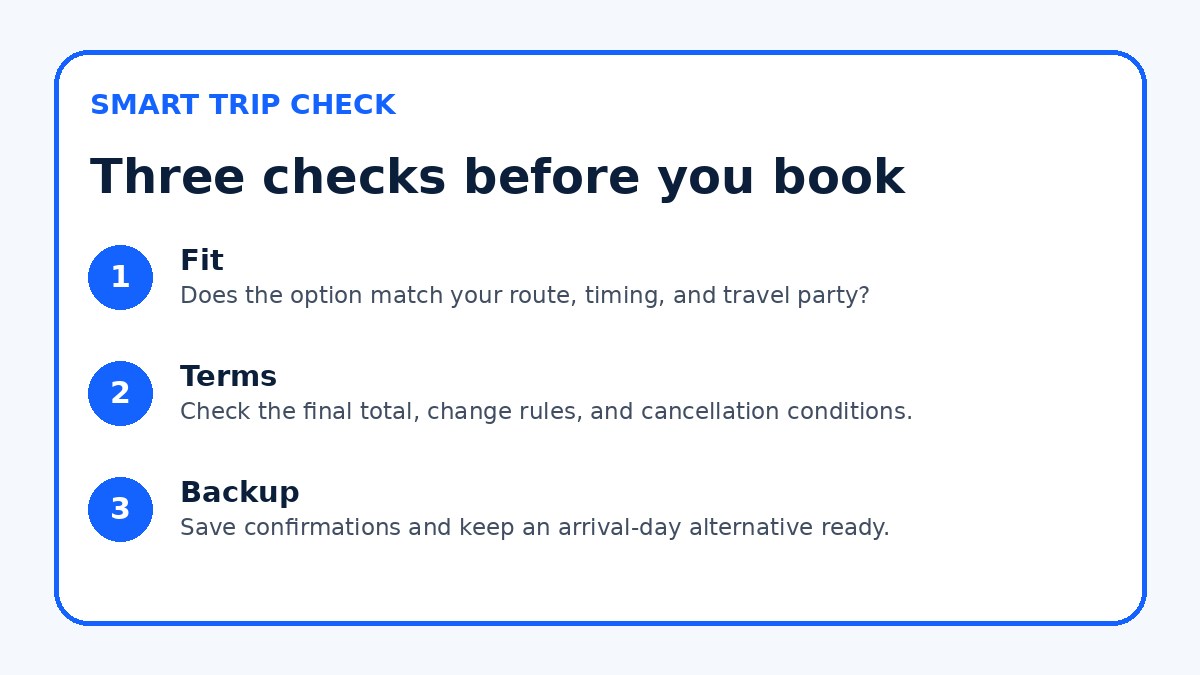
- Verify cancellation, check-in hours, and early/late luggage storage policies on the final provider confirmation page.
- Confirm the presence of reliable Wi‑Fi, power outlets near the bed or desk, and any workspace photos if you plan to work.
Practical checks to run on booking pages
Before you hit book, verify four concrete items on the hotel’s final booking page: the exact bed size and room dimensions or type, whether the room has windows and the view/floor, the cancellation and change policy, and what essential amenities are included (Wi‑Fi, AC, private bathroom, towels). Many listing summaries omit room size or show staged photos that mask usable space; the detailed room description or property policy often contains specifics. If anything is ambiguous—especially regarding floor level, window presence, or noise expectations—contact the property directly or use the booking platform’s messaging tool to ask and document their reply.
Also check practical arrival details: how to get from Busan Station or Gimhae Airport to the property, whether the hotel offers luggage storage for early arrivals or late departures, and whether there are convenience stores or 24‑hour options nearby. Don’t assume breakfast style or free parking—these are provider-controlled facts that can change and must be confirmed on the booking page. You may compare availability on Trip.com or other platforms, but always confirm the final room description and policies on the provider’s own confirmation page before paying.
Frequently asked questions
Should I prioritize being near Busan’s beaches or closer to subway hubs?
If your trip centers on beach time, evenings by the water, or seafood restaurants, prioritize neighborhoods like Haeundae or Gwangalli that put the coast within walking distance; you’ll save transit time and can return to your room easily during the day. If you plan broad sightseeing across Busan and nearby cities, staying close to a major subway hub such as Seomyeon or Nampo minimizes transfer times and gives flexibility for longer day trips. Evaluate how often you’ll cross the city each day—if you expect multiple long routes, subway proximity often beats beachfront convenience.
How can I tell from photos whether a room will actually be comfortable for solo work or rest?
Look for photos showing a clear desk or table with visible outlets, a properly sized chair, and a bed that appears wider than a narrow single. Windows that show a courtyard or skyline usually indicate less street noise than photos with busy streets below. Check for bathroom photos that reveal ventilation and counter space. If photos don’t show these essentials, read guest comments for specific mentions of ‘workspace’, ‘quiet’, or ‘good Wi‑Fi’, and ask the property directly for a room layout or assurance before booking.
Are hostels or capsule hotels a good fit for solo travelers balancing cost and comfort?
Hostels and capsule hotels are useful if you’re on a strict budget and prioritize location or social opportunities over private space. Private rooms in guesthouses can offer a middle ground: more privacy than a dorm but less cost than a full hotel. Capsules maximize location convenience but often sacrifice floor space and work surfaces. If you need reliable sleep, a workspace, or long stays, compare capsule or hostel private rooms to small hotel rooms on criteria like bed size, soundproofing, and included amenities, and confirm specifics on the booking page before reserving.
Final planning note
Balancing location and room comfort in Busan comes down to honest tradeoffs and a few focused checks. Decide whether you’ll mostly be out exploring or spending time resting and working; that choice should drive your neighborhood and room filters. Use photos and detailed room descriptions to judge usable space, and verify essential facts—bed size, floor, view, cancellation rules and included amenities—on the booking page before you pay. A short subway ride often unlocks better rooms without sacrificing too much convenience, so don’t hesitate to compare one or two options slightly farther out if they improve comfort significantly.
Continue planning
Check current options and final conditions
Use the provider page to confirm live availability, the final total, cancellation terms, and every condition that matters to your trip.
This evergreen planning guide was created with AI-assisted drafting and a structured quality review. It does not display live prices, schedules, availability, visa guidance, or provider rankings. Verify current details before booking. Some links are affiliate links; we may earn a commission at no additional cost to you.