If your family is weighing options for Busan to Gyeongju transport, focus first on ticket flexibility: refundable or changeable tickets reduce stress when plans shift, while restrictive fares cost less but lock you in. Start by deciding how likely your itinerary is to change—medical visits, weather, or a child’s nap can all alter timing—and aim to buy tickets that match that risk. Compare where providers allow free name or date changes, whether they issue seat reservations for families, and how refunds are processed. Before you hit purchase, check the final booking page for exact cancellation windows, change fees, and whether a credit or refund applies. Trip.com can be a place to compare availability, but always verify provider policies at checkout.
How ticket flexibility affects family travel choices
Ticket flexibility meaningfully alters the family travel experience because children’s routines and emergencies increase the chance of change. A flexible ticket reduces financial risk and administrative hassle if you need to move departure times, swap passengers, or cancel. For families, the value of flexibility goes beyond refundability: it includes the ease of rebooking seats together, transferring tickets between members, and the provider’s responsiveness to last-minute requests. When children are involved, small conveniences like the ability to delay a trip for a nap or to rebook if weather closes an attraction can justify a higher fare.
Flexible fares vary in what they allow. Some let you change travel dates without charge but levy a fare difference; others permit cancellations but refund only as a travel credit. A key step is to read the fine print on change windows (how close to departure changes are permitted), whether name changes are allowed, and how split-family bookings are handled. Also consider whether the provider offers family-specific options or bundled benefits like free child tickets under a certain age. Always balance the cost delta against how likely you are to need flexibility.
Comparing common transport types on this route
Bus and intercity coach services often offer many seats and occasional family discounts, but their fare rules differ: some tickets are flexible and refundable, others strictly non-refundable. Buses may allow easy same-day exchanges at a station counter, which appeals to families making spontaneous changes, but check whether seat assignments are guaranteed; on busy services you may not be seated together unless you reserve specific seats. For some families, the ability to board later on the same operator’s service can be more valuable than a formal refund policy.
Trains—regional or express services—tend to have clear, well-documented rules about changes and refunds; many allow date changes with a fee or require advance notice for refunds. Trains commonly permit seat reservations, which is a big plus for families wanting adjacent seating and a predictable ride. When comparing options, evaluate whether a reserved seat comes standard or is an add-on, and whether changing a reserved seat triggers additional fees. For both bus and train, confirm luggage and stroller policies and whether child fares are automatically applied.
| Approach | Best for | Tradeoff to check |
|---|---|---|
| Buy the cheapest non-refundable fare | Families with rigid, confirmed plans and low change risk | Lowest upfront cost but no refund or limited change options if plans shift |
| Choose a refundable or fully changeable fare | Families who expect schedule changes or who want peace of mind | Higher fare but reduces stress and potential out-of-pocket losses for last-minute alterations |
| Book a restricted fare plus ticket insurance or waiver | Families balancing cost and flexibility by outsourcing risk | Insurance adds cost and may have exclusions; read coverage limits carefully before relying on it |
| Use a flexible-family bundle or reserved-seat option | Families prioritizing adjacent seating and predictable travel times | May cost more and still carry change fees; great for comfort but not always the cheapest option |
Practical decision criteria for families
Make a short list of priorities before you compare tickets: how important are seat adjacency, the ability to change the date, quick refunds, and customer service in English or your preferred language? Rank those criteria and use them to weight options. For example, if your top concern is keeping children seated together, reservations and guaranteed family seating might outweigh a modest refund policy. If your schedule is fluid, prioritize refundable or changeable fare classes even if they cost more initially.
Next, gather the exact policy details you’ll need to verify at purchase: change cut-off times, fee structure (flat fee versus percentage), whether refunds are credited to the original payment method or issued as travel credit, and how name changes are handled. Also check operational items that affect families, such as onboard restroom availability, priority boarding for strollers, and help lines for same-day changes. Compare the total practical cost by adding potential change fees and the hassle factor, not only the headline fare.
Before you book
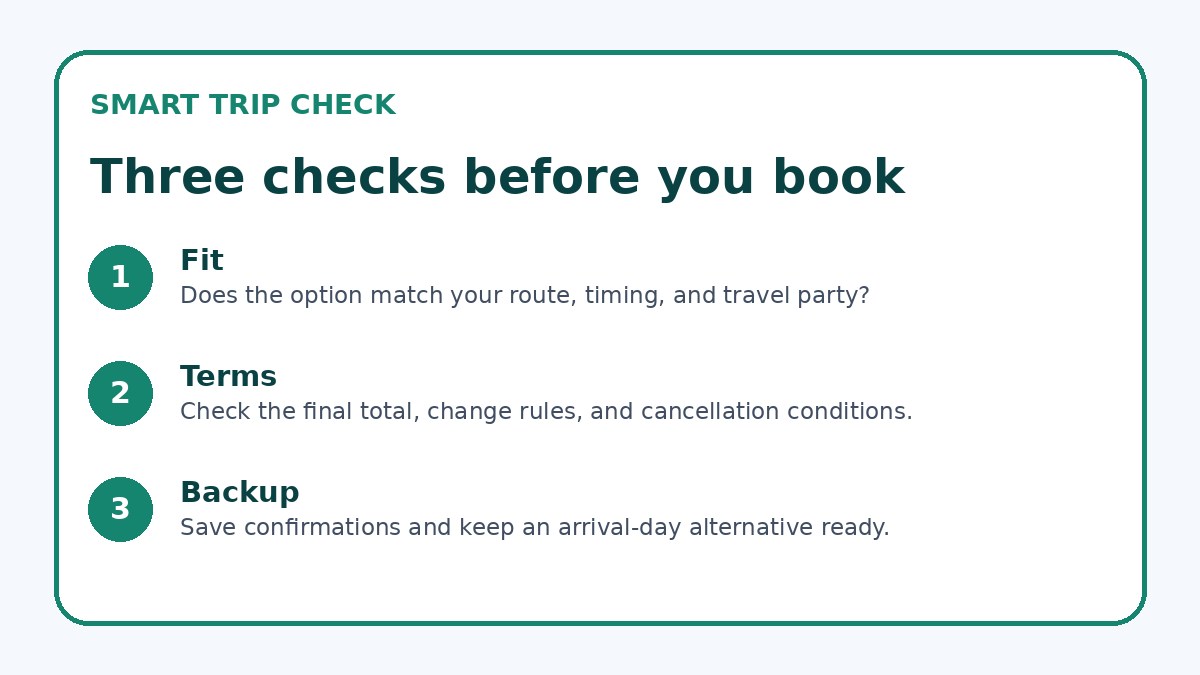
- Decide whether date-changeability, refundability, or seat reservations are your top priority before searching fares.
- On each provider’s final booking page, copy the exact change and refund policy text into your notes for future reference.
- If traveling with a stroller or car seat, confirm carriage rules and whether folding or gate-checking is required.
- Reserve seats together when available, and verify whether changing seats later will incur fees or be blocked.
- Save contact numbers for same-day changes and a screenshot of the purchase confirmation and policy terms.
- Compare total cost including potential change fees and any insurance or add-on fees—not just the headline fare.
Booking tips and what to confirm on the final page
When ready to buy, open each provider’s final booking page and confirm the policy text exactly as it will apply to your ticket. Look for explicit wording on change windows, whether a fare difference applies, and how refunds are processed. Note whether seat selection is included or optional and if there are restrictions for child tickets or stroller carriage. If the site offers a ticket insurance add-on, read that policy separately to see whether it covers the specific family risks you worry about—illness, delayed connections, or weather.
Keep a screenshot or PDF of the final booking terms and the confirmation email; these are useful if you need to request a refund or change. If you rely on a third-party reseller, verify that the reseller’s change and refund process is compatible with the operator’s rules—some resellers mediate changes differently. For language support or urgent same-day changes, save local customer service numbers. Finally, if you’re comparing multiple sellers, use one basket to calculate out-of-pocket totals including potential fees, and confirm all policies one last time on the provider’s booking page before payment.
Frequently asked questions
How do I decide whether to pay more for a flexible ticket or risk a cheaper fare with limited changes?
Start by estimating the probability your travel dates will change: consider children’s health, parental work flexibility, and weather sources of disruption. If the chance of change is low and the family can absorb the loss, a cheaper non-refundable ticket can save money. But if any factor makes changes likely—young children, medical needs, or uncertain connecting plans—paying for a flexible fare often saves stress and unpredictable costs later. Factor in whether the flexible fare includes seat reservations; for many families, guaranteed adjacent seats are worth the price differential.
Can I transfer or swap a train or bus ticket between family members if plans change?
Transferability depends on the operator and fare rules. Some services permit name changes or passenger swaps up to a certain cutoff before departure, sometimes for a fee; others strictly tie tickets to the original purchaser’s ID. If you anticipate the need to swap passengers—say, a grandparent replacing a parent—check whether the booking system or station counter allows name edits and whether identification will be required at boarding. Always confirm the exact process on the final booking page and keep proof of any allowed name change.
What should I check about refunds and credits when booking through a reseller or aggregator?
Resellers and aggregators can have different policies from the actual carrier—some process refunds faster, others issue travel credits or act as a middleman that requires extra steps. Verify whether refunds come from the operator or the reseller and how long processing typically takes. Confirm whether the reseller charges its own change or cancellation fees on top of the operator’s. If in doubt, compare the reseller’s stated policy on the booking page with the carrier’s official terms and save screenshots of both for reference.
Final planning note
For families traveling Busan to Gyeongju, ticket flexibility is a practical decision that balances cost, comfort, and the likelihood of disruption. Begin by ranking what matters most—refundable fares, seat reservations, or low upfront price—and compare providers’ final booking terms for exact change and refund rules. Remember that seat adjacency and easy same-day changes often matter more in practice than marginal savings. Always verify the full policy on the provider’s final booking page, keep documentation of the terms, and save customer service contacts. This approach helps you pick the fare that minimizes stress and keeps your family trip adaptable.
Continue planning
Check current options and final conditions
Use the provider page to confirm live availability, the final total, cancellation terms, and every condition that matters to your trip.
This evergreen planning guide was created with AI-assisted drafting and a structured quality review. It does not display live prices, schedules, availability, visa guidance, or provider rankings. Verify current details before booking. Some links are affiliate links; we may earn a commission at no additional cost to you.