If you need to get between Los Angeles and San Francisco on business, the practical choice usually favours a nonstop flight for speed and schedule predictability, provided you can accept airport transfers and security time. For travelers who need a quieter workspace, fewer transfer uncertainties, or want to avoid the airport routine, a train or a premium bus can be competitive when you factor in downtown stations and a comfortable mobile office. Driving gives complete control over schedule and stops, but it adds route variability and often unpredictable city driving at each end. The right option depends on three main tradeoffs: door-to-door journey time, how reliably you can work en route, and how much time you have to absorb transfers. Below you’ll find clear decision criteria, what to check before booking, and practical tips to make the trip efficient and stress-free.
How to compare total journey time and convenience
Business travelers often focus on scheduled transport duration, but the decisive metric is door-to-door time: think about the commute to the departure point, required check-in or boarding time, transfer time, and the trip from arrival point to your final meeting location. For flights, add time for travel to the airport, security screening, and ground transport on the arrival side; for trains or buses, factor in straightforward downtown access but also the likelihood of delays or slower speeds on certain sections. Drive time needs the same real-world lens—account for rush-hour traffic, parking time, and distance between venue and meeting.
To compare options efficiently, map each leg and give realistic buffer time for typical rush hours and transit reliability on the day of travel. If you have a fixed meeting time, work backwards from when you must be at your destination: that determines acceptable departure windows and whether the faster scheduled mode actually wins. Keep an eye on how each option affects your ability to arrive fresh and prepared; an earlier departure that avoids connection stress may be preferable to a marginally faster but tighter itinerary.
Work productivity and onboard comfort
If uninterrupted work time is a priority, evaluate the onboard environment for reliability of Wi-Fi, seating ergonomics, power outlets, and noise levels. Trains and some premium buses often provide the steadier workspace that business travelers prefer: room to set up a laptop, more relaxed security processes, and less interruption for brief taxiing or turbulence that can disrupt calls. Air travel gives speed but typically requires you to be offline during critical phases and may offer limited workspace unless you book amenity-rich cabins.
Assess how much you need to be online versus doing preparatory reading or offline tasks. For conference calls, make sure your chosen service supports reliable voice or video and that you have a tested mobile hotspot or onboard internet plan where applicable. If privacy and focused work are essential—contract reviews, confidential calls—consider reserving a seat zone or premium class that reduces interruptions, and always check the provider’s final booking page for exact onboard services and connectivity details.
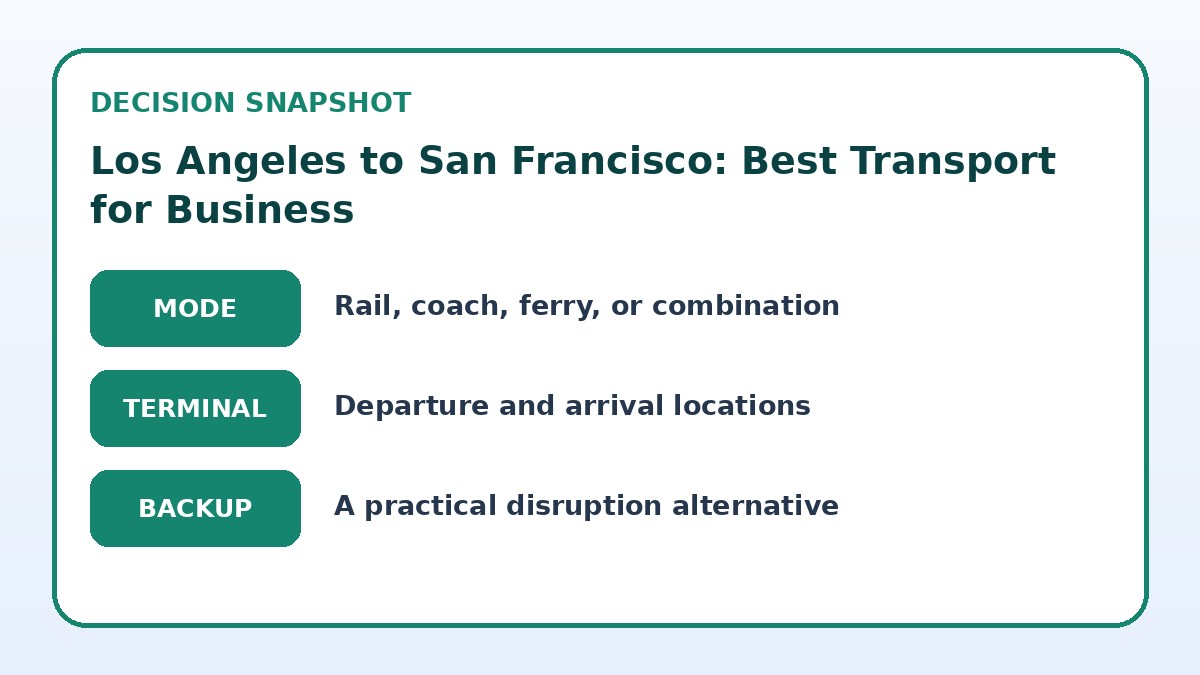
| Approach | Best for | Tradeoff to check |
|---|---|---|
| Nonstop flight | Fastest scheduled point-to-point travel when airports are convenient. | Adds airport transfer and security time; limited reliable workspace during critical phases. |
| Intercity train | Stable onboard workspace and direct city-center access. | Potential for slower scheduled speed and occasional track-related delays. |
| Premium intercity bus | Cost-effective, comfortable seating with useful onboard amenities. | Longer travel time than air and variable road traffic impacts reliability. |
| Driving (personal or rental) | Maximum schedule control, flexible stops, and equipment transport. | Unpredictable traffic, parking hassle, and limited ability to use travel time productively. |
Reliability, schedule flexibility, and contingency planning
Business plans change, so choose options that match your tolerance for delays and the cost of disruption. Frequent daily departures make it easier to shift to the next available service if you miss one; options with infrequent runs force more careful timing. For air travel, look at the number of daily nonstop flights and how easily you can rebook on the same day. For ground transport, consider alternative routes and whether you can switch to a later train or bus without heavy penalties.
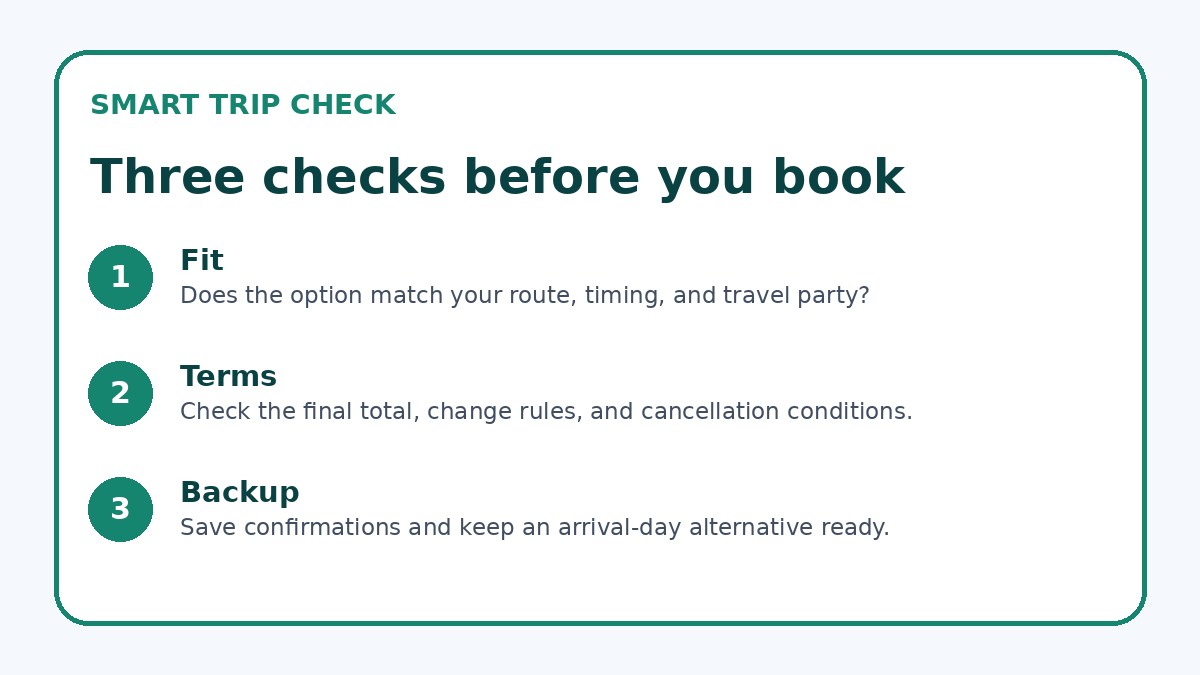
Prepare contingency plans for the most likely disruptions: road congestion, weather affecting flights, or mechanical delays on rail. Build buffer time into your schedule for critical meetings and know the change/cancellation terms on the transport operator’s final booking page before you commit. Keep contact details and real-time tracking tools at hand, and consider travel insurance or flexible fares if your itinerary carries high business costs from a missed meeting.
Before you book
- Map door-to-door times for each option including transfers, and choose the one with acceptable arrival buffer for your meeting.
- Verify the operator’s final booking page for exact onboard amenities, Wi-Fi availability, and seating options before reserving.
- Check change and cancellation policies so you can switch plans without excessive cost if your meeting time shifts.
- Confirm ground transit times to and from airports or stations for your planned travel windows, including typical rush-hour delays.
- If productivity en route is essential, test your mobile hotspot and bring noise-cancelling headphones and a compact laptop stand.
- Prepare a contingency plan (later service, alternate route, or virtual attendance) and share arrival updates with meeting hosts.
Cost tradeoffs and expense-account considerations
On expense reports, the cheapest visible fare isn’t always the most economical when you account for time lost, productivity, and ground transfers. Airlines might look faster on paper but can become costlier after factoring taxis or ride-shares and extra time away from work. Trains and premium buses may offer simpler station access and fewer ancillary costs, while driving shifts costs to fuel, parking, and potential tolls. Choose the mode that minimizes total business cost: time value plus actual out-of-pocket expenses.
When booking, verify company travel policies on preferred classes and allowable expense thresholds; check what documentation your expense system requires for taxis, parking, and onboard services. Always review the operator’s final booking page for fare rules, change penalties, and refund conditions so your finance team isn’t surprised later. Trip.com can be a place to compare current availability and conditions, but confirm provider-specific baggage policies, seating options, and fare-change rules on the operator’s official site before you finalize anything.
Frequently asked questions
Should I always choose a nonstop flight between Los Angeles and San Francisco for business?
Not always. Nonstop flights commonly minimize in-air time, but their advantage depends on airport transfer times and security wait. If your downtown-to-downtown travel time erodes the flight’s speed advantage, or if you need a reliable workspace during transit, a train or premium bus might be more practical. Evaluate the whole journey—how long it takes to get to each terminal, how long it takes to reach your meeting location after arrival, and how productive you can be en route—before assuming air travel is the best choice.
How do I decide between train and premium bus for working while traveling?
Compare seat space, table availability, and Wi-Fi reliability as primary productivity factors. Trains often have more stable work surfaces, wider aisles, and the option to move around comfortably; premium buses can be a good compromise if they advertise business-friendly features. Also consider station location: if a bus station is more convenient to your start or end point than the train station, that convenience can outweigh slight differences in onboard comfort. Always confirm specific services on the operator’s booking page before you buy a ticket.
What should I check about driving versus public transport for a business trip between these cities?
Calculate realistic driving time including rush-hour patterns and parking availability near your destination; add tolls and potential rental logistics if you need a vehicle. Consider whether road unpredictability might jeopardize meeting timing—if missing time is costly, public transport with frequent departures could be safer. If driving, plan exact parking options, and have an alternate plan (train or flight) ready if traffic conditions look severe on the day of travel.
Final planning note
Choosing the most practical option between Los Angeles and San Francisco for business hinges on three questions: how much door-to-door time you can afford, whether you must be reliably productive en route, and how tolerant you are of schedule risk. Nonstop flights win when minimizing travel time matters most and airport transfers are quick; trains and premium buses are compelling when you prioritize a stable workspace and downtown access. Driving gives flexibility but shifts risk and lowers in-transit productivity. Before you book, map full door-to-door times, confirm exact onboard amenities and fare rules on the provider’s booking page, and pick the option that best protects your meeting time and productivity.
Continue planning
Check current options and final conditions
Use the provider page to confirm live availability, the final total, cancellation terms, and every condition that matters to your trip.
This evergreen planning guide was created with AI-assisted drafting and a structured quality review. It does not display live prices, schedules, availability, visa guidance, or provider rankings. Verify current details before booking. Some links are affiliate links; we may earn a commission at no additional cost to you.