If you’re flying solo from Melbourne to Queenstown, decide first whether schedule flexibility or door-to-door convenience matters more — that choice shapes every search. For many solo travelers the tradeoff is simple: flexible fares and open-change policies let you manage unpredictable plans, while tighter connections and lower fares can save time and cash but bring higher risk if your itinerary shifts. Start by locking in exact travel dates, the airports you prefer in Melbourne and Queenstown, and any must-have connection timings (morning arrival, evening departure, etc.). With those details you’ll compare direct versus connecting patterns, minimum connection times, baggage transfer policies, and the fare-change or refund conditions shown on each carrier’s final booking page. Trip.com can be one of several places to check live availability, but always verify baggage allowances, connection protection, and cancellation/change rules on the airline or booking agent’s final confirmation screen.
See live routes for your exact travel day
Compare direct and connecting choices with the same baggage and traveler details.
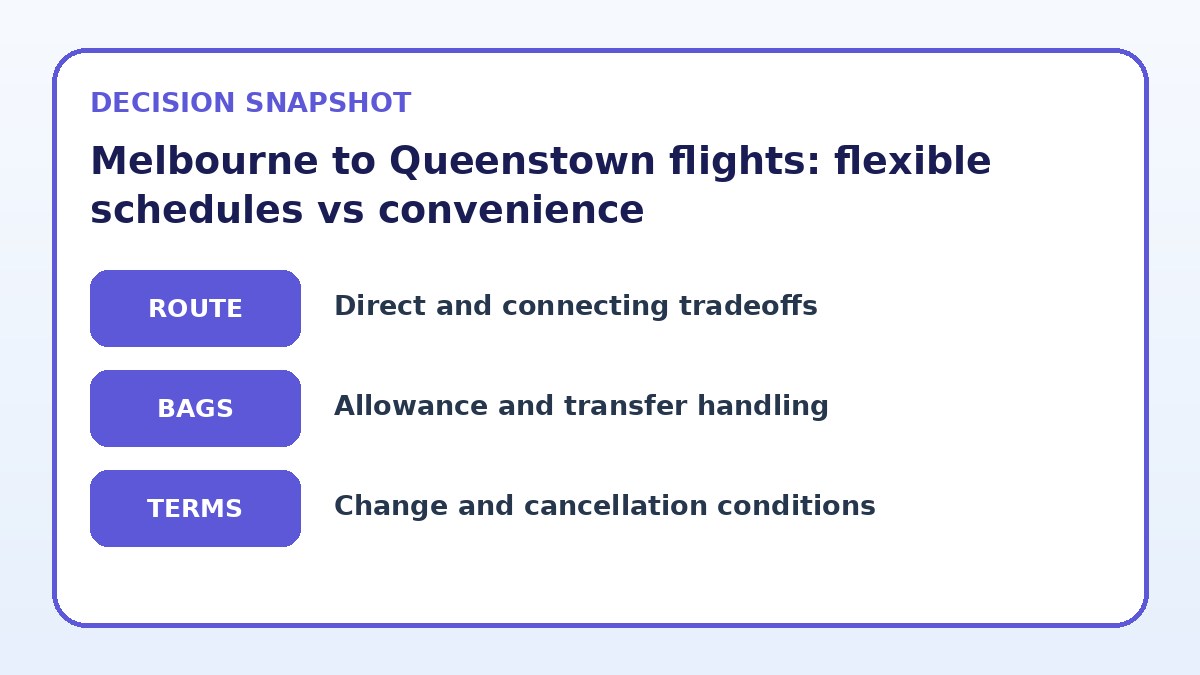
Routing: choose between direct, one-stop, and multi-stop options
Compare the travel time and convenience of different routing options by first identifying whether any direct services are available on your chosen dates. If direct options exist, they typically reduce airport transfers and the chance of missed connections — useful for solo travelers who value a simpler journey. If the only practical options are connecting flights, check whether the connection is on the same ticket and with the same operating carrier. Single-ticket itineraries usually include protected connections, meaning the carrier is responsible for rebooking if a delay caused by the airline breaks your journey.
For one-stop or multi-stop itineraries, map the connection airports and the minimum connection times they recommend. Longer layovers increase schedule flexibility if you want buffer time for delays, immigration, or grabbing a meal; they also increase overall travel time. When balancing convenience and flexibility, aim for a connection window that matches your risk tolerance: shorter windows save time but leave less margin for recovery from delays, while longer windows offer peace of mind at the cost of a longer day of travel.
Baggage and connection risk: protect your checked and carry-on items
Before booking, verify how each itinerary handles checked baggage through connections. If your trip requires separate tickets or multiple operators, you may need to collect and recheck luggage at the connecting airport, which increases both time and stress. Single-ticket itineraries more commonly transfer baggage automatically between legs; still, confirm this on the booking page and in your confirmation email. Carry-on allowances also vary by fare class and carrier — if you rely on a single carry-on to avoid rechecking, make sure the listed allowance meets your needs.
Assess your personal risk tolerance: as a solo traveler, you might prefer slightly longer transfer times for baggage transfer and customs clearance, especially if you have a single short connection or are traveling across different terminal types. If minimizing time in airports is more important, choose an itinerary with the fewest connections or single-operator connections and accept stricter change rules. Always note the counter at which baggage must be checked and whether the airline or the ticketing agent is responsible for any missed connections caused by delays.
Compare flight-selection strategies
| Flight strategy | Best for | Risk to check |
|---|---|---|
| Flexible refundable fare | Travelers who expect schedule changes or want peace of mind | Higher upfront cost in exchange for easy changes and refunds |
| Low-cost, restrictive fare | Solo travelers prioritizing lowest immediate fare and minimal baggage | Limited changes, extra fees for bags and seats, higher risk if plans shift |
| Single-ticket connecting itinerary | Those who want fewer risks on connections with moderate cost | May be slower than direct options but includes protected connections |
| Separate tickets or mixed carriers | Travelers chasing lower fares with flexible timing across legs | You assume missed-connection risk and possibly need more transfer time |
Recheck the complete itinerary
Confirm airports, connection handling, baggage, and change conditions before deciding.
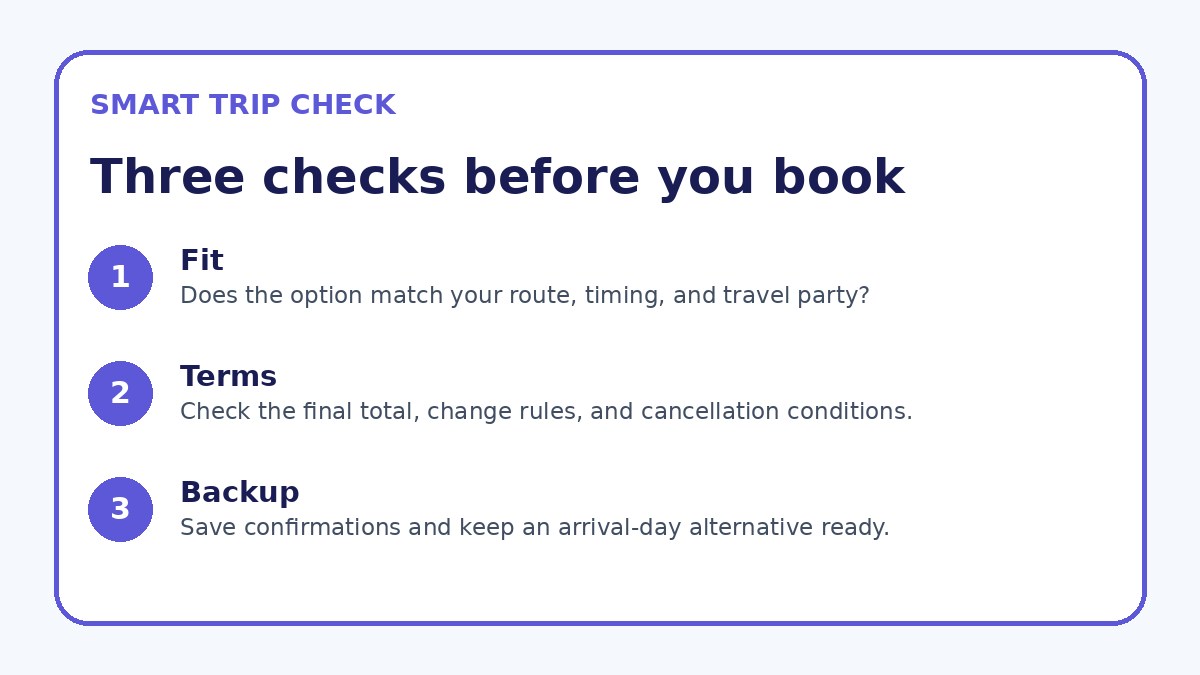
Schedule fit: match departure and arrival times to your plans
Think beyond flight time: arrival time in Queenstown influences ground transport choices and first-day plans. Early arrivals give you more afternoon to explore or attend meetings; late arrivals may force an overnight stay near the airport. When planning your schedule, include estimated time for disembarkation, baggage claim, and any customs or immigration steps. If you plan to catch a tour, rental car, or shuttle, confirm those providers’ operating times before finalizing flights and allow buffer time between scheduled arrival and ground bookings.
Solo travelers often trade off between shorter total travel time and greater schedule flexibility. If your schedule is fixed around an event or tour, prioritize flights that arrive with comfortable buffers. If your plans are fluid, consider fares with flexible change options — these let you shift departure or return times with lower penalties. Either way, lock in exact travel dates and note your earliest acceptable arrival and latest acceptable departure so searches and filters return only options that fit your real itinerary.
Flight details to verify
- Confirm exact travel dates, preferred Melbourne and Queenstown airports, and acceptable arrival/departure time windows before searching.
- Check the booking page for baggage transfer policy and whether checked bags are protected across connections on the same ticket.
- Compare fare conditions on the airline’s final confirmation screen for change fees, refundability, and included extras like seat selection.
- Choose connection windows that match your risk tolerance—longer if you want flexibility, shorter if convenience and speed matter most.
- If booking separate tickets, plan for self-transfer time and check whether you must reclaim and recheck luggage between carriers.
- Consider travel insurance or a fare with change protection that explicitly covers missed connections or schedule changes on your itinerary.
Fare conditions: how refundability, changes, and extras affect the choice
Carefully read fare conditions shown on the carrier or booking agent’s final booking page before purchasing. Look for change fees, refundability, and whether any fare credits are issued for schedule changes or cancellations. Some lower-cost fares restrict refunds and seat selection and may charge extra for carry-on or checked bags; others bundle these features but carry a higher upfront price. For solo travelers who value the ability to change plans without major cost, a ticket with flexible change terms or a refundable fare can be worth the difference.
Also check whether bundled add-ons (seat selection, priority boarding, extra baggage) are necessary for your comfort and how they affect change or cancellation policies. If you’re booking with separate carriers on separate tickets to save money, remember that fare protections differ — you may be responsible for missed connections if the first segment is delayed. In those cases, either buy protected connection products, leave generous connection windows, or consider travel insurance that explicitly covers missed flights on separate tickets.
Flight Guide questions travelers ask
Should I prefer direct flights or a cheaper one-stop itinerary when traveling solo?
Direct flights reduce the number of moving parts—no extra baggage handoffs or additional boarding passes—which lowers the chance of a missed connection and simplifies the journey for a solo traveler. One-stop itineraries often save money or expand time options, but they introduce extra risk and require managing a connection. If your priority is convenience and minimal hassle, lean toward fewer connections; if price or schedule range matters more, accept a one-stop route but build in a comfortable connection window and verify baggage transfer rules on the booking page.
How much connection time should I allow in Melbourne or during transit?
There’s no universal rule because recommended connection times depend on the airports and whether you’re changing terminals or airlines. As a solo traveler, favor additional buffer beyond the published minimums if you’re not comfortable rushing, especially when international arrival processes or baggage collection are involved. If you have to change carriers on separate tickets, allow extra time to reclaim and recheck bags. Always confirm the airline’s published minimum connection time and then add your preferred cushion before booking.
What should I verify on the airline or booking page right before paying?
Before you complete any purchase, verify (1) the full fare conditions for changes and refunds, (2) baggage allowances and whether checked bags transfer across connections, (3) whether the itinerary is on a single ticket and the operating carriers for each leg, and (4) any additional fees for seat selection or priority boarding. If you’re using a third-party site like Trip.com to find options, re-check these items on the airline’s official confirmation page because rules and responsibilities vary by carrier and ticket type.
Final decision note
On the Melbourne to Queenstown route, your principal decision is the tradeoff between schedule flexibility and convenience. Solo travelers who value predictability should prioritize single-ticket itineraries or refundable/flexible fares, even if that means a higher fare or longer total travel time. If saving time or money is the key goal, a low-cost fare or mixed-ticket approach can work — but accept the need for longer transfers, thorough baggage checks, and a careful review of fare rules. Assemble exact travel dates, preferred airports, and tolerance for connection risk before searching, and verify baggage transfer and change conditions on the carrier’s final booking page to ensure the option you pick matches your real-world needs.
Continue planning
Check current options and final conditions
Use the provider page to confirm live availability, the final total, cancellation terms, and every condition that matters to your trip.
This evergreen planning guide was created with AI-assisted drafting and a structured quality review. It does not display live prices, schedules, availability, visa guidance, or provider rankings. Verify current details before booking. Some links are affiliate links; we may earn a commission at no additional cost to you.