If you plan to bring extra luggage to Bali, deciding whether to rent a car comes down to space, rules and predictable costs. Practically: self-driving helps when you need control over stops, luggage stowage and schedule, but only if the rental’s fuel policy, mileage allowance and baggage terms support your plan. Before booking, confirm how the company measures mileage, what triggers extra-kilometer fees, whether fuels are charged prepay or at return, and whether roof racks, larger trunks or extra-seat arrangements are allowed or charged. Also read the insurance wording for agreed driver limits and excluded luggage claims. This article gives the straightforward recommendation first, then steps to verify policies, how to reduce friction at pickup and return, what to watch in the insurance wording, and non-driving alternatives if renting a car doesn’t actually improve your trip.

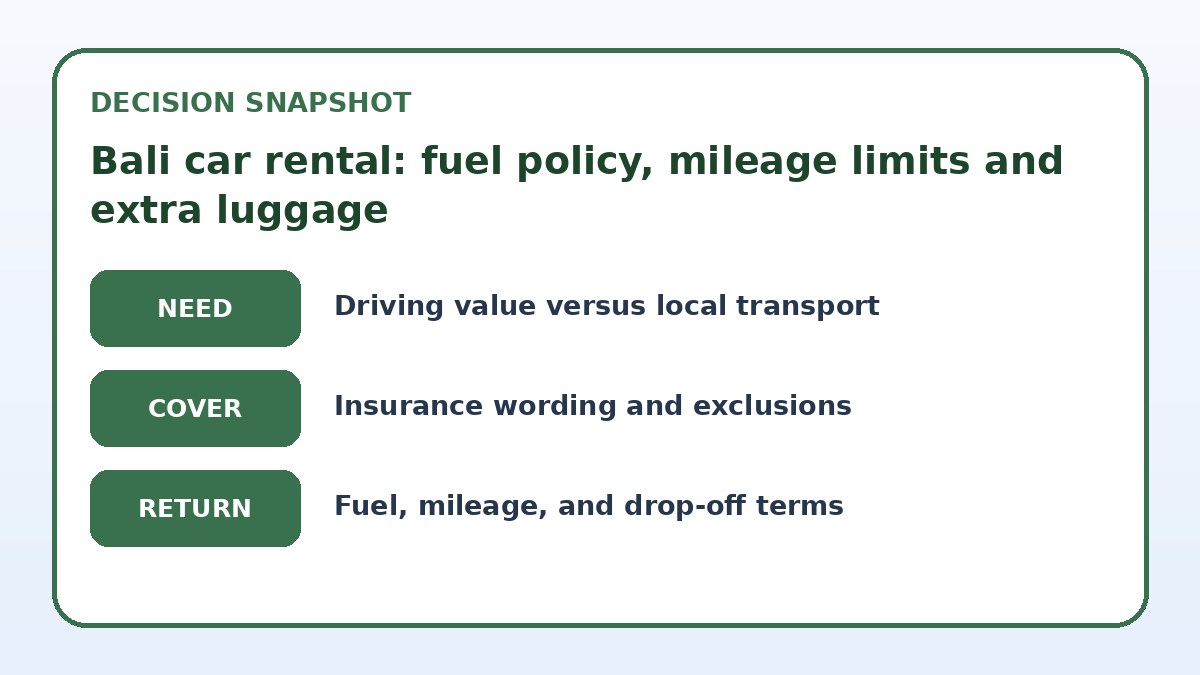
Deciding if driving truly improves your Bali itinerary
Start by mapping where you’ll go and how much luggage you’ll carry. If you’re hopping between multiple villas across southern Bali or exploring remote areas like East Bali, a car can provide flexibility and protect luggage from exposure during transfers. But driving adds tasks: finding parking at busy tourist spots, handling narrow roads, and arranging for extra storage if your suitcases overflow the trunk. Consider whether a single larger vehicle or planning fewer transfers will lower overall handling risks when you have bulky items.
Compare door-to-door time and the friction of loading and unloading luggage with the convenience of not driving. If your plan involves mostly airport-hotel transfers and short local trips, prearranged airport transfers or a private driver who helps with luggage may be simpler and cheaper than a car rental once fuel and mileage fees are added. Use this decision to guide what to verify next: does the rental’s trunk size, roof-rack policy, mileage cap and fuel rule align with the distance and baggage you expect?
Decide whether driving earns its place
| Mobility strategy | Best for | Cost or friction to check |
|---|---|---|
| Self-drive rental | Travelers who need full control of timing, long-distance routing and secure storage of multiple suitcases. | You must manage fuel, mileage limits, and insurance exclusions yourself; parking and local driving rules add complexity. |
| Private driver/driver-for-day | Groups or families with lots of luggage who want door-to-door assistance without fuel or mileage worries. | Higher per-day cost than a basic rental and less flexibility for spontaneous detours without extra charges. |
| Airport/private transfer service | Short itineraries or arrivals/departures where luggage handling and punctuality are the priority. | Limited use beyond transfers; may be less economical if you need multiple long-distance hops during your stay. |
| Ride-hailing and local taxis | Short moves across towns with light luggage or when you prefer not to deal with vehicle paperwork. | Can be awkward with oversized or many bags; repeated hires add up and availability can vary by area and time. |
Check live rental choices only after the route test
Use the exact driver, dates, pickup point, and return plan to compare current conditions.
What to check on fuel, mileage and extra-luggage rules
Fuel policy: identify whether the rental uses a ‘full-to-full’, ‘prepaid fuel’ or ‘full-to-empty’ approach. Full-to-full usually avoids extra fuel charges when you return with a full tank, but confirm how refueling is validated—some companies expect the tank to match a photographed gauge or an attendant’s reading. Prepaid fuel often looks convenient but can leave you paying for unused liters. Ask how fuel is measured at return and whether they accept receipts or only in-person inspection, and verify any refuelling service fees.
Mileage and luggage rules: confirm the included daily or total kilometers and the per-kilometer overage rate. If you expect long drives, ensure the allowance covers them or that unlimited mileage is available. For extra luggage, ask whether rooftop boxes, longer wheelbase vehicles, or an upgraded class are offered, and whether fitting roof racks or boxes is allowed in their insurance. Request explicit wording on excess baggage charges and what counts as oversized or hazardous items—this avoids arguments at drop-off.

Compare the full rental conditions
Confirm insurance wording, exclusions, deposit, fuel, mileage, and return terms on the final page.
Insurance wording, pickup/return friction and practical tips
Insurance terms often contain critical exclusions. Look for wording on third-party liability, collision damage waiver (CDW), and what’s excluded regarding personal items left in the car. Some policies reduce cover if the vehicle is used on unpaved roads, outside specified areas, or if equipment like roof boxes is fitted without prior agreement. Ask how deductibles are handled, whether waivers can lower them, and whether extra driver names are covered. If you rely on a credit-card insurance supplement, confirm the car category and rental terms on the provider’s final booking page to ensure compatibility.
Pickup and return friction can erode the benefit of having a car. At airport counters, long queues, limited luggage space in shuttle routes and required vehicle inspections can delay you. Ask the rental how they handle trunk measurements, whether they offer help loading heavy bags at pickup, and what evidence they use for pre-existing damage or fuel levels on return. Photograph the car, fuel gauge, and trunk area at pickup. If you’re short on time or uncomfortable with local driving conditions, the non-driving fallback below can avoid these hassles.
Car rental terms to verify
- Confirm the rental’s exact fuel policy wording (full-to-full, prepaid, or other) on the final booking page and ask how fuel levels are verified at return.
- Verify the included mileage allowance, the per-kilometer overage fee, and whether unlimited mileage is available as an option.
- Ask whether roof boxes, roof racks or larger-boot vehicles are allowed and whether equipment rental or installation carries an extra charge.
- Read insurance exclusions for baggage and theft—get clear instructions on how to file a claim locally and what documentation is needed.
- Photograph the vehicle (interior, trunk and fuel gauge) at pickup and save timestamps and counter receipts for refuelling or damage claims.
- Compare a driver or private transfer option from your booking platform (including Trip.com if you use it) if the rental’s baggage or mileage rules don’t fit your plan.
Non-driving fallback: when to choose drivers, transfers or local transport
If the rental terms for fuel, mileage or baggage don’t fit your plan, pick a non-driving strategy that still respects luggage needs. Private airport transfers or a hired driver-for-the-day can offer door-to-door service and luggage assistance without the need to monitor fuel or mileage limits. These options put the responsibility for vehicle paperwork and insurance on the provider; still, confirm luggage allowances and whether extra suitcases incur an equipment or vehicle-size surcharge.
Public transport and ride-hailing (like Grab) work well for light or moderate luggage on short hops but become awkward for multiple big bags. Combining a single private transfer for arrival with local taxis or scooters for short trips can balance cost and convenience. Wherever you book—whether a local operator, international aggregator or Trip.com—read the provider’s final booking page to verify luggage policies, vehicle size, fuel rules, and cancellation terms before you commit.
Car Rental & Road Trip questions travelers ask
Will a rental company charge me for luggage stored in the trunk or on the roof?
Policies vary. Some companies include normal luggage in the trunk without extra charge, while others levy fees for oversized items or require you to rent a roof box. Always check the rental’s specific luggage or equipment section on the final booking page. If you expect bulky items, ask for written confirmation that those items are permitted and whether any extra insurance or equipment fees apply. Photographing the packed trunk at pickup helps if a dispute occurs at return.
How do mileage limits work and what happens if I exceed them in Bali?
Mileage is typically quoted as a daily or total allowance; exceeding it usually triggers a per-kilometer fee noted in the rental terms. Before booking, calculate your planned distances, include drives to remote areas, and factor in the extra kilometers for local detours. If the allowed mileage is too low, request unlimited mileage or a higher allowance and confirm the rate for overage. The provider’s final booking page will state the exact overage rate and how it’s charged—keep that number for your budget planning.
Does insurance cover damage to luggage or theft from the car in Bali?
Coverage depends on the insurer and rental company. Many basic policies focus on vehicle damage and third-party liability and exclude personal possessions left in the car. Some rentals offer optional insurance for personal effects or recommend separate travel insurance. Verify the policy wording on the booking page and ask how claims for stolen luggage are handled locally, what police reporting is required, and what proof you must submit. If personal items are valuable, prefer keeping them with you or in secure luggage compartments rather than leaving them visible in the vehicle.
Final decision note
Bringing extra luggage to Bali doesn’t automatically mean you should rent a car, but it does mean you must read the fine print before you book. Start by matching your route and luggage profile to the rental’s fuel policy, mileage allowance and equipment rules. When those align, self-driving gives flexibility and luggage control; when they don’t, a private driver or transfer generally reduces hassle and hidden costs. Always verify the exact fuel measurement method, mileage fees, any equipment charges, and insurance exclusions on the provider’s final booking page. With those checks done, you can choose the mobility approach that protects your bags and your budget.
Continue planning
Check current options and final conditions
Use the provider page to confirm live availability, the final total, cancellation terms, and every condition that matters to your trip.
This evergreen planning guide was created with AI-assisted drafting and a structured quality review. It does not display live prices, schedules, availability, visa guidance, or provider rankings. Verify current details before booking. Some links are affiliate links; we may earn a commission at no additional cost to you.