Practical answer first: for many families, renting a car in Melbourne unlocks flexible day trips to the Great Ocean Road, Mornington Peninsula and nearby national parks — but it only makes sense if your itinerary includes at least one multi-stop day beyond Melbourne’s inner suburbs. If your plan centers on inner-city museums, playgrounds and suburbs like St Kilda, public transport plus occasional rideshares is often easier and cheaper. This guide helps families decide whether to drive, how to shape a kid-friendly route, what insurance wording to verify, how to avoid pickup and return friction, and what to do if you opt not to drive. Read the quick tradeoffs below, then use the route, insurance, pickup/return and non-driving sections to make a final call and assemble an actionable checklist before you book.
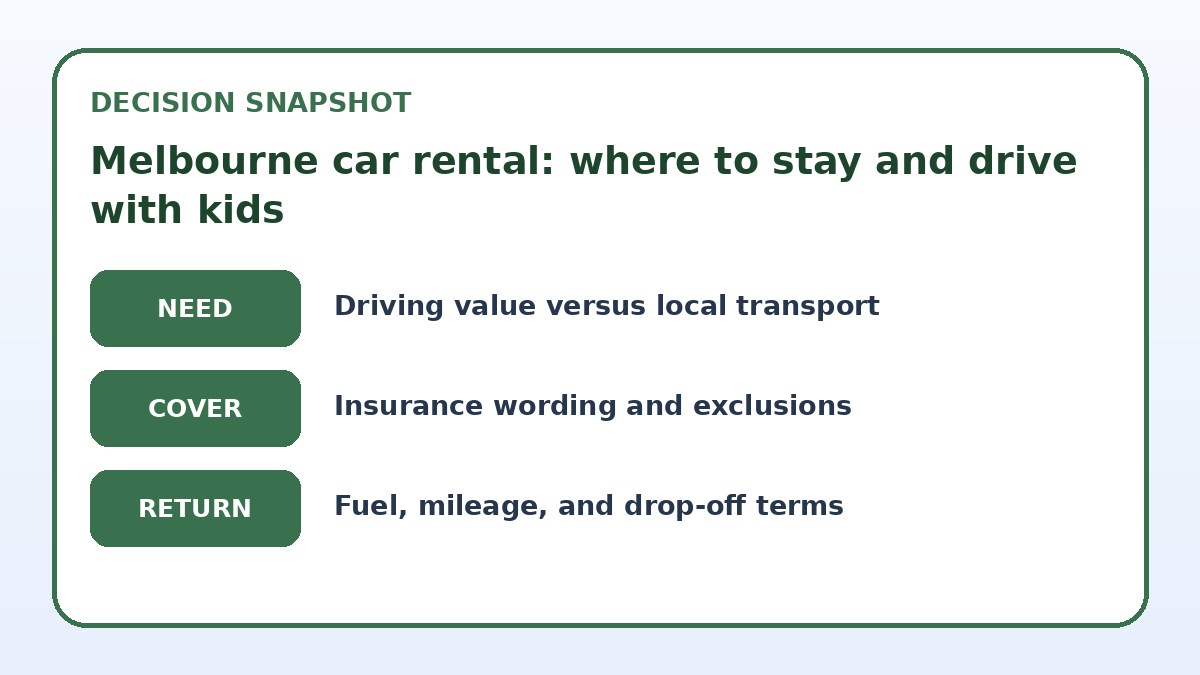
Does driving genuinely improve your family itinerary?
Start by mapping what you want to see and how often you’ll leave the inner city. Driving shines when your days include long, flexible routes — coastal loops along the Great Ocean Road, staggered stops on the Mornington Peninsula, or reaching national parks where public transport is sparse. Consider the ages and stamina of your children: toddlers need extra stops, and teens may appreciate scenic detours. If your plan has two or more days that require leaving Melbourne early or returning late with multiple stops, a rental is likely worthwhile.
By contrast, if most activities are clustered in central Melbourne and nearby suburbs, the city’s trams, trains and buses handle crowds and drop-off points efficiently. Parking fees, traffic at peak times, and the mental load of navigating unfamiliar roads with children can outweigh the freedom of a car. Use a simple spreadsheet or map to tally travel time vs activity time for each day — when driving cuts more than an hour per day from your door-to-destination time on two or more days, it usually pays.
Decide whether driving earns its place
| Mobility strategy | Best for | Cost or friction to check |
|---|---|---|
| Full multi-day rental | Families planning multiple remote day trips and flexible overnight stays. | More freedom but higher cost, insurance complexity, and parking headaches in the city. |
| Single-day car hires | Families who want one scenic driving day without managing a full rental. | Avoids multi-day fees but requires packing, seat changes and coordination each hire day. |
| Public transport plus rideshares | Families staying in inner Melbourne with short daily outings and light luggage. | Cheaper and less stressful, but limits access to remote coastal or national-park routes. |
| Guided coach or private day tours | Parents who prefer guided itineraries and no driving responsibility for scenic routes. | Convenient and educational, but less flexibility on timing and stops with children. |
Check live rental choices only after the route test
Use the exact driver, dates, pickup point, and return plan to compare current conditions.
Insurance, damage liability and what to verify on booking pages
Insurance terminology matters. Before you book, read the final rental provider’s policy page for key wording: the standard excess (your maximum liability if the car is damaged), what third-party liability covers, and any exclusions like off-road use, unsealed roads, or driving on private property. Check whether child seats are covered or available for a fee, whether additional drivers can be added without big surcharges, and whether any credit-card or travel-insurance policies you hold will reduce or replace the vendor’s excess. These specifics determine whether the rental will leave you with unexpected costs after an incident.
Also verify statements about fuel policy, tolls and fines, and what the provider expects at return (fuel level, cleanliness). If the booking page lets you pre-pay a damage waiver or excess-reduction package, confirm the exact reduction and the non-refundable nature of that purchase. If you rely on a third-party insurance or your credit card for collision damage waiver, take screenshots and carry proof. Treat the supplier’s final terms page as the contract: if its wording conflicts with an earlier quote, the final page controls what you’ll owe.
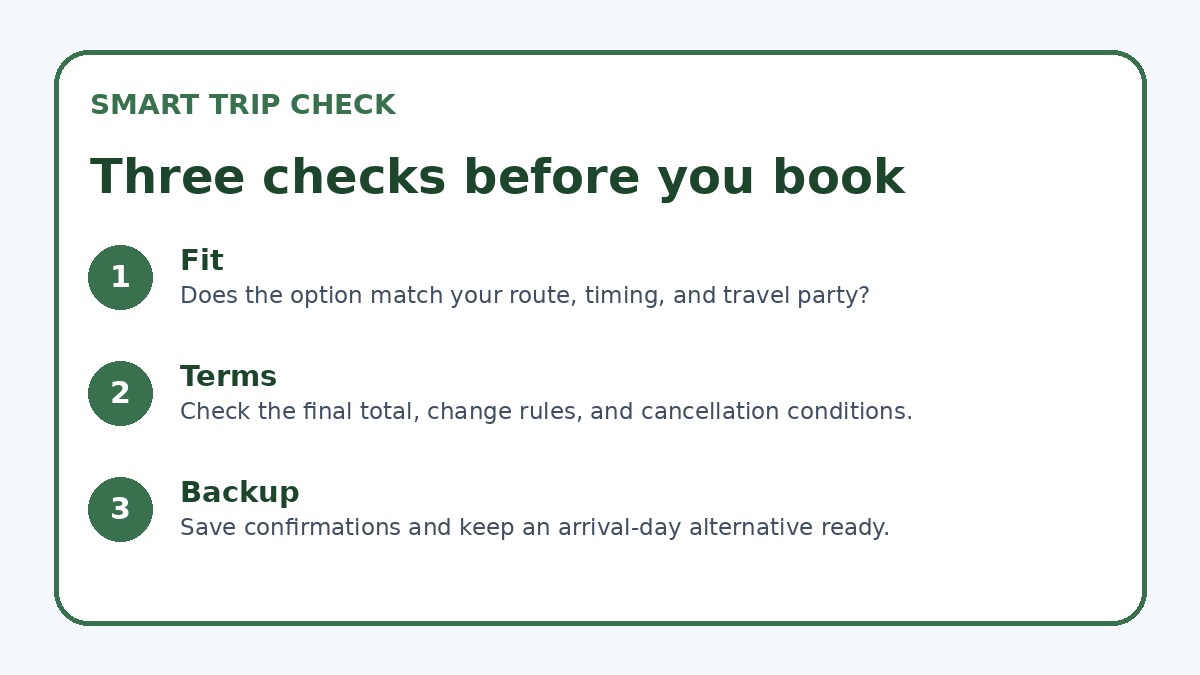
Compare the full rental conditions
Confirm insurance wording, exclusions, deposit, fuel, mileage, and return terms on the final page.
Pickup and return friction: airport vs city terminals and child-seat logistics
Pickup and return are the most overlooked time sinks on family rentals. Airport counters can be busy, with queues and shuttle waits to remote depots; city offices may require navigating busy streets with tired kids. Factor in time for stroller folding, child-seat fitting, and a calm orientation in the lot. If travelling through Melbourne Airport, check whether the provider’s counter is inside the terminal or at an offsite depot that needs a transfer. If minimal hassle is a priority, choose a pickup location that balances convenience and shorter waits even if it costs slightly more.
Bring or reserve child seats in advance: Melbourne has strict standards, and availability at short notice can be limited. Compare the time cost of fitting child seats yourself versus paying for professionally installed seats at pickup. For returns, confirm opening hours for late arrivals and whether there is a key-drop box to avoid long queues. On the booking page, verify the exact pickup address, hours, late-return fees, and whether the agent will inspect the vehicle in your presence — resolving disputes is much easier with a joint inspection.
Car rental terms to verify
- Map each day’s start and end points, and calculate door-to-destination time with and without a car to see real time savings.
- Read the rental provider’s final terms page for excess amounts, off-road exclusions, additional driver fees and child-seat availability.
- Reserve child seats or bring certified seats and confirm installation assistance at pickup to avoid delays at the lot.
- Choose pickup and return locations with family-friendly hours and on-site inspection; screenshot the exact address and opening times.
- Plan fuel and toll handling: note nearest petrol stations near your return point and whether the booking requires a full-to-full return.
- Prepare a non-driving fallback by listing train/tram stops, rideshare estimates, and one-day hire or coach tour options for scenic days.
Non-driving fallback: how to plan if you skip a rental
If you decide not to drive, build a blended mobility plan. Use Melbourne’s dense tram and train network for inner-city days; they serve major museums, parks and beaches with frequent service. For single long day-trips, book one-day car hires or small-group coach tours that handle driving, navigation and parking. Rideshares and taxis simplify short hops with children and can be budgeted per trip; pre-book larger vehicles when you have luggage or a stroller. Planning these alternatives in advance preserves flexibility while avoiding the full responsibility of a multi-day rental.
Additionally, consider staying in a family-friendly neighbourhood with easy transit links to your must-see sites to reduce transfers. Schedule one longer hired-car day for a scenic loop if you still want a driving experience without managing a whole rental. Keep an emergency list of local car-hire desks and reputable day-tour operators so you can switch to driving mid-trip if weather or kids’ energy makes it attractive. This hybrid approach keeps options open while limiting the friction that full-time driving can bring.
Car Rental & Road Trip questions travelers ask
Is driving in and around Melbourne safe for families with young children?
Driving in Victoria is generally safe, but safety depends on route choice and driver experience. Major highways and well-maintained coastal roads are suitable for family travel, while some rural routes have unsealed sections or narrow bridges where insurers may restrict coverage. Keep children secured in appropriate child restraints required by local law, observe posted speed limits, and plan extra stops to avoid driver fatigue. Before you book, verify any road-surface restrictions on the provider’s policy page and ensure your insurance covers the specific roads you intend to use.
Do providers include child seats and what should I check before pickup?
Many providers offer child seats for an extra fee but availability can be limited. On the booking page, check the exact type of seat (rear-facing, forward-facing, booster), whether professional installation is provided, and the cost. If you use your own certified seat, bring proof of certification and instructions for installation. At pickup, inspect the seat for damage, ask staff to confirm correct fitting, and test latching before you leave. Keep the provider’s booking confirmation and photographs of the installed seat in case of later disputes.
How do tolls, parking and city restrictions affect the decision to rent in Melbourne?
Tolls are common on some freeways near Melbourne and on certain bridges; check whether the rental includes a toll device or charges administrative fees for toll processing. City parking varies by neighbourhood — meters, time limits and paid parking structures are common near tourist spots and beaches. Some areas have resident-only restrictions. Review the provider’s toll policy, parking guidance on their final terms page, and research parking options near your planned stops. Budget time and cost for parking and consider choosing accommodations with included parking to simplify logistics.
Final decision note
For most families, the question isn’t whether renting a car is possible in Melbourne but whether it genuinely improves your days. If your plan includes multiple long, multi-stop day trips to coastal routes or parks, a multi-day rental usually pays back in flexibility. But if your stay focuses on central Melbourne, combine public transport with occasional single-day hires or guided tours to keep logistics simple and stress low. Before booking, verify insurance wording, child-seat availability, pickup/return specifics, and any toll or fuel rules on the provider’s final booking page. If you want a quick place to compare current availability and conditions, Trip.com can be one source, but treat the provider’s terms as the contract you’ll sign.
Continue planning
Check current options and final conditions
Use the provider page to confirm live availability, the final total, cancellation terms, and every condition that matters to your trip.
This evergreen planning guide was created with AI-assisted drafting and a structured quality review. It does not display live prices, schedules, availability, visa guidance, or provider rankings. Verify current details before booking. Some links are affiliate links; we may earn a commission at no additional cost to you.