If you’re taking Amsterdam to Berlin transport and travelling with extra luggage, the practical decision is to choose the option that minimizes hand-carry transfers and uncertain lifts while giving predictable transfer time and accessible terminals. That usually means prioritizing services with straightforward station access, easy luggage handling policies, and realistic buffer time for transfers, rather than the absolute fastest advertised travel time. Ahead of the day, map door-to-door walking distances, confirm luggage allowances and storage options, and plan for at least one disruption backup that doesn’t force you to haul everything across town. This article explains how to compare rail, coach, and combined routes; what to expect at terminals; how to reduce transfer friction; and an actionable backup and packing checklist so you arrive in Berlin from Amsterdam without needless drama.
Choosing between rail, coach, ferry, or mixed options
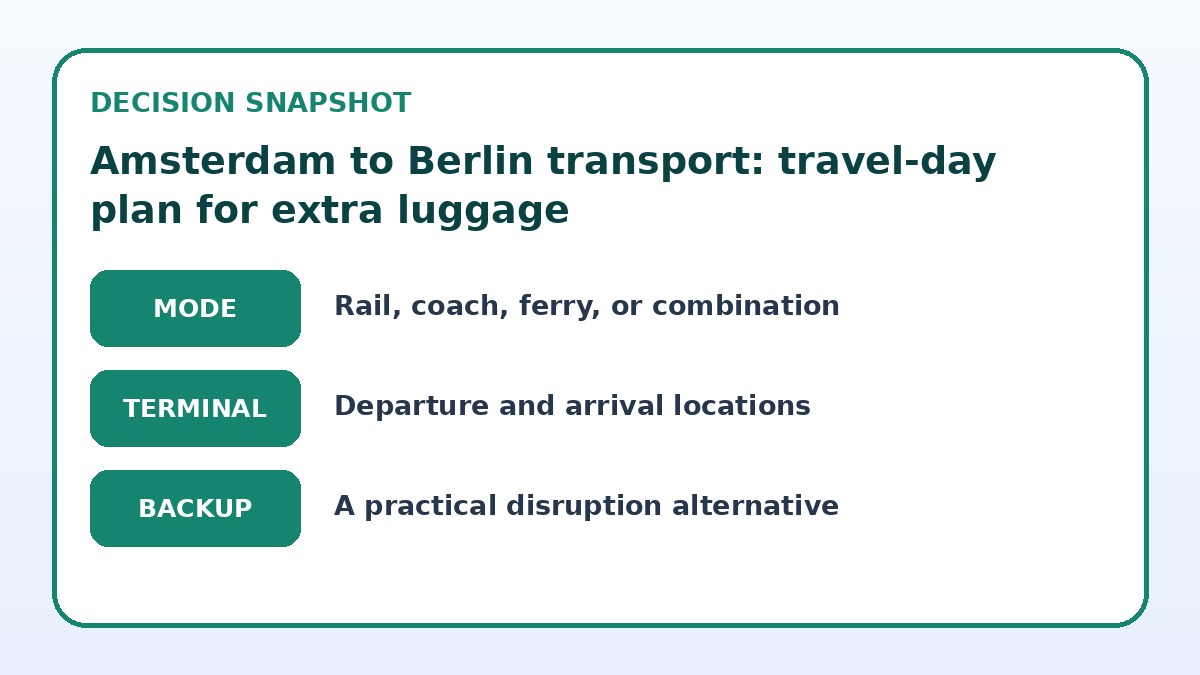
Start by comparing how each mode handles luggage and transfers instead of focusing solely on advertised travel time. Trains typically allow larger bags without extra handling, boards at central stations that often have elevators, and permit easier transfers to taxis or short urban rail segments. Coaches can be straightforward if they load luggage into dedicated bays, but expect longer waits at roadside stops and possible curb-level handling. Ferries are rare for Amsterdam–Berlin but can be part of a combined route; they add complexity and typically require you to manage luggage between different terminal levels.
Mixed options — for example, a coach to a major rail hub then train onward — can balance price and convenience but add transfer points where heavy bags become a pain. When weighing these, calculate door-to-door convenience: how far is the drop-off from your lodging to the terminal entrance, are ramps and lifts available, and how many times will you need to move your luggage between vehicles or platforms? Prioritize routes with the fewest forced carries, direct curbside access, or reliable porter/assistance services if you have many or heavy items.
Choose the end-to-end journey plan
| Journey approach | Best for | Friction to check |
|---|---|---|
| Direct intercity train | Passengers wanting fewest transfers and onboard luggage access | May require fixed station access and checking elevator availability before booking |
| Long-distance coach | Travelers prioritizing lower handling complexity at departure/arrival curbside | Luggage stored in bays and roadside stops can add waiting and lifting at each end |
| Mixed coach + rail | Those balancing cost and convenience with one planned transfer | Adds a transfer point that increases handling and timing risk with heavy bags |
| Private transfer or taxi for part/all route | Maximum door-to-door ease and minimal baggage handling | Higher cost and variable availability; verify vehicle size and luggage capacity |
Check live intercity options
Look beyond the ride itself and compare terminals, transfers, luggage, and arrival fit.
Terminal fit and luggage handling on the travel day
Assess each terminal’s layout before you leave. Major Amsterdam stations and coach terminals vary in elevator and escalator coverage; similarly in Berlin, arrivals can be in sprawling stations where platform-to-exit walks are long. Check the operator’s booking page or station map to verify elevator and barrier-free access, and identify the easiest entrance for taxis or ride-hails so you don’t end up hauling luggage across pedestrian zones. If you have bulky cases, look for stations with staffed assistance or porters—confirm availability and any extra charges on the provider’s final booking pages.
Consider how luggage is handled at boarding and arrival points: coaches load in bays requiring lifting into holds, while trains usually allow luggage in racks or dedicated areas in carriages. If your bags are heavy, bring a wheeled trolley or choose a bag with robust wheels. Also plan short-term storage options at both ends: many major stations offer lockers or left-luggage services—check sizes and opening hours in advance. If you plan an overnight between legs, book accommodation near the terminal to minimize transit with luggage.
Timing flexibility: windows, buffers, and realistic schedules
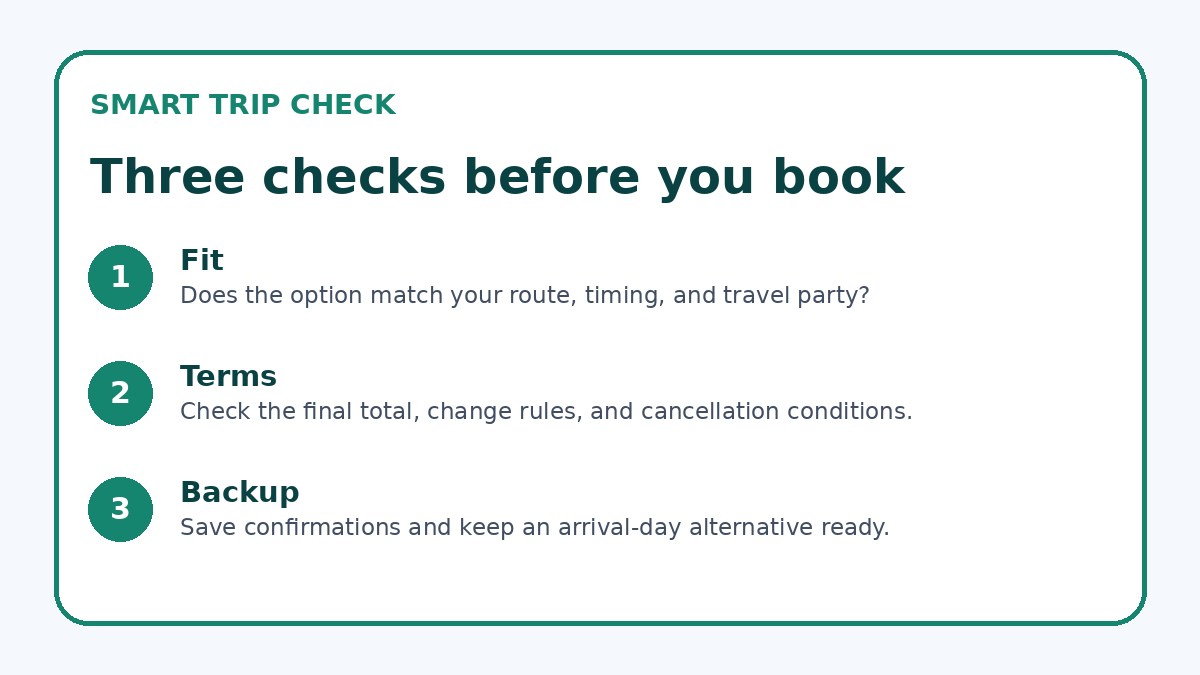
With extra luggage, build bigger buffers into your itinerary. Allow extra time for checking in luggage bays, finding accessible entrances, and potential elevator congestion. If you’re taking a connecting service, aim for a longer connection than the minimum suggested by booking systems; a 30–45 minute cushion is often reasonable when you must move heavy suitcases across platforms or between vehicles. Also stagger your bookings to avoid tight back-to-back arrivals and departures—arrive early enough to troubleshoot but not so early that you’re stuck waiting with bags in busy station concourses.
Flexibility means choosing tickets and providers that allow modest date or time changes without onerous penalties if possible; verify change and refund terms on the provider’s final booking page. If your journey spans peak travel times or holiday periods, factor in additional time for boarding queues and platform access. When comparing options, lay out three realistic schedules—fastest with tight transfers, moderate with generous buffers, and slowest with same-day overnight—and mentally commit to the moderate plan for reduced stress.
Compare the practical alternatives
Use the final page to confirm what is actually offered on your dates and save a workable fallback.
Intercity travel checklist
- Measure and weigh each suitcase; confirm luggage dimensions and allowance on the final booking page for your chosen carrier.
- Map the exact route from your lodging door to the departure terminal entrance, identifying nearest elevator-equipped access points.
- Reserve or pre-book assistance (porters, wheelchair service) via the carrier or station if you need help with heavy bags.
- Plan connections with at least a 30–45 minute buffer when moving suitcases between vehicles or platforms.
- Locate and note nearby left-luggage lockers or staffed storage at arrival and departure stations, including opening hours.
- Save contact details for operators and a local taxi firm; download an offline map that highlights the simplest barrier-free walking paths.
Disruption backup and door-to-door practicality
A resilient travel day plan includes a clear backup for common issues: cancelled segments, full baggage bays, or elevator outages. Identify a nearby alternative station or coach stop, local taxi ranks that can take heavy bags, and at least one secure luggage storage option near each terminal. Save contact numbers for your chosen operators and a local taxi company, and store offline maps that highlight the shortest, barrier-free walking route from the terminal to nearby hotels or transport links.
Don’t underestimate door-to-door practicality: figure out how you’ll get from your Amsterdam lodging to the departure point and from the Berlin arrival to your overnight address, including how many times you’ll need to lift or wheel each bag. If a transfer involves stairs or narrow passages, consider hiring a transfer service or booking a taxi that can accept multiple suitcases. Finally, confirm any luggage restrictions and buy an additional small flexible ticket or a short taxi segment if it keeps you from multiple forced carries—this often costs less than the strain and time of numerous transfers.
Rail & Intercity Transport questions travelers ask
Can I bring oversized luggage on trains between Amsterdam and Berlin?
Many long-distance trains accommodate large suitcases, usually stored in racks or designated carriage areas, but specific limits and placement rules vary by operator. Before booking, check the carrier’s baggage policy on the official booking page for size, weight, and any required advance notice. If space seems limited or you have unusually large items, consider contacting customer service to confirm whether you should reserve assistance or a special luggage service. Always have a plan for last-mile transport if station elevators or ramps are out of service.
Is a coach better than a train for heavy suitcases on this route?
Coaches often handle luggage in underfloor bays so you don’t carry bags up stairs, making them practical for bulky items at curbside. However, that involves lifting at loading and unloading and potential waits if the crew handles luggage slowly. Trains tend to let you keep bags with you onboard, reducing the risk of misplaced items and enabling quicker exits on arrival, but not all stations have simple elevator access between platforms and street level. Compare door-to-door effort rather than travel time alone to decide which mode suits your needs.
How should I handle an unexpected cancellation with heavy luggage?
If a segment is cancelled, prioritize a solution that minimizes moving your luggage multiple times: look for another direct service, a taxi transfer to a nearby station with accessible boarding, or an overnight option near the terminal. Check the operator’s official page for rebooking rules and alternatives, then call customer service if online options are unclear. If you must carry bags across town, seek staffed help at the station or use a local taxi large enough for your items; having saved taxi numbers and knowing locker locations reduces stress during disruptions.
Final decision note
Traveling from Amsterdam to Berlin with extra luggage is mainly a matter of reducing forced carries and planning realistic buffers. Choose the mode that minimizes transfer points and fits your mobility needs—direct trains for fewer handoffs, coaches for curb-level loading, or private transfers when door-to-door simplicity matters most. Before you book, verify luggage rules, elevator and porter availability on the carrier or station pages, and map your exact door-to-door route. Prepare a disruption backup that avoids multiple re-handlings, and pack a small day bag with essentials so you can manage unexpected waits or overnight stays without digging through large suitcases.
Continue planning
Check current options and final conditions
Use the provider page to confirm live availability, the final total, cancellation terms, and every condition that matters to your trip.
This evergreen planning guide was created with AI-assisted drafting and a structured quality review. It does not display live prices, schedules, availability, visa guidance, or provider rankings. Verify current details before booking. Some links are affiliate links; we may earn a commission at no additional cost to you.