The first decision after your meeting or checkout is simple: how to get to the airport with the least stress and the most predictable arrival window. For business travelers in Boston that means weighing luggage and party size, the risk of delays from traffic or a disrupted schedule, clarity about pick-up and drop-off points, and how your final destination (hotel or office) fits with the airport terminal you’ll use. Make that decision while you still have your flight time and accommodation confirmation open: you’ll need them for realistic timing and to book the right vehicle. Below is a short practical answer up front, then the tradeoffs and decision criteria to help you choose and prepare a Boston airport transfer that matches a tight schedule and business priorities.
Check options for your arrival details
Use your flight, luggage, party size, and accommodation address to compare current choices.
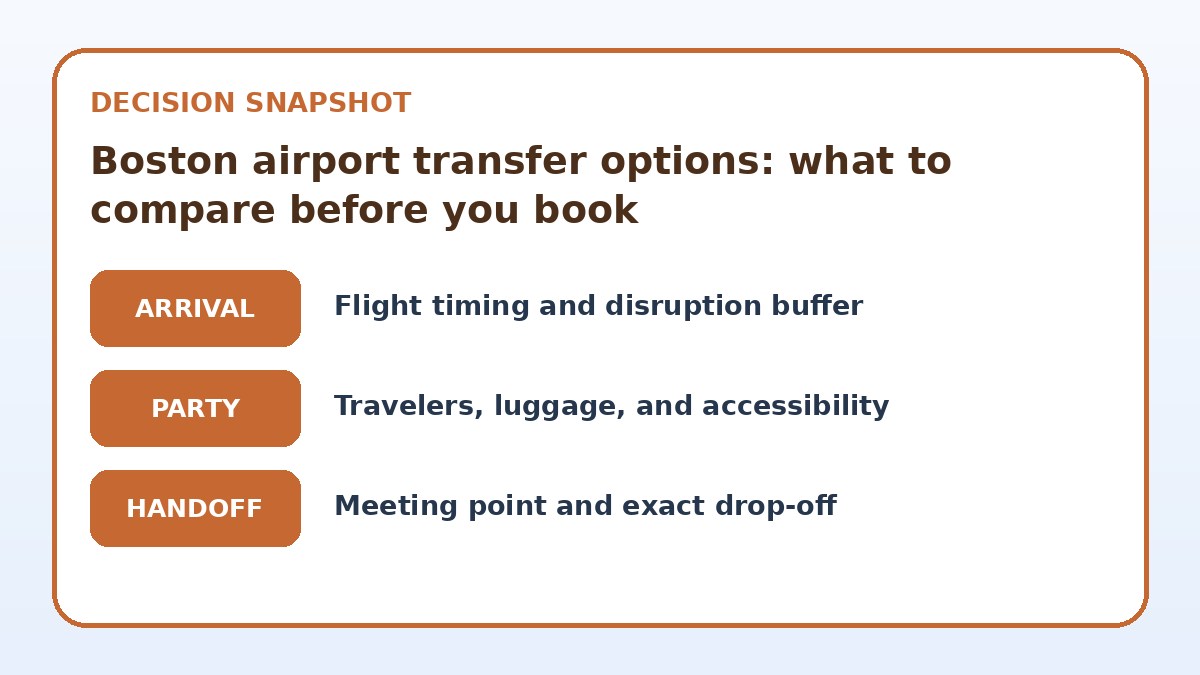
Luggage and party size: choose capacity first
Start by counting people and bags. Business travelers who rely on a single carry-on and one person can favor compact vehicles or shared services without wasted cost. But a partner, assistant, or multiple large suitcases changes the calculus: you’ll need a vehicle with dedicated trunk space or a small van. When booking, specify quantity and size of bags rather than assuming “luggage” is understood. That prevents last-minute upgrades or refusals at pick-up.
If you’re transporting sensitive materials or presentation equipment, consider a private transfer that lets you supervise loading and ensures the items ride with you. Confirm the vehicle type on the booking page and, where possible, request a photo or model name so you can judge space. For group travel, compare the number of seats and luggage capacity across options—roomy seats and uninterrupted door-to-door service often save time and stress even if upfront cost is higher.
Arrival details to have ready
- Confirm your airline, flight number, and terminal; note check-in deadlines and whether you must check bags at the counter.
- Count people and measure expected luggage so you can select vehicle size and avoid last-minute changes.
- Check the provider’s exact pick-up and drop-off points on the booking page and save precise directions for the driver.
- Allow buffer time for Boston traffic, parking or shuttle transfers; build contingencies for meetings that might run late.
- Save contact numbers and reservation references for your transfer and a local taxi service for quick backups.
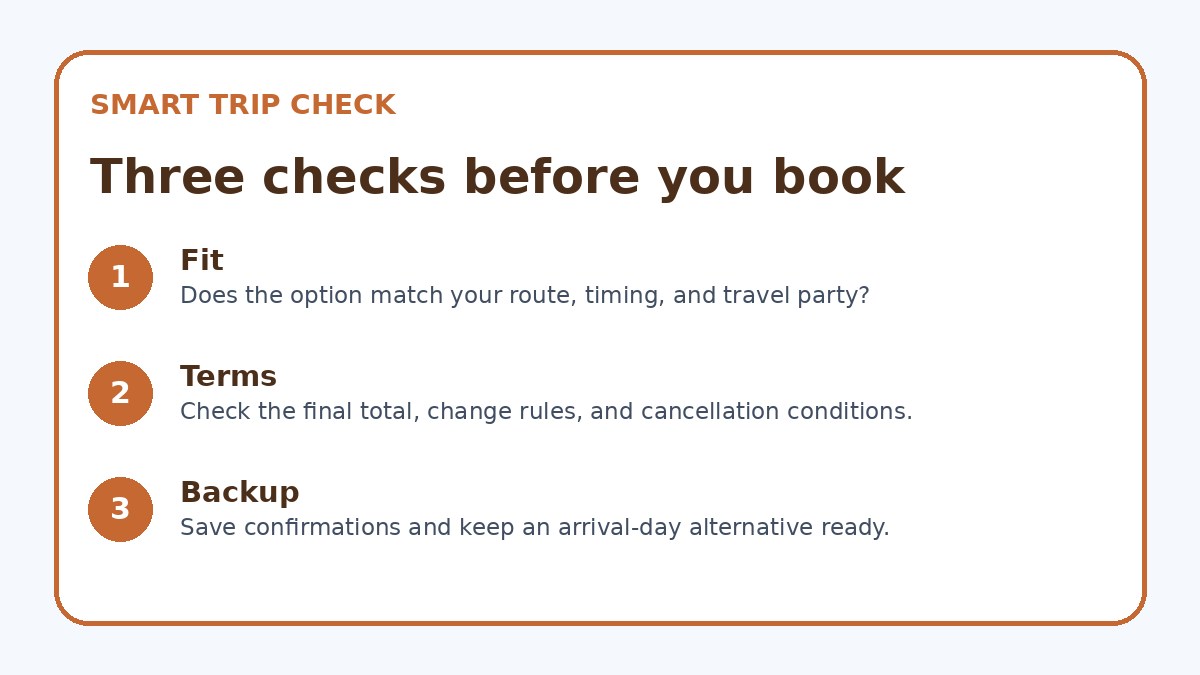
- Verify change, cancellation and wait-time policies with the provider before confirming the booking; retain screenshots of terms.
Late or disrupted arrivals: plan redundancy
Business trips frequently shift. If a meeting runs long or a train is delayed, you need a plan that handles schedule changes without derailing your trip to the airport. For predictable flight departures, build buffer time based on your confidence in local traffic and meeting duration. If you prefer flexibility, choose services that explicitly allow free or low-cost changes and check how they handle cancellation, wait time, or rebooking.
When disruptions happen, having a backup option reduces panic: save a local taxi company, an alternate ride-booking app, and the details for a private transfer provider that can respond on short notice. If your flight could be re-timed, confirm refund and rebooking policies on the provider’s final page. Keep contact numbers and reservation references easily accessible so you can switch plans in minutes rather than scrambling at the curb.
Match the transfer to your arrival
| Arrival approach | Best for | Detail to verify |
|---|---|---|
| Rideshare (app-based) | Solo travelers with light luggage who value speed and flexibility. | Potential curbside rules and surge pricing; check pick-up point and luggage fit before booking. |
| Shared airport shuttle | Budget-minded individuals with standard-sized bags and flexible schedules. | Multiple stops and fixed routes increase travel time; confirm boarding points and luggage allowances. |
| Prebooked private car or van | Small teams or travelers with oversized luggage and strict timing needs. | Higher cost but door-to-door reliability; verify vehicle size and pick-up/drop-off specifics on booking page. |
| Taxi or on-demand black car | Travelers needing immediate pickup or localized local knowledge for alternate routes. | Less predictable wait times and variable availability; confirm meet-up details and payment options. |
Make the meeting plan clear
Check the final pickup instructions, waiting conditions, and exact drop-off coverage.
Meeting-point clarity: avoid curbside confusion
Boston’s terminals and city curbs have specific rules; misunderstanding them wastes time. Before you book, check the exact pick-up landmark the provider uses—’hotel lobby’ can mean ‘main entrance’ or ‘side entrance’; a rideshare meet-up point could be a designated curb or parking level. Confirm which curb, door, or lobby the driver will use and whether you need to walk to a different entrance for pickups. Clear directions prevent missed connections and awkward calls to drivers.
For corporate travelers, share precise pick-up instructions with colleagues and assistants. If you plan to meet outside a building, pick a named landmark and a measurable time—allow a few minutes for elevators and security. For airport drop-off, verify terminal and airline check-in desks since airports sometimes redirect commercial vehicle stops; ask the provider to reconfirm drop-off location and permitted stopping points on the final booking screen.
Destination-side drop-off fit: terminal and timing
Decide which terminal and airline you’re using before choosing a transfer. Some vehicle services stop curbside at arrivals, others use offsite lots or permitted zones requiring short shuttle transfers to the terminal. That extra hop matters for tight connections or when you’re carrying important items. When booking, confirm where the driver will drop you versus the walking time or shuttle time required to reach airline check-in or security.
If your flight has a remote check-in or you need to check bags, add extra time for the airline’s counter operations. For travelers catching very early or late flights, confirm that your chosen transfer operates at those hours or has clear after-hours procedures. Always verify drop-off details on the provider’s booking page and keep the airline’s terminal map handy to plan the final walking or shuttle leg from curb to gate.
Airport Transfer & Local Mobility questions travelers ask
How much time should I allow to get from downtown Boston to the airport?
Timing depends on your departure terminal, time of day, and traffic conditions. For a business traveler, add buffer time beyond the airline’s recommended arrival at the airport to cover local traffic and any shuttle transfers. If you need to check bags or use express lanes, build additional minutes. For the most reliable planning, check recent travel times on a mapping app at the same day and hour you’ll travel, and confirm pick-up and drop-off specifics with your transfer provider before booking.
Is advance booking necessary for a private transfer in Boston?
Advance booking is recommended for groups, bulky luggage, or when timing is critical—this helps ensure the correct vehicle type and avoids last-minute availability issues. For private cars, review the vehicle’s passenger and luggage capacity on the provider’s final booking page, and verify the pick-up address and expected arrival window. If your schedule is flexible and you travel light, on-demand options exist, but you’ll trade some predictability for convenience.
What should I check about airport drop-off rules and terminals?
Confirm the permitted curbside or drop-off zones for your airline’s terminal because some vehicles must use offsite lots or designated zones. On the provider’s booking page, look for terminal names, allowed drop points, and whether a shuttle or a short walk is required to reach the airline check-in. Also verify if the provider can wait briefly at curbside during busy periods, and keep a terminal map or airline guidance handy to plan the final short leg from drop-off to security.
Final decision note
For business travelers in Boston the lowest-stress airport transfers start with three facts: your flight time and terminal, the number of passengers and the luggage you’ll carry, and how much buffer you need for traffic or meeting overruns. Choose a transfer type that matches those constraints: rideshares for solo, private cars for groups or equipment, shuttles for cost efficiency, and taxis when you need immediate pickup. Before you finalize anything, verify pick-up and drop-off locations, vehicle capacity, and change/cancellation terms on the provider’s booking page. Keep a backup option and contact details ready so you can switch plans quickly if a meeting runs long or traffic worsens. If you want to compare current availability, Trip.com can be a place to look, but always confirm live provider terms before booking.
Continue planning
Check current options and final conditions
Use the provider page to confirm live availability, the final total, cancellation terms, and every condition that matters to your trip.
This evergreen planning guide was created with AI-assisted drafting and a structured quality review. It does not display live prices, schedules, availability, visa guidance, or provider rankings. Verify current details before booking. Some links are affiliate links; we may earn a commission at no additional cost to you.