If you’re arriving at Madrid’s main airport and want a straightforward way into the city, choose between the metro, the airport bus, taxis or pre-booked private transfers. The practical answer depends on your priorities: the metro is usually the simplest choice if you’re traveling light and staying near central stations; the airport bus can drop you at major hubs with fewer transfers; a licensed taxi gives door-to-door convenience for passengers with luggage or late arrivals; private transfers add predictability and meet-and-greet service if you prefer a driver waiting. Read the tradeoffs below so you can pick the right approach for your arrival time, luggage, mobility needs and comfort level. Where provider-specific details matter, verify schedules, vehicle capacities and pickup instructions on the operator’s booking page before you finalize anything.
Think about where you’re staying and how you’ll finish the journey
Your hotel or apartment address should be the single most important factor when choosing an airport transfer. If you’re staying near a metro stop on a direct airport line, the metro can drop you close enough that a short walk or a single short taxi completes the trip. For hotels clustered around major bus or rail hubs, the airport bus or a train connection might be the most convenient. Consider the exact street address rather than the neighborhood name—some central areas still have several stops that are not equally convenient.
Also factor in the complexity of the final leg: narrow streets, pedestrian-only zones, steep hills, or luggage-unfriendly walkways can make a taxi or private transfer worth the extra hassle and planning. If your accommodation requires a longer walk from public-transport stops, or if you’re arriving late at night, a door-to-door option could save time and stress despite the higher cost. Keep a map open when deciding so you can estimate the final walking distance and any potential transfers.
Compare travel time windows, luggage handling and arrival time
Public transport usually runs on a reliable daytime schedule, but services may be less frequent very late or very early. If you’re arriving during typical service hours and don’t have oversized bags, metro and airport bus are efficient. If you arrive in a period when public transit is limited, a taxi or pre-booked transfer avoids waiting; however, the speed advantage depends on traffic. During peak hours, road congestion can make taxis and private cars slower than the metro.
Luggage handling is another practical consideration. Metro trains and buses have space for luggage but can be crowded during rush hours, making boarding and storing bags awkward. Taxis and private cars permit door-to-door loading and unloading, which is more comfortable for groups, families with strollers, or travelers with many suitcases. When booking a private transfer, verify vehicle size and luggage limits on the provider’s booking page so you don’t face a last-minute vehicle mismatch.
| Approach | Best for | Tradeoff to check |
|---|---|---|
| Metro | Travelers with light luggage staying near central metro stations | May require walking and transfers; less convenient late at night or with heavy bags |
| Airport bus | Passengers who want a single-seat ride to major hubs and hotel strips | Stops are limited to main locations; check final stop proximity to your accommodation |
| Taxi | Groups, families or late arrivals needing door-to-door service | Subject to traffic and airport taxi queueing; verify official taxi ranks at your terminal |
| Private transfer | Those seeking a meet-and-greet, guaranteed vehicle and minimal navigation stress | Requires advance booking and checking provider policies for flight delays and vehicle size |
Cost, convenience and the tradeoff between predictability and flexibility
Lower-cost options like metro and airport bus often make sense if you value economy and don’t mind handling your luggage on public transport. They are flexible in that you can hop on with minimal advance planning, but you should understand how many transfers and how much walking the trip requires. Taxis and private transfers cost more but give you door-to-door service and predictable pickup—useful when traveling with family, late-night arrivals, or if you want to avoid navigating public transit after a long flight.
If you prefer predictability, pre-booked transfers lock in pickup times and often include a driver who waits for delayed flights; however, always confirm how the provider handles flight delays and whether there’s a grace period or extra charge. For taxis, ask at the official rank and confirm any flat-rate options or known supplements for airport pickups by checking the official airport information page or the taxi regulator’s guidance. When in doubt, compare live options on a booking platform like Trip.com alongside official websites to verify terms and pickup instructions.
Before you book
- Confirm which airport terminal you’ll arrive at and note the official taxi rank or rideshare pickup zone for that terminal.
- Check your accommodation address on a map and identify the nearest metro, bus stop or taxi drop-off point before you choose a transfer.
- If booking a private transfer, verify vehicle size and luggage allowance, pickup point, driver contact instructions, and flight-delay policy on the booking page.
- Photograph your accommodation address, confirmation details and any meeting-point instructions so you can show them to drivers if needed.
- If you need accessibility features, contact the airport and the transport provider ahead of time to confirm elevators, ramps, or wheelchair-accessible vehicles.
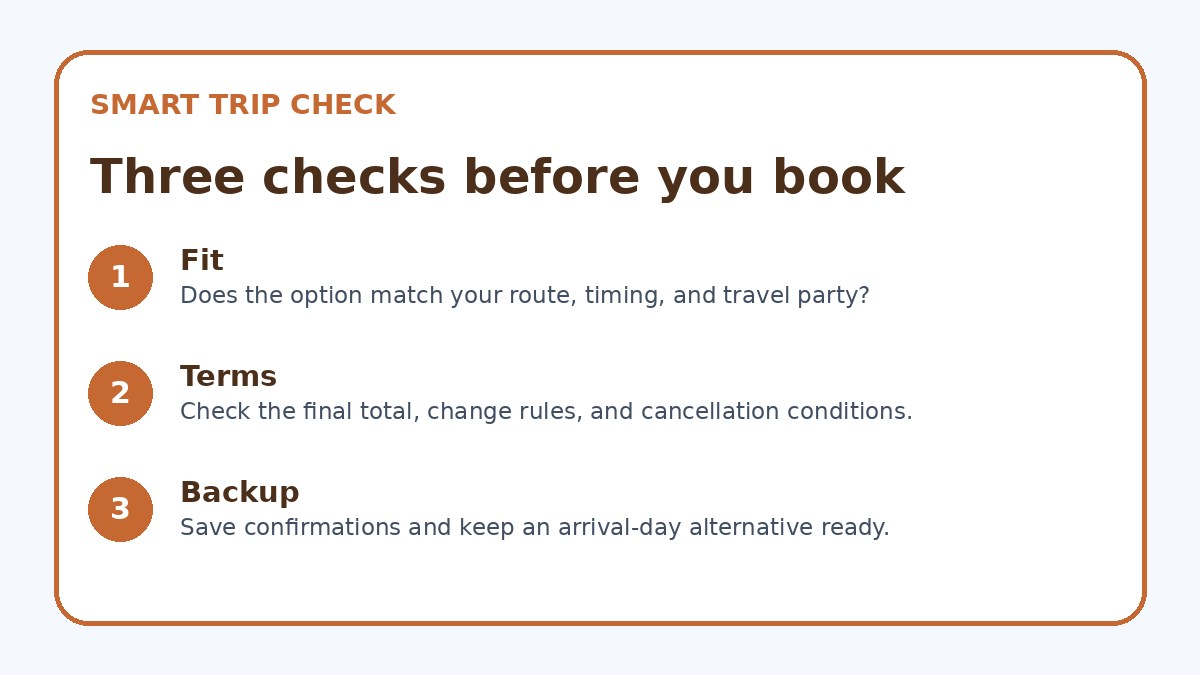
- Compare live availability and final terms on provider booking pages and consider checking a comparison site like Trip.com for current options.
Safety, accessibility and small practical checks before you leave the airport
Safety and accessibility should steer your choice if you have mobility needs, medical equipment, or are traveling alone at night. Confirm whether the metro stations you will use have elevators or escalators and whether buses that serve the airport can accommodate wheelchairs or large mobility devices. For taxis and private cars, ask about vehicle accessibility when booking. If you require assistance on arrival, check the airport’s passenger assistance services and request help in advance when possible.
Before you leave the terminal, do a few small but important checks: note the correct arrival terminal, find the official taxi rank or designated rideshare pickup zone, confirm the meeting point if you booked a private transfer, and take a photo of your accommodation address. If you use a rideshare app, ensure the driver’s license plate, make and model match what the app shows. Always verify provider-specific pickup instructions, wait times and cancellation policies on the operator’s final booking page to avoid misunderstandings.
Frequently asked questions
Is the metro the fastest way from Madrid airport to the city center?
The metro can be the fastest option during peak traffic because it avoids road congestion and stops close to many central stations. However, speed depends on your final destination, the need for transfers, and how much time you need to manage luggage between platforms. If your accommodation is near a direct airport metro stop, the metro usually offers a reliable travel time estimate. If you arrive outside normal service hours or have many bags, a taxi or private transfer might be quicker despite road traffic.
Should I pre-book a private transfer or just take a taxi at the airport?
Pre-booking gives you a confirmed pickup time, driver contact details and often a meet-and-greet at the arrivals area, which reduces uncertainty—helpful for late flights or group travel. Taking a licensed taxi from the official rank is flexible and requires no advance planning, but you may face queues during busy periods. If you choose a private transfer, read the provider’s flight-delay and cancellation rules on their final booking page so you know how they handle late arrivals or schedule changes.
What small checks should I do on arrival to avoid problems with transfers?
On arrival, verify your terminal and follow signage to official taxi ranks or designated rideshare and transfer pickup zones. If you booked a transfer, confirm the driver’s name, vehicle details and the stated meeting point—take a screenshot of the booking confirmation to show if needed. For rideshare pickups, match license plates and driver details in-app before entering the vehicle. Finally, keep some local cash and a map of your accommodation address handy in case you need to communicate with drivers who prefer cash or paper directions.
Final planning note
Choosing the right Madrid airport transfer comes down to one simple question: what matters most at the moment you arrive—price, predictability, door-to-door convenience, or minimal walking with luggage? If you’re traveling light and during public-transport hours, the metro or airport bus is usually efficient. If you value convenience, have lots of luggage, or arrive outside service hours, a taxi or pre-booked private transfer reduces hassle. Before you commit, map the final leg from the nearest stop to your accommodation, confirm pickup details and vehicle size where relevant, and check the operator’s booking page for their specific terms. With those checks, you’ll arrive in Madrid ready to start exploring with far less stress.
Continue planning
Check current options and final conditions
Use the provider page to confirm live availability, the final total, cancellation terms, and every condition that matters to your trip.
This evergreen planning guide was created with AI-assisted drafting and a structured quality review. It does not display live prices, schedules, availability, visa guidance, or provider rankings. Verify current details before booking. Some links are affiliate links; we may earn a commission at no additional cost to you.