If you’re planning to rent a car in Honolulu with kids, the most practical move is to first decide what financial exposure you will accept and then match that to clear policy wording. Start by asking three questions when you book: does the rental include liability coverage to meet Hawaii’s minimums, what protection applies to damage or theft of the rental vehicle, and does any policy exclude drivers under a certain age? These answers show as short phrases on reservation pages but can hide important clauses. This article translates common terms you’ll see on booking pages, explains tradeoffs for families (driver age limits, additional driver rules, child-seat coverage, and deductible levels), and lists the exact items to verify on the provider’s final booking page before you hit reserve.
Key insurance terms, translated for families
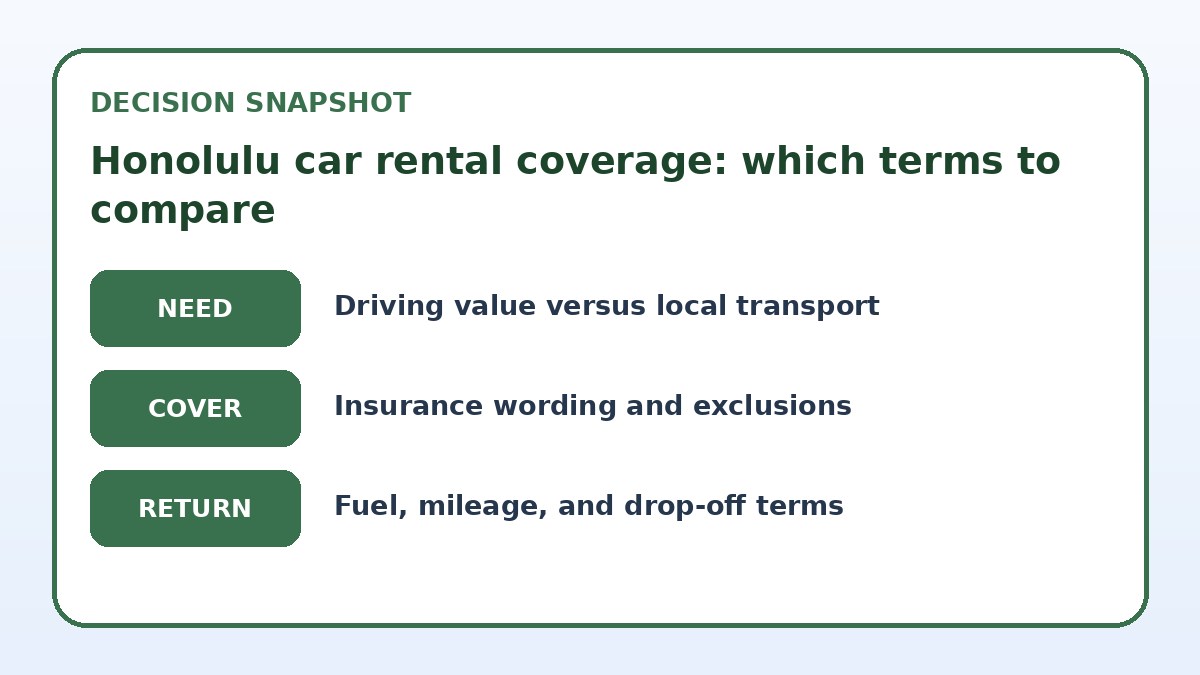
Rental pages list abbreviations like LDW (Loss Damage Waiver), CDW (Collision Damage Waiver), and PAI (Personal Accident Insurance). LDW/CDW are not traditional insurance in some contracts but waivers that limit your financial responsibility for damage or theft of the vehicle if you comply with the rental terms. PAI covers medical costs for driver and passengers in some plans, which can be useful for families who want a simple backup to health insurance while on vacation.
Liability coverage (sometimes called Supplemental Liability Insurance or SLI) protects you if you injure others or damage their property. Check whether the rental’s liability is primary — meaning it pays first — or secondary to your personal auto policy. For families, primary liability avoids pulling your home or personal auto policy into a claim, which can be important if you prefer not to risk a rate increase at home.
Common exclusions and clauses that affect families
Watch for exclusions that can surprise you: off-road driving (relevant if you plan rugged sightseeing), driving on unpaved roads, unauthorized drivers, and using the vehicle for commercial purposes. Families often assume child seats are covered by the insurance— they generally are not. The rental company may provide child seats for a fee, but damage to the seat itself or injury claims involving improperly installed seats can fall outside basic waivers.
Age and additional-driver clauses are crucial. Many contracts restrict drivers under 25 or impose daily young-driver surcharges; some policies specifically exclude drivers under a stated age from coverage altogether. If a teenager will drive or you want grandparents to share driving, confirm the contract wording and whether adding them as an authorized driver is straightforward and covered by the protection you purchase.
| Approach | Best for | Tradeoff to check |
|---|---|---|
| Buy the rental company’s LDW/CDW | Families wanting straightforward protection without checking external policies | Higher daily cost but fewer paperwork gaps and immediate coverage confirmation |
| Rely on personal auto insurance | Drivers with robust, island-valid policies who want lower out-of-pocket rental costs | May be secondary; could involve deductible and risk of affecting your personal policy |
| Use credit-card coverage | Cardholders who already have damage coverage and want to avoid duplicate rental fees | Often excludes liability and requires following card issuer claim procedures |
| Hybrid approach (card + minimal rental waiver) | Families balancing cost and gap protection where card covers damage but not loss-of-use or administrative fees | Saves money but needs careful verification of overlapping exclusions and claim steps |
How to compare coverage options before booking
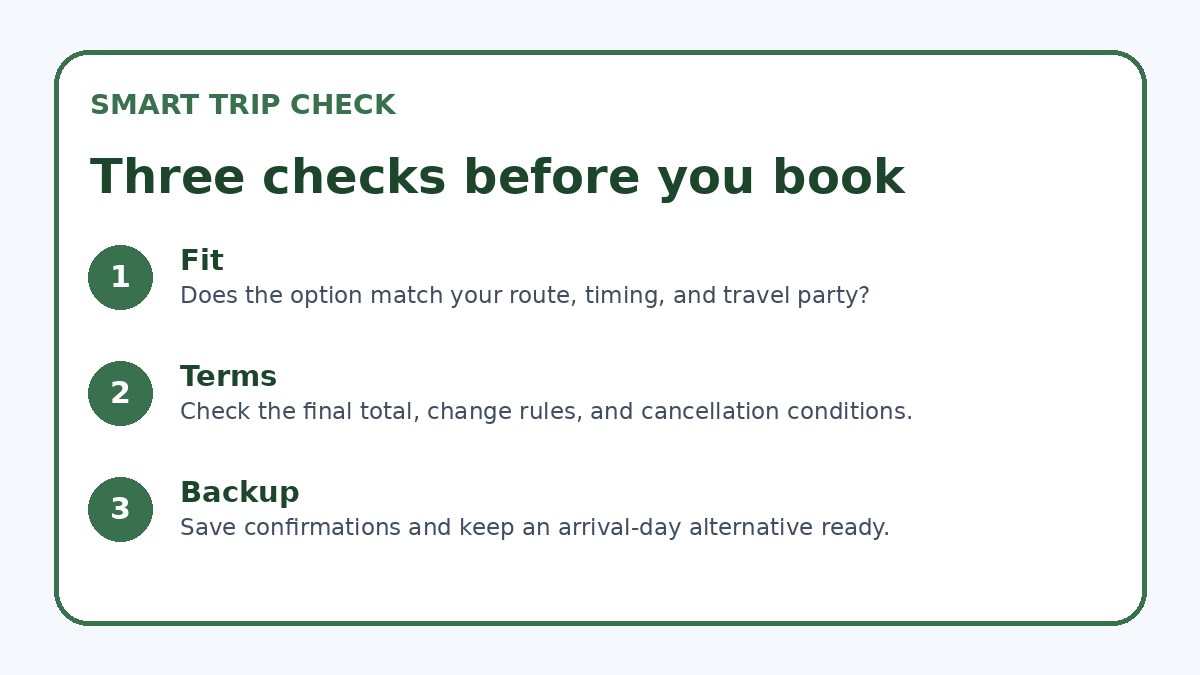
When comparing offers, don’t just look at the headline phrase ‘full coverage’ or a single dollar amount for a waiver. Open the detailed terms and search for key phrases: deductible, exclusions, primary/secondary, authorized drivers, and loss-of-use. For families, prioritize waivers that explicitly name additional drivers at no extra cost and that don’t exclude drivers under your children’s ages, if they may drive.
If you have a personal auto policy or a credit card that offers rental coverage, read those documents alongside the rental terms. Credit-card coverages often handle vehicle damage but exclude liability; personal auto policies vary in whether they apply to out-of-state or island rentals. The safest decision is the one where the combined wording leaves no blind spots for bodily injury, third-party property damage, and rental vehicle repair costs.
Before you book
- Confirm whether liability on the rental reservation is primary or secondary and note the covered limits.
- Check the deductible amount for CDW/LDW and whether you can buy a zero-deductible option or a reduction.
- Verify the exact age rules and add any additional family drivers on the reservation to keep coverage valid.
- Read exclusions for road types and permitted uses if you plan scenic or rural routes off Oʻahu’s main roads.
- Ask the rental company whether child seats are insured for damage or loss and get any promises in writing.
- Take screenshots or print the final booking page and rental contract; save contact details for roadside assistance.
What to verify on the provider’s final booking page
Before finalizing the reservation, confirm these explicit items on the booking/checkout page and the rental agreement: the exact name of each included coverage, whether liability is primary or secondary, deductible amounts, and any stated driver-age limits or surcharges. If child seats, GPS, or roof racks are part of your plan, verify whether damage to those accessories is covered, and whether installation errors could affect claims.
Also look for procedural language about reporting accidents, required police reports, and the company’s process for assessing loss-of-use or administrative fees. Because provider terms can change, check the final booking page for precise wording and save a screenshot or PDF of the reservation summary and the full rental terms. If anything is unclear, call the rental desk and get the clarifying answer in writing before you leave for Honolulu.
Frequently asked questions
Does a typical credit card cover Honolulu car rental damage for families?
Many premium credit cards offer secondary or primary collision damage coverage for rental vehicles, but coverage varies by issuer and card level. Cards commonly cover damage to the rental vehicle but often exclude liability for third-party injuries or property, and they may not cover loss-of-use or administrative fees charged by the rental company. If you plan to rely on a card, obtain the card benefits guide, confirm whether coverage applies in Hawaii, check any driver-age restrictions, and learn how to file a claim. Keep rental agreements and police reports; issuers typically require documentation to process claims.
Should families buy the rental company’s full coverage if they already have personal auto insurance?
It depends on your comfort with risk and your personal policy’s wording. Personal auto insurance may extend to rentals, but it can be secondary and could leave you responsible for a deductible or loss-of-use charges while the provider processes claims. Buying the rental company’s LDW/CDW can simplify handling damage claims at the counter, but it adds cost. Compare the deductible, whether liability is included, and whether you prefer avoiding a potential claim on your own policy. Where uncertainty exists, a minimal rental waiver plus card coverage can reduce exposure without paying full daily waiver fees.
What steps should I take immediately after a minor accident involving a rental in Honolulu?
Prioritize safety and get medical help if needed. Document the scene with photos, exchange contact and insurance details with other parties, and obtain a police report if required by the rental agreement. Notify the rental company promptly following the exact procedure in the contract—some waivers require immediate reporting to remain valid. Collect repair estimates if requested, keep receipts for any out-of-pocket expenses, and contact your credit-card insurer or personal insurer as applicable. Save all paperwork and correspondence; insurers and rental companies often require full documentation for claims.
Final planning note
Families renting in Honolulu can travel with more confidence by focusing on plain-language verification rather than headline phrases. Determine whether you need primary liability, low or no deductible for damage to the rental, and explicit permission for all drivers who will use the vehicle. Cross-check the rental contract, your personal insurance, and any credit-card benefits so coverage gaps are visible before you arrive. Always save the final booking page and ask for written clarification when terms are ambiguous. For quick comparisons of current availability and rental terms you can look at providers on Trip.com, but rely on the provider’s final booking page and the signed rental agreement for the definitive wording you’ll be held to.
Continue planning
Check current options and final conditions
Use the provider page to confirm live availability, the final total, cancellation terms, and every condition that matters to your trip.
This evergreen planning guide was created with AI-assisted drafting and a structured quality review. It does not display live prices, schedules, availability, visa guidance, or provider rankings. Verify current details before booking. Some links are affiliate links; we may earn a commission at no additional cost to you.