
If you’re visiting San Francisco for the first time and shopping travel deals, focus first on cancellation flexibility: it changes how much risk you carry and how comfortable you are changing plans. The practical answer is simple: pick the most flexible option you can afford for the components that would be hardest to re-book or that carry the biggest penalty—usually your flights and the most expensive nights or prepaid tours. For the rest, balance price and flexibility based on how likely your plans are to shift. Below I explain exactly what to compare on supplier booking pages, how to prioritize flexibility versus savings, and where modest flexibility buys the most peace of mind for a short city trip.
Which bookings to prioritize for flexibility
Flights and the most expensive, nonrefundable hotel nights should top your priority list when comparing cancellation flexibility for San Francisco travel deals. Flights often have distinct fare buckets with different change and refund rules; refundable fares and those that allow free changes reduce risk but cost more. If you’ll fly in or out during a busy weekend, a flexible ticket lets you adjust plans without losing the full ticket value. Hotels often block the best rates behind nonrefundable rules—decide whether the savings justifies the risk of forfeiting nights you might need to change.
If prepaid experiences matter to your itinerary—sunset cruises, Alcatraz tickets, or guided day trips—treat them like mini-flights. Many specialized experiences sell a limited number of spots and use strict cancellation windows; some allow free changes up to a set day while others offer only partial refunds or credits. For tours, verify whether rescheduling is allowed and whether new booking availability is guaranteed. When you compare offers, list the financial exposure for each booking: how much you’d lose if you must cancel.
How to read cancellation language on booking pages
Booking pages use many terms—refundable, nonrefundable, partially refundable, flexible, or changeable. Don’t assume a single word covers all conditions; look for exact deadlines (for example, cancel by 2 p.m. local time X days before arrival) and note whether the deadline refers to your local time or the property’s. Also check when refunds are processed: some providers issue immediate refunds, others return funds after their internal processing window, and third-party booking fees can be nonrefundable even when the main fare is refundable.
For flights, find the fine print about change fees, fare difference charges, and whether a voucher replaces a cash refund. For hotels, confirm whether taxes, city fees, or third-party commissions are refundable and whether cancellations during a nonrefundable window convert to a partial refund or property credit. Tours often describe a percentage refunded if cancelled within a certain period; note whether insurance or force majeure clauses alter those rules in practice. Always take a screenshot or save the confirmation page showing the cancellation policy.
| Approach | Best for | Tradeoff to check |
|---|---|---|
| Pay more for refundable bookings | Travelers who value full flexibility or expect itinerary changes | Higher upfront cost but minimal loss if you must cancel |
| Choose partially refundable or credit-based options | Those who want a price cut but still some recourse | Lower cash refunds and possible restrictions on when credits expire |
| Mix refundable flights with cheaper hotel deals | Visitors prioritizing flexibility for travel dates but willing to risk accommodation savings | You protect major costs but still risk losing smaller prepaids |
| Buy nonrefundable deals and add travel insurance | Price-focused travelers comfortable using insurance to manage most risks | Insurance adds cost and has claim conditions; it may not cover every cancellation reason |
Weighing cost savings vs. flexibility for first-time visitors
First-time visitors often want to maximize experiences while keeping costs reasonable. To balance savings with flexibility, identify which parts of the trip you view as essential and nonrepeatable—those deserve higher flexibility. For example, if you’re traveling for a special event, choose flexible options for the travel dates; if you’re on a leisure trip with loose timing, accepting a stricter nonrefundable hotel night in a neighborhood that offers easy alternatives may be sensible.
Another practical approach: mix refundable and nonrefundable bookings based on the booking horizon. For purchases made far in advance, pay more for flexibility on flights and high-demand hotels. As your trip approaches and plans firm, you can favor lower-flex options for incidental nights or small tours you could replace locally. Keep a simple spreadsheet of cancellation deadlines so you can weigh the cost to cancel versus the cost to keep each booking if plans change.
Before you book
- Save screenshots of each booking confirmation showing the cancellation policy and deadline.
- Note exact cancellation cutoffs in your calendar with local time references and reminder alerts.
- Compare total refundable amounts, including taxes and nonrefundable fees, before finalizing a booking.
- Confirm how refunds are issued (original payment method, voucher, or credit) on the final provider page.
- Read travel insurance policy triggers and exclusions before purchasing to ensure it covers your likely risks.
- Keep contact details for suppliers and the third-party booking site handy for quick changes or claims.
What to verify on the provider’s final booking page
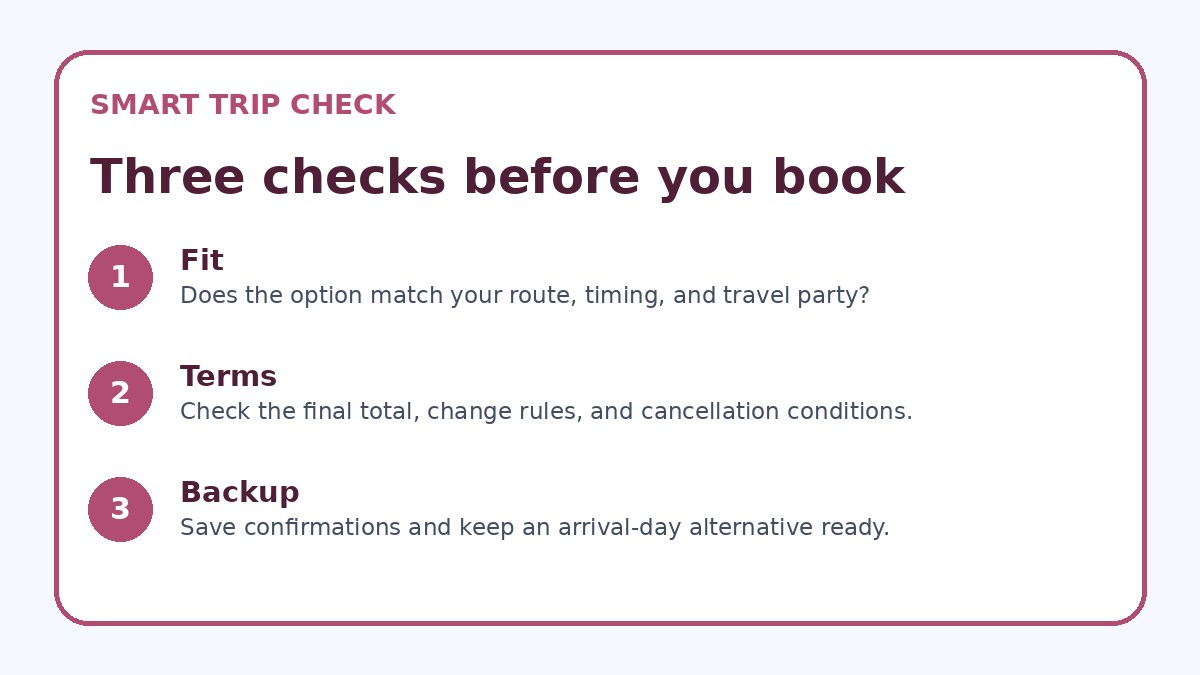
When you reach a supplier’s final booking page, verify three items: the exact cancellation deadline and how it’s stated, the refund amount and timing, and whether any third-party or processing fees are nonrefundable. If a provider offers credit or vouchers instead of cash refunds, confirm expiry dates and blackout restrictions. Also check the contact method for changes—online only, phone required, or through the original booking site—and whether same-person rebooking is necessary to retain any flexible terms.
For tours and experience bookings, confirm the rescheduling window and minimum participant requirements that could cancel a tour. For flights, check whether the fare includes a waiver for changes (for example, caused by schedule disruptions) and what paperwork airline refunds may need. If you use a third-party site, click through to the supplier’s policy page and save the confirmation that shows the policy text you relied upon. Trip.com is an optional place to compare live availability and policies, but treat the airline, hotel, or tour operator page as definitive.
Frequently asked questions
How do I compare refundable flight fares without seeing live prices?
Focus on the fare rules rather than price labels. Refundable fares generally explicitly state full refunds on cancellation; changeable fares explain change-fee amounts and when a fare difference applies. On a booking page, note whether changes are free and whether refunds convert to vouchers. If an airline page references a waiver policy for irregular operations, read that text too. When you’re ready to book, verify the final fare rules on the purchase screen and save a copy—these are the terms you’ll rely on later.
Is a flexible hotel rate worth the premium for a short San Francisco stay?
It depends on how fixed your dates are and how costly a last-minute change would be. Flexible rates are worth the premium if you might shift arrival or departure dates, or if a canceled night would force you into significantly more expensive last-minute lodging. If you have backup options and travel dates are stable, a nonrefundable night can be a reasonable gamble. Always check whether penalties escalate after a certain date and whether the property charges a fee that isn’t refundable even on otherwise free-cancel rates.
Can travel insurance replace booking flexible options entirely?
Insurance can substitute for some flexibility but rarely covers everything. Typical plans cover medical issues, some trip interruptions, and certain covered reasons that force cancellations; they usually have documentation and claim requirements. Insurance may not reimburse a nonrefundable booking if your reason for cancellation falls outside policy triggers. Read the policy’s covered reasons, timing for claims, and exclusions carefully, and consider combining limited flexibility on bookings with insurance for layered protection.
Final planning note
Choosing flexibility for San Francisco travel deals is an exercise in prioritizing risk versus savings. For first-time visitors, protect the high-impact items—your flights and any costly, prepaid experiences—by favoring refundable or change-friendly options. Use stricter, cheaper options where you can tolerate the loss or where replacement options are plentiful in the city. Always capture and save the exact cancellation wording from the final booking page, set calendar reminders for cutoffs, and consider travel insurance as a secondary safety net. With these checks in place, you’ll reduce last-minute stress and keep more control over your San Francisco trip.
Continue planning
Check current options and final conditions
Use the provider page to confirm live availability, the final total, cancellation terms, and every condition that matters to your trip.
This evergreen planning guide was created with AI-assisted drafting and a structured quality review. It does not display live prices, schedules, availability, visa guidance, or provider rankings. Verify current details before booking. Some links are affiliate links; we may earn a commission at no additional cost to you.