If you’re travelling to Busan with extra luggage, the practical booking question is this: how far in advance should you lock in flights, hotels, and transfers so you’re not paying for surprises or stuck with unusable inclusions? The short answer: choose a booking window that balances confirmed baggage allowances and cancellation flexibility against the likelihood of better bundled deals later. Start comparing bundles and separate bookings as soon as your travel dates are firm, but treat any advertised package price as provisional until you verify baggage rules, change fees, and the supplier’s final terms on the checkout page. That verification is the deciding factor for travelers with oversized or extra bags, because a modest-looking savings can evaporate once luggage fees or restrictive transfer terms are applied.

Test package value fairly
| Booking approach | Best for | Tradeoff to check |
|---|---|---|
| Full bundle (flight + hotel + transfers) | Travelers seeking convenience and a single point of contact for logistics | May mask baggage fees or restrictive transfer rules that reduce overall value for extra-luggage travelers. |
| Flight + hotel booked separately, transfers added later | Those who want to compare carrier luggage rules and choose transfers that accept extra gear | Takes more time and coordination; potential higher per-item fees if not negotiated in advance. |
| Book flight only, arrange local accommodation and transfers directly | Travelers with unusual or oversized equipment who need bespoke handling | Requires local research and possibly higher per-service costs, but offers precise control over baggage handling. |
| Package with explicit equipment-handling add-on | Sport and gear travelers who want a clear line item for oversized items | Adds upfront cost; you must verify the provider’s handling competence and on-ground pickup/drop details. |
Check current package and separate options
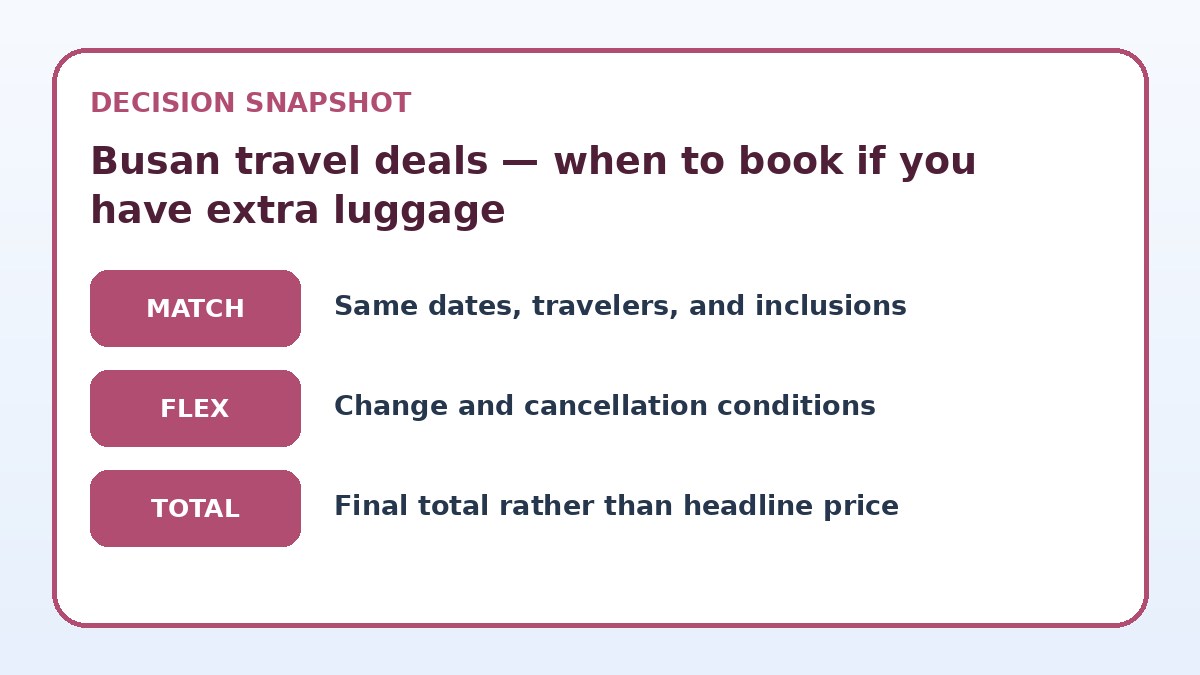
Use identical dates, travelers, room needs, baggage, and flexibility so the comparison stays meaningful.
What you must compare before judging a bundle
Start by lining up the same baseline for every comparison: identical travel dates, number of travelers, and a precise description of the luggage you will bring (checked bag count, weight, and any oversized items). Only compare prices once the inclusions list matches across options. A package that “includes baggage” may mean one small checked bag per passenger, while another option offers a different weight allowance or charges for oversized items. Also check whether transfers, early check-in, or storage options are included, since bulky luggage changes how valuable those services are to you.
Always read the provider’s final booking page and terms and conditions before assuming anything about baggage. Verify exactly which party will handle baggage fees at departure and arrival, whether fees are collected during checkout or at the airport, and what documentation is needed for oversized items. If the bundle involves third-party ground transfers, confirm maximum allowed bag dimensions and whether multiple suitcases per person are accepted. These details determine whether a bundled “deal” actually handles your luggage needs or simply shifts costs to you later.
Inclusions and where savings can vanish
Bundles can look cheaper because they aggregate flights, hotels, and transfers, but the headline price often hides how luggage is handled. Savings evaporate when a cheaper flight requires a paid checked bag, or a “private” transfer charges extra for roof- or trunk-stored gear. For heavy or sports equipment, a bundle that doesn’t disclose equipment-handling fees can create large unexpected charges at check-in. Ask for a line-item breakdown of luggage charges before committing and treat any verbal assurance as provisional until it appears on the booking confirmation.
If a package shows a single baggage line, confirm whether that allowance applies per passenger or per booking. Also look for exclusions—some hotel transfers accept only one suitcase per person, leaving you to pay for an extra vehicle or separate taxi. If the supplier offers baggage insurance or protection, weigh that cost against paying a la carte. Small upfront extras for confirmed baggage allowances and flexible cancellation often save money compared with last-minute airport surcharges and emergency logistics.
Look past the headline total
Compare inclusions and change conditions before deciding whether a package is genuinely useful for this trip.
Deal comparison checklist
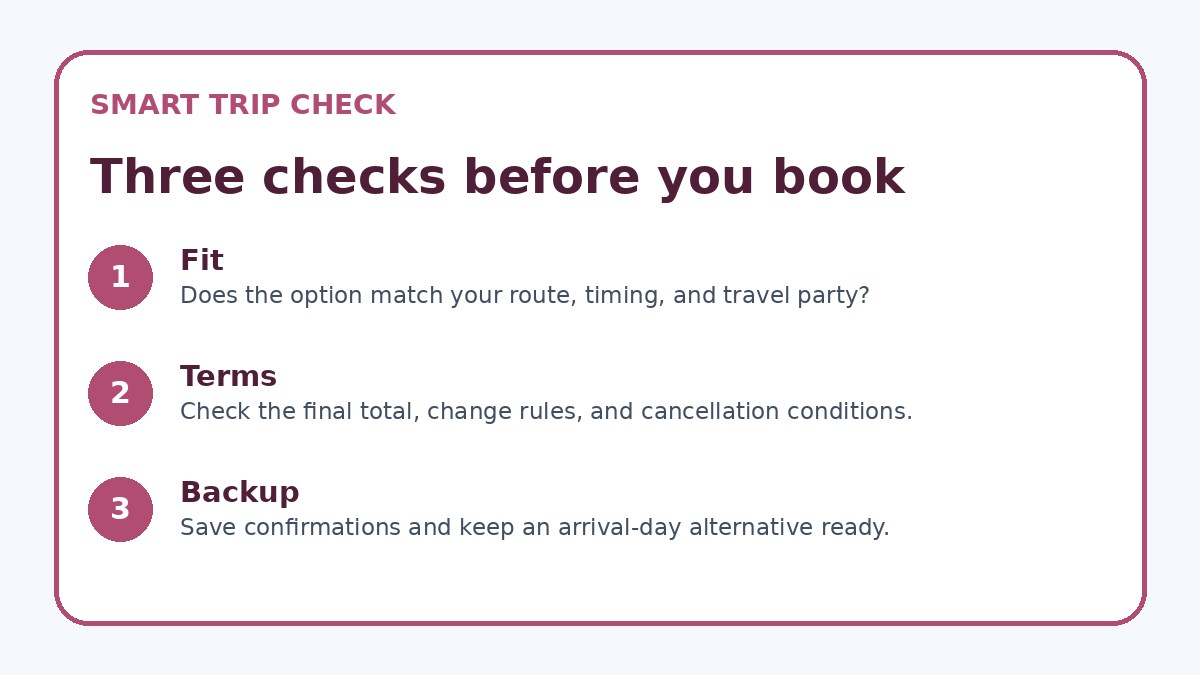
- List every piece of luggage by type, count, and approximate weight before you start comparing offers.
- Compare at least two bundles and two separate-booking scenarios using the same travelers, dates, and luggage details.
- On each supplier’s final checkout page, screenshot the baggage allowance, change/cancellation rules, and any add-on selections before payment.
- If a bundle includes transfers, email or call the transfer operator to confirm maximum bag size, number of items accepted, and pickup/drop instructions.
- Consider booking a refundable fare or flexible hotel rate if your baggage plan is not final; confirm how refunds handle baggage fees.
- If you have oversized equipment, research local shipping or sports-handling services in Busan and confirm lead times and delivery/pickup points before booking.
Flexibility and traveler-specific value
Flexibility is the trump card for travelers with extra luggage. If your bag count or itinerary might change, prioritize refundable or changeable flight and hotel rates that clearly specify how changes affect luggage allowances. Packages that lock you into non-refundable segments can be risky if you later need to add a heavy bag or swap arrival times. For groups or family travel where luggage can be redistributed among people, a bundle that limits per-person checked items may be less attractive than separate bookings that let you allocate allowance more flexibly.
Assess how your type of luggage influences value: business travelers with an extra suitcase may prefer a flexible flight fare and a centrally located hotel with luggage storage, while adventure travelers with surfboards or bicycles should prioritize providers who confirm equipment handling. If you plan to ship oversized items ahead of arrival, build the shipping timeline and pickup points into your booking window. The most valuable bundles for your trip will be those that model your actual luggage scenario rather than standard assumptions.
Final terms: what to verify on purchase
Before you click buy, verify on the supplier’s final booking page: explicit baggage allowances and fees (including oversize and overweight rules), who collects any extra charges, deadline for free changes or cancellations, and any limits on transfers or storage. If a bundle includes third-party services, confirm the subcontractor’s baggage rules and whether the main supplier will mediate disputes or charge additional handling fees. Don’t accept vague language—‘baggage included’ with no weight or count details is not sufficient.
Also check payment and refund mechanics: are baggage fees refundable if you later cancel? Are change fees applied per passenger or per booking? Note time windows for free changes and whether name corrections are allowed without full rebooking. If the bundle’s checkout page requires selecting an option for luggage protection or transfer upgrades, treat those add-ons as necessary line items if they matter to your trip. Finally, save and screenshot the final confirmation page showing the exact baggage terms; that evidence is useful if disputes arise.
Travel Deals & Booking Strategy questions travelers ask
How far in advance should I book Busan travel if I have extra luggage?
There’s no single ideal window; start comparing options as soon as your dates are set. Early booking can secure desired flights and rooms, but don’t prioritize lowest headline price over clear baggage terms. If your luggage plan is final, book once you’ve confirmed that the fare or package explicitly covers your number and type of bags. If your baggage needs might change, choose flexible fares or refundable hotel rates even if they cost a bit more upfront—the cost of changing or paying airport oversize fees often exceeds the price difference.
Can I trust a ‘baggage included’ line in a package price?
Treat ‘baggage included’ as a starting point, not a guarantee. Always verify the precise allowance on the supplier’s final booking page: number of checked bags per passenger, weight limits, and oversize/overweight fees. If the package involves third-party transfers or subcontracted services, confirm their rules separately. If the terms on the checkout page differ from the package listing, ask the provider to clarify in writing before you pay or save the final confirmation screenshots so you can show the documented terms if a dispute arises.
What’s the smartest approach for sports equipment or oversized items?
For surfboards, bicycles, or other oversized gear, seek packages or add-ons that list equipment handling as a line item and describe pickup/drop logistics. If no clear option exists, consider separate arrangements: book flights with a carrier known for accommodating equipment (verify weight/dimension rules), reserve an accommodation with confirmed storage or easy street access, and pre-book a transfer service that explicitly accepts oversized items. Always verify handling fees, required packing procedures, and whether the transfer driver will assist with loading; get these details in writing on the booking page.
Final decision note
Travelers with extra luggage should treat a low package price as the beginning of due diligence, not the final answer. The realistic booking window depends less on a calendar date and more on when you can confirm the exact baggage arrangements in writing on the supplier’s final booking page. Compare identical scenarios—same dates, passengers, and luggage—across full bundles, partial bundles, and separate bookings so you can see where fees or restrictions apply. Prioritize flexibility if plans might change, and don’t be shy about contacting providers to confirm transfer capacity or equipment handling. That discipline prevents unpleasant surprises in Busan and usually saves money and stress in the long run.
Continue planning
Check current options and final conditions
Use the provider page to confirm live availability, the final total, cancellation terms, and every condition that matters to your trip.
This evergreen planning guide was created with AI-assisted drafting and a structured quality review. It does not display live prices, schedules, availability, visa guidance, or provider rankings. Verify current details before booking. Some links are affiliate links; we may earn a commission at no additional cost to you.