
If you’re planning your first trip to Jeju, the single most useful lever for lowering travel friction and finding better options is date flexibility. Shifting arrival or departure by a few days — or changing weekday vs weekend nights — often widens the pool of flight and ferry times and reveals different hotel room types. Being flexible doesn’t mean vague plans; it means defining acceptable windows for travel (for example, plus or minus three days) and then testing those windows across carriers and accommodation platforms. This approach reduces stress and puts you in control of tradeoffs: cheaper travel vs specific weather or event preferences. Below I explain a straightforward decision method for when to lock dates, what to compare, and what to verify on the booking page so you don’t run into surprises.
See current options before you compare the details
Availability and final conditions change. Open Trip.com now or keep reading for the practical comparison.
Start by defining acceptable flexibility
Before you hunt for deals, decide how much uncertainty you can tolerate. Practical flexibility is a clear rule: pick a maximum window for arrival and departure (for example, plus or minus three days) and outline deal-breakers such as absolute arrival dates, must-see events, or a nonrefundable connection at your onward destination. That makes searching systematic instead of aimless. You’ll avoid spending time checking every possible date combination and can focus on realistic options that still meet your core requirements.
Next, tier your priorities. Rank what matters most—lower fares, specific activities (Hallasan hiking or Seongsan sunrise), quieter beaches, or lower accommodation cost—and let that ranking guide whether you should prioritize weekday travel, shoulder-season dates, or midweek stays. With clear priorities, you can create simple search experiments: keep dates fixed and change weekday/weekend status, then keep weekday/weekend fixed and move by a day. Record results so you can see how small shifts affect availability and conditions.
How to search: tools and tactics that reveal options
Use multi-day calendar views on flight and hotel booking tools to visualize where availability and fares vary across your window. When searching ferries or domestic carriers to Jeju, look at several departure ports and times because alternate routes or morning vs evening sailings can change overall travel time and price options. If a platform offers flexible-date toggles (weekend/weekday, plus or minus days), start there; otherwise run a few manual searches spaced across your window. Keep a simple spreadsheet or notes with the combinations you test so you can quickly compare total travel time and constraints.
Don’t rely only on aggregate results. Open the provider’s final booking page to confirm baggage rules, cancellation and change fees, and time-of-day penalties that aren’t always shown in a quick calendar view. For hotels, check whether room types differ by date (some dates may only show longer minimum stays or prepayment rules). If comparing on marketplaces, cross-check the property’s own site and the operator’s booking page to verify the terms you care about—Trip.com can be used as an additional comparison point but always confirm the provider’s final terms on their booking page.
| Approach | Best for | Tradeoff to check |
|---|---|---|
| Wide flexibility (±4+ days) | Travelers prioritizing lower fares and maximum options | May land in less-preferred weather or miss specific events; requires more flexible activity plans |
| Narrow flexibility (±1–2 days) | Visitors needing specific weather windows or fixed activities | Smaller chance of finding deep deal variations; still allows modest savings |
| Weekday-focused travel | Those who want quieter hotels and potential weekday flight/ferry availability | Some attractions or services may have reduced hours; weekend events may be missed |
| Weekend-anchored travel | Visitors constrained to weekend dates or combining short trips | Often higher demand and minimum-stay rules; compare arrival/departure days carefully |
Ready to check the option that fits your plan?
Use your exact dates and traveler details so the provider page can show the current total and conditions.
Tradeoffs: cheaper dates vs experience and weather
Pursuing the lowest-cost date might mean accepting tradeoffs that affect your trip quality. Off-peak arrivals could limit ferry or evening flight options, push you into different neighborhoods for cheaper hotels, or require a longer transport leg across the island. Weather is a big variable: Jeju’s coastal and mountainous microclimates can produce different conditions within days. If your trip depends on a clear morning for Seongsan Ilchulbong sunrise or a dry day for a Hallasan hike, you may prefer a narrower date window even if it costs more.
Weigh your priorities: if you value cost savings above all, widen the search window and be ready to rearrange activities. If a particular experience is non-negotiable, use flexibility to protect that moment (for example, aim to arrive a day early to buffer against delays). Also consider crowds—weekend and festival dates bring more visitors and higher hotel policies like minimum stays. Your best flexible strategy often balances modest date shifting with targeted protections for must-do activities.
Before you book
- Set a concrete date window (example: arrival ±3 days) and list three deal-breakers before searching.
- Run flexible-date searches on at least two booking platforms and record best options in a single note or sheet.
- Open the carrier’s final booking page to confirm baggage, change, and cancellation policies before choosing a fare.
- Check hotel minimum-stay, prepayment, and cancellation terms on the property’s own booking page.
- Verify ferry or transport departure points and transfer options from port/airport to your hotel.
- Scan local event calendars and weather forecasts for your window, then decide whether to tighten or widen dates.
Booking checklist and verification steps
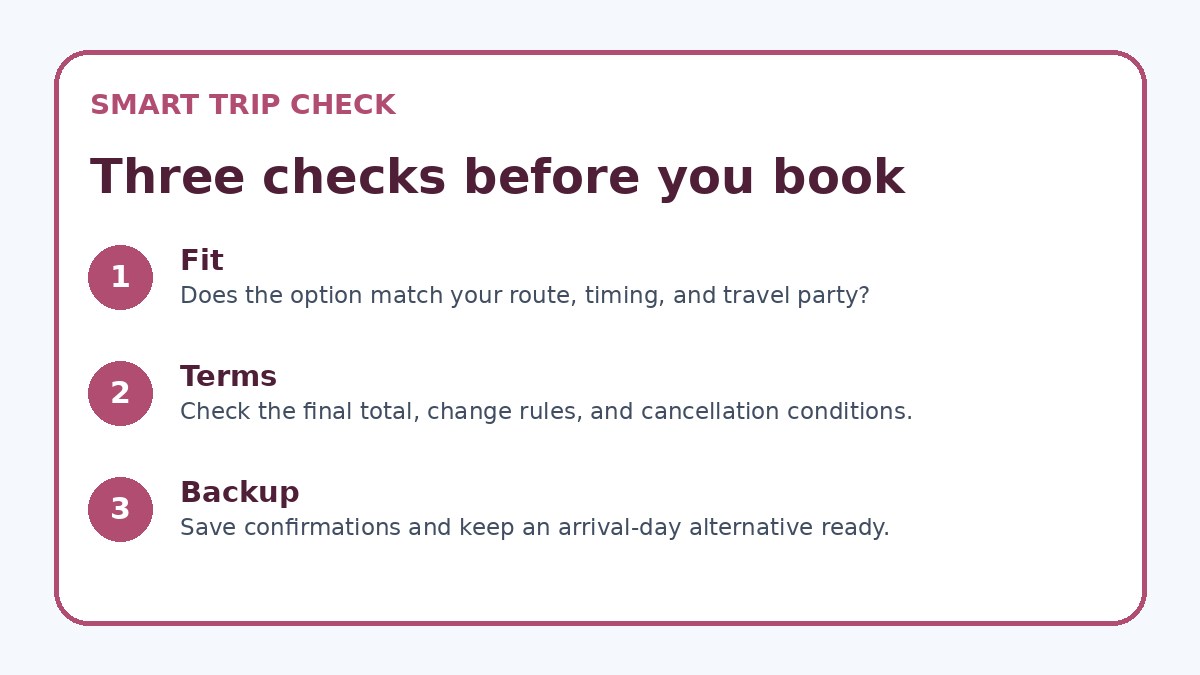
When you find a promising option, follow a short verification routine before booking. Confirm total trip duration including connection or transfer times, verify baggage and seat policies directly on the carrier’s page, and check whether hotel rates require prepayment or have nonrefundable restrictions. For ferries and local transport, confirm departure ports and transfer options to your accommodation. These specifics commonly change and affect whether a found deal works for your actual schedule.
Also double-check any seasonal or event calendar that could affect your stay: local festivals, national holidays, and school vacation dates often change availability quickly. If you use a third-party marketplace to compare deals, open the actual supplier booking page to confirm that what you saw is the final offer—especially cancellation terms and any added fees. Finally, save screenshots of the search results and provider pages in case details shift before you complete the transaction.
Frequently asked questions
How many days of flexibility should I allow when searching for Jeju travel deals?
For most first-time visitors, a practical approach is a ±2–4 day window around your ideal dates. That range usually reveals alternate flight and ferry times and additional hotel room types without becoming unwieldy to check. If you have firm commitments (work, connections), narrow the window to ±1–2 days and focus on weekdays if possible. If your schedule is flexible and you prioritize cost, expand to ±4 days but be ready to accept potential weather or itinerary tradeoffs.
Should I prioritize flights, ferries, or hotels when using flexible dates to find deals?
Prioritize whichever element is hardest to change for your trip. If your main goal is an early morning arrival for a specific activity, start with flights. If ferry schedules or connections from another Korean port are the limiting factor, search ferry options first. For those who only need a comfortable base, begin with hotel availability and then match transportation. In all cases, verify the provider’s final booking page for rules like baggage, minimum stays, or nonrefundable terms before committing.
What should I always verify on the final booking page before I pay?
Always confirm total trip duration including connections or transfers, baggage and seat assignment policies for carriers, and cancellation or change fees for both transport and lodging. For hotels, check the exact room type, whether breakfast is included, and whether the rate requires prepayment. For ferries and local transfers, confirm departure port names and boarding requirements. If you used an aggregator, also open the supplier’s own page to ensure terms match what you saw—these operational details often change and affect whether a deal is workable.
Final planning note
Using flexible dates is a practical decision tool for first-time visitors to Jeju: it broadens options and helps you balance cost against weather, activities, and crowd levels. Start with a defined search window and ranked priorities, use calendar-style flexible searches to visualize differences, then verify all key terms on provider booking pages before finalizing. Small shifts—changing an arrival by a day or swapping a weekend night for a weekday—can improve schedule fit and reduce friction without sacrificing core experiences. With a short verification routine and clear priorities, flexible-date searching becomes a low-effort way to make a Jeju trip better planned and less stressful.
Continue planning
Check current options and final conditions
Use the provider page to confirm live availability, the final total, cancellation terms, and every condition that matters to your trip.
This evergreen planning guide was created with AI-assisted drafting and a structured quality review. It does not display live prices, schedules, availability, visa guidance, or provider rankings. Verify current details before booking. Some links are affiliate links; we may earn a commission at no additional cost to you.