If you’re a solo traveler booking Seoul to Busan flights, the practical priority is clear: pick a fare whose change and cancellation conditions match how likely your plans are to shift. That means confirming how many free changes are allowed, what fee applies for cancellations or refunds, the time window for free or reduced-fee changes, and whether a voucher or partial credit will be offered instead of money back. Also check whether the fare includes seat selection or baggage, since moving plans can interact with those add-ons. Below I outline what to look for on booking pages, how to weigh flexible vs nonrefundable fares, and the steps to take if you expect last-minute changes — with concrete decision criteria solo travelers can use before hitting purchase.
See current options before you compare the details
Availability and final conditions change. Open Trip.com now or keep reading for the practical comparison.
Reading the fare rules: what to verify on the booking page
When a listing catches your eye, go beyond the headline fare and click through to the full fare rules before you enter payment. On the carrier’s final booking page you should find explicit sections for change policy, cancellation/refund policy, and how the airline treats tax differences or fare differences on reissue. Look for whether changes are allowed only once, whether they incur a fixed fee, and whether the date of the change matters (for example: within 24 hours of departure, versus any time up to departure). If the page mentions voucher-only refunds, note whether the voucher is transferable, has an expiry date, and whether it covers taxes or only base fare.
Also check who handles the booking. If you’re buying through an online travel agency, the agency’s own change and cancellation handling may add fees or different timelines; the carrier’s rules still apply to the flight segment itself. If the fare is marked nonrefundable, check whether the airline allows changes for a fee and whether any unused portion can be converted to travel credit. Finally, verify whether add-ons such as seat reservations and checked baggage are refundable or transferable, and whether they appear separately on the confirmation so you can compare whether repurchasing them after a change would be costly.
Flexible versus restricted fares: tradeoffs for solo travelers
Flexible fares typically allow free or low-cost changes, sometimes up to the departure time, and may offer refundable options. For a solo traveler with uncertain timing—meetings that could shift, festival dates that might move, or personal reasons that could alter plans—the higher upfront cost of flexibility can be valuable peace of mind. But the premium varies by airline and booking class. When deciding, estimate the likelihood of needing a change and multiply it by the nonrefundable fare difference and any change fees; if that expected cost exceeds the premium for flexibility, the flexible fare usually makes sense.
Restricted fares keep cash outlay low but raise the risk of sunk costs. If you pick a restricted fare, build a backup plan: buy a refundable ticket only if cancellations are likely, or plan to use travel credit or work around blackout periods. Consider how much of your schedule is fixed—if only one connection is time-sensitive but the rest of your days are flexible, you might buy a cheaper fare and accept the risk for noncritical segments. For solo travelers traveling light and with tight budgets, the tradeoff often comes down to tolerable financial risk versus the stress of potential disruption.
| Approach | Best for | Tradeoff to check |
|---|---|---|
| Buy a fully flexible fare | Travelers who expect date changes or value low rebooking stress | Higher upfront cost that may be wasted if plans stay fixed |
| Choose a restricted/nonrefundable fare | Budget-conscious solo travelers with firm plans | Lower price but potential for significant sunk costs if plans change |
| Purchase a basic fare and add flexible add-on | Those wanting a middle ground between cost and flexibility | You may still pay penalties or fare differences; add-ons don't always cover full protections |
| Book separate tickets for connections | Independent travelers prioritizing lowest fare and flexible routing | More rebooking complexity and separate change fees for each ticket |
Ready to check the option that fits your plan?
Use your exact dates and traveler details so the provider page can show the current total and conditions.
Same-day and short-notice changes: what to expect
If you think you might need same-day changes, check the airline’s policy for day-of departure modifications: some carriers allow stand-by or same-day confirmed changes for a reduced fee or for free on certain fare classes, while others treat them like standard changes and add a fare difference. Also confirm cutoffs for airport desk changes versus online or app-based changes: some airlines close change windows earlier at the airport. For solo travelers with tight schedules—early meetings or late arrivals—confirm whether the airline offers priority rebooking or standby lists and whether you must be at the airport to use them.
When time is short, the practical approach is to have screenshots of the fare rules, the original confirmation, and the airline app ready. If you must rebook at the airport, speak politely but firmly with the agent and ask specifically whether any fare difference and fee will be charged and whether a travel credit option exists if you cancel instead of change. Remember that taxes and regulatory fees sometimes cannot be refunded; confirm on the final booking page whether taxes will be returned or retained if you cancel.
Before you book
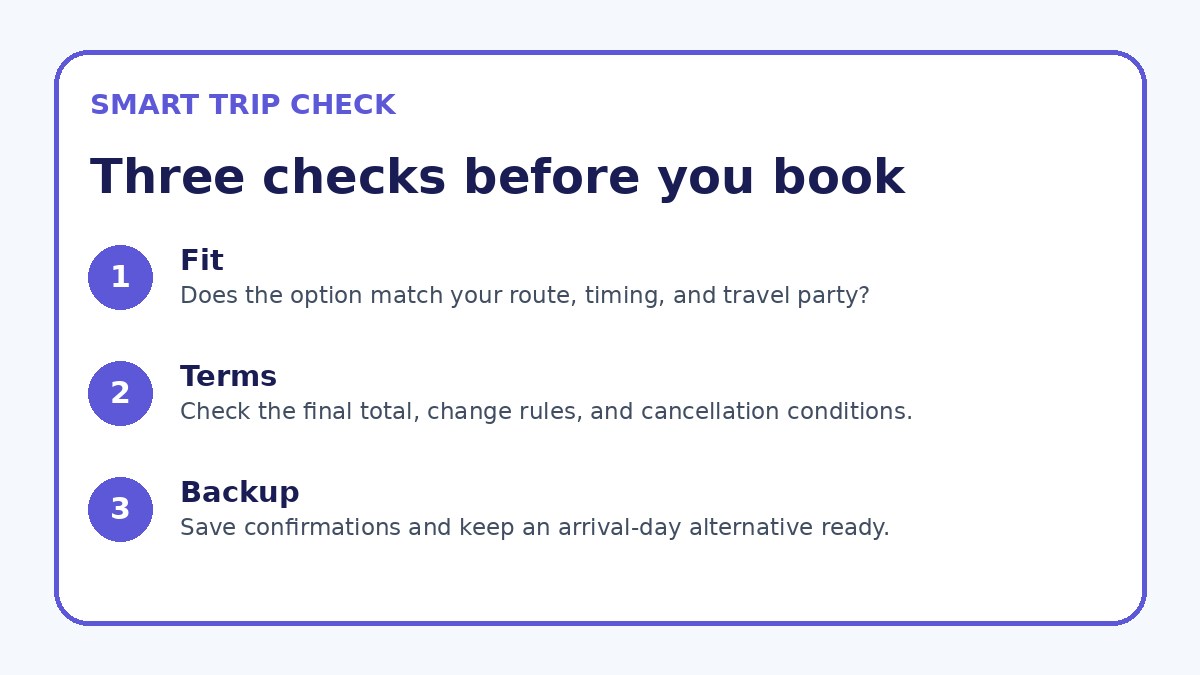
- Open the carrier’s final booking page and read the full change and cancellation policy before entering payment.
- Note any deadlines for free changes (for example within 24 hours of booking) and set a calendar reminder if you think you may change.
- Confirm whether refunds are cash, travel credit, or voucher-only, and record voucher expiry and transfer rules if applicable.
- Verify whether add-ons like checked baggage and seat selection transfer automatically when the main ticket is changed.
- If booking through an agency, ask the agency how they handle reissues and whether they add service fees on top of airline charges.
- Screenshot or save the fare rules and booking confirmation so you can show them to airline staff if you need to rebook or dispute fees.
How to compare direct and connecting options through the lens of change rules
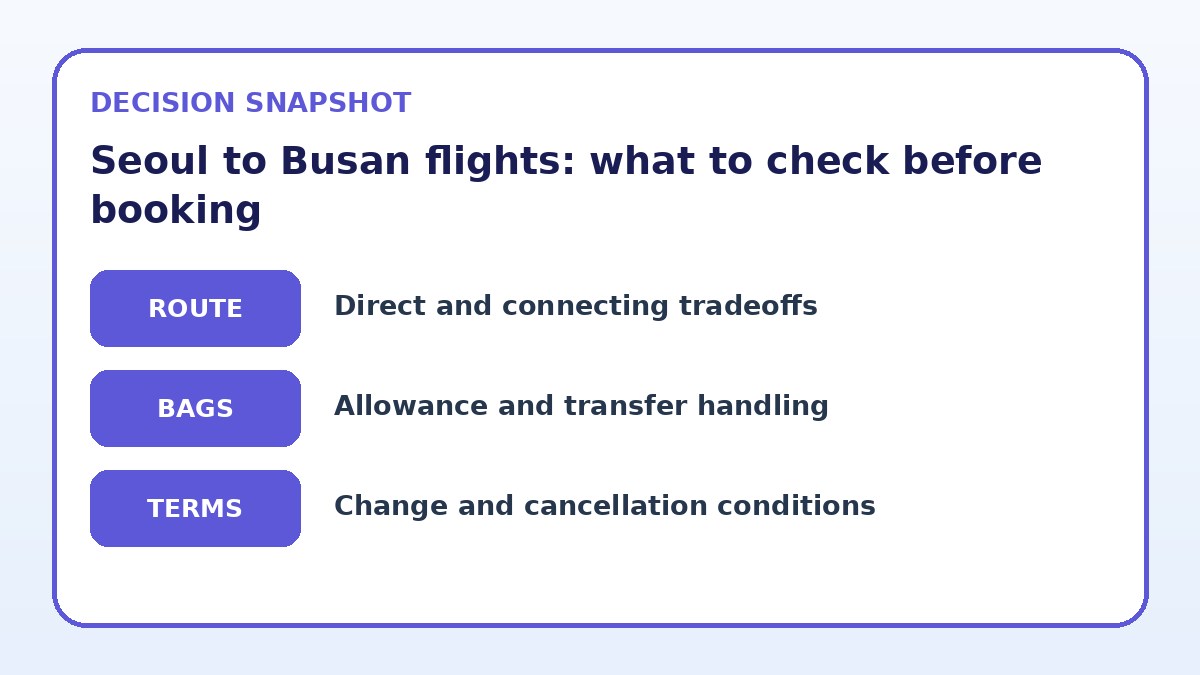
For Seoul to Busan travel you may find direct flights and options that route via other cities; when comparing, don’t look only at total journey time and price. Check change and cancellation rules for each itinerary: a connecting itinerary combining two separate tickets may require you to change each segment separately, doubling fees or creating rebooking complexity. By contrast, a through-ticket with a single carrier or partner alliance often simplifies changes—one reissue can cover the entire journey, though you may still face a fare difference. Confirm on the booking page whether the itinerary is protected as a single ticket and how disruptions will be handled.
If reliability and a simple rebooking process matter more than a small price advantage, prioritize a single-ticket direct or partner-carrier itinerary with clearer change rules. If you’re comfortable managing each segment and possibly rebooking independently—useful if you want lower fares and are willing to accept more work in case of changes—separate tickets can save money but increase risk. Always verify on the provider’s confirmation how checked baggage and seat assignments are handled in your chosen itinerary and whether they will carry over after a change.
Frequently asked questions
Can I change a Seoul to Busan flight the day of travel without paying a fee?
That depends on the fare class and the airline’s same-day change policy. Some flexible fares allow same-day changes for free or a reduced fee; others treat last-minute changes like standard reissues, requiring any fare difference plus a change fee. Check the carrier’s final booking page for same-day or airport-desk cutoffs and whether mobile/app changes are permitted. If you expect to need this flexibility, choose a fare that explicitly lists free or low-cost same-day changes on the booking page.
If I cancel a nonrefundable Seoul to Busan ticket, will I get any money back?
Nonrefundable tickets typically do not return the base fare, but policies vary: some airlines will convert unused value to a travel credit or voucher after deducting a cancellation fee, while taxes and certain government fees may be refundable. Verify on the carrier’s final booking page what portion—if any—can be refunded and under what conditions. If booking through a third-party site, confirm whether the agency charges additional cancellation or processing fees that affect the total refund or voucher value.
How should I handle checked baggage and seat reservations when changing my booking?
Before changing, check whether baggage and seat purchases are transferable with the ticket change; some airlines automatically carry them over, others require you to rebook add-ons. If add-ons are nontransferable, you may need to repurchase them at the new fare level after making a change. Confirm these details on the final booking page and note any separate refund or transfer rules for optional services to avoid unexpected extra costs when you reissue or cancel.
Final planning note
For solo travelers on the Seoul to Busan route, the smartest booking decision begins with matching the fare’s change and cancellation rules to how fixed your plans are. If your dates are tentative, pay for greater flexibility and save potential headache and rebooking fees later. If you’re confident in your schedule, a restricted fare can lower costs—provided you accept the risk and follow a checklist that protects you if plans shift. Always verify the carrier’s final booking page for exact change windows, fees, voucher terms, and how add-ons are handled. When comparing itineraries, weigh the simplicity of a single ticket against the savings and complication of separate legs. If you want a quick cross-check of current options and rules, you can compare listings on Trip.com, but always rely on the carrier’s booking page for the contractual details before you buy.
Continue planning
Check current options and final conditions
Use the provider page to confirm live availability, the final total, cancellation terms, and every condition that matters to your trip.
This evergreen planning guide was created with AI-assisted drafting and a structured quality review. It does not display live prices, schedules, availability, visa guidance, or provider rankings. Verify current details before booking. Some links are affiliate links; we may earn a commission at no additional cost to you.