Practical answer up front: for most families traveling between Tokyo and Osaka, Japan’s high-speed train network (Shinkansen) will be the fastest, most convenient door-to-door option with frequent departures and easy luggage handling. Coaches can save money on fares and overnight time while offering simpler seat booking and fewer breaks. Ferries are a slower, occasionally scenic alternative that may suit families wanting a relaxed, vehicle-inclusive trip. Driving gives flexibility but adds navigation, tolls, and parking hassles in cities. Use this guide to match travel time, cost sensitivity, luggage needs, child comfort, and transfer complexity to the right transport mode—and to know exactly what to check on provider booking pages before committing.
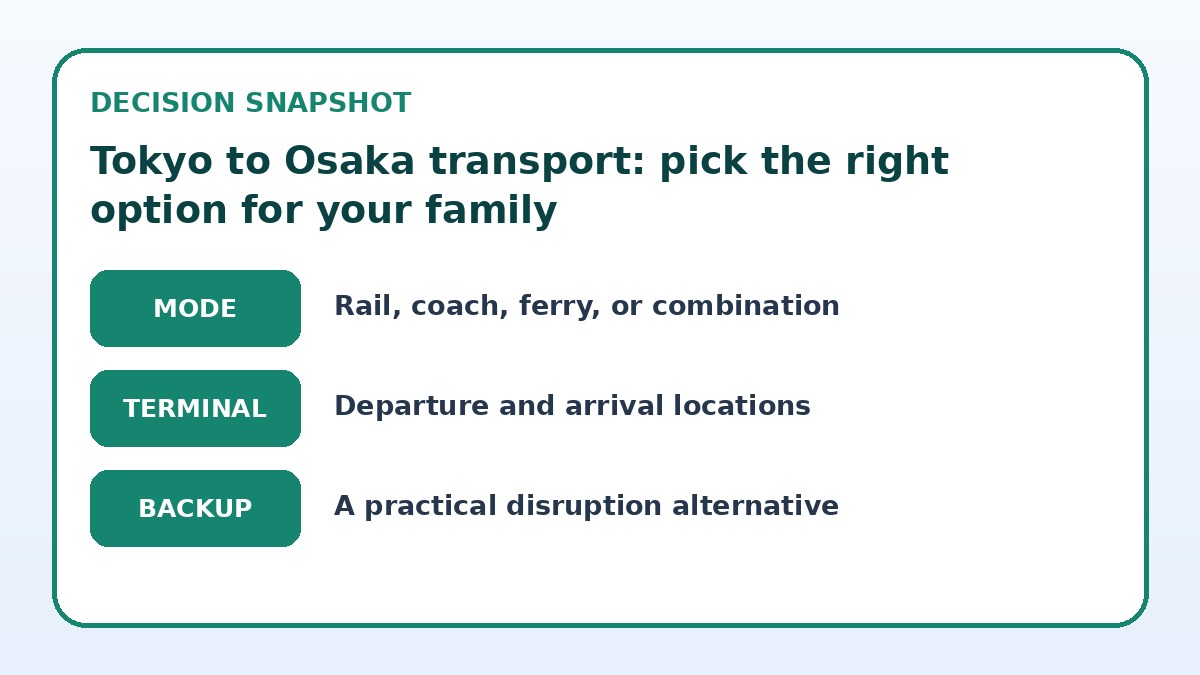
See current options before you compare the details
Availability and final conditions change. Open Trip.com now or keep reading for the practical comparison.
Trains (Shinkansen and conventional rail): speed, predictability, and station logistics
Trains are the default family choice for many reasons: predictable journey lengths, frequent departures, and straightforward station-to-station navigation. With the Shinkansen, you’ll generally change less often than using regional lines. Station amenities often include accessible toilets, vending machines, and waiting areas where children can stretch legs; major stations have family-friendly facilities. Decide whether reserved seats or unreserved carriage are better for your group—reserved seats guarantee you sit together, which is frequently worth the extra step when traveling with young children or strollers.
When comparing train options, look at total door-to-door travel time including transfers to and from stations, not just the time on the train. Check luggage rules and carriage layouts if you have big suitcases or a stroller; some services have limited luggage racks and regulations that vary by operator. Inspect station access—how long it takes to leave the station and reach your accommodation—because a fast train that dumps you at a distant station may not save time overall.
Coaches and overnight buses: cost-effective and simple planning
Coaches often win on price per person and can be very simple to book, with direct routes between major terminals in Tokyo and Osaka. Night coaches double as a place to sleep, which may save on one night’s accommodation for families comfortable sharing a berth or reclining seat. For young children, consider seat configuration and whether the coach offers child seats, bassinets, or easy access to restrooms. Check pickup and drop-off locations, since coach terminals can be farther from your hotel than main train stations.
Compare coach departure times to your family’s sleep and activity schedule—overnight services can be convenient but may be disruptive for some children. Verify luggage allowances and how carry-on items are handled; coaches often put large bags in an underfloor hold, which can be less accessible during the trip. Before booking, confirm the exact boarding address and arrival point, and read the operator’s policy on child fares, seat assignment, and cancellation to avoid surprises.
| Approach | Best for | Tradeoff to check |
|---|---|---|
| Shinkansen (high-speed train) | Families prioritizing speed, frequent departures, and minimal transfers | Higher fares and potential luggage restrictions compared with surface options |
| Express or overnight coach | Budget-conscious families willing to trade time for lower out-of-pocket fares | Longer journey times and less personal space than trains or private vehicles |
| Ferry (passenger or car ferry) | Families who value space, a relaxed pace, or need to bring a vehicle | Longer travel times and port transfer logistics that may add complexity |
| Private car or rental (mixed-mode) | Families needing door-to-door flexibility or traveling with bulky gear | City traffic, tolls, parking difficulty and possible higher total costs |
Ready to check the option that fits your plan?
Use your exact dates and traveler details so the provider page can show the current total and conditions.
Ferry and car-inclusive crossing options: space and a slower pace
Ferries between Honshu and nearby islands or coastal routes aren’t the fastest way to reach Osaka from Tokyo, but they provide a relaxed environment and generous space for families who want to move around during the voyage. Some services allow you to bring a car, which is useful for families planning road trips that continue after arrival in Osaka. Ferries often have simple cabins or reclining areas and eateries, which can be helpful for long crossings and infants who need a calm place to nap.
If you consider a ferry with a vehicle, factor in how driving before and after the ferry fits with your city-center plans—urban driving and parking in Osaka and Tokyo are more challenging than intercity navigation. Confirm whether the ferry operator accepts child seats for cars, what safety and lifejacket provisions are available for children, and the exact check-in time for vehicles as these are commonly stricter than passenger-only sailings. Verify all vehicle-size limits and boarding procedures on the operator’s booking page.
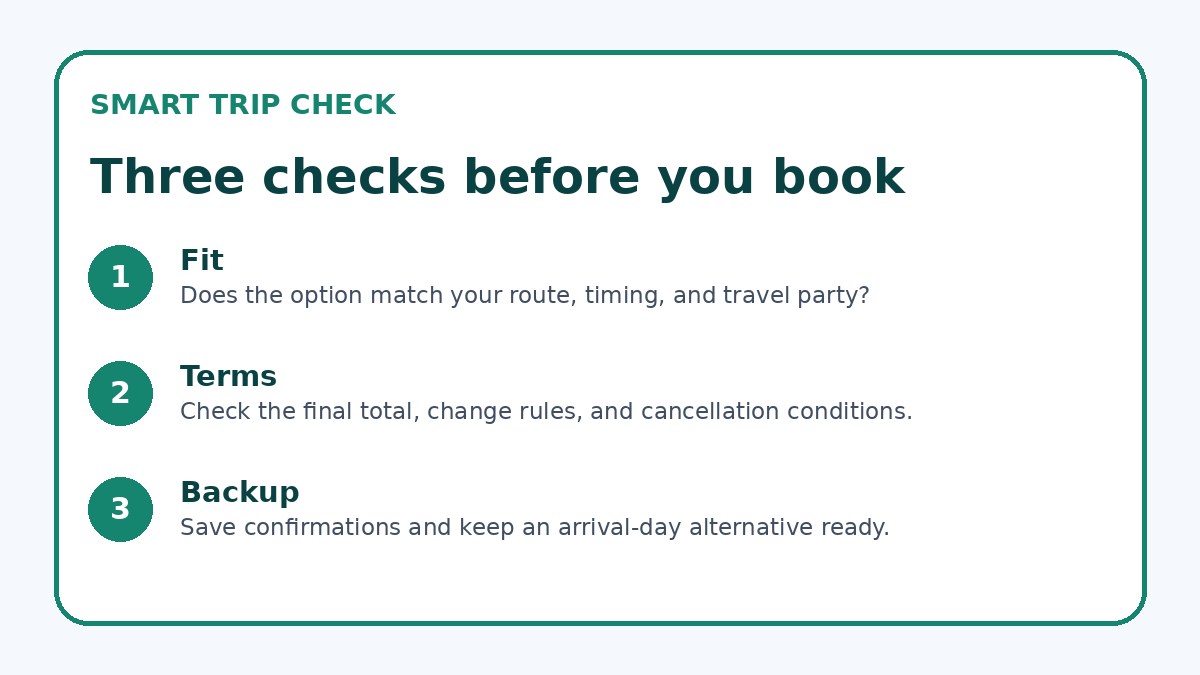
Before you book
- Compare total door-to-door time for each mode, including transfers, to see which saves you the most family convenience.
- Verify luggage and stroller policies on the provider’s official booking page—some carriers limit large suitcases or require pre-registration.
- Confirm seat reservation options for your group so you can sit together, especially on trains and coaches with mixed reserved/unreserved seating.
- Check exact boarding and arrival locations and plan how to get from station or terminal to your accommodation.
- If driving, confirm child-seat laws, availability from the rental company, and any cross-prefecture restrictions on the booking page.
- Review cancellation, change, and refund policies before you pay, especially for nonrefundable promotional fares or time-limited coach tickets.
Driving and mixed modes: flexibility versus urban friction
Driving gives ultimate flexibility for families who want to stop frequently, transport bulky items, or include side trips along the way. It’s particularly attractive if you plan to visit regional spots off the main rail corridors where public transit is sparse. However, you’ll trade predictable travel times for potential delays in and around cities, pay tolls, and need to manage parking at destinations—factors that can erode any time or cost advantages.
A mixed-mode plan—drive to a suburban rail hub, park, and take a train into the city—can combine convenience with reduced urban driving. When evaluating this approach, compare total travel time including parking and transfers, and check whether parking reservations are needed. Always confirm driver license requirements, insurance coverage, and child-seat regulations with the rental company before booking, and verify any cross-prefecture restrictions or additional fees on the provider’s final page.
Frequently asked questions
Is the Shinkansen the best option for families with young children?
The Shinkansen often makes sense for families with young children because trains are frequent, punctual, and reduce the number of transfers. Reserved seats let you sit together and many trains have accessible toilets and smooth rides that are easier for napping infants. However, consider how far the departure and arrival stations are from your lodgings—sometimes a slightly slower option located closer to your hotel can be calmer overall. Before booking, check seat reservation rules, luggage limits, and whether the train requires online seat selection to keep your family together.
When should we choose an overnight coach instead of a daytime train?
Choose an overnight coach if you want to save on one night’s accommodation or prefer to travel while children sleep, and if your family handles reclining seats and coach restrooms comfortably. Coaches can be significantly cheaper per person than daytime high-speed trains, but keep in mind reduced personal space and limited mobility for very young children. Confirm boarding location, the coach’s restroom and changing facilities, and the operator’s child-seat or fare rules on the booking page to make sure the service matches your family’s needs.
Can taking a ferry with a car be worth it for a family road trip?
A ferry with vehicle carriage can be worth it if you plan a broader road itinerary that requires a car upon arrival and if you value onboard space for children to move around. Ferries can provide cabins or open seating for naps and downtime, reducing the stress of long highway driving. But remember port transfer times, vehicle-size restrictions, and potential fees for vehicle boarding. Always check vehicle dimensions accepted, check-in deadlines, and the operator’s child and vehicle safety policies on the final booking page before committing.
Final planning note
Choosing the right Tokyo to Osaka transport for a family trip comes down to balancing speed, cost, comfort, and logistics. Shinkansen services offer the quickest, most predictable experience with easy station access and frequent departures, while coaches and ferries trade time for lower fares or extra space. Driving or mixed-mode travel gives flexibility but introduces tolls, parking, and city driving challenges. Before you book, compare full door-to-door travel times, seat and luggage rules, boarding locations, and cancellation policies on the provider’s official pages—Trip.com can be a convenient place to compare live availability and conditions, but verify details with the carrier before purchase.
Continue planning
Check current options and final conditions
Use the provider page to confirm live availability, the final total, cancellation terms, and every condition that matters to your trip.
This evergreen planning guide was created with AI-assisted drafting and a structured quality review. It does not display live prices, schedules, availability, visa guidance, or provider rankings. Verify current details before booking. Some links are affiliate links; we may earn a commission at no additional cost to you.