Practical answer up front: for most solo travelers visiting downtown Toronto, public transport plus occasional rideshares usually beats renting a car. Driving can make sense if your itinerary includes multiple day trips outside the city, remote attractions with limited transit, or if you value absolute schedule freedom. Before you book a car, weigh the route value (how many destinations lie outside efficient transit corridors), pickup and return friction at your chosen location, and the exact insurance wording the rental company offers. This guide lays out the tradeoffs, what to verify on booking pages, a non-driving fallback plan, and a checklist so you can decide confidently. If you prefer to compare availability, Trip.com is one optional place to view current car inventory and transport connections, but always confirm fees, coverage, and pickup details directly with the provider.
Route value: when driving truly adds time or access
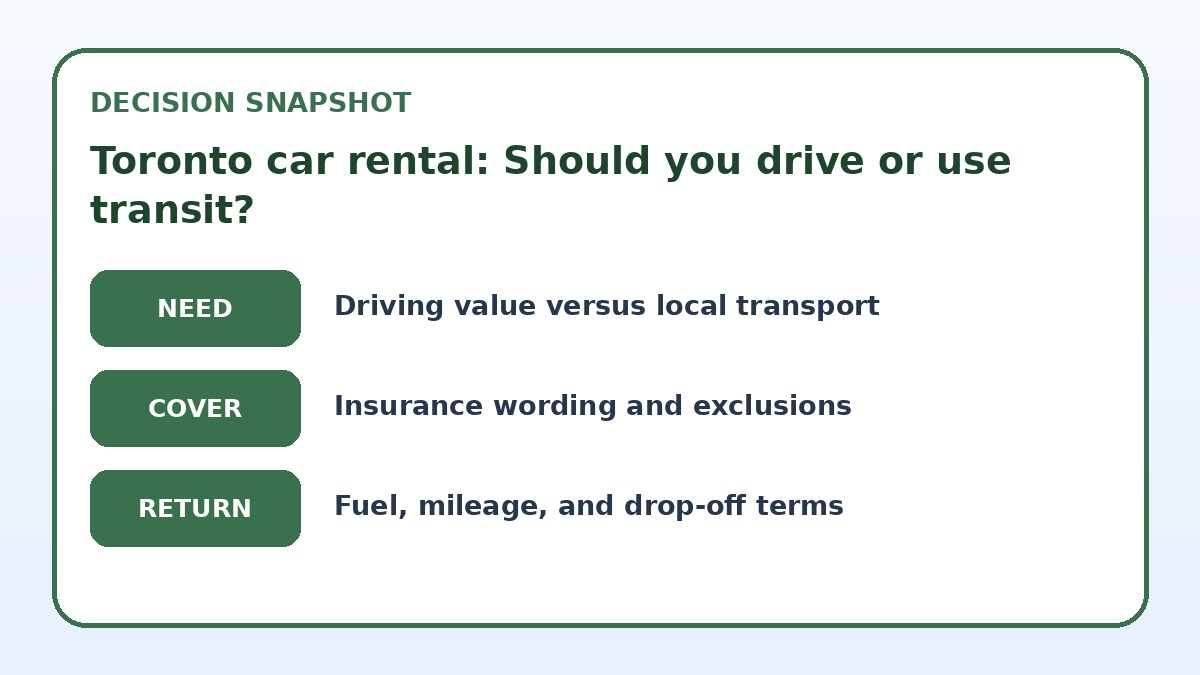
Ask whether a rented car shortens travel time meaningfully or simply shifts it into parking and congestion. Toronto’s core — from Church and Wellesley across to the Harbourfront and west to High Park — is dense and well covered by subways, streetcars and buses. If your itinerary is focused inside these corridors, travel times are competitive with or faster than driving once you factor in traffic, searches for paid parking, and walking time from distant garages. Conversely, destinations that sit outside the transit grid, such as rural conservation areas, remote lakeside trails, or dispersed wineries, can be much easier to reach by car where public transit would require transfers, longer waits, or infrequent service.
Think about the number of intercity legs in your plan. If you’re doing a single day trip that can be reached by GO Transit or a guided tour, renting is often unnecessary. But if you plan several day trips with flexible start and end times, or you need to carry gear — bikes, photography equipment, or camping supplies — a car can unlock routes you couldn’t do comfortably otherwise. Balance route density, the unpredictability of local transit schedules for off-peak days, and how much time you place on door-to-door convenience when deciding whether a rental offers real route value.
Decide whether driving earns its place
| Mobility strategy | Best for | Cost or friction to check |
|---|---|---|
| Rent a car for full trip | Travelers with multiple remote day trips or heavy gear who prioritize schedule control. | Higher costs, parking hassles, and need to verify insurance and airport/downtown pickup details. |
| Transit-first with occasional rideshare | Solo visitors focused on downtown and nearby sights who want low hassle and lower fixed costs. | Less flexibility for remote sites; rideshares can add up for late nights or distant destinations. |
| One-way rental combined with transit | Itineraries starting in the city and ending outside it (or vice versa) where driving one leg saves time. | Potential one-way fees and more complex pickup/return logistics to confirm on booking pages. |
| No-rental plus guided day trips | Solo travelers who want access to distant attractions without driving or complex logistics. | Fixed schedules and less personal freedom to linger or deviate from the planned route. |
Check live rental choices only after the route test
Use the exact driver, dates, pickup point, and return plan to compare current conditions.
Insurance wording: what to check before you sign
Insurance language in rental agreements is dense but crucial. Don’t assume your personal auto policy or credit-card coverage automatically applies — terms differ by insurer, vehicle class, and country. On the rental provider’s final booking page, verify whether the price includes a collision damage waiver (CDW) or only basic third-party liability. Look for exclusions (young driver surcharges, off-road use, or unauthorized drivers) and precise deductible amounts. If you plan to cross provincial or international borders, check whether the policy covers that movement. Ask the counter for a written summary of coverage to avoid surprises if you need to file a claim.
Also confirm whether supplemental liability insurance (SLI), personal accident coverage, and theft protection are optional and what each costs. Credit card benefits sometimes cover CDW for rentals when certain criteria are met — but the card issuer’s terms may exclude specific vehicle types or require you to decline the rental company’s CDW to be eligible. Before departure, contact your insurer and card provider, request written confirmation of coverage limits and exclusions, and compare that to what the rental company lists on its booking page so you can make an informed choice at pickup.
Compare the full rental conditions
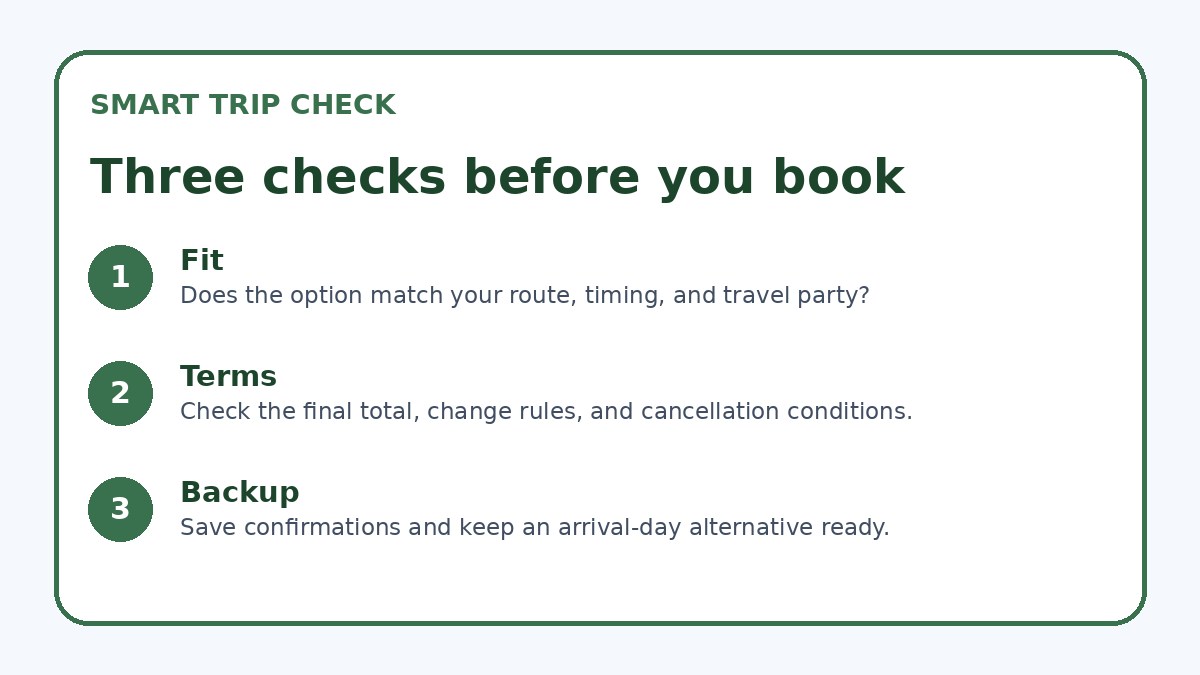
Confirm insurance wording, exclusions, deposit, fuel, mileage, and return terms on the final page.
Pickup and return friction: logistics that eat time and patience
Pickup location matters more than brand. Airport counters may be convenient but often mean shuttle rides from terminals and busy queues; downtown locations can be quicker but might include limited parking for the return. One-way rentals add administrative complexity and often a fee. Check the exact pickup and return hours on the rental confirmation, and whether after-hours drop boxes are available. Plan extra time for the initial vehicle inspection and for the counter agent to process your insurance selections. If you’ll use transit to reach the pickup site, map that connection and include transit waits in your schedule.
Consider the return process carefully: metropolitan garages with height limits or time-restricted access can cause headaches. If you’re flying out the same day, factor in traffic and the recommended arrival time at the airport. Ask whether the location requires you to refuel to a certain level, whether they accept receipt photos, and whether there’s a documented charge for failure to refill. Minor friction at pickup or return can turn a short trip into a stressful experience, so choose locations and appointment times that minimize overlap with peak traffic or rush hours.
Car rental terms to verify
- Map every destination and mark which are within a 10–15 minute walk of subway/streetcar stops to see how much of your trip is transit-accessible.
- On the rental company’s final booking page, download or screenshot the full insurance wording, including deductible amounts and any geographic exclusions.
- Confirm pickup and return hours, shuttle requirements, and after-hours drop procedures for your chosen rental location before finalizing your booking.
- Check whether your credit card’s rental insurance applies and get written confirmation from the card issuer describing applicable vehicle types and required steps.
- Compare transit travel times for key legs using official TTC/GO schedules and map the combined travel-plus-transfer time against driving estimates.
- Plan a non-driving backup for each day that relies on a mix of transit lines, guided tours, or rideshares and list contact numbers and booking pages.
Non-driving fallback: planning a transit-first solo itinerary
A transit-first plan gives you flexibility without the costs and overhead of a car. Build an itinerary around the TTC subway and streetcar grid for downtown exploration, GO Transit for regional trips, and ferries for the Toronto Islands. For destinations slightly off transit routes, pair the network with scheduled regional buses, short rideshares, or local taxi services. Set realistic travel windows that account for transfer waits and walking between stops. Keep a small rolling bag if you expect to use public transport frequently; it makes boarding streetcars and trains easier and speeds up transfers.
Prepare a transit contingency for late nights or weather-impacted days: bookmark rideshare apps, identify reliable taxi numbers, and check the frequency of late-night transit routes on provider pages. For day trips where transit would be slow or infrequent, consider booking a small guided tour or a shared shuttle that covers the route — these can match selective driving benefits without the rental logistics. Finally, confirm accessibility options, luggage policies, and peak schedules on the transit provider pages so you’re not surprised on travel day.
Car Rental & Road Trip questions travelers ask
Can I rely on my personal auto insurance or credit card for a Toronto car rental?
Possibly, but don’t assume coverage. Policies and card benefits vary by issuer and jurisdiction. Before you decline the rental company’s protection, contact your insurer and your credit card company to request written confirmation of whether they cover rentals in Canada, any vehicle exclusions, deductible amounts, and the required claim procedure. Compare that written confirmation against the rental company’s insurance wording on the final booking page. If the documents conflict, get clarification in writing to avoid surprises if you need to file a claim.
Is parking in downtown Toronto hard to find and expensive?
Parking availability and rates fluctuate by neighborhood and time of day. Many downtown streets have paid metered parking, and lots or garages enforce height and access restrictions. Before relying on a rental, identify likely parking options near your accommodation and major stops, and note any cost and time limits posted by the lot operator. Also check whether your hotel offers parking and what rules apply. Verify exact fees and restrictions on the parking operator’s or hotel’s official page, and build a time cushion for walking from garages to your final destination.
What’s the best way to reach Toronto attractions at night without a car?
Use a combination of TTC night routes, GO Night services where available, and rideshare or taxi options for gaps. First, check official transit provider pages for late-night routes and any planned service changes. For areas with limited night transit, identify reliable rideshare services and local taxi companies and save their apps or phone numbers. Consider scheduling return trips in advance where possible, and factor in additional cost and wait time for peak events or inclement weather. For safety, share your route and estimated arrival time with someone you trust.
Final decision note
Deciding whether to rent a car in Toronto comes down to itinerary geography and your tolerance for logistics. For downtown-focused solo travelers, public transit plus occasional rideshares usually wins for convenience and lower administrative friction. If your trip includes multiple rural or widely spaced day trips, heavy gear, or a strict time budget that transit can’t meet, a rental can be worth the extra verification work around insurance and pickup/return rules. Whatever you choose, confirm insurance wording and pickup/return procedures on the rental provider’s final booking page, map transit alternatives for each day, and keep a non-driving fallback. That preparation makes either choice work smoothly for a solo traveler.
Continue planning
Check current options and final conditions
Use the provider page to confirm live availability, the final total, cancellation terms, and every condition that matters to your trip.
This evergreen planning guide was created with AI-assisted drafting and a structured quality review. It does not display live prices, schedules, availability, visa guidance, or provider rankings. Verify current details before booking. Some links are affiliate links; we may earn a commission at no additional cost to you.