If you’re visiting Bangkok for the first time, the most practical question about renting a car is not just price—it’s whether driving actually improves your trip. For many travelers, a car makes sense if you plan day trips outside the dense city center (Ayutthaya, Kanchanaburi, coastal beaches) or are traveling with family and lots of luggage. But Bangkok traffic, parking scarcity, and one-way drop fees can quickly erase any convenience. This guide gives a clear recommendation up front, then unpacks four mobility strategies: airport pickup, city pickup, taxis/ride-hailing with day rentals, and using public transit plus short-term car hire. I’ll explain route-value (where a car helps), insurance wording to check, pickup/return friction to expect, and a non-driving fallback so you can book confidently. Where provider-specific details matter, I’ll tell you exactly what to verify on the final booking page.
Decide whether driving actually improves your Bangkok trip
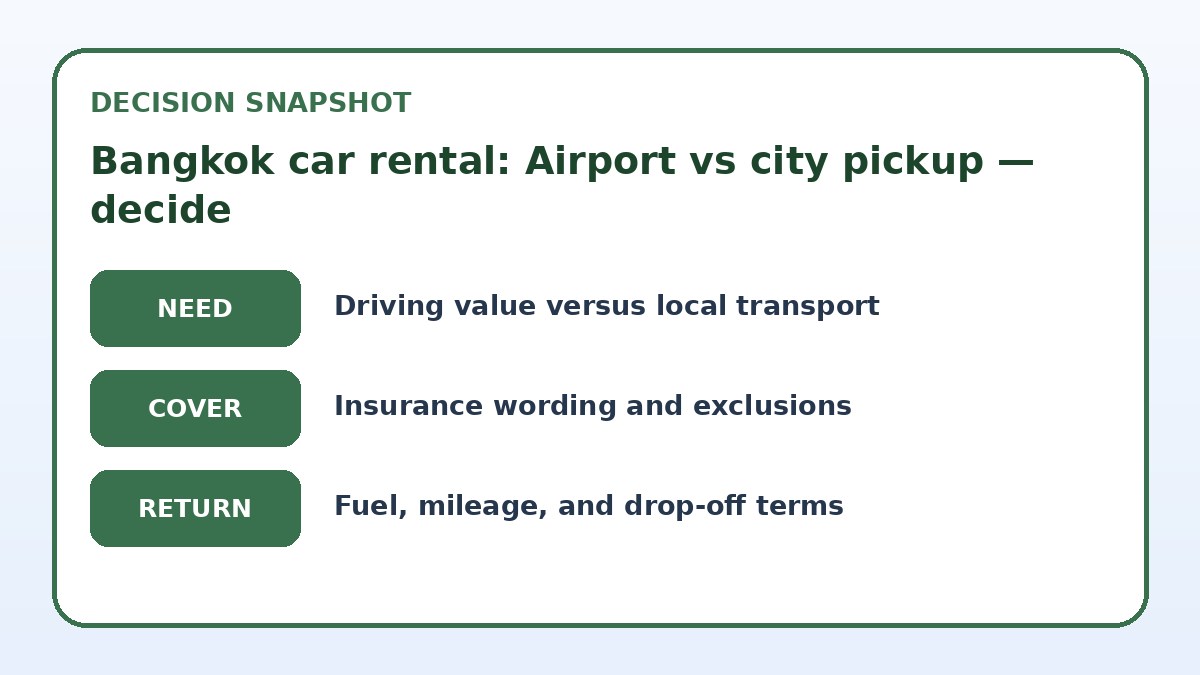
Start with itinerary value: list the places you really need a car to reach. Bangkok’s central districts are well served by BTS, MRT, riverboats and taxis; for temple-hopping, markets, and nightlife the city’s transit network and ride-hailing often outperform a rented car. A car pays off when your plan includes multi-hour drives outside the metro, multiple stops at dispersed sites in one day, or transporting bulky equipment. If you have flexible arrival and departure times and plan only a few point-to-point day trips outside the city, consider renting a car only for those specific days instead of the whole stay.
Think about stress and local driving culture. Bangkok has congested roads, many motorcycles, and complex junctions; even experienced drivers can find rush-hour navigation draining. If you don’t want to manage toll cards, parking searches, and local traffic patterns, factor that friction into your decision. On the other hand, if your group values flexibility—stopping where you want, carrying luggage without transfers—a rental can feel liberating. The right call depends on the balance between added convenience and the time you’ll lose in traffic.
Decide whether driving earns its place
| Mobility strategy | Best for | Cost or friction to check |
|---|---|---|
| Airport pickup and drive out of Bangkok | Travelers heading straight to outskirts or other provinces with heavy luggage or early departures. | Saves transfers but may include airport surcharges, longer counter waits, and potential one-way drop fees. |
| City pickup near your hotel | Visitors based in central Bangkok who need a car for some in-city driving and nearby day trips. | Avoids airport fees but adds inner-city navigation, parking challenges, and potentially limited after-hours returns. |
| No rental—public transit and ride-hailing | First-time visitors staying mainly in central Bangkok or with short, frequent trips inside the city. | Simplifies travel and avoids parking, yet less convenient for multi-stop day trips outside the metro or late-night travel beyond transit hours. |
| Hybrid: short-term rental only on day trips | Travelers who want a car only for selected day trips outside Bangkok without a full rental period. | Reduces driving time in the city but requires extra planning for pickup/return and may be pricier per day. |
Check live rental choices only after the route test
Use the exact driver, dates, pickup point, and return plan to compare current conditions.
Pickup and return friction: airport versus city locations
Airport pickup often means immediate access to your vehicle the moment you land and a clear exit route for long-distance drives. Expect longer queues at counters, shuttle transfers from desks or car parks, and sometimes mandatory airport surcharges. Airport rentals can simplify logistics when you’re continuing to other provinces or have heavy luggage, but confirm if the rental company allows returns at different locations or if one-way drop fees apply. Also check the return process: whether you drop keys at a staffed desk, a secured lot, or a designated airport return lane.
City pickup locations are usually closer to hotels and can offer more flexible office hours and quicker handovers if you arrive after a long flight. They can save you time and money by avoiding airport surcharges and the need to drive an extra distance through congested routes. However, city returns may require finding a specific branch and can come with limited after-hours drop options. Before you book, verify exact pickup/return addresses, after-hours policies, and whether you can leave the car overnight without moving it for valet or parking restrictions.
Compare the full rental conditions
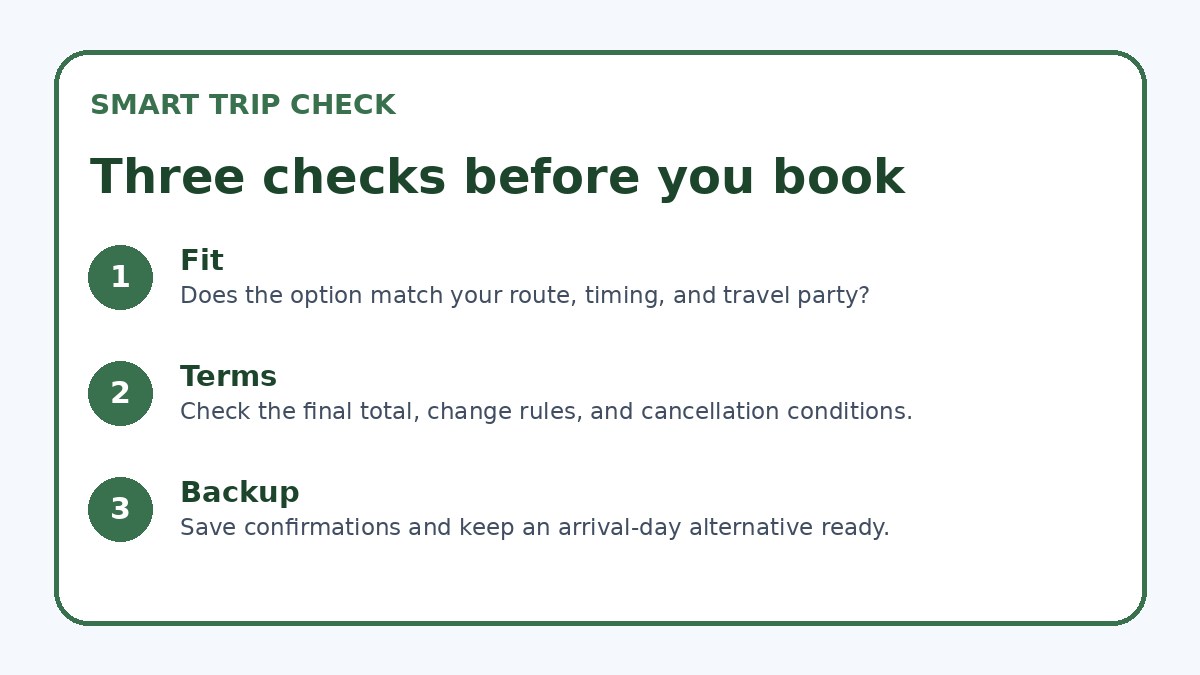
Confirm insurance wording, exclusions, deposit, fuel, mileage, and return terms on the final page.
Insurance wording and what to verify on the booking page
Insurance language can make or break your peace of mind. On the booking page, look for collision damage waiver (CDW) and theft protection terms, the amount of the excess (deductible) you are liable for, and whether basic coverage applies or if additional waivers are optional. Check whether the policy excludes certain road types, regions, or cross-border travel. If a lower excess is offered through a third-party add-on, compare whether that provider requires you to pay the rental company first and claim reimbursements later.
Also verify driver eligibility rules, such as minimum and maximum age, how many drivers are included, and whether your domestic or international driver’s license is accepted or needs an International Driving Permit. Read fuel policy wording (full-to-full is simplest), mileage limits, and whether roadside assistance is included. When in doubt, ask for screenshots or PDFs of the rental agreement before finishing booking; for provider availability checks you can optionally compare offers on Trip.com but confirm all terms on the supplier’s final booking page.
Car rental terms to verify
- Confirm pickup and return addresses, exact open hours, and after-hours drop procedures on the supplier’s final booking page.
- Verify the collision damage waiver (CDW) terms, theft protection, and the deductible amount you must pay in case of damage.
- Check fuel policy wording (full-to-full vs pre-purchase) and whether mileage limits or toll transponders are included or charged separately.
- Ensure your driver’s license is accepted—carry an International Driving Permit if required—and check minimum/maximum age and additional driver fees.
- Ask whether the reservation includes roadside assistance, what it covers, and the phone number or procedure for emergencies.
- Confirm one-way drop fees, cross-province or cross-border restrictions, and whether returns at the airport have extra charges.
Non-driving fallback and combining modes for smarter trips
If you decide not to drive in Bangkok, plan a fallback that keeps your itinerary flexible. Use a mix of BTS/MRT for central travel, riverboats for scenic north-south trips along the Chao Phraya, and ride-hailing apps for late-night returns or destinations off-transit lines. For day trips outside the city, consider booking a private transfer or a guided day tour that includes pickup from your hotel instead of renting for the whole stay. This approach avoids parking headaches and lets you still reach attractions outside the core without managing a vehicle.
You can also combine strategies: pick up a car for specific days from a city branch near your hotel or for an airport pickup when leaving Bangkok by land. Short-term hourly or daily rentals from neighborhood offices work well for weekend escapes. The key is to match vehicle use to the days you will genuinely need it, minimizing unnecessary driving in dense traffic and reducing parking and toll exposure while keeping freedom for off-city excursions.
Car Rental & Road Trip questions travelers ask
Is it safe to drive in Bangkok as a first-time visitor?
Driving in Bangkok is possible but not always comfortable for first-time visitors. Roads can be congested, traffic rules are enforced but local driving patterns (frequent lane changes and many motorcycles) require constant attention. If you’re experienced with busy urban driving and comfortable reading local road signs, plan routes with buffer time and avoid peak hours. Otherwise, rely on taxis, ride apps, and public transit in central areas and rent a car only for day trips outside the metropolitan core when roads become less dense.
How do I compare liability and insurance coverage across rental options?
On each booking page, look for CDW, theft cover, and the excess/deductible amount; those three items determine your out-of-pocket risk. Note exclusions, such as driving on certain unpaved roads, driving under influence, or unauthorized drivers. If a lower excess is offered through extra waivers, check whether you pay the rental company first and claim reimbursement later. Request the rental contract or an insurance summary in writing before you confirm, and compare word-for-word rather than relying on summary bullets.
What are the practical advantages of picking up a car in the city rather than at the airport?
City pickup typically avoids airport surcharges and may be closer to your accommodation, reducing initial transfers. City branches may offer more flexible pickup windows and faster handovers if you arrive late. However, you’ll need to plan a route through busy inner streets and find parking near your hotel, which can be time-consuming and costly. If you only need the car for a day trip or two, a city pickup can be the most efficient choice—just verify return options and after-hours procedures before booking.
Final decision note
For most first-time visitors who plan to stay mainly in central Bangkok, driving adds more hassle than benefit: congested streets, parking and tolls often outweigh the convenience. Choose airport pickup if your trip begins with a long out-of-city drive or you’re leaving by road; it minimizes transfers and brings the car to you. Pick up from a city branch if you need a car for select days and prefer proximity to your hotel. If you’re unsure, use a hybrid approach—book short-term rentals only for the days you plan to escape the city and rely on transit and ride-hailing for everything else. Whatever you pick, double-check insurance wording, fuel policy, pickup/return addresses and one-way fees on the final booking page before you confirm.
Continue planning
Check current options and final conditions
Use the provider page to confirm live availability, the final total, cancellation terms, and every condition that matters to your trip.
This evergreen planning guide was created with AI-assisted drafting and a structured quality review. It does not display live prices, schedules, availability, visa guidance, or provider rankings. Verify current details before booking. Some links are affiliate links; we may earn a commission at no additional cost to you.