If you’re arriving in Seoul with more suitcases than you can comfortably carry on public transit, a rental car might look like the obvious fix. The practical answer: renting helps mainly when your itinerary includes frequent transfers between outer suburbs, day trips with heavy gear, or stays in several hotels without easy luggage storage. For most visitors based inside central Seoul, taxis, airport limousines, and short private transfers often solve the luggage problem with less hassle. This guide walks you through the core tradeoffs—route value, pickup and return friction, insurance wording—and gives a clear non-driving fallback so you can compare the total door-to-door time, cost, and stress before opening a booking page.

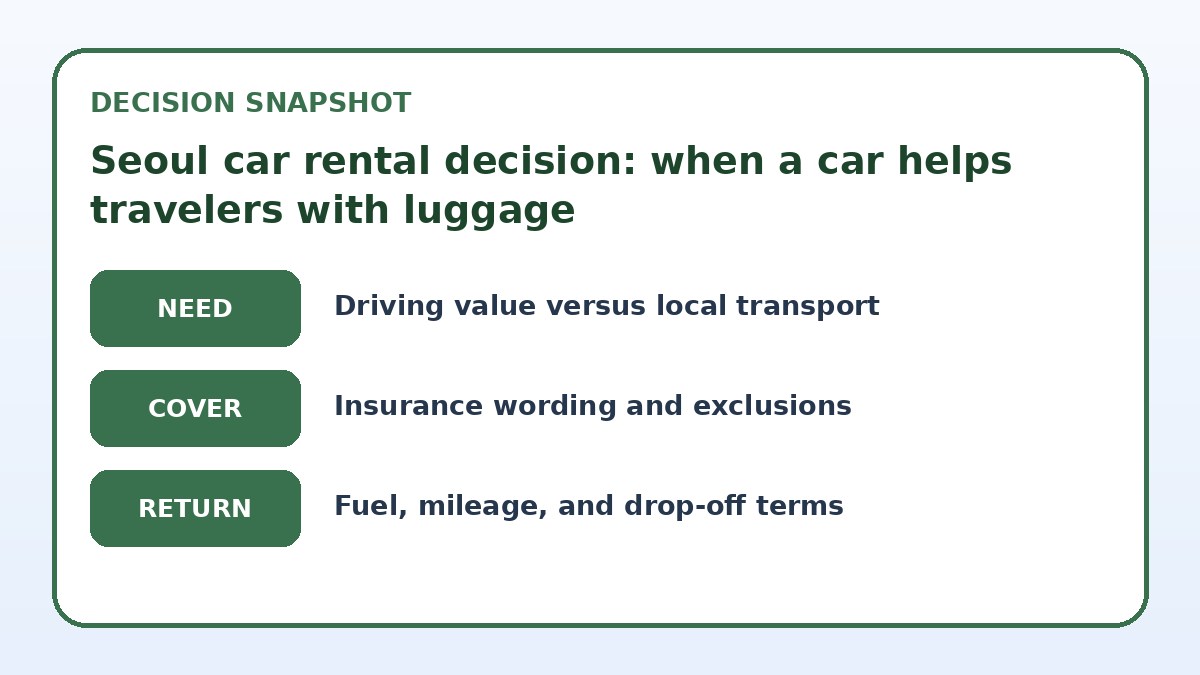
Route value: when driving actually improves your trip
Driving creates value when it shortens or simplifies the most cumbersome parts of your trip. Examples where a car pays off include multi-stop rural or coastal day trips from Seoul, moving between hotels across different districts with large bags, or a plan that includes early-morning rail departures from stations outside the city. Measure value by comparing door-to-door minutes and how much time you’d spend lifting, hauling, or waiting for transfers versus driving directly to each destination.
If your schedule is anchored in central Seoul with sightseeing around subway-connected neighborhoods, the car’s advantages shrink. The subway is faster than surface traffic for core city journeys, and taxis or private transfers can handle short luggage-haul legs. Before booking, sketch your daily routes on a map, estimate transit time and taxi frequency, and weigh that against parking searches, tolls, and likely rush-hour slowdowns.
Decide whether driving earns its place
| Mobility strategy | Best for | Cost or friction to check |
|---|---|---|
| Full rental for entire stay | Travelers with many stops outside central Seoul or large, heavy gear needing door-to-door control | Higher parking, tolls, and possible traffic delays; more paperwork at pickup and return |
| One-way or day rental only for heavy-transfer legs | People who need a car briefly to move luggage between hotels or to reach outer attractions | Possible one-way fees and coordination; reduces time spent driving in central Seoul |
| Taxis/ride-hailing plus subway for sightseeing | Visitors staying centrally who want minimal planning and easy luggage handling for short trips | Can be costlier than subway for many trips and may struggle with very large items |
| Pre-booked private transfer or airport shuttle | Groups or families with lots of luggage needing reliable door-to-door service at arrival or departure | Less flexibility during the trip and potential wait times if sharing shuttle services |
Check live rental choices only after the route test
Use the exact driver, dates, pickup point, and return plan to compare current conditions.
Insurance and coverage: what to verify on the booking page
Insurance wording can change across suppliers and fleet types; read it before you commit. Verify the collision damage waiver (CDW) excess or deductible, whether theft protection covers unattended luggage, third-party liability limits, and if roadside assistance is included. Check if the policy restricts driving outside certain provinces or on particular road types, and confirm how claims are handled—some providers require local police reports and stamped documents for reimbursement.
Don’t assume credit-card coverage will fill every gap; compare what the rental’s optional protections actually add. On the provider’s final booking page, find exact deductible amounts, exclusions for underage drivers, any mandatory add-ons for airport pickups, and the process for preauthorizing your card. If unclear, contact the rental office directly and get names and confirmation of the terms you’ll rely on.
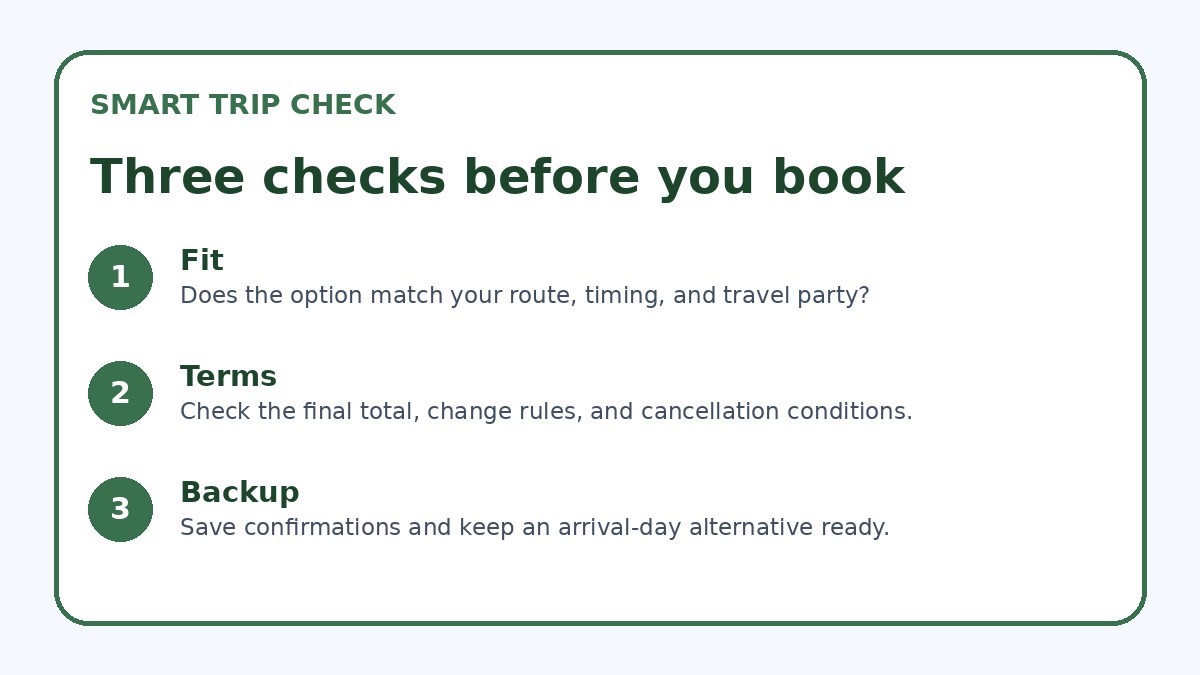
Compare the full rental conditions
Confirm insurance wording, exclusions, deposit, fuel, mileage, and return terms on the final page.
Pickup and return friction: time, paperwork, and luggage handling
Airport pickup sounds convenient but can introduce delays. Factor in baggage reclaim time, the walk to shuttle areas, rental-office queues, and vehicle inspection. If you’ll be collecting children or coordinating multiple passengers, choose an office with staff who speak your language or a streamlined document process. On return, allow extra time for fuel-fill requirements, an inspection that might note minor scratches, and potential queues at the airport drop-off—these steps can erase the time advantages you expected to gain by driving.
If you prefer minimal friction, look for one-way policies that let you return at a different location or city, but verify any one-way fees or restrictions on cross-province returns. Consider rentals from downtown locations if you’re staying centrally; a short taxi to the city office plus a quicker pickup might be calmer than a crowded airport terminal. Whatever you select, add buffer time to your schedule so late check-in or early flights aren’t jeopardized by unexpected rental delays.
Car rental terms to verify
- Map every major stop and calculate door-to-door minutes for driving versus public transit plus taxis.
- On the rental booking page, note deductible amounts, theft exclusions, and whether roadside assistance is included.
- Confirm pickup and return locations, fuel policy, expected wait times, and required ID or card preauthorization.
- Estimate parking costs and availability at each overnight address and major daytime destination.
- Line up one non-driving fallback: private transfer, large-taxi app, or hotel luggage storage with confirmed hours.
- Save screenshots of booking terms and contact details for the rental office and any transfer provider.
Non-driving fallback: efficient alternatives when a car isn’t right
Plan a clear fallback before you cancel public transit options. For luggage-heavy trips, useful alternatives include pre-booked airport transfers that accept multiple suitcases, private taxis or ride-hailing services with minivan options, and porter-friendly hotel shuttle arrangements. Some hotels offer paid luggage storage for multi-night gaps, and major train stations and airports operate left-luggage facilities. Combining a single private transfer for the bulkiest legs with public transit for daytime sightseeing often gives the best balance.
If cost or comfort is your main concern, compare door-to-door transfer times and total costs (including tip equivalents) before deciding. Trip.com can be used to check current transfer and rental availability, but always confirm cancellation terms and baggage allowances on the provider’s booking page. Keep a backup taxi app installed and screenshots of return transport options in case plans change; having a named fallback reduces stress if you decide not to drive.
Car Rental & Road Trip questions travelers ask
Will a rental car save time when traveling between Seoul and nearby sites?
A car can save significant time for door-to-door travel to nearby rural or coastal sites outside Seoul where public transit requires multiple transfers. Measure potential savings by comparing total travel minutes including walking and waiting for trains or buses. For popular nearby destinations well-served by express buses or regional trains, public transport may be competitive during peak traffic times. Always plot the specific route, check station connections, and consider parking time at the destination when deciding.
How do I handle large or fragile luggage when using public transit in Seoul?
For large or fragile items, prioritize direct taxi or private-transfer options for arrival and departure legs. In-city, use spacious taxis or minivan-style ride-hailing vehicles and avoid peak subway rush hours when cars and corridors are crowded. If you must use trains, keep fragile items in hard-shell cases, pad them with clothing, and choose off-peak travel windows. Also check hotel luggage-storage policies in advance so you can drop items between check-out and departures without carrying them all day.
What rental terms should I verify to avoid surprises at pickup or in a claim?
Before you book, verify the exact deductible/CDW, theft coverage limits, whether additional drivers are permitted and charged, and any geographic restrictions. Confirm the fuel policy and whether you must return the vehicle with a full tank, plus how preexisting damage is documented. If you plan to cross administrative borders, ensure cross-province use is allowed. For any ambiguous clause, contact the rental office and get written confirmation; keep that documentation until the rental is closed.
Final decision note
Deciding whether a Seoul car rental fits your trip comes down to routing and friction. Rent if your days include many outer-city transfers, early departures, or bulky gear that would make multiple taxi rides expensive or awkward. Skip the rental if your stay is mostly central Seoul sightseeing—taxis, subway, and targeted private transfers handle luggage well with far less paperwork. Always read insurance and pickup terms on the booking page, factor in parking and return time, and prepare a clear non-driving fallback. With those checks done, you’ll know whether a car truly simplifies your journey or just adds another thing to carry.
Continue planning
Check current options and final conditions
Use the provider page to confirm live availability, the final total, cancellation terms, and every condition that matters to your trip.
This evergreen planning guide was created with AI-assisted drafting and a structured quality review. It does not display live prices, schedules, availability, visa guidance, or provider rankings. Verify current details before booking. Some links are affiliate links; we may earn a commission at no additional cost to you.