Practical answer first: before you search live fares, decide whether you value a simple direct itinerary over a cheaper connection, confirm the baggage allowance you need, and add reliable buffer time for check-in and security at both Paris and Rome airports. For most first-time visitors, the easiest booking combines a direct flight or single-airline connection with a checked bag option and at least 90–120 minutes at the departure airport for standard flights, more if you have checked baggage, early or late slots, or tight connections. Use this framework to compare fares: routing (direct vs connection), baggage policy and fees, schedule fit with your plans on the ground, and the fare’s change/cancellation conditions. Gather exact travel dates, traveler ages, and how much luggage you’ll carry before you check live options — that will make comparisons accurate and avoid surprises at booking.

See live routes for your exact travel day
Compare direct and connecting choices with the same baggage and traveler details.
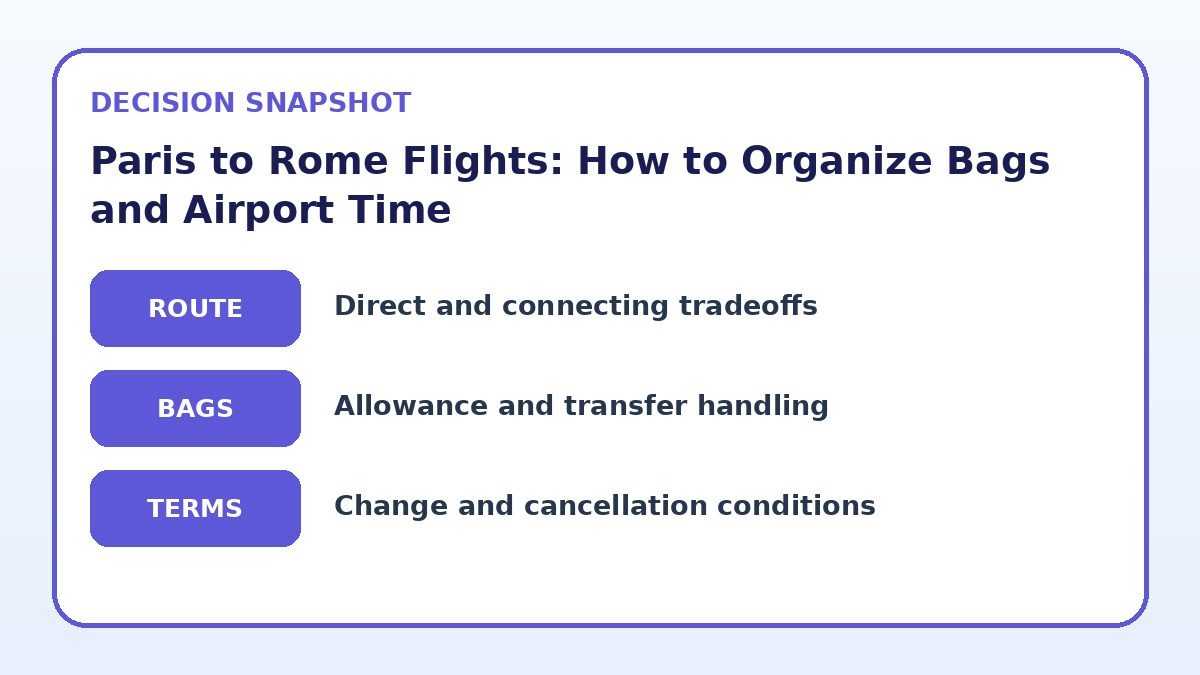
Routing: direct versus connecting on Paris to Rome flights
Choosing a routing is the first practical decision. A direct flight from Paris to Rome simplifies the ground side of travel: fewer transfers, a single boarding process, and lower chance that a missed connection will ripple into missed plans in Rome. For first-time visitors who prefer simplicity, a direct itinerary usually wins because it reduces the number of airport procedures you must navigate and minimizes language or signage confusion when moving between terminals.
Connecting flights can be cheaper or necessary to hit particular times of day, but they introduce complexity: you have separate boarding passes to manage, possibly a terminal change, and an increased need to allow buffer time. When comparing options, look at total door-to-door travel time, number of separate check-in operations, and whether connections occur in an airport where you’ll need to re-check baggage or pass through security again. Write down the exact departure and arrival airports and terminal names before booking so you can estimate transfer times and transfer methods precisely.
Baggage: allowances, packing decisions, and check-in timing
Baggage strategy shapes both cost and how early you must arrive at the airport. If you travel with carry-on only, you generally save check-in time and can arrive closer to departure, but you must be sure your bag meets the airline’s size and weight rules. First-time visitors should weigh realistic needs: if you have multiple outfits, liquids, or souvenirs returning, a checked bag may be more practical. When booking, always verify whether the fare includes a checked bag and whether hand luggage is restricted to a specific size or weight.
If you opt to check luggage, add time for bag drop and potential queueing at the check-in desk or automated kiosks. Some airports and airlines recommend arriving earlier for checked baggage and international flights; factor that into your planning. Also check the airline’s rules for connecting flights: if your connection requires picking up luggage and re-checking it, add substantial extra buffer. Keep a printed or screenshot copy of your baggage allowance and any purchased add-on baggage during travel so staff can confirm entitlements at check-in.
Compare flight-selection strategies
| Flight strategy | Best for | Risk to check |
|---|---|---|
| Direct flight | Travelers prioritizing simplicity and minimizing transfer stress | Often higher base fares and fewer schedule choices compared with multi-leg options |
| Single-ticket connection (same alliance/partner) | Those seeking lower fares with some protection if delays occur | Longer total travel time and more airport procedures than direct flights |
| Separate tickets for legs | Price-focused travelers willing to accept higher connection risk | No automatic protection for missed connections; requires long buffers and careful planning |
| Flexible/refundable fare | Travelers who value adaptability for schedule changes or uncertain plans | Higher upfront cost but reduces stress and change fees later |
Recheck the complete itinerary
Confirm airports, connection handling, baggage, and change conditions before deciding.
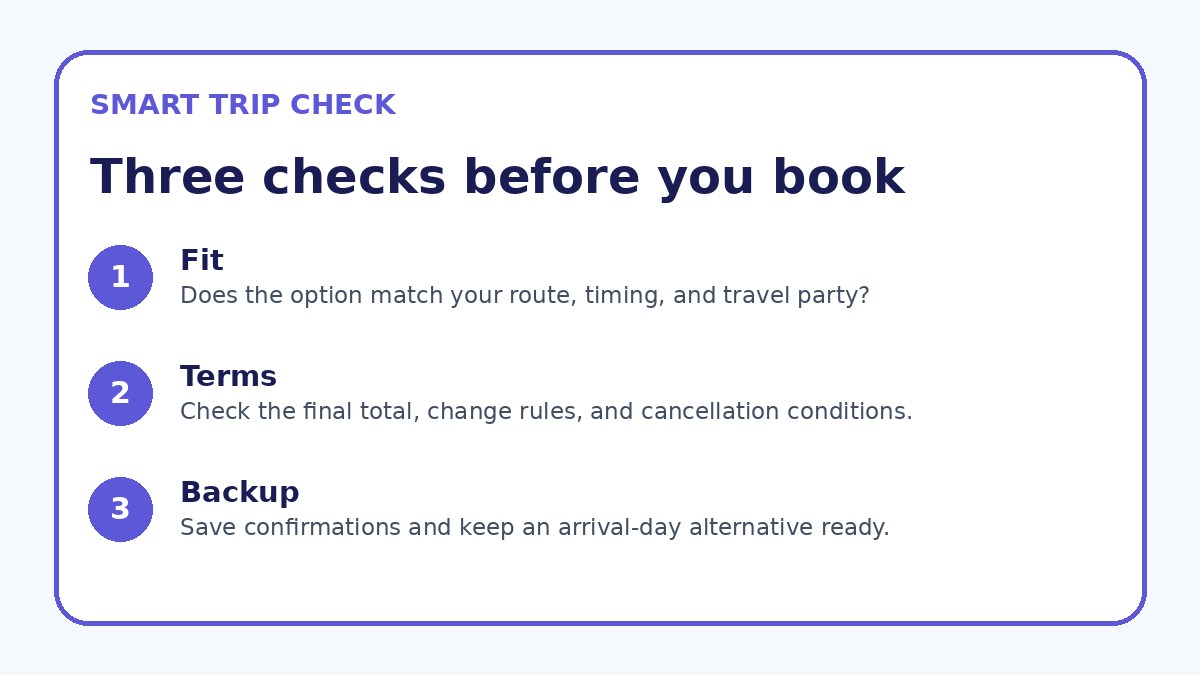
Connection risks and schedule fit for first-time travelers
Connections increase exposure to delay risk. If you choose an itinerary with a change, compare minimum connection times published by the airports and the airline — and then add personal buffer time for immigration, security, and moving between terminals or even airports. Consider your personal tolerance for stress: if you are unfamiliar with airport layouts, traveling with family, or carrying heavy luggage, choose longer connections. When you see short connection windows online, mentally convert them to realistic time for walking, queuing, and unexpected delays.
Schedule fit also means aligning arrival times in Rome with onward plans like hotel check-in or public transport operating hours. An early-morning arrival gives you a full day but may mean waking very early in Paris; a late arrival can be tiring and reduce transport options into the city. For first-time visitors, prioritize arrival times that let you reach your accommodation without last-minute transfers, and avoid itineraries that arrive or depart during known peak hours if you want to limit stress at airports.
Flight details to verify
- Write down exact travel dates, full traveler names, ages, and passport details before searching fares to ensure accurate rules and pricing.
- Decide carry-on only or checked luggage and note the allowed dimensions and weight from the airline’s booking page.
- Compare direct and connecting itineraries by total door-to-door travel time, number of check-in operations, and terminal transfer needs.
- Check the fare’s change and cancellation conditions on the airline’s final booking page and save a screenshot of the policy details.
- Plan airport arrival times: add 90–120 minutes for carry-on departures, 120–180 minutes if checking bags or during peak periods.
- If booking separate tickets, leave at least three hours between flights and arrange travel insurance that covers missed connections.
Fare conditions and what to verify before finalizing
Fare conditions determine how flexible your ticket is and what happens if plans change. Lower-fare classes often restrict changes, may charge high fees for alterations, or exclude refunds. Before you pay, check the fare rules for baggage inclusions, change and cancellation fees, and refundability. Confirm on the airline’s final booking page whether the fare includes an assigned seat, priority boarding, or any ancillary items you care about so you’re not surprised at check-in.
Also verify whether the itinerary is sold by a single airline or multiple carriers under one ticket; single-ticket itineraries typically protect you if a delay causes a missed connection because the carriers coordinate rebooking. If the booking platform shows a connection operated by different carriers, read the transfer rules carefully and consider purchasing a longer connection or buying travel protection. When you compare options, have your exact travel dates, number of travelers, and luggage plan ready so the fare rules you read apply correctly to your booking.
Flight Guide questions travelers ask
How early should I arrive at Paris airports for a Rome flight?
Aim to arrive at least 90–120 minutes before departure for short-haul flights if you travel with just carry-on and already have an online boarding pass. If you need to check luggage, arrive closer to 120–180 minutes to allow for baggage drop, security queues, and possible passport control. During busy travel days or if your departure is in the early morning or late evening, add extra buffer. Always verify the airline’s recommended check-in time and terminal details on the airline’s official page for the airport you’re leaving from.
What should I pack to avoid baggage surprises on Paris to Rome flights?
Start by listing what you’ll need in Rome and choose luggage based on that list. Keep liquids in a clear, resealable bag within allowed volume for carry-on, and verify size/weight limits for both carry-on and checked bags on the airline’s booking page. If you plan to bring souvenirs or extra shoes, consider pre-purchasing checked baggage online where fees are usually clearer and sometimes lower. Also pack essential documents, medications, and a change of clothes in your carry-on in case of delayed checked luggage.
How do I handle a tight connection between Paris and Rome flights?
If your connection is tight, first confirm whether both flights are on the same ticket; single-ticket itineraries are usually rebooked by the airline if delays cause a missed connection. If you bought separate tickets, plan a much longer buffer and be prepared for the need to rebook without automatic protection. Map the terminals in advance, check whether you must pass through passport control, and consider using priority lanes if available. If possible, choose the next available later flight when booking to reduce anxiety, and buy travel protection if you’re concerned about transfer risk.
Final decision note
For first-time visitors, organizing baggage and airport time is the practical core of a smooth Paris to Rome trip. Decide early whether you value a direct flight’s convenience or lower fares with connections, then match that routing decision with a clear baggage plan and realistic airport arrival times. Confirm fare rules, baggage inclusions, and whether connections are protected by a single ticket before you pay. Prepare exact traveler details and preferred travel dates so comparisons reflect your needs. Finally, verify key conditions on the airline’s final booking page and consider travel protection if you rely on tight connections or nonrefundable fares.
Continue planning
Check current options and final conditions
Use the provider page to confirm live availability, the final total, cancellation terms, and every condition that matters to your trip.
This evergreen planning guide was created with AI-assisted drafting and a structured quality review. It does not display live prices, schedules, availability, visa guidance, or provider rankings. Verify current details before booking. Some links are affiliate links; we may earn a commission at no additional cost to you.