If you’re traveling solo to Fukuoka, the two decisions that will most affect daily life are where the hotel is and how comfortable the room will be. Pick a hotel near Hakata or Tenjin and you’ll save time and have nightlife, restaurants, and transit at your doorstep; pick a quieter neighborhood or a hotel that prioritizes larger rooms and better sleep, and you’ll pay with longer walks or short transit rides. This guide gives a practical rule-of-thumb to reach a decision: prioritize location when you plan to be out most days and need fast transit; prioritize room comfort when long working hours, rest, or a private base are your travel focus. Below you’ll find clear tradeoffs, checklists to use at booking, and simple comparison options so you can pick a Fukuoka hotel that suits how you’ll actually spend your time.
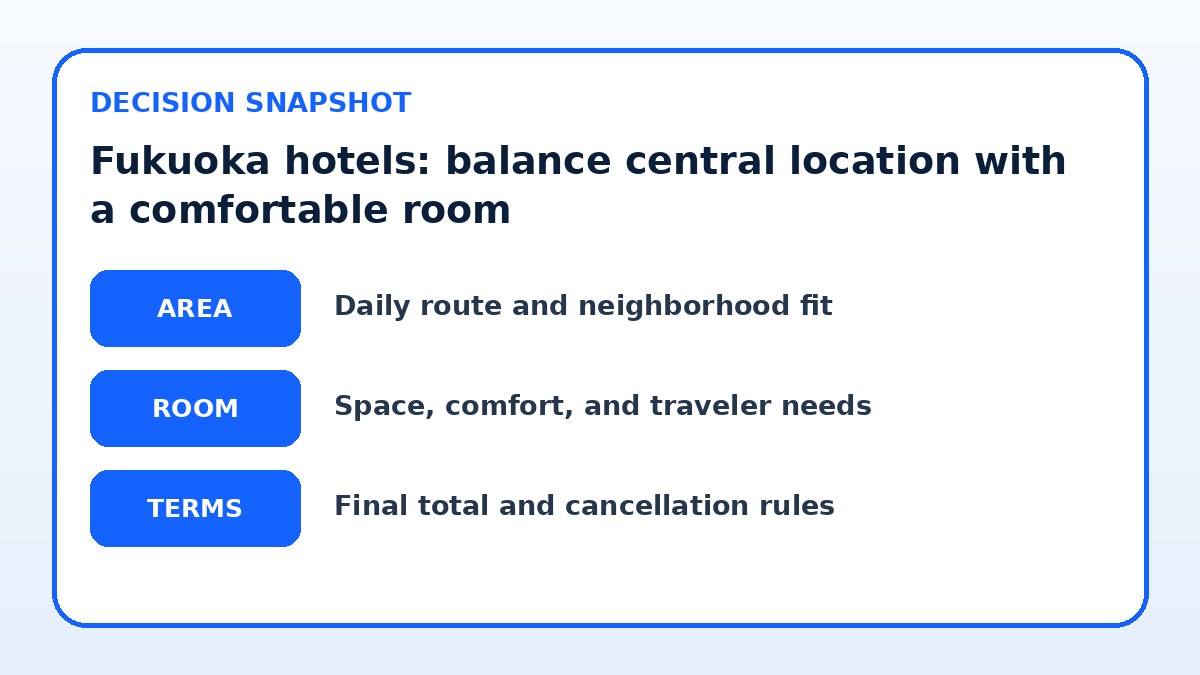
See current options before you compare the details
Availability and final conditions change. Open Trip.com now or keep reading for the practical comparison.
How Fukuoka’s neighborhoods affect your choice
Fukuoka’s main practical hubs for solo travelers are Hakata and Tenjin. Hakata is the transport backbone: the main train station, shinkansen access, and easy bus and subway connections make it a logical base if you plan day trips or arrive/leave by train. Tenjin is the city’s commercial heart with shopping, restaurants, and nightlife. Staying in either area reduces time spent navigating the city—useful when you want flexibility for late-night dining or early departures. Small pockets around Nakasu or the riverside bring nightlife closer but can be louder at night.
If you prefer a quieter stay with slightly larger rooms, look to neighborhoods a short subway ride from the center, such as Daimyō or the areas near Ohori Park. These locations give a calmer evening environment and more green space while still keeping you within a short transit trip to the main hubs. Consider how often you’ll cross the city: if most of your plans are in central Fukuoka, the small extra commute from a residential area may add up. For solo travelers, safety and easy late-night transit are also important—confirm subway last train times on the provider’s booking page or local transit site when you plan late returns.
Room comfort variables solo travelers should compare
Room size is the obvious comfort variable—Japanese city hotels often have compact single rooms. If you expect to work, store luggage, or spend several hours in your room, look for hotel listings that give room square meters or photos that clearly show desk space and bed orientation. Other comfort factors include soundproofing, bed quality, blackout curtains, and a reliable climate control system. If sleep matters, read recent guest feedback on noise and bed comfort, and check if the hotel offers rooms facing interior courtyards or away from main roads.
Amenities also shape comfort: ensuite bathrooms versus shared facilities, in-room kettles or coffee makers, luggage storage, and laundry options can alter daily convenience. If you plan evening work sessions, fast and stable Wi‑Fi and a good desk lamp are essential; verify Wi‑Fi speed expectations on the hotel’s final booking page. Think about simple logistics—elevators, luggage trolleys, and the presence of coin laundries nearby. These practical details often matter more than a decorative lobby when you’re travelling solo for several days.
| Approach | Best for | Tradeoff to check |
|---|---|---|
| Central location (Hakata/Tenjin) | Short transit times, nightlife, first-time visitors who want convenience | Smaller rooms, higher noise, and sometimes higher nightly rates for the convenience |
| Quiet, residential neighborhoods | Long stays, remote work, travelers wanting larger rooms and calmer evenings | Extra time to reach city hubs and possibly fewer late-night dining options nearby |
| Business-style hotels near the station | Solo travelers on tight schedules or arriving/departing by train | Functional rooms focused on efficiency rather than spacious comfort |
| Boutique or ryokan-style stays | Travelers prioritizing atmosphere, privacy, and a unique sleep environment | May be located away from transit hubs and offer smaller on-site services |
Ready to check the option that fits your plan?
Use your exact dates and traveler details so the provider page can show the current total and conditions.
Balancing proximity and peace: tradeoffs to assess
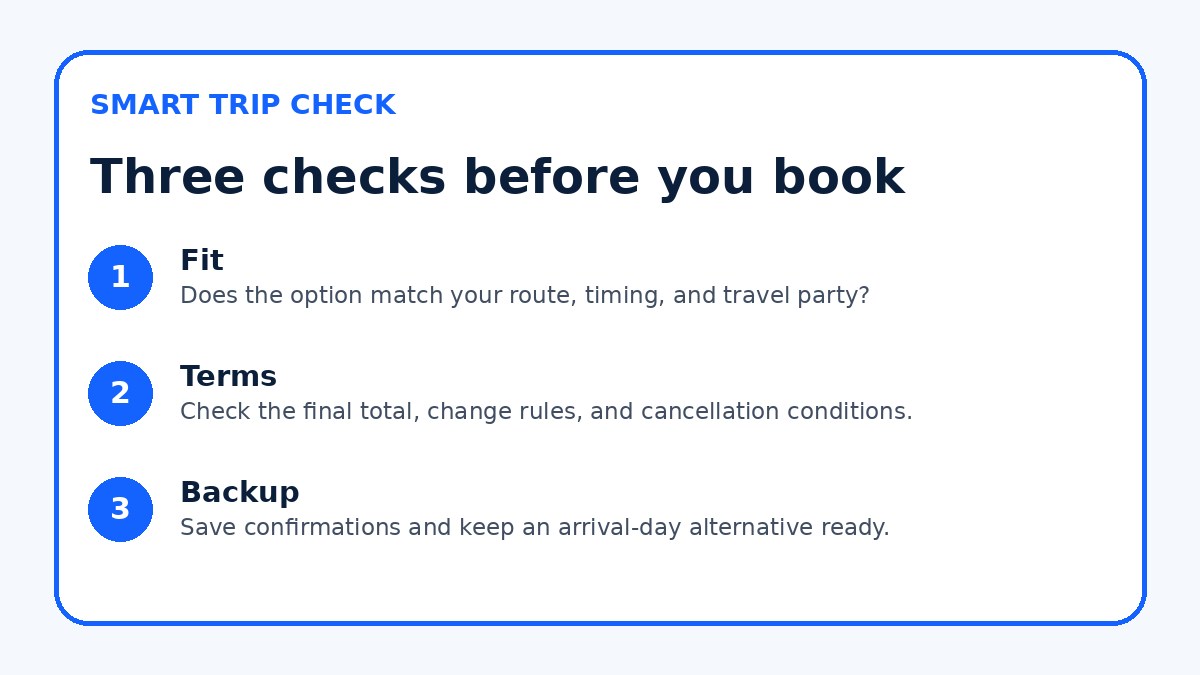
Choosing a central hotel reduces transit time and makes spontaneous plans easier, but central locations often come with higher noise, smaller rooms, and busier streets. If you expect to be out exploring for most of the day, these tradeoffs lean toward staying central. On the other hand, if you plan full-day remote work, need longer sleep windows, or prefer calm evenings, a slightly further hotel with larger rooms and quieter surroundings could provide more value—even if you spend a little more time commuting.
Assess how you will actually spend your days: make a simple itinerary of morning, afternoon, and evening activities and map those against the hotel location. If most activities cluster near one hub, prioritize proximity. If they’re spread across Fukuoka or you have long work blocks, prioritize comfort and reliable in-room amenities. When comparing options, tally not only the nightly rate but also the cost of additional short transit rides, taxis at night, and the value of time saved by staying in a central area.
Before you book
- Map where your planned daytime/evening activities are and choose a hotel that minimizes transit time to most of them.
- Confirm the exact room size, bed type, and whether a desk is provided on the hotel’s final booking page before payment.
- Check recent guest comments for mentions of noise, bed comfort, and Wi‑Fi reliability rather than relying only on star ratings.
- Verify check-in/out times, late arrival policies, and whether the hotel charges for early luggage drop-off or late baggage storage.
- If you need fast work internet, contact the property or check the booking page for explicit Wi‑Fi speed or business center availability.
- Plan transport from the station to the hotel at your arrival hour and factor luggage handling into the total commute time.
Practical booking steps and what to verify
Before you confirm a reservation, verify the room layout and exact bed type on the hotel’s booking page—don’t rely solely on thumbnail photos. Look for explicit data such as room square footage, photos showing the desk and bed, and any notes about noise or floor level. When a property lists different room orientations, pick one that notes a courtyard or higher floor if you want less street noise. If you need very specific features like a fridge, iron, or rollaway space for luggage, contact the hotel directly; booking pages can change, so confirm availability on the provider’s final page.
Also confirm the check-in and check-out times and whether late check-in is supported, particularly if you arrive late by train or plane. If you expect to be out after subway service ends, check taxi access and approximate fares or alternative transport. Use Trip.com once to compare current availability and room types, but treat its information as one source; always re-check the hotel’s official page for the most current room descriptions, cancellation policy, and extras like breakfast inclusion or paid parking.
Frequently asked questions
Is it better for solos to stay in Hakata or Tenjin?
Both districts work well for solo travelers, but the best choice depends on your priorities. Hakata centers on transport and quick access to trains and airport connections, which is convenient if you plan day trips or want the shortest transfer times. Tenjin offers more nightlife, shopping, and late-night dining—handy if you expect to explore the city after dark. For quieter evenings or larger rooms, consider neighborhoods a short subway ride away and weigh the extra commute against the benefit of a calmer stay.
How can I tell if a room will be too small or noisy from online listings?
Look for room dimensions, multiple interior photos showing the bed, desk, and luggage space, and indicators like floor level or room orientation. Guest reviews are a good source for real noise and space impressions—search comments for words like ‘small’, ‘tight’, ‘quiet’, or ‘road noise’. If photos and descriptions are minimal, contact the hotel to ask for exact measurements, floor position, or whether the room faces a main road. Confirm these specifics on the hotel’s booking page before completing your reservation.
Should I factor in last-train times when choosing a Fukuoka hotel?
Yes—late-night transit windows affect how late you can return to a non-central hotel without taking a taxi. If you plan to be out late, prioritize hotels within walking distance of nightlife or close to subway lines that run late, or confirm taxi availability and approximate fares. Always verify local subway or train schedules separately from hotel pages and check the hotel’s policy on late check-in if you might arrive back after public transit stops.
Final planning note
Solo travelers in Fukuoka make the best hotel choice by matching how they will spend most days to a location and room type. Choose central neighborhoods like Hakata or Tenjin to maximize convenience, cut transit time, and enjoy nightlife within easy reach. Choose quieter residential spots or hotels that advertise larger rooms if you need better sleep, workspace, or a calmer base. Use practical checks—room size, photos, guest comments on noise, and confirmed amenities on the hotel’s final booking page—to avoid surprises. With those tradeoffs clear, you can pick the hotel that supports your actual travel rhythm in Fukuoka.
Continue planning
Check current options and final conditions
Use the provider page to confirm live availability, the final total, cancellation terms, and every condition that matters to your trip.
This evergreen planning guide was created with AI-assisted drafting and a structured quality review. It does not display live prices, schedules, availability, visa guidance, or provider rankings. Verify current details before booking. Some links are affiliate links; we may earn a commission at no additional cost to you.