Practical answer first: for a first-time visit to Jeju, compare package vs separate bookings by checking the exact inclusions, cancellation and change rules, same-date availability, and traveler-specific benefits before judging a deal. Shoulder seasons—late spring and early autumn—usually give milder weather and fewer crowds, which can make flexible packages particularly valuable if your dates aren’t fixed. A bundled deal can simplify logistics and sometimes adds convenience, but the right choice depends on what you need included (ferry or flight legs, transfer, island car hire, attractions) and how much flexibility you want. Read the fine print, align all travel components to the same conditions, and prioritize the terms that matter most to your travel style.

Test package value fairly
| Booking approach | Best for | Tradeoff to check |
|---|---|---|
| All-in-one package (flight/ferry + hotel + transfers + tours) | Travelers seeking convenience and minimal planning effort | Higher loss of flexibility and potential mismatch of timing for island activities |
| Bundle flight/ferry + hotel, book extras later | Those who want core logistics handled but keep day plans flexible | May save some coordination effort but still requires managing car hire and tours separately |
| Separate bookings for flights/ferries, hotel, and car hire | Independent travelers wanting maximum control and tailoring | More time researching and cross-checking terms; risk of fragmented cancellation rules |
| Book transport and skip prebooked tours; add local guides on-island | Visitors who want mobility but prefer local spontaneity for activities | Potential for sold-out tours in peak pockets; requires extra local legwork |
Check current package and separate options
Use identical dates, travelers, room needs, baggage, and flexibility so the comparison stays meaningful.
What to check first: inclusions and the same-date test
Before evaluating a bundled Jeju travel deal, line up precisely what you want included and then force each option to the same baseline. List the travel dates, number of travelers, preferred arrival and departure windows, and any must-have items such as a rental car, airport transfer, specific attraction entry, or ferry versus flight. Then compare each bundle or ala-carte quote by sticking these identical details into the vendor or booking site search fields. This avoids the common trap of seeming savings that vanish when a cheaper package omits a rental car, adds restrictive transfer times, or locks in a nonrefundable attraction voucher.
The same-date test matters because availability and terms can differ by even one day in shoulder seasons when crowds and schedules shift. If an airline or ferry segment in a bundle requires a specific connection time that doesn’t work for you, the bundle’s convenience is actually a constraint. Also check whether the package ties you to group transfers or preset itineraries that limit flexibility. For first-time visitors, that lost flexibility can mean missing preferred viewpoints, dining windows, or leisurely drives around the island.
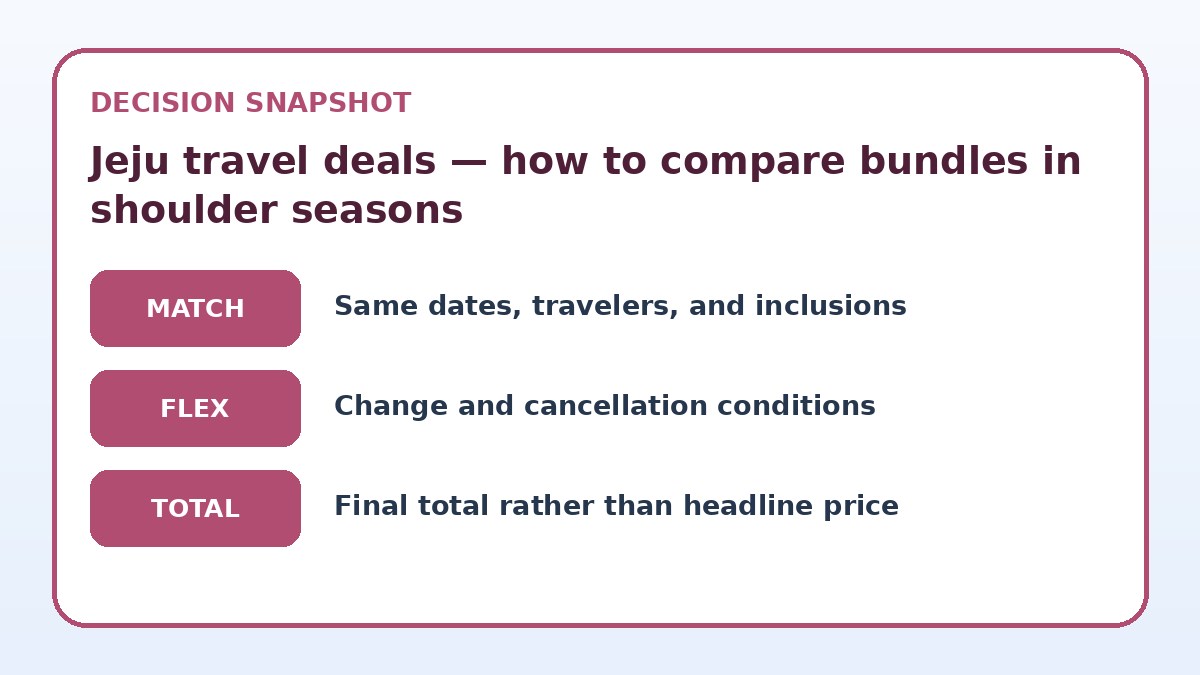
Inclusions versus flexibility: tradeoffs in shoulder season timing
Shoulder seasons offer milder weather and fewer visitors, which reduces the pressure to lock into rigid, bundled excursions. A package that includes pre-booked attraction tickets or guided day tours can be a time-saver, but evaluate whether those windows match your ideal pace. In shoulder months you may want to keep some days unstructured—good packages let you add optional activities without punitive fees. Focus on the cancellation and change rules for included elements: a flexible airline or ferry ticket paired with a strict nonrefundable hotel and car hire can create risk if plans change due to weather or ferry schedules.
When a bundle includes a rental car or private transfer, check whether it allows free driver changes or has fuel, mileage, and insurance terms clearly spelled out. Flexibility also means the ability to swap days for different attractions if weather turns poor; many outdoor highlights on Jeju depend on visibility and wind. If you prioritize mobility and spontaneous route changes—common for first-time exploration—favor options that let you modify reservations with minimal fees or provide credit toward a rebooked service.
Look past the headline total
Compare inclusions and change conditions before deciding whether a package is genuinely useful for this trip.
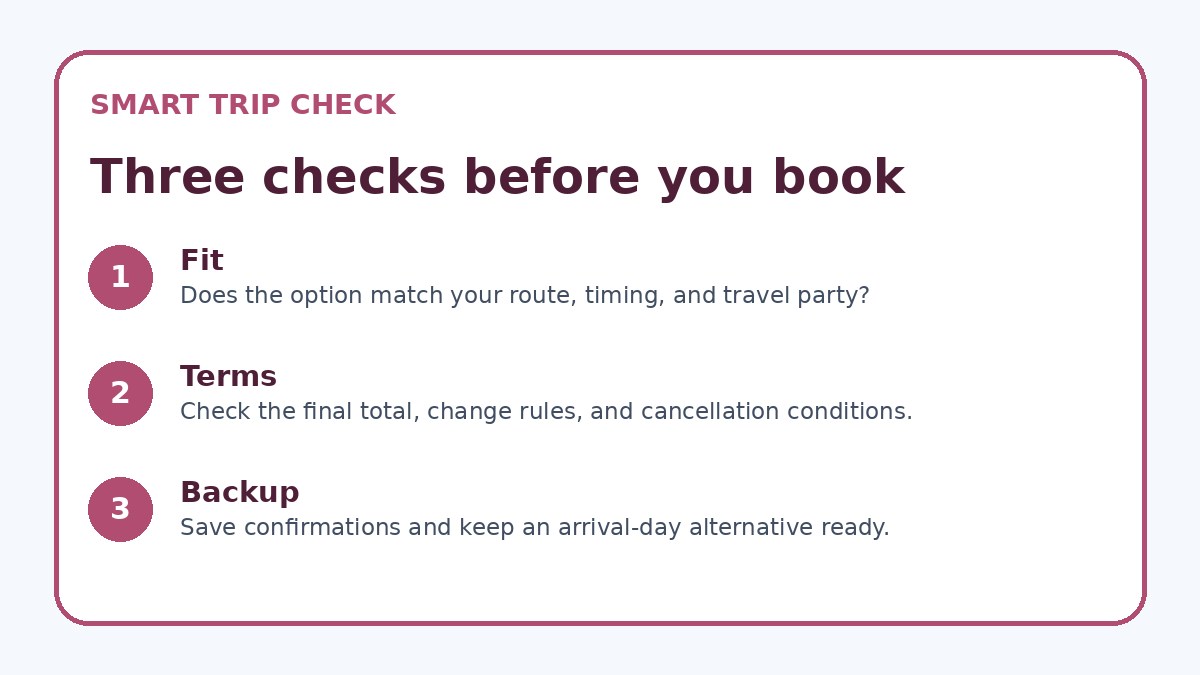
Deal comparison checklist
- List nonnegotiable inclusions (arrival window, car hire, transfers, must-see attraction) and use them as a uniform comparison baseline.
- Enter the exact same travel dates and number of travelers on every provider’s search to avoid misleading savings.
- Read the final booking page for each supplier and screenshot the cancellation and change terms before payment.
- Confirm whether included vouchers require on-site exchange, timed entry, or identity verification at redemption.
- Check who is the contractual supplier for each bundled element and note who to contact for refunds or changes.
- Estimate how much flexibility matters to you and prioritize options with free modifications during shoulder-season uncertainty.
Traveler-specific value: who benefits most from packages
Packages tend to favor travelers who want simplicity: those arriving with limited time, families who prefer transfers and prebooked excursions, or visitors uncomfortable organizing local transport. If you want to arrive and have ground transfers, a car, and a set of tours already handled, a bundle removes stress. Conversely, independent travelers who enjoy researching local guesthouses, mixing ferry and flight options, or switching islands mid-trip will often find separate bookings more economical and flexible—especially in shoulder seasons when single components are easier to change without large penalties.
First-time visitors should match the bundle’s style to their priorities: do you value a single supplier handling everything, or do you prefer control over each component? Ask whether a package includes local tax, insurance, or convenience fees, and whether third-party vouchers are accepted at the front desk and attractions. For families or groups, a bundled option that consolidates both transport and transfers can reduce coordination friction; for solo travelers, separate bookings can offer more opportunities to adjust plans on the fly.
Final terms to verify before booking any Jeju deal
Always read the provider’s final booking page and confirm the precise terms that matter to you. Verify the refund window, change fees, name-change rules, baggage allowance for included flights or ferries, and any blackout dates. If the deal references attraction tickets or ferry crossings, check whether those are timed entries that require strict arrival times. Ask whether vouchers can be redeemed directly at the service provider or must be exchanged at an agency counter, and whether they include proof of identity requirements.
When comparing options, make sure cancellation and modification policies are applied consistently to the same date and traveler count. Confirm who is the contractual provider of each included service—especially for transfers and car hire—as some packages resell third-party services and responsibility for changes or refunds may fall back onto the original supplier. Trip.com can be used as one place to compare availability and terms, but verify every critical policy on the supplier’s final booking confirmation before you pay.
Travel Deals & Booking Strategy questions travelers ask
Are shoulder-season Jeju travel deals typically cheaper than peak-season offers?
Shoulder seasons often have lower demand than peak summer months, which can influence deals, but price is not the only factor. What matters for first-time visitors is whether the deal’s terms match your needs: flexible change policies, included transfers, and car hire value can outweigh a modest price difference. Rather than assuming lower sticker prices mean better value, compare identical dates, traveler counts, and included services across options, and verify cancellation and modification terms on the provider’s booking page to see how cost-sensitive your plan truly is.
If a package includes a rental car, what specific rental terms should I verify?
Ask whether the rental includes insurance, fuel policy, mileage limits, and additional driver fees. Confirm the pick-up and drop-off points and whether shuttle transfers to the rental desk are included. Check the rental company’s rules for young or international drivers, deposit amounts, and credit-card hold policies. Also verify whether cross-border or island-restricted rules apply if you plan to use ferries. These details determine real convenience and cost—especially on Jeju, where a car significantly affects your island mobility.
How do I avoid false savings when comparing a package and separate bookings for Jeju?
Run a side-by-side comparison using identical dates, the same number of travelers, and a checklist of must-have inclusions. Price out each required component separately—transport, accommodation, car hire, and core activities—then total them and compare to the package’s all-in cost while factoring in cancellation flexibility and convenience. Don’t forget to include fees, taxes, and the value of any included transfers or timed tickets. Finally, confirm all critical terms on the supplier’s final booking page so the quoted savings survive real-world conditions.
Final decision note
For a first-time Jeju trip planned around shoulder seasons, the right approach balances convenience with the flexibility to adapt to weather and changing plans. Start by defining nonnegotiable inclusions—arrival window, car hire, transfers, and key activities—and use those as a consistent comparison baseline across packages and separate bookings. Prioritize clear cancellation and modification rules, and verify contractual suppliers for every included component on the final booking page. If you value simplicity, a well-structured bundle can save time; if you value control, separate bookings let you tailor each element. Either way, run the same-date test and confirm terms before committing.
Continue planning
Check current options and final conditions
Use the provider page to confirm live availability, the final total, cancellation terms, and every condition that matters to your trip.
This evergreen planning guide was created with AI-assisted drafting and a structured quality review. It does not display live prices, schedules, availability, visa guidance, or provider rankings. Verify current details before booking. Some links are affiliate links; we may earn a commission at no additional cost to you.