For most business travelers, the practical question isn’t romantic — it’s: will driving in Hong Kong save time or create hassle? The short answer: in central Hong Kong and Kowloon, public transport is usually faster, more predictable, and less hassle; a rented car can help when your meetings are spread across the New Territories, you’re carrying equipment, or you need flexible regional travel. This guide helps you decide by weighing route value (where your meetings are), insurance and liability language you must verify, pickup and return friction at airports and city locations, and a non-driving fallback plan that gets you where you need to be without a car. Read the quick decision points first, then use the sections to apply the criteria to your specific itinerary and timing.
Route value: when driving truly helps
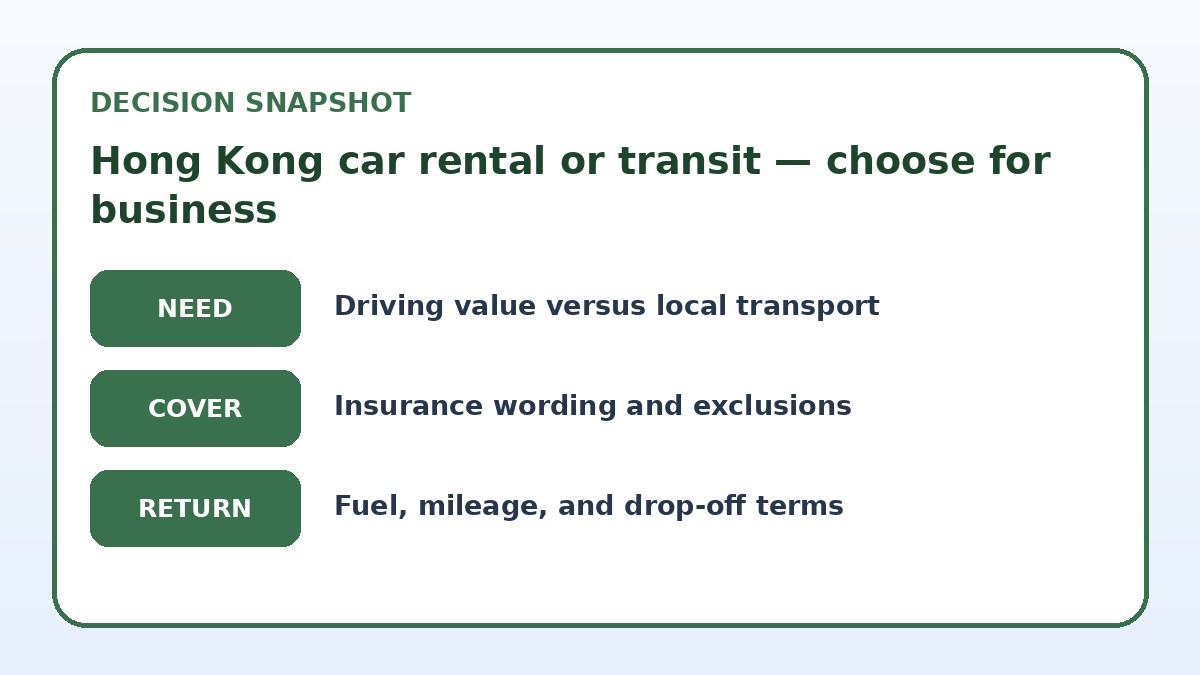
Assess route value by mapping your actual meeting addresses and typical traffic windows. Hong Kong’s MTR, tram and bus network connect central business districts with high frequency; when meetings are clustered within those zones, the convenience of frequent stations and short walking connections beats the door-to-door promise of a car. Conversely, if your schedule includes multiple locations in industrial parks, remote offices in the New Territories, or construction sites with limited public-transit access, a car can cut overall transit time and reduce the stress of juggling timed taxis between isolated addresses.
Also consider the number and timing of stops. Driving pays if you must make many sequential pickups or drop-offs, or if meetings start before public transit begins or run late into the night when services are less frequent. Factor in parking availability at each stop—metered urban parking and private lots can be scarce and expensive. Use a map to plot total door-to-door time for both options during real meeting windows rather than relying on nominal distances.
Decide whether driving earns its place
| Mobility strategy | Best for | Cost or friction to check |
|---|---|---|
| Rent a car for full itinerary control | Business travelers with dispersed meetings, heavy equipment, or early/late schedules | Higher pickup/return friction, parking search, and strict rental insurance clauses to verify |
| Use public transport (MTR, trams, buses) | Clustered central meetings with predictable timing and minimal luggage | Limited reach to remote industrial sites and possible first/last-mile walking |
| Taxi and ride-hail on demand | Flexible point-to-point needs inside the urban area and unpredictable schedules | Variable travel time and costs during peak congestion; limited capacity for large freight |
| Hybrid: rent only for specific days | Trips combining central meetings with occasional out-of-town visits | You must coordinate pickup/return windows and accept incremental rental fees |
Check live rental choices only after the route test
Use the exact driver, dates, pickup point, and return plan to compare current conditions.
Insurance wording: what to verify before you sign
Rental contracts often use terse insurance phrases that matter in a claim. Before you book, confirm the type of cover included and its limits: third-party liability limits, collision damage waiver (CDW) or loss damage waiver (LDW) terms, whether theft protection is provided, and the amount of the excess (deductible) you’d be responsible for. If damage or theft occurs, the rental firm’s repair estimate process and the time taken to release deposit holds can affect your cash flow and schedule. Ask whether accident administration fees, recovery costs, or towing charges are billed to the renter.
Check exclusions and cross-border rules: some contracts forbid driving into mainland China, Macau, or certain restricted zones, and some policies exclude damage from improper parking or use on unpaved roads. If you rely on a corporate card or a personal travel insurer, verify how their coverage interacts with the rental company’s CDW—some cards require you to decline the rental CDW to activate their benefit, while others require you to accept it. Always get the insurer’s exact wording and verify on the final booking page or policy PDF before you commit.
Compare the full rental conditions
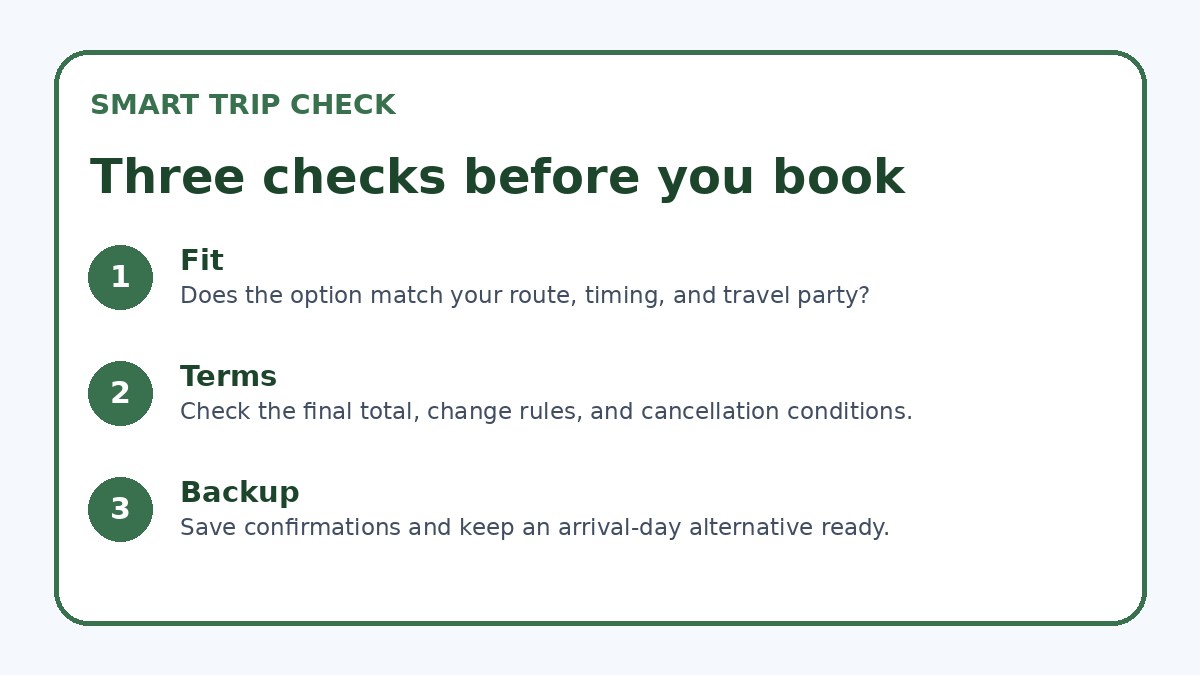
Confirm insurance wording, exclusions, deposit, fuel, mileage, and return terms on the final page.
Pickup and return friction: timing and practical hurdles
Pickup and return can add unexpected time to a business itinerary. Airport counters may have long queues, vehicle inspections, and deposit holds that take time to complete. City depots can be quicker but require a shuttle or short taxi to reach; some downtown locations restrict pick-ups outside business hours. Reserve a slot that matches your arrival window and confirm the process for after-hours returns. Factor in the time required for a thorough walkaround inspection at pickup and the time to clear damage disputes; build padding into your schedule so a late return or inspection doesn’t derail your outbound plans.
Also consider operational details that affect friction: how security deposits are blocked and released, whether the car needs refueling to a specific level, and local toll payment systems or in-car transponders. If you rely on airport express or trains for arrival, check the distance and transit between the terminal and the rental office. If your trip includes an evening arrival or an early departure, confirm late pickup and early drop-off procedures in writing and document the car’s condition with time-stamped photos to limit post-rental disputes.
Car rental terms to verify
- Map every meeting address and calculate door-to-door travel time for driving versus public transit during your actual meeting windows.
- Request and save the rental company’s full insurance policy PDF; verify third-party limits, excess amounts, exclusions, and cross-border rules.
- Confirm pickup and return procedures, hours, inspection process, and how long the security deposit will be held on your card.
- Check parking availability and costs at every meeting venue and your hotel; identify reserved or visitor parking options in advance.
- Plan a non-driving fallback: nearest MTR stations to meetings, reliable taxi numbers, and a courier or transfer service for equipment.
- Take time-stamped photos of the vehicle at pickup and return, keep all receipts, and record any damage in writing with the agent.
Non-driving fallback: reliable alternatives for business needs
A non-driving fallback should be a credible plan that matches your meeting times and luggage needs. For central meetings, combine MTR with short taxi or ride-hail legs to cover first/last mile gaps—this usually beats traffic delays. For equipment-heavy trips, pre-arrange hotel concierge assistance, freight pick-up to meeting venues, or a local courier. If you expect last-minute changes, identify a dependable taxi company, a ride-hail app service coverage area, and private transfer options that can accept larger cargo or groups, and include their estimated response times in your plan.
Also prepare a backup meeting schedule and contact list so you can shift times if transport delays occur. If you decide against a car, book hotels that are near major MTR stations to minimize transit time between venues. Confirm cancellation policies for transfers or private cars so you can scale up to a hired vehicle at short notice if unexpected field visits or out-of-town meetings appear on your agenda.
Car Rental & Road Trip questions travelers ask
Is driving in Hong Kong difficult for visitors used to left- or right-hand traffic?
Driving in Hong Kong follows left-hand traffic and typically dense urban conditions, with narrow streets, frequent lane changes, and heavy peak-hour congestion. If you are accustomed to driving on the opposite side, allow an acclimation period before important trips. Consider heavier penalties for traffic violations and strict parking enforcement in many districts. If unfamiliarity would add stress that affects work—especially during multi-meeting days—favor public transport or a driver-assisted option. When renting, ask whether roadside assistance and local guidance are included.
Can I drive a rental car from Hong Kong into Macau or mainland China?
Cross-border travel rules vary by rental provider and local regulation. Many Hong Kong rental contracts restrict or prohibit driving into Macau or mainland China without specific permits, additional insurance, or documentation. Before you book, ask the company for explicit written confirmation about allowed jurisdictions and any extra fees or insurance requirements. If cross-border travel is necessary, verify customs procedures, vehicle permits, and whether temporary license plates or additional cover are required—always check the provider’s final booking page or policy documents to confirm the current rules.
How should I handle tolls and electronic payment systems when renting a car?
Hong Kong uses electronic tolls and toll roads in some crossings; rental cars may include an in-vehicle toll transponder or offer pay-as-you-go billing. Confirm who is charged for tolls, whether the rental firm adds an administration fee, and how tolls are billed on return. For parking, check whether payment apps, cash, or meter cards are required. If your corporate card should be used for tolls or deposits, confirm the rental firm’s accepted payment methods and any hold amounts before pickup to avoid surprises at the counter.
Final decision note
Deciding whether to choose a Hong Kong car rental comes down to route value and risk management. For centrally clustered meetings, the city’s public transport network will usually save time, reduce unpredictability, and remove parking and deposit headaches. Rent a car when your itinerary includes multiple dispersed locations, significant equipment transport, or unusual schedules that public transit cannot cover. Whatever you pick, verify insurance wording, pickup and return procedures, and parking arrangements on the rental company’s final booking page. Keep a clear non-driving fallback—MTR plus short taxi legs or a prebooked transfer—to protect your meeting schedule if traffic or rental friction appears.
Continue planning
Check current options and final conditions
Use the provider page to confirm live availability, the final total, cancellation terms, and every condition that matters to your trip.
This evergreen planning guide was created with AI-assisted drafting and a structured quality review. It does not display live prices, schedules, availability, visa guidance, or provider rankings. Verify current details before booking. Some links are affiliate links; we may earn a commission at no additional cost to you.