Practical answer first: prioritize a hotel near your arrival hub (Kyoto Station or the nearest major train/airport transfer point) or in a central neighborhood that offers 24-hour or late check-in, easy ground access, and either on-site luggage storage or simple third-party options. If you land late with extra suitcases, your main choices are a short taxi ride to a roomy hotel, a central business hotel with late reception and compact rooms plus storage, a ryokan prepared to accept late guests and luggage, or staying near a luggage-forwarding desk to delay hotel check-in until morning. Each option trades walking distance, cost, room space, and convenience for the next day. Read the following sections to match neighborhood fit, daily routing, room needs, and booking terms to your party and arrival time so you can shortlist a neighborhood and clear next steps before opening inventory.

Check live stays in the areas that fit
Use your dates and party size to compare current rooms after you narrow the neighborhood fit.
Neighborhood fit: pick the right base for a late arrival and heavy bags
Focus on where you will arrive into Kyoto and how you’ll get to town; Kyoto Station is the most practical base for late arrivals because it concentrates transport links, taxi ranks, and a range of hotels. Staying near the station reduces the number of transfers with heavy bags and gives you 24‑hour access to taxis and late-night convenience stores. However, station-adjacent hotels can be busier and sometimes noisier at night, so if quiet and a traditional stay matter, you may prefer a ryokan or hotel closer to Gion or Higashiyama — but expect longer, costlier transfers.
If evening logistics matter more than an early start, choose neighborhoods with a reputation for hotels that accept late arrivals or offer round‑the‑clock reception, such as Kyoto Station, Kawaramachi/ downtown, and parts of Nakagyo. For travelers focused on minimizing the physical burden of luggage, prioritize walk distance from the transfer drop-off and elevator access. For example, riverside Kawaramachi gives nightlife and food options but may require negotiating steps, narrow sidewalks, or small elevators in older buildings, so verify accessibility details before you finalize.
Choose an area-selection strategy
| Area approach | Best for | Tradeoff to check |
|---|---|---|
| Stay next to Kyoto Station | Minimum transfer steps and easy late-night taxi access | Busier area with potentially smaller rooms and more noise |
| Book in Kawaramachi / downtown | Evening dining options and walkable nightlife after a late arrival | Potentially narrower hotel entrances and longer transfers from the station |
| Choose a ryokan near Gion / Higashiyama | Traditional atmosphere and roomy tatami layouts for storing bags | Often limited elevator access and stricter late check-in expectations |
| Select a business hotel with explicit late-check policies | Reliable late reception, luggage holds, and predictable procedures | Smaller rooms and fewer amenities suited to heavy-luggage groups |
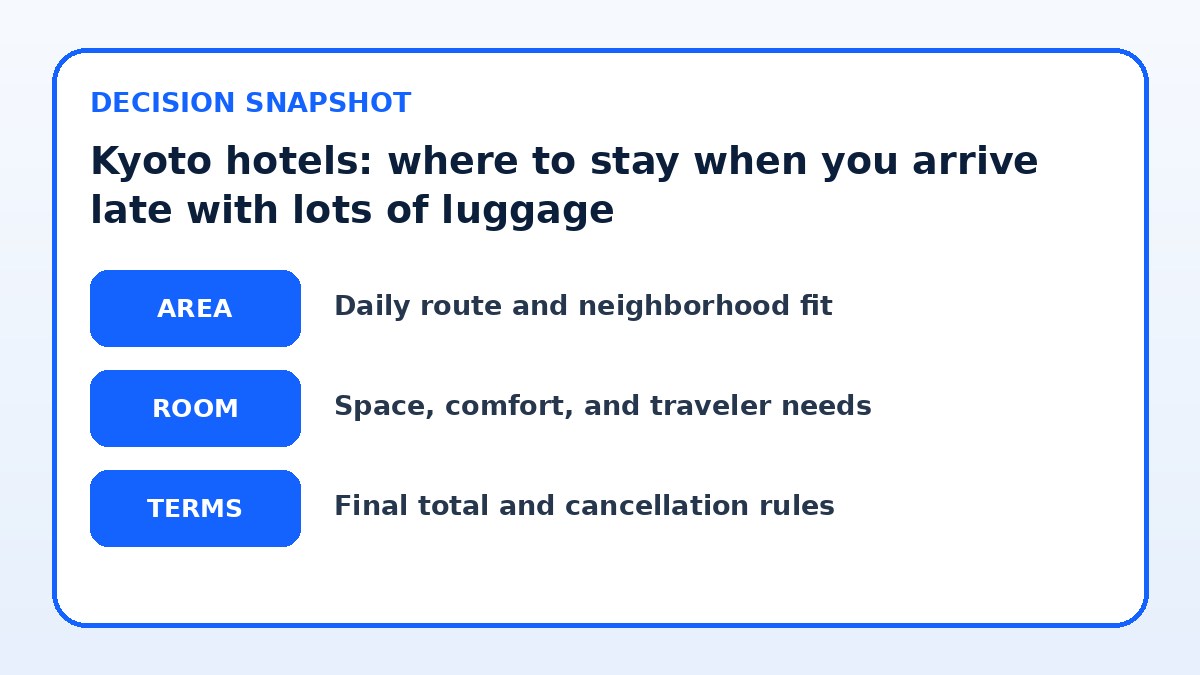
Daily-route friction: how neighborhood choices affect the next day
Think beyond the arrival night: will you be sightseeing widely the next day or only staying local? If you plan an early temple day, a hotel near a convenient subway or bus hub can save hours. Kyoto’s bus network commonly serves tourist sites, but buses may be crowded; staying closer to the subway (e.g., near Karasuma or Kyoto Station) reduces time hauling luggage or transferring. Also consider whether you want to drop bags and immediately tour — some hotels allow early luggage storage, others expect you to return after check-in hours, which makes proximity more important.
If your party consists of multiple people with many bags, daily friction multiplies — elevators, narrow corridors, and small hotel lobbies make moving suitcases slower. Choose neighborhoods where taxis are easy to flag at night to avoid long walks on uneven surfaces or stairs. Also factor in how you’ll move later in your trip: a central base like Kawaramachi offers easy evening options and shorter returns, while a quieter area near temples gives a better morning atmosphere but longer returns from nightlife or late eats.
Now compare like with like
Keep the same dates, guests, room needs, and cancellation preferences while you compare the final choices.
Room and party needs: sizing, accessibility, and luggage handling
Ask what type of room layout will actually fit your luggage and group. Hotels in Kyoto vary from compact business rooms to more spacious twin or family rooms; ryokans and larger city hotels may offer rooms with more open floor plans and luggage storage space. When booking, check bed configurations (twin versus double), closet and floor space photos, and whether the room includes an entryway (genkan) or luggage hooks. If you need to store suitcases in the room overnight, confirm floor clearances and whether the property can assist movers to avoid stair carries.
Accessibility matters: request ground‑floor rooms or confirm elevator access if anyone in your party has mobility limits or you expect repeated luggage trips. Smaller traditional properties sometimes have narrow staircases and no elevator—this is fine for light travelers but a difficult choice with heavy gear. Also verify if the property accepts late check-ins and whether staff can hold luggage after check-out or before check-in. If the hotel’s policy is unclear, plan a backup such as a luggage forwarding service (takuhaibin) or a station coin locker alternative, and verify pickup/drop times on the provider’s page.
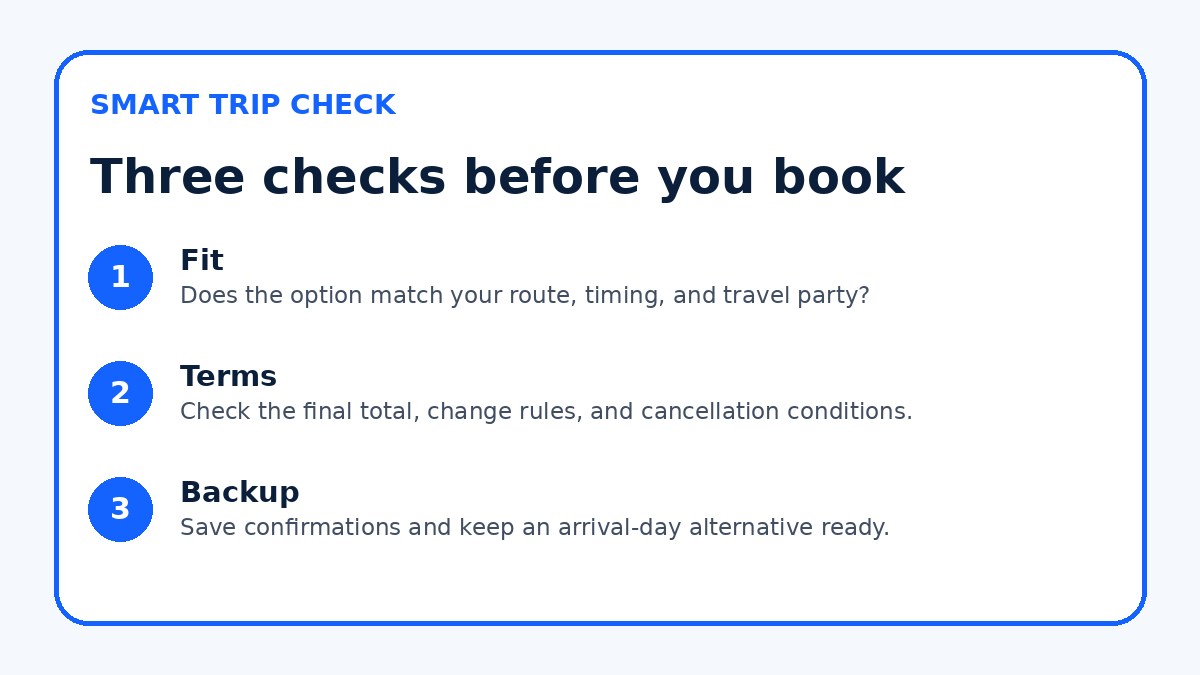
Hotel booking check before payment
- Confirm the hotel’s last permissible check-in time and whether late arrival requires advance notice.
- Ask explicitly if the property will accept and store oversized luggage overnight or pre-arrival.
- Request elevator dimensions or confirm ground-floor availability if stair carries will be difficult.
- Verify the hotel will accept luggage forwarded by a takuhaibin service and note the recipient name and delivery window.
- Plan a taxi or transfer route from your arrival point and confirm typical drop-off locations near the hotel entrance.
- Save written confirmation of any agreed late-check or luggage arrangements to show on arrival if needed.
Final booking terms: what to confirm before you commit
Before you press reserve, confirm three key items on the hotel’s booking page or by contacting the property: their latest check-in cut-off and any late check-in fee or required notice; explicit luggage storage and hold limits; and accessibility details about stairs, elevator size, and doorway widths. If the property lists a 24-hour front desk, still ask how late guests should expect staff to help with heavy bags. If you plan to use a luggage-forwarding service, verify whether the hotel will accept parcels or forwarded bags and any necessary recipient instructions so your shipment is not refused.
If the booking page does not state the luggage or late arrival policy clearly, email or call the hotel and request a written confirmation you can save with your itinerary. When comparing rooms, look for tangible indicators: wider bed configurations, photos showing clear floor space, and guest notes about luggage assistance. Use Trip.com or another aggregator as one place to compare availability and policies, but always verify the final terms on the hotel’s own confirmation page or by direct contact before finalizing.
Hotel Guide questions travelers ask
What if I arrive at Kansai/Itami late and need to reach Kyoto hotels with large suitcases?
Compare transfer options before you book: check direct airport bus timetables to Kyoto Station, available train routes, and taxi estimates for late-night rides. If buses or trains are infrequent at your arrival hour, choose a hotel near Kyoto Station or pre-book a taxi from the airport’s official counters. Before you finalize, confirm the hotel’s late arrival policy and whether staff can help with heavy bags; if that’s uncertain, plan to use a luggage-forwarding service to send bulky bags ahead to your hotel with a delivery window that matches your schedule.
Can I leave my luggage at the station and check in to Kyoto hotels later?
Yes—many visitors use Kyoto Station coin lockers or staffed luggage services to store bags temporarily, but availability varies by locker size and time of day. If using coin lockers, verify there are large-capacity units for suitcases; for larger items, use a staffed baggage service and take a receipt. Remember that large-season demand can fill lockers quickly, so choose a hotel near the station if you rely on short-term station storage, and always confirm the hotel’s check-in and luggage acceptance policies before assuming you can move straight to the room later.
Is luggage forwarding to Kyoto hotels reliable for avoiding late-night handling?
Luggage-forwarding (takuhaibin) is widely used in Japan to move bags between airports, hotels, and stations, and it can let you travel light on arrival night. To use it effectively, confirm with both the forwarding company and the hotel that the property will accept deliveries and note any recipient instructions or arrival windows. Send the bags to the hotel for delivery the day after your arrival if you can’t match same-day windows; always keep tracking details and booking references, and verify the hotel’s receiving hours on their booking page or by direct contact.
Final decision note
When you arrive late in Kyoto with extra luggage, the fastest way to reduce stress is to pick a neighborhood that matches your immediate needs: minimize transfers with a Kyoto Station hotel, prioritize evening access and food choices in Kawaramachi, or accept a quieter traditional stay in Gion if you can manage transfer logistics. Match the neighborhood to your party’s room and accessibility needs, then confirm late check-in and luggage policies in writing. If anything is unclear on the listing, call or email the property and keep proof of the arrangement. With a shortlist of neighborhoods and confirmed baggage handling, you can open live availability with confidence and choose a room that truly fits your arrival plan.
Continue planning
Check current options and final conditions
Use the provider page to confirm live availability, the final total, cancellation terms, and every condition that matters to your trip.
This evergreen planning guide was created with AI-assisted drafting and a structured quality review. It does not display live prices, schedules, availability, visa guidance, or provider rankings. Verify current details before booking. Some links are affiliate links; we may earn a commission at no additional cost to you.