Most couples don’t need a car for a simple Honolulu stay focused on Waikiki and nearby sights; public transit, rideshares, and walking often cover the essentials. But a rental quickly becomes useful if your plans include day trips to the windward side, sunrise at higher-elevation lookouts like Tantalus, or a West Oahu beach-hopping day where public transit would be slow or infrequent. This guide gives a clear yes-or-no approach: start by listing your must-see places and how flexible you want to be, then weigh pickup friction at the airport against parking costs and insurance choices. Read the route value, pickup/return friction, insurance basics, and a fallback non-driving plan so you can decide with confidence before you book.
Route value: which couple itineraries need wheels
Start by mapping each day’s destinations to see how often a car reduces travel time or opens new options. Rides within central Honolulu—Waikiki beaches, Ala Moana Center, and downtown museums—are compact and walkable or quickly reached by TheBus and short rideshares. A couple focused on restaurants, afternoon beach time, and one or two guided excursions can usually skip a rental. On the other hand, if you want to visit multiple distant beaches in one day, chase sunrise or sunset at specific outlooks, or explore the North Shore and Windward coast independently, a car materially improves timing and sightlines.
Also consider rhythm: do you value spontaneity and early starts? Driving lets you leave before tour operators or buses run and stay later at remote spots with limited night transit. But that freedom brings parking searches and city driving during busy times. For couples who prefer a relaxed, lower-stress pace and evenings out with drinks, avoiding driving removes the responsibility of sober return transport and lets both partners enjoy the night without planning designated drivers.
Decide whether driving earns its place
| Mobility strategy | Best for | Cost or friction to check |
|---|---|---|
| Full rental for entire stay | Couples wanting on-demand access to remote beaches and flexible day-trip schedules | Higher total cost from daily rental, insurance add-ons, and parking fees in Honolulu areas |
| Hybrid: transit plus occasional one-day rental | Couples who mostly stay central but want a single independent day trip | Requires planning around one-day availability and coordinating pickup/return logistics |
| No rental: public transit, rideshare, and hotel shuttles | Couples prioritizing simplicity, walking-friendly itineraries, and nightlife without driving responsibilities | Less flexibility for early starts, remote beaches, and multi-stop days; potential wait times |
| Guided tours and private transfers only | Couples who prefer structured experiences and a driver to handle local roads | Less independence and possible schedule constraints compared with self-driving |
Check live rental choices only after the route test
Use the exact driver, dates, pickup point, and return plan to compare current conditions.
Insurance and coverage: what to confirm before you arrive
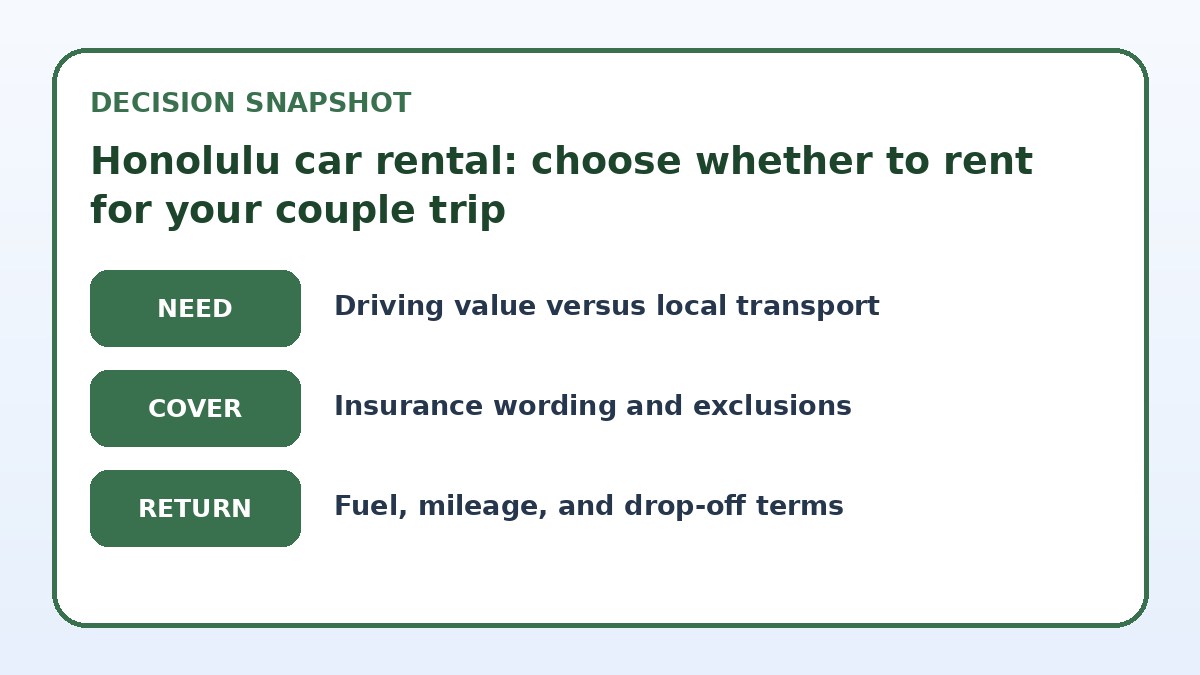
Rental companies present multiple coverage options—loss damage waivers, liability supplements, and personal accident insurance. Before you accept anything, check your existing protections: many personal auto insurance policies extend some coverage to rentals, and several credit cards include primary or secondary collision coverage when you pay for the rental with the card. Call your insurer and credit card issuer to confirm the exact terms and any exclusions for rentals in Hawaii so you can compare cost and redundancy. Keep written confirmation or screenshots of policy numbers and phone contacts saved with your booking.
At pickup, don’t sign until you understand what the contract says about deductible amounts, fuel policies, and additional driver fees. Ask the agent to show where optional coverages are described on the contract and request time to review. If you’ll be driving off the main island roads—toward rougher, unpaved local access trails—clarify whether damage from such roads is excluded. Finally, verify what the rental company needs for claims: current driver licenses, proof of return condition, and how to report damage while still on island.
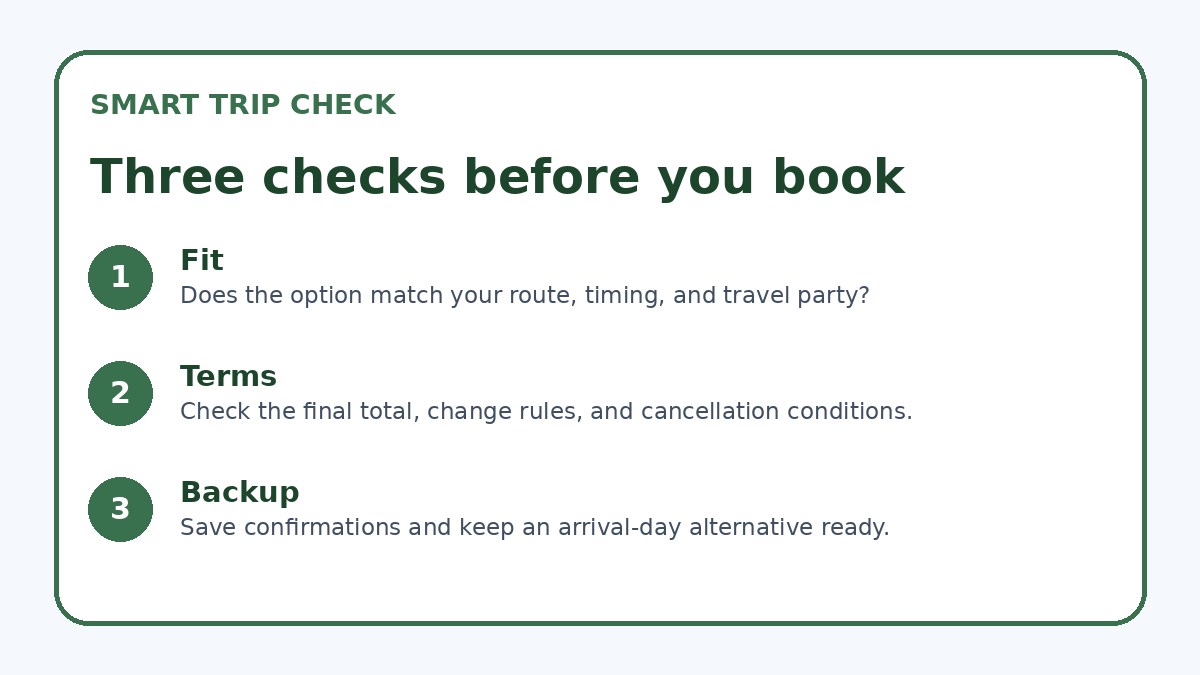
Compare the full rental conditions
Confirm insurance wording, exclusions, deposit, fuel, mileage, and return terms on the final page.
Pickup and return friction: airport vs city counters and parking
Airport pickup sounds convenient but can add time: counters may be a shuttle ride from the terminal, and busy days bring lineups. If you land at Daniel K. Inouye International Airport, check whether your chosen company operates a nearby lot or an on-site desk; on-the-ground arrangements change, so confirm the pickup location and shuttle details on the provider’s booking page before you plan your arrival. For couples, consider whether you want a single loop—collect the car and head straight out—or to spend the first hours in town before navigating out of central Honolulu.
Return logistics are just as important. Returning late or at nonstandard hours can bring extra fees or require leaving keys in a drop box and accepting limited final inspection options. Also factor parking costs where you’ll stay: many Waikiki hotels or condos charge for overnight parking or have limited spaces unsuited to larger vehicles. Ask your lodging about guest parking rates and options, and compare the total cost of daily parking versus the convenience of driving for day trips.
Car rental terms to verify
- List every place you must visit and mark which are hard to reach by bus or shuttle.
- Call your personal auto insurer and credit card company to confirm rental coverage and get written confirmation.
- Ask your accommodation about parking availability, overnight rates, and any size restrictions before booking a car.
- Check the rental company’s pickup and return location details and shuttle arrangements on the final booking page.
- Estimate total mobility cost: rental daily rate, insurance options, expected parking fees, and rideshares for non-driving days.
- If skipping a car, note main bus lines, download local transit apps, and set a rideshare budget for nights and remote stops.
Fallback plan: efficient non-driving options for couples
If you decide against renting, prepare a layered mobility plan so you’re not stranded when plans change. Learn the main TheBus routes that connect Waikiki, downtown, Ala Moana, and the university district; buses are affordable and relatively frequent on major corridors. For evenings, rideshares and taxis bridge any gaps—build a small rideshare budget for late nights or scenic spots where the bus timetable isn’t convenient. Many tour operators and outfitters offer pickups from central hotels, which reduces the need for a personal vehicle on activity days.
Combine transit with a single occasional rental or car swap: for example, rely on public transit and rideshares for most days, then book a one-way rental for a day trip to the North Shore or windward beaches. Alternatively, look for organized small-group excursions that cover remote beaches, driving-free surf lessons, or guided hikes. This hybrid approach can keep overall costs down while giving you access to the parts of Oahu that are hardest to reach without a car.
Car Rental & Road Trip questions travelers ask
Can I use my U.S. driver’s license to rent and drive in Honolulu?
Yes, U.S. driver’s licenses are accepted for rentals in Honolulu when the license is valid and presented at pickup. If you hold a license issued in another country, check with the rental company about whether they require an International Driving Permit or additional identification. Always bring the physical license; digital images are usually insufficient. Also verify any minimum age rules and additional fees for younger drivers on the rental company’s final booking page.
How do I decide whether my credit card’s rental coverage is enough?
Contact your credit card issuer and ask whether the card offers primary or secondary collision coverage for rental cars and any geographic exclusions for Hawaii. Request written confirmation including coverage limits and whether coverage applies to loss of use charges, towing, or roadside assistance. If the card coverage is secondary, your personal auto insurance may pay first; if primary, the card may cover collision costs directly. Confirm what documentation the card company requires after an incident so you know what to keep.
What should couples do about parking when staying in Waikiki?
Before you book a rental, ask your hotel or vacation rental host about on-site parking availability, nightly rates, and any early arrival policies. Many Waikiki properties limit capacity and charge daily fees that add significantly to the rental cost. If your lodging lacks parking, find nearby public lots and check their hours and rates. Consider whether the convenience of a car outweighs these recurring fees; for many short stays centered in Waikiki, parking costs tilt the decision toward transit and occasional rideshares.
Final decision note
For most couples staying mainly in Waikiki and downtown Honolulu, skipping a rental reduces cost and stress—public transit, short rides, and guided tours cover the essentials. Rent a car if your plan includes multiple remote beaches, early-morning or late-night flexibility, or independent multi-stop days where schedules would otherwise constrain you. Always verify coverage details with your insurance and credit card, confirm pickup and return locations on the provider’s booking page, and check your accommodation’s parking policy before you commit. With those checks done, choose the mobility approach that matches your pace: relaxed and transit-based, hybrid for one big day, or full-time driving for complete independence.
Continue planning
Check current options and final conditions
Use the provider page to confirm live availability, the final total, cancellation terms, and every condition that matters to your trip.
This evergreen planning guide was created with AI-assisted drafting and a structured quality review. It does not display live prices, schedules, availability, visa guidance, or provider rankings. Verify current details before booking. Some links are affiliate links; we may earn a commission at no additional cost to you.