If you’re traveling from Melbourne to Adelaide with extra luggage, choose the option that minimizes handling and door-to-door friction. For many passengers that means prioritizing fewer transfers and terminals with easy vehicle access: direct rail or coach with generous luggage policies, or a carefully planned drive. The practical decision balances how many times you’ll lift or move bags, how long you’ll tolerate transfers, and where you start and finish your journey. This guide explains how to compare rail, coach, driving, and combined approaches for bulky baggage, plus what to check on booking pages (baggage allowances, transfer logistics, and station/terminal access). Use the decision checklist and the disruption backup so you can make a comfortable, realistic plan rather than a theoretical one.
How to choose rail, coach, driving, or combination
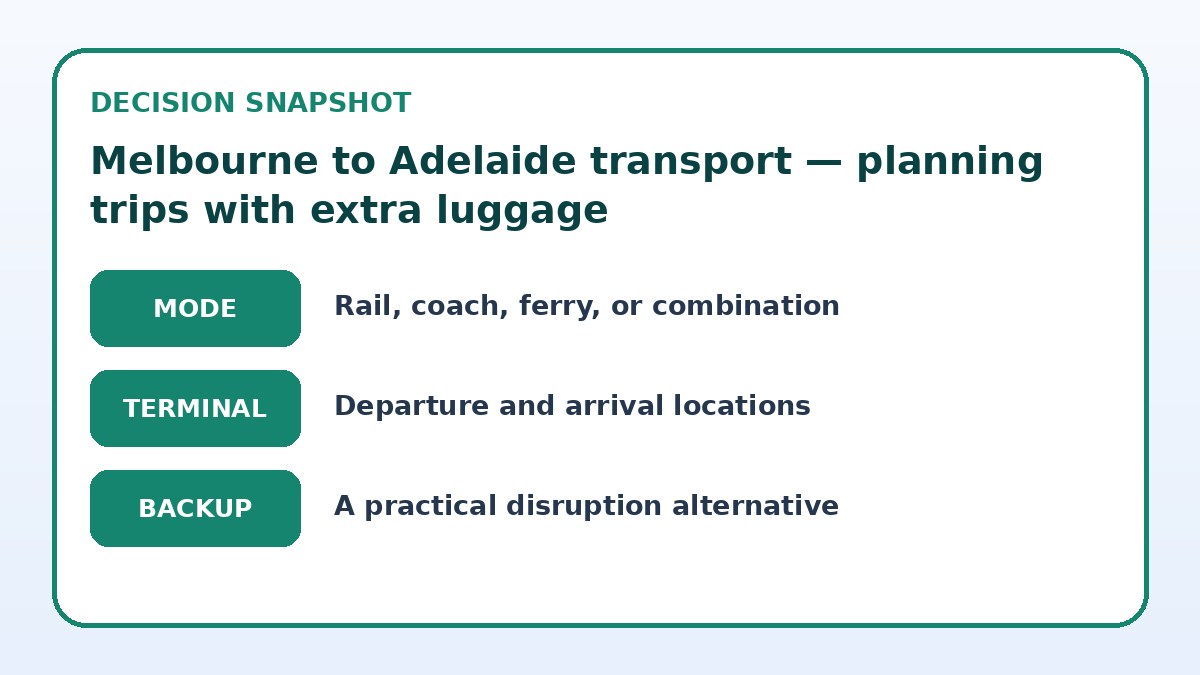
Start by mapping your origin and final drop-off against where each mode delivers you. Rail often deposits passengers at central stations with taxi ranks and rideshare pick-up areas, which is convenient if your final address is in the city. Coaches typically use major intercity terminals that can have good curb access for dragging heavy suitcases. Driving gives total door-to-door control, but consider parking and long-distance fatigue. A combined plan—drive to a regional park-and-ride or take a coach for the longer leg—can cut handling while keeping flexibility.
Decide on a priority: fewer transfers, cheaper fare, or shorter overall travel time. If minimizing luggage handling is the priority, rank options by number of times bags must be lifted and moved rather than by advertised travel time. For example, a longer direct coach or direct train with generous luggage handling beats a faster itinerary that requires multiple station-to-station transfers. Use local transit, rideshare, or a private transfer for the first/last mile only when they can manage your luggage without repeated lifts.
Choose the end-to-end journey plan
| Journey approach | Best for | Friction to check |
|---|---|---|
| Direct long-distance train or coach | Travelers who want fewer transfers and minimal handling | May be slower than a multi-leg flight+drive or limited in schedule frequency |
| Driving door-to-door (rental or private transfer) | Maximum control over luggage and pick-up/drop-off points | You bear all driving time, fuel and fatigue; parking and tolls add complexity |
| Mixed: drive to regional hub, then rail/coach | Balancing driving short distances with a comfortable main leg | Introduces one transfer but reduces long-haul driving and handling at major terminals |
| Multi-leg public transport with rideshare first/last mile | Cost-conscious travelers with manageable transfers and local help | Multiple lifts and transfers increase friction and risk with heavy or multiple bags |
Check live intercity options
Look beyond the ride itself and compare terminals, transfers, luggage, and arrival fit.
Terminal fit and transfer friction
Examine the terminals and stations you’ll use for step-free access, elevators, curbside loading, and how far your luggage will be carried from vehicle to platform or bus bay. Some regional coach bays are simple curbside stops, while some train stations require negotiating stairs and pedestrian bridges. If any transfer involves a long walk, steep ramp, or narrow concourse, account for extra time and physical effort. If you need help, plan to recruit a porter service or request assistance from the operator when booking; verify availability on the booking page.
Also consider the realities of midday versus early-morning or late-night transfers. Stations are usually busier at commuter peaks, which can slow loading and unloading of heavy items. Curbside pick-up points and rideshare zones can be congested; check whether contacts at your destination can meet you directly at a vehicle-accessible entrance. If moving through airport infrastructure for part of the trip, find out baggage trolleys, elevator locations, and shuttle bus procedures before travel—these small details make a big difference with oversized suitcases.
Timing flexibility and planning for comfort
Traveling with extra luggage typically rewards flexibility. Allow extra time for check-in, loading, and any paperwork like vehicle permits or coach baggage declarations. If you’re choosing a timetabled service, pick a departure that gives a comfortable buffer before any onward appointments or hotel check-in deadlines. For long daytime trips, aim for departures that avoid peak commuter periods to smooth loading. If you prefer night travel to avoid busy day traffic, check whether the service and terminal facilities support late arrivals and safe curbside pickup.
Consider physical comfort during the journey: seat selection, available storage, and whether you’ll need access to your bag mid-trip. Some trains and coaches have luggage racks or dedicated bays where larger items are stowed; others require luggage to remain in the luggage compartment, which can mean limited access. If you need frequent access to a carry-on, keep it under the seat rather than in an inaccessible hold. For rental cars or private transfers, choose vehicles that clearly accommodate your bag dimensions and allow for a comfortable ride with passengers and luggage combined.
Compare the practical alternatives
Use the final page to confirm what is actually offered on your dates and save a workable fallback.
Intercity travel checklist
- Measure and photograph each bag; note dimensions and weight limits before booking any service.
- Confirm baggage allowances, oversized item policies, and any carry-on restrictions on the operator’s final booking page.
- Plan first- and last-mile pickups at vehicle-accessible entrances to avoid stairs and long walks with luggage.
- Book a later arrival or earlier departure than strictly necessary to provide a buffer for delays and extra loading time.
- Reserve assistance or porter services where available, and keep operator contact details for same-day coordination.
- Pack a small, accessible bag with essentials and documents so you won’t need to open large suitcases during transfers.
Disruption backup and what to verify on booking pages
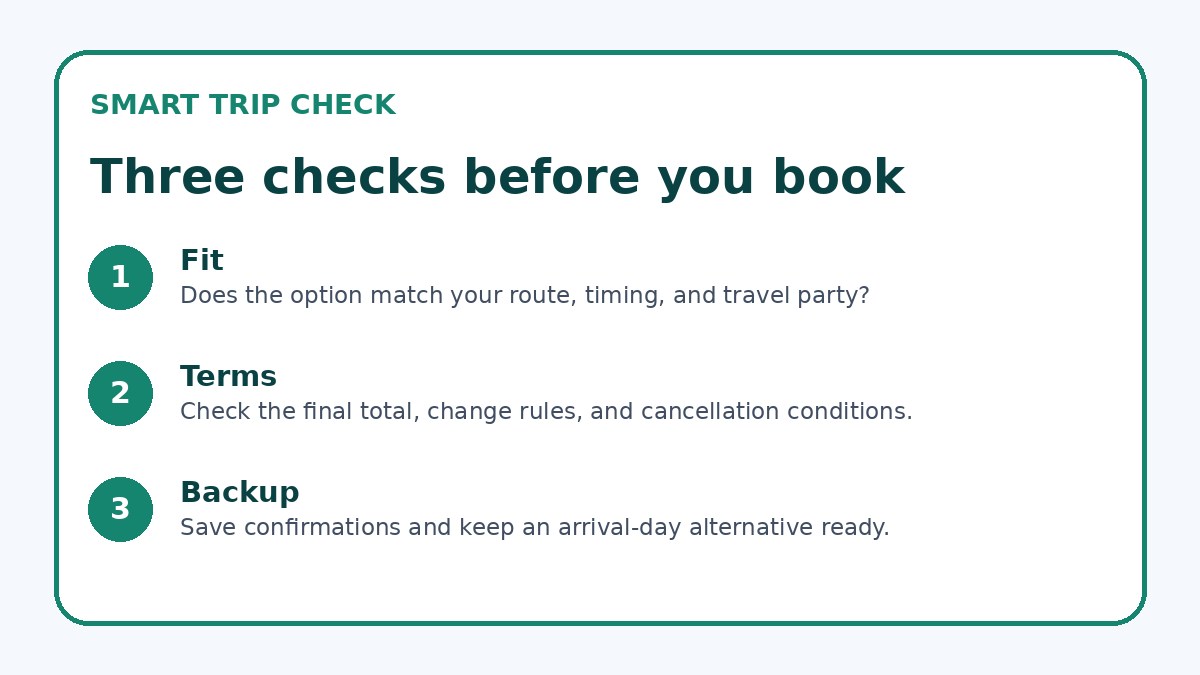
Build a simple contingency: at least one alternative departure or transfer option, plus contact details for local taxi and railway station assistance. If a direct service is canceled or delayed, your best backup might be a later direct coach or a drive to an alternative station where you can catch an onward connection. Know which operators allow rebooking without moving your bags between services—verify their transfer and rebooking policies exactly on the provider’s booking page before purchase. If you rely on third-party platforms, cross-check baggage terms on the operator’s own site.
Before finalizing any booking, confirm these practical facts on the operator’s final booking page: baggage size and weight allowances for hold and cabin, fees for oversized items, available assistance at departure and arrival terminals, and the locations of curbside/terminal pick-up. Also verify whether transfers require self-handling between modes. Trip.com can be used to compare availability and conditions, but always treat their listing as a starting point and verify baggage and transfer rules with the operator who will carry your luggage.
Rail & Intercity Transport questions travelers ask
Can I bring oversized or extra bags on trains and coaches between Melbourne and Adelaide?
Policies differ by operator and can change, so treat this as a planning step rather than a fact. Many rail and coach services accept standard suitcases and a carry-on, but oversized or additional bags may need pre-declaration or incur limits. Before booking, check the specific service’s baggage page for size and weight allowances, any charges for excess or oversized items, and whether you can store large items in a hold or must keep them in an onboard compartment. If this information isn’t clear, contact the operator directly to confirm how they handle bulky items and whether assistance is available at stations.
What is the easiest way to handle luggage during transfers between different modes?
Ease comes from reducing the number of transfers and picking terminals with curbside access, elevators, or short distances between platforms and pick-up points. Choose direct services when possible so you avoid moving bags between vehicles. If a transfer is unavoidable, arrange a meet-and-greet from a rideshare or taxi at a vehicle-accessible entrance to minimize walking. Consider a porter service for heavy items, or pack valuables and essentials in a small day bag you keep with you. Always confirm terminal layouts and assistance options on booking pages so you’re not surprised on the day.
Should I drive the whole way or combine driving with public transport?
Driving end-to-end gives total control over when and where your luggage moves, which is ideal for bulky or delicate items, but it places the burden of long-distance driving and parking on you. Combining a short drive with a longer coach or train ride reduces total driving time and can be easier physically, while still limiting the number of times you handle your bags. When comparing options, assess the door-to-door time, parking availability at the rail or coach hub, and whether the hub offers easy curbside loading. Verify parking rules and terminal access on municipal or operator pages before you commit.
Final decision note
For travelers with extra luggage, the best Melbourne to Adelaide transport choice minimizes the number of times you must lift and move bags while matching your tolerance for driving, time, and cost. Start by comparing direct train or coach services against driving door-to-door, and consider a mixed approach if you want shorter driving with a comfortable long leg. Always verify baggage size and weight policies, assistance availability, and terminal access on the operator’s booking page before purchase. Pack a small essentials bag, reserve extra time, and have a clear backup plan so disruptions don’t leave you stranded with heavy suitcases.
Continue planning
Check current options and final conditions
Use the provider page to confirm live availability, the final total, cancellation terms, and every condition that matters to your trip.
This evergreen planning guide was created with AI-assisted drafting and a structured quality review. It does not display live prices, schedules, availability, visa guidance, or provider rankings. Verify current details before booking. Some links are affiliate links; we may earn a commission at no additional cost to you.