Practical answer first: set targeted price alerts but pair them with a short decision checklist so you don’t buy on impulse. For business travelers heading to Manila, alerts are a valuable tool to monitor airfare and hotel bundles—but only if you define exactly what you’ll accept before the alert triggers. That means specifying dates, preferred class of service, refundable or changeable fares, and the minimum hotel standards you need for reliable work. Use alerts to gather options and deadlines; don’t turn a low headline price into an automatic buy. Treat the alert as a prompt to compare identical trip parameters across suppliers, confirm cancellation and change terms on the provider’s final booking page, and evaluate whether a package truly saves time or reduces flexibility.
Test package value fairly
| Booking approach | Best for | Tradeoff to check |
|---|---|---|
| Buy a bundled flight+hotel package when alerted | Travelers who value time savings and coordinated support for a single booking. | May sacrifice flexibility or face stricter change rules than separate bookings; verify final terms carefully before purchase. |
| Book flights and hotels separately after an alert | Travelers who need precise control over change fees, loyalty benefits, and specific flight times. | Requires more time to manage and may lose out on unified support for disruptions, though it preserves flexibility. |
| Use alerts only to monitor price trends, then wait for corporate approval | Duty‑of‑care conscious travelers and those with strict expense oversight. | You might miss a short‑term fare window, but you avoid impulse buys that conflict with company policy or refund rules. |
| Set tighter alert criteria (exact dates, cabin, refundable fares) | Frequent business travelers who need predictable, changeable itineraries. | Narrow alerts produce fewer notifications and may miss broader bargain opportunities; you trade quantity for relevance. |
Check current package and separate options
Use identical dates, travelers, room needs, baggage, and flexibility so the comparison stays meaningful.
What to compare before you judge a package useful
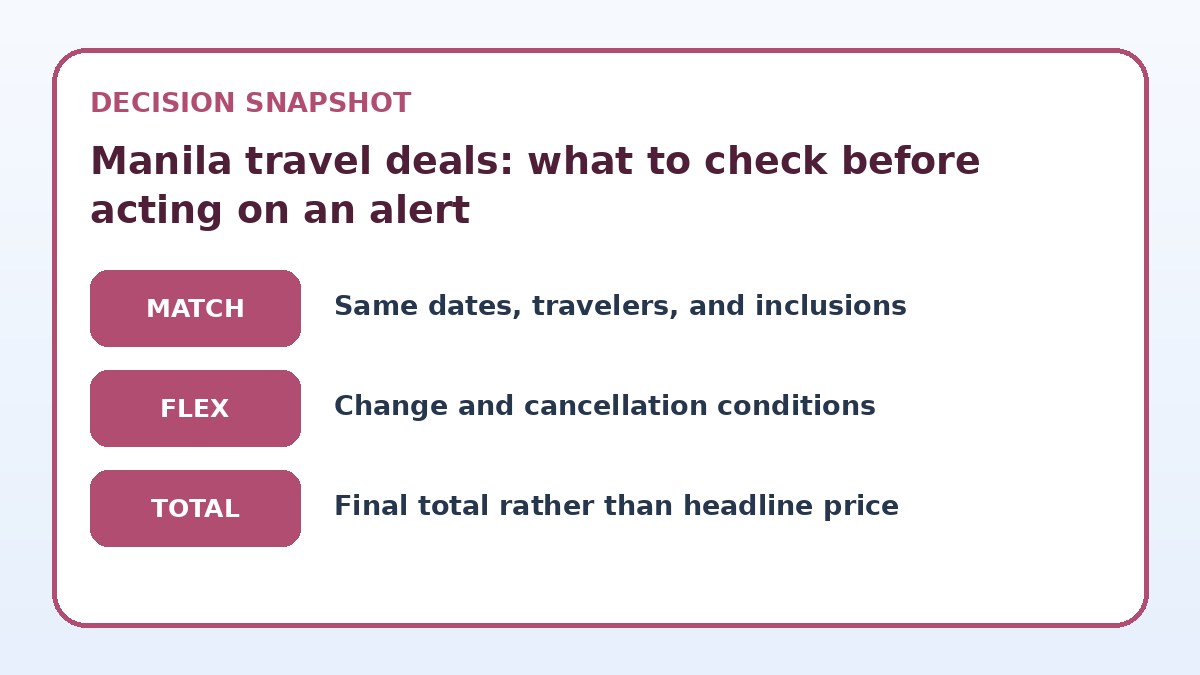
The single most important step is to compare like with like. Match the same travel dates, number of travelers, seating class, baggage allowances, and hotel room type and breakfast inclusion before declaring a package a better deal. Different suppliers list different inclusions under vague labels; a lower headline fare may exclude seat selection or charge for checked luggage that another option includes. For business trips where timing and comfort matter, small differences can create large downstream costs—missed meetings, rebook fees, or uncomfortable overnight flights.
Also compare change and cancellation policies side by side. A bundled package can lock you into strict terms that are costly if your schedule shifts. Check whether the package allows name changes, rebooking with fee waivers, or partial refunds, and verify these exact conditions on the provider’s final booking page. If your employer mandates refundable fares or specific invoice requirements, confirm those details before buying; an apparent bargain that complicates refunds or corporate billing is often a false saving.
Inclusions: what matters for business travelers
For a business traveler, inclusions should be translated into operational needs: reliable Wi‑Fi, proximity to meeting districts, airport transfer options, and quiet rooms for calls. On the flight side, focus on seat type and departure/arrival times rather than the carrier alone. A cheaper flight that arrives late night or has long connections can undermine a tight itinerary. For hotels, check whether the rate includes breakfast, Wi‑Fi speed, and the room type you actually need—executive floors and lounge access may be worth the premium on work trips.
Beyond amenities, look at support guarantees: does the package promise assistance if a flight is canceled or delayed? How does the supplier handle rebooking across components of a bundle? The process for resolving disruptions should be clear on the booking page. If the bundle comes with a single-ticket support promise, verify how refunds and rebookings operate across flight and hotel legs so you won’t be forced into a suboptimal alternative when timing matters.
Look past the headline total
Compare inclusions and change conditions before deciding whether a package is genuinely useful for this trip.
Deal comparison checklist
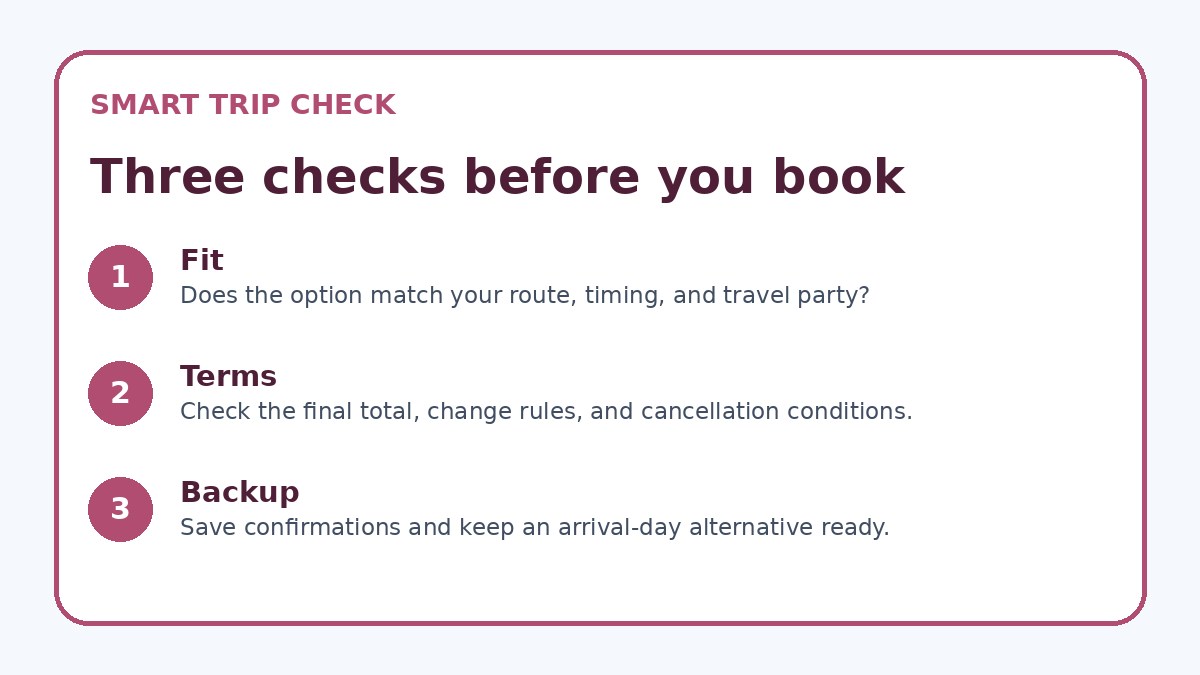
- Define exact trip parameters (dates, traveler count, cabin or room type) and only accept alerts that match them.
- Compare the same itinerary and refund/change conditions across package and separate booking options before buying.
- Open the provider’s final booking page and copy or screenshot the cancellation and change policy for corporate records.
- Confirm whether baggage, seat selection, breakfast, and airport transfers are included or charged separately in the price.
- Verify invoice and billing details meet your company’s expense and accounting requirements before completing payment.
- Set a firm decision window (for example 24–48 hours) for acting on any alert to avoid impulsive purchases.
Flexibility and traveler-specific value
Determine how much flexibility you need before you let an alert prompt you to buy. If your calendar is fixed, a nonrefundable lower fare may be acceptable. If meetings often change, prioritize refundable or changeable fares—even if they cost more upfront. Consider whether your company’s travel policy reimburses change fees or prefers refundable fares; align your booking behavior with those rules. Also factor in frequent‑flyer status or corporate negotiated rates, which may deliver additional value outside headline pricing.
Think about intangible traveler-specific value too: a hotel near the business district may cut commute time and taxi expense even if it’s pricier. A later departure or an earlier arrival can let you attend meetings without hotel-night changes. When alerts flag bundles, weigh these soft benefits against raw price differences, and measure them in saved time or reduced stress. If time equals money on your trip, pick the option that preserves your schedule rather than the lowest sticker price.
Final terms and verification before checkout
Never rely on the alert notification alone—always click through to the provider’s final booking page and verify exact terms. Confirm the total final price, including taxes and fees, baggage charges, seat selection costs, and any local hotel surcharges. Read the cancellation and change conditions word for word and note any deadlines for free changes. If a bundle references credits or vouchers, confirm how and when they can be used and whether they expire within a timeframe that suits your employer’s expense rules.
If you plan to use a travel manager or expense tool, ensure invoices meet their requirements before purchase. Keep screenshots of the fare rules and booking confirmation so you have a record if policy disputes arise. When in doubt, pause—alerts are for information, not pressure. You can also compare the same itinerary on Trip.com to check availability and terms, but always treat the supplier’s final booking page as authoritative.
Travel Deals & Booking Strategy questions travelers ask
How should I set price alerts so they’re useful for fast business trips to Manila?
Set alerts with specific parameters: exact travel dates or a tight date range, cabin class you require, number of travelers, and the hotel location or room type you will accept. Include baggage allowance if you normally check bags and, where possible, require refundable or changeable fares if your schedule changes frequently. Use alert price thresholds that trigger only when savings exceed your acceptable difference versus a refundable fare. This reduces noisy notifications and keeps alerts aligned with business needs.
If an alert shows a cheaper bundled package, what immediate checks should I perform?
First, confirm that the bundle’s dates, cabin, and room type exactly match what you’d book separately. Then verify cancellation and change fees for each component and whether the bundle’s support covers rebooking across flight and hotel. Check baggage, seat selection, breakfast, and any transfer inclusions. Finally, ensure the total invoice format and payment method comply with your company’s expense process; if anything is unclear, pause and contact the supplier’s support or your travel manager before paying.
Can alerts undermine corporate travel policy, and how do I avoid that?
Yes—alerts can tempt you into noncompliant purchases if they highlight lower nonrefundable fares or consumer bundles that don’t meet corporate rules. To avoid this, align alert criteria with policy requirements (e.g., refundable fares, approved hotels, or preferred carriers) and add a mandatory approval step for purchases outside preapproved parameters. Maintain documentation of fare rules and confirmations. When in doubt, run the alerted option past your travel manager; the small delay protects duty of care and prevents reimbursement disputes.
Final decision note
Price alerts are a practical tool for business travelers to Manila if you use them as structured signals, not automatic prompts to buy. Start by setting narrow, policy-aligned criteria so notifications match the trip you actually need. When an alert appears, run a quick but disciplined comparison: identical dates, identical inclusions, and identical change or cancellation rules. Verify the provider’s final booking page for fees, invoice details, and support promises before paying. That discipline preserves flexibility, protects corporate compliance, and ensures that any apparent savings are real and useful for your work trip.
Continue planning
Check current options and final conditions
Use the provider page to confirm live availability, the final total, cancellation terms, and every condition that matters to your trip.
This evergreen planning guide was created with AI-assisted drafting and a structured quality review. It does not display live prices, schedules, availability, visa guidance, or provider rankings. Verify current details before booking. Some links are affiliate links; we may earn a commission at no additional cost to you.