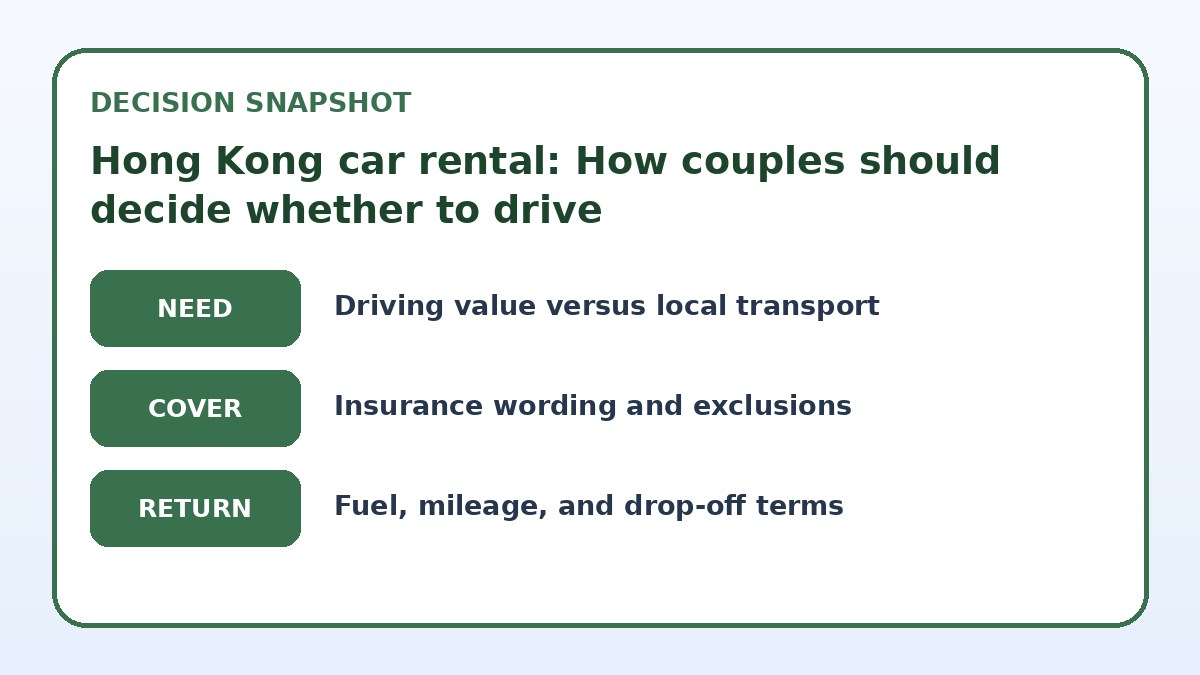
For most couples visiting Hong Kong, a rental car is rarely essential — the city’s compact urban core, efficient public transit and limited parking change the math compared with driving in many Western destinations. That said, a car can make sense for specific itineraries: if you plan day trips to outlying islands or the New Territories, want flexible scenic drives, or are carrying bulky gear. This guide gives a clear yes/no decision first, then walks through the tradeoffs that matter to couples: whether the route offers enough value to justify driving, how to read insurance and extra coverage wording, what to expect at pickup and drop-off, and a practical non-driving fallback you can rely on.
Route value: when a car actually improves a couple’s Hong Kong trip
Driving in Hong Kong becomes compelling when your itinerary includes destinations that are awkward by public transit: remote New Territories beaches, certain hiking trailheads, or multi-stop island loops where buses run infrequently. For couples who prize privacy, convenience, or the ability to change plans on the fly, a car removes reliance on timetables and crowded transfers. Evaluate the incremental time and convenience a car provides versus transit: if the total extra door-to-door time saved is under an hour per day, the car’s cost and hassle may not be worth it.
Consider mobility needs and luggage too. Couples carrying bulky sports equipment, photography gear, or traveling with a small child may find the trunk space and private storage worthwhile. But measure that benefit against parking search time, parking fees, and restricted parking zones — especially on Hong Kong Island and Kowloon where street parking is limited and often metered or permit-only. In short: drive when the route unlocks experiences you could not reasonably do together on public transport.
Decide whether driving earns its place
| Mobility strategy | Best for | Cost or friction to check |
|---|---|---|
| Rent a car for entire trip | Couples with multiple remote day trips, heavy luggage, or mobility needs seeking full itinerary control. | Higher cost, parking and inspection friction, and responsibility for insurance excesses and local driving rules. |
| Rent only for specific days | Couples who want transit for the city but a car for one or two remote excursions. | Extra pickup/return time and potential one-way fees, but lower overall rental cost and less daily hassle. |
| Public transit and taxis | Most couples focused on urban sightseeing, dining, museums and short island ferries. | Less flexibility for remote spots and luggage handling, but simpler logistics and often lower cost. |
| Guided day trips or private transfers | Couples who want door-to-door service for specific days without rental responsibilities. | Less personal flexibility during the tour day, but no inspection, insurance or parking concerns for the couple. |
Check live rental choices only after the route test
Use the exact driver, dates, pickup point, and return plan to compare current conditions.
Insurance and coverage: the wording you must read before you sign
Insurance details are where unexpected costs commonly appear. Don’t rely on summary language when booking: check the rental contract for the collision damage waiver (CDW), theft protection, third-party liability limits, and any deductible (excess) amounts. Many providers present damage waivers that reduce but do not eliminate out-of-pocket liability; know the exact excess number and whether you can buy a supplement to lower it. Also verify whether roadside assistance is included and what response times or service limits apply.
If your plan includes crossing the border to mainland China or driving to outlying islands requiring a ferry, confirm cross-border permission explicitly — many policies forbid it. Read exclusions such as prohibited road types or driving under certain weather conditions. Finally, if you intend to use a personal credit card or travel insurer to cover the excess, check the credit card provider’s terms and the rental company’s acceptance rules. On the provider’s final booking page, find the full insurance wording, quotes for supplements, and contact details for policy clarification.
Compare the full rental conditions
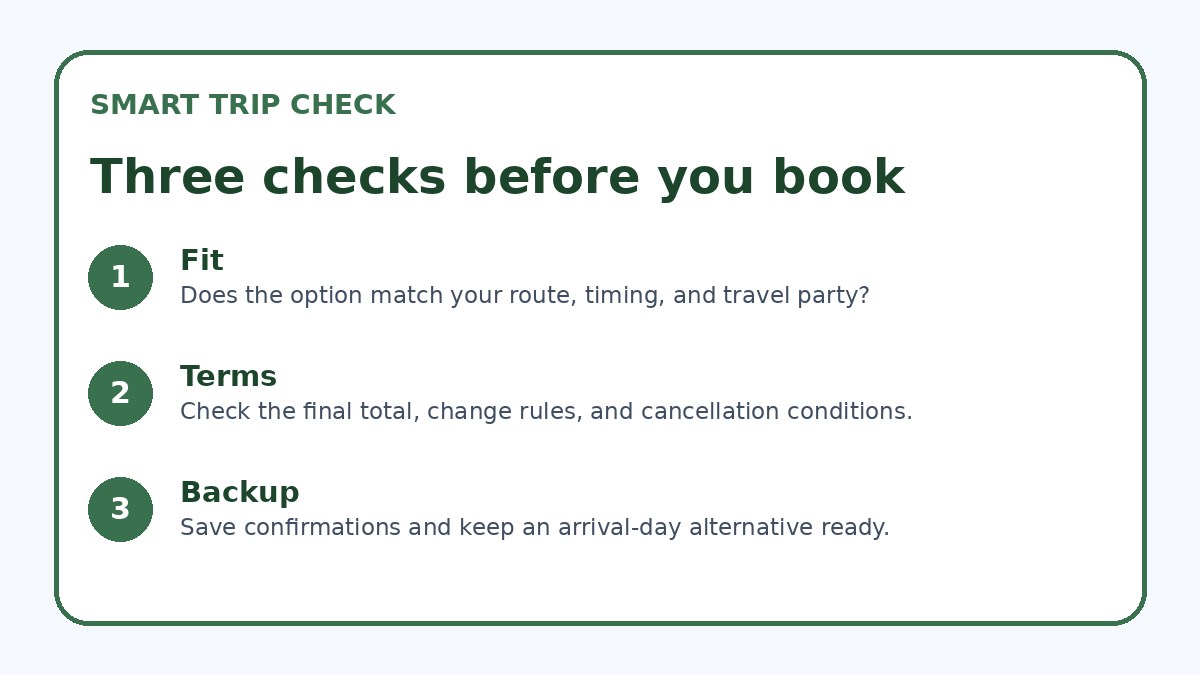
Confirm insurance wording, exclusions, deposit, fuel, mileage, and return terms on the final page.
Pickup and return friction: logistics couples should budget into the day
Pickup and drop-off add real time costs that couples often overlook. Airport locations usually have on-site desks but may require a shuttle or a walk to the parking lot; downtown depots sometimes need reservations for parking or specific return windows. Build an extra 30–60 minutes into both pickup and return for paperwork and the joint vehicle inspection. Note that after-hours returns may be accepted but often require a documented condition report and sometimes extra fees, so confirm the exact process before you arrive.
Inspection is a key moment for both parties: walk the car together, photograph existing damage, and get the attendant’s signature or stamped receipt if possible. For one-way rentals or different pickup/return locations, check for transfer fees and the administrative steps required. If you’re arriving by plane late or have a tight connection, consider delaying pickup until the next morning to avoid rushed checks. Always save the booking confirmation and photograph the fuel gauge at handover to prevent disputes at return.
Car rental terms to verify
- List every place you want to visit and mark which are hard to reach by MTR, tram, bus or ferry to judge the car’s route value.
- Read the rental contract’s insurance section on the provider’s final booking page; note deductible amounts, liability limits and excluded activities.
- Confirm pickup and return procedures, hours, inspection requirements and after-hours drop-off rules directly with the rental location.
- Check whether cross-border driving or island ferry vehicle transport is allowed and what extra permits or fees the provider requires.
- Photograph the vehicle thoroughly at pickup (odometer, fuel, exterior) and keep copies of all signatures and condition reports.
- Plan a non-driving backup: download transit apps, save key ferry and bus timetables, and pre-book at least one private transfer option for remote days.
Non-driving fallback: a practical plan if you decide not to rent
If you choose to skip the car, you still need a reliable mobility plan so your days run smoothly. Hong Kong’s MTR, tram, buses and ferries cover most tourist and local destinations with frequent service; taxis and ride-hailing are convenient for late nights or direct routes. For island or New Territories visits, check regional bus schedules and public ferry timetables in advance because some services are less frequent on weekdays or outside peak season. Keep a backup taxi app or a plan for pre-booked meet-and-greet transfers for early departures or late returns.
For day trips that would have tempted you to drive, organize a guided small-group tour or a private driver-transfer for that single day instead of a full rental — it often costs less and avoids parking and insurance worries. Also plan routes with realistic transfer times and leave buffer time for scenic stops. Whether you drive or not, download transit maps, save offline directions, and store emergency contacts; these small preparations prevent stress and let you enjoy the city and the quieter countryside.
Car Rental & Road Trip questions travelers ask
Is driving in Hong Kong difficult for visitors used to left- or right-hand traffic?
Driving in Hong Kong follows left-hand traffic. If you’re used to driving on the opposite side, allow an adaptation period and avoid winding single-lane rural roads until you feel comfortable. Urban driving often involves congestion, narrow streets, and aggressive lane changes, so prioritize routes with clearer lanes and simpler junctions. Also check the rental’s stated rules about which roads are permitted and whether they provide a GPS or recommended navigation app; practicing in lower-traffic areas first helps build confidence for the couple sharing driving duties.
How do parking and tolls affect the decision to rent a car as a couple?
Parking in central areas is limited and often metered or gated; secure hotel parking can be expensive, so confirm availability ahead. Tolls apply on some tunnels and expressways; your rental agreement should state how tolls are handled and whether an in-car transponder is provided. When budgeting, include likely tunnel tolls, parking fees, and any congestion charges. If you plan many short hops in the city, these costs can add up more than a single day rental plus a guided transfer for remote locations.
Can we rely on credit card insurance or our travel policy for the rental excess?
Some credit cards or travel insurance policies cover collision excess, but coverage varies widely. Before relying on those, verify the card’s terms and confirm the rental company accepts that form of cover for the excess; some companies still require an upfront authorization on a credit card. On the provider’s final booking page and the insurance policy language, look for explicit acceptance conditions and any required documentation to file a claim. If in doubt, purchase the rental company’s excess waiver for peace of mind and straightforward handling after an incident.
Final decision note
For most couples, Hong Kong’s compact core and extensive public transport make a rental car unnecessary. Drive only when your planned route opens access to remote beaches, trails or multiple outlying stops where transit would be slow or awkward. If you do rent, read the insurance and cross-border rules carefully, allow time in your schedule for pickup and return inspections, and photograph the car at handover. If you decide against driving, build a reliable fallback using MTR, ferries, taxis and occasional private transfers — this mix keeps logistics simple and your trip focused on shared experiences rather than vehicle management.
Continue planning
Check current options and final conditions
Use the provider page to confirm live availability, the final total, cancellation terms, and every condition that matters to your trip.
This evergreen planning guide was created with AI-assisted drafting and a structured quality review. It does not display live prices, schedules, availability, visa guidance, or provider rankings. Verify current details before booking. Some links are affiliate links; we may earn a commission at no additional cost to you.