Short answer: sometimes — but not always. If your Brisbane itinerary hooks into the Gold Coast, Sunshine Coast, Lamington or wide-ranging day drives to beaches, national parks and wildlife refuges, a rental car will likely improve convenience and give you flexibility with children, gear and pace. If you’re staying central, using a base in South Bank, Fortitude Valley or Kangaroo Point, Brisbane’s compact inner-city layout, plentiful public transport and family-friendly ferries often remove the need for a car.
This article helps families decide by weighing route value (what you want to see), insurance and driver responsibilities (what to verify in the fine print), pickup and return friction (airport versus city), and a clear non-driving fallback plan. Read the quick checklist and comparison rows to match mobility to your priorities, then use the checklist to verify vehicle, coverage and local requirements before booking.
Route value: when driving genuinely improves your family trip
Start by mapping the day trips you want to make and placing them on a clock: morning, midday and late afternoon. Driving becomes valuable when your plan includes multiple destinations that are spread across South East Queensland — for example, switching between several beaches, national parks or hinterland villages in a single day. A car lets you carry strollers, picnic gear and sunscreen without repeated transfers, keep flexible departure times for naps, and reach sunrise or sunset viewpoints that public transport serves poorly.
If your stay is largely inner-city, with activities clustered along the river, in kid-friendly museums, playgrounds, and cafés, the gains from a rental fall. Brisbane’s CityCat ferries, buses and trains serve many riverside attractions and suburbs well; combined with short rideshare trips for evenings or late returns, you may avoid parking search and parking costs. When deciding, estimate door-to-door travel time with and without driving, and factor in the energy cost of managing children and luggage during transfers.
Decide whether driving earns its place
| Mobility strategy | Best for | Cost or friction to check |
|---|---|---|
| Self-drive rental car | Families planning multiple day trips or carrying bulky gear and strollers. | Greater flexibility and convenience but adds parking, fuel costs, insurance checks, and pickup/return friction. |
| Public transport (trains, buses, CityCat) | City-centred stays with predictable schedules and light luggage. | Low cost and less hassle with parking; less convenient for remote day trips or complex itineraries. |
| Rideshares and taxis | Short hops, evenings, airport transfers, and on-demand flexibility without driving. | Convenient for point-to-point travel but can be costly for repeated long trips and may lack child-seat options. |
| Guided day tours or private transfers | Families wanting structured day trips to beaches, wildlife or hinterland without navigating roads. | Simplifies logistics and safety for kids but reduces schedule flexibility and may limit stops. |
Check live rental choices only after the route test
Use the exact driver, dates, pickup point, and return plan to compare current conditions.
Insurance wording and driver responsibilities to verify
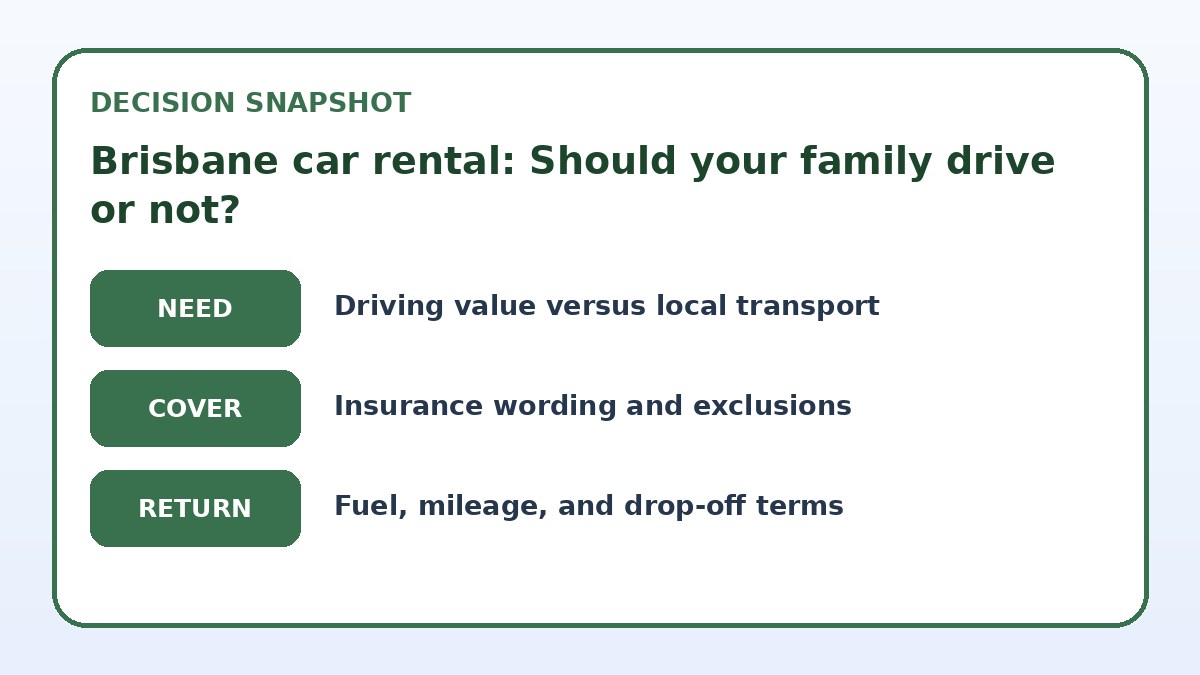
Insurance details can change the value equation. Look for the rental agreement’s excess (the amount you’d pay after a damage claim), what the standard insurance covers, and which incidents are excluded—tyres, windscreen, undercarriage, and driving on unsealed roads are commonly treated separately. Check age limits and whether additional authorised drivers are allowed without surcharge. If road trips include gravel tracks to lookouts or rural reserves, confirm whether that terrain is permitted under the policy.
Don’t rely on headline coverage words alone. On the final booking page, verify whether a reduction in excess is an optional product, whether collision damage waiver (CDW) or loss damage waiver (LDW) is included or sold separately, and what happens if you use a third-party authorised credit card protection. Note whether roadside assistance is included and what phone number or steps you’ll need in an emergency. If the contract is unclear, contact the supplier directly and save the correspondence.
Compare the full rental conditions
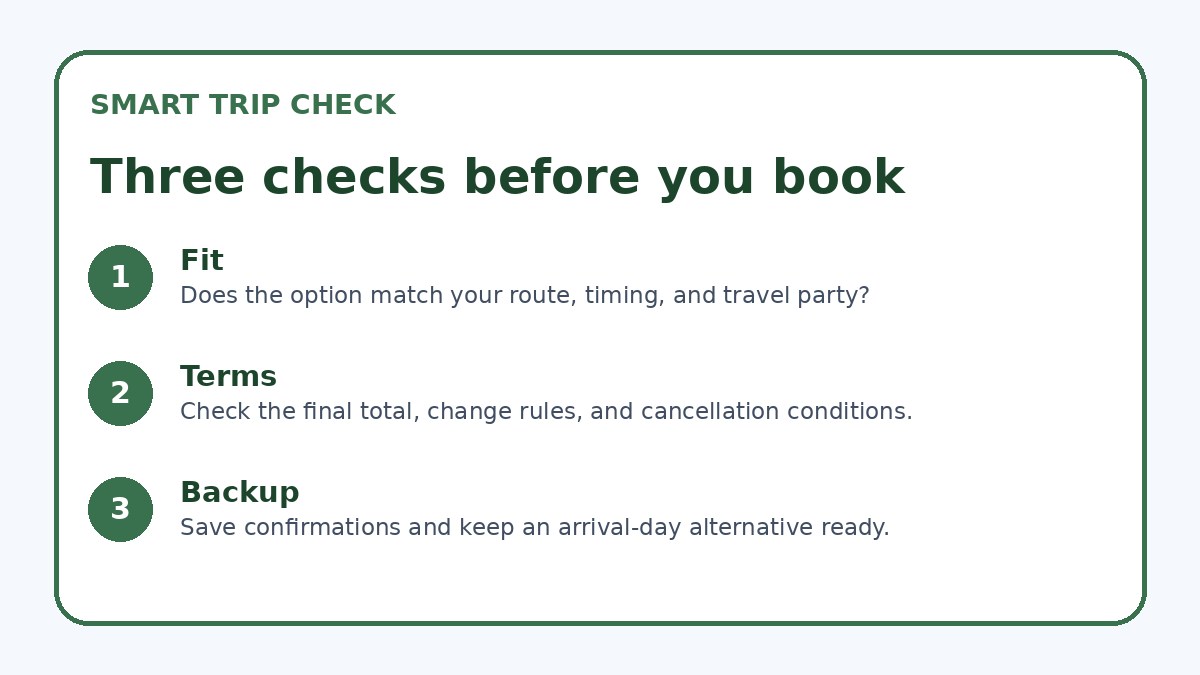
Confirm insurance wording, exclusions, deposit, fuel, mileage, and return terms on the final page.
Pickup and return friction: airport vs city counters
Pickup and return logistics strongly influence whether a rental is worthwhile for families. Airport desks often mean faster handoffs, luggage trolleys and familiar signage, but they can add queueing time on arrival, extra airport surcharges, and longer waits for shuttle transfers to off-airport lots. If travelling with young children, a quick, controlled pickup might beat the lower daily cost of off-airport locations. Consider arrival time, how much carry-on and stroller gear you have, and whether a pre-booked transfer from the terminal is available.
City counters put you closer to your accommodation and can reduce return friction on your departure day, but they sometimes require navigating public transport or rideshares to reach the office. Look at opening hours to avoid late-night returns that incur penalties, and confirm if a drop-off outside business hours is possible and whether a key-drop process is used. Also verify fuel policies, whether you must top up before return, and how final tank checks are handled on the confirmation page.
Car rental terms to verify
- List your planned day trips and estimate door-to-door times with and without a car to judge route value.
- On the rental confirmation page, read the insurance excess, collision damage terms, and exclusions for tyres, windscreen, and unsealed roads.
- Confirm authorised driver rules, minimum/maximum driver ages, and whether additional drivers add fees.
- Check pickup and return locations, hours, after-hours drop-off procedures, and whether airport surcharges apply.
- Verify roadside assistance contact details and the steps required for an accident or breakdown.
- Decide child-seat arrangements: reserve manufacturer-approved seats with the rental or bring portable approved restraints and confirm fit.
Non-driving fallback: a family-friendly plan without a car
A robust no-car plan is essential if you decide not to rent. Brisbane’s public transport network—trains, buses and CityCat ferries—covers the central river corridor and many suburbs. For family trips beyond public transport reach, combine scheduled coach services or regional trains with guided day tours that handle transfers, child-safety logistics, and itinerary pacing. Rideshare apps and taxis fill gaps for late nights, grocery runs, or airport transfers while avoiding parking stress.
Plan for child seats: public transport generally doesn’t supply them and taxis or rideshares may not have them standard. If you rely on taxis or rideshares, check local providers’ child-seat policies in advance and, if necessary, bring a portable approved child restraint or reserve a supplier that can provide one. Also identify nearby grocery stores and laundromats at your base to reduce the need for a vehicle for small errands.
Car Rental & Road Trip questions travelers ask
Can I use a rental car to visit Queensland national parks around Brisbane?
Often yes, but verify the rental agreement for terrain restrictions and insurance exclusions before you drive on park access roads. Some suppliers prohibit driving on unsealed or rough roads; others require extra coverage. If your route includes gravel tracks, waterfalls with rough access or remote campsites, check whether those specific roads are permitted and whether additional damage or undercarriage cover is needed. Always confirm permitted road types and any related excesses on the booking confirmation page.
How do I handle child seats and booster requirements when renting in Brisbane?
Australian law has specific child-restraint requirements that vary by age/size. Rental companies sometimes offer child seats for an extra fee, but availability and types differ, so reserve them when you book rather than rely on walk-up availability. If you bring your own seats, ensure they meet Australian standards and you can install them in the rental model. On the booking page or with customer service, verify seat availability, approval standards, fit for your child’s height and weight, and any additional fees.
What should I check about fuel and tolls for a family rental around Brisbane?
Fuel policies matter—some rentals require you return a full tank, others offer prepaid fuel. Decide which is best for your itinerary and check the refuelling process and penalties for not refilling. For toll roads, confirm whether the vehicle uses an electronic toll tag, how tolls are billed, and whether administrative fees apply; toll systems can bill the renter indirectly through the supplier. The rental confirmation page should explain toll handling, and you can ask how toll charges appear on your final invoice.
Final decision note
Deciding whether a Brisbane car rental fits your family trip comes down to tradeoffs between flexibility and friction. If your plan hinges on multiple out-of-city day trips, transporting strollers, or keeping a loose schedule for naps and feeding, a rental commonly improves comfort and access. If you’re mainly city-based, Brisbane’s ferries, trains and buses combined with occasional rideshares and guided tours often provide a simpler, lower-stress option. Before you book, map your routes, read the insurance and damage-exclusion wording on the rental confirmation, confirm child-seat arrangements, and check pickup/return procedures. If you want to compare current availability and policies, consider checking live listings on Trip.com or the provider’s booking page, then use the checklist above to finalize a safe, practical choice for your family.
Continue planning
Check current options and final conditions
Use the provider page to confirm live availability, the final total, cancellation terms, and every condition that matters to your trip.
This evergreen planning guide was created with AI-assisted drafting and a structured quality review. It does not display live prices, schedules, availability, visa guidance, or provider rankings. Verify current details before booking. Some links are affiliate links; we may earn a commission at no additional cost to you.