If you want a straightforward travel day from Rome to Florence, choose a high-speed train for the best blend of convenience and less transfer friction. Trains generally deliver city-centre to city-centre travel with predictable terminals, straightforward luggage rules, and frequent departures that help if your morning shifts. That said, coaches can be cheaper but involve longer road time and different terminals, while private car or combined transfers might suit groups or tight door-to-door schedules. This article focuses on preparing the travel day itself: picking the mode that fits your luggage and timing, arranging transfers to and from terminals, packing a disruption backup, and what to verify at booking so your day in transit feels like a smooth part of your trip rather than an ordeal.
Choosing between train, coach, or private transfer
Start by thinking end-to-end: where you need to be in Rome, where you’ll arrive in Florence, and how much time you want to spend managing luggage and transfers. Trains typically link central stations and reduce extra travel to and from airports or suburban bus terminals. Coaches often depart from different hubs and can add time getting to and from those points. Private transfers offer door-to-door convenience but may be costlier and subject to city traffic, which can lengthen travel-day uncertainty.
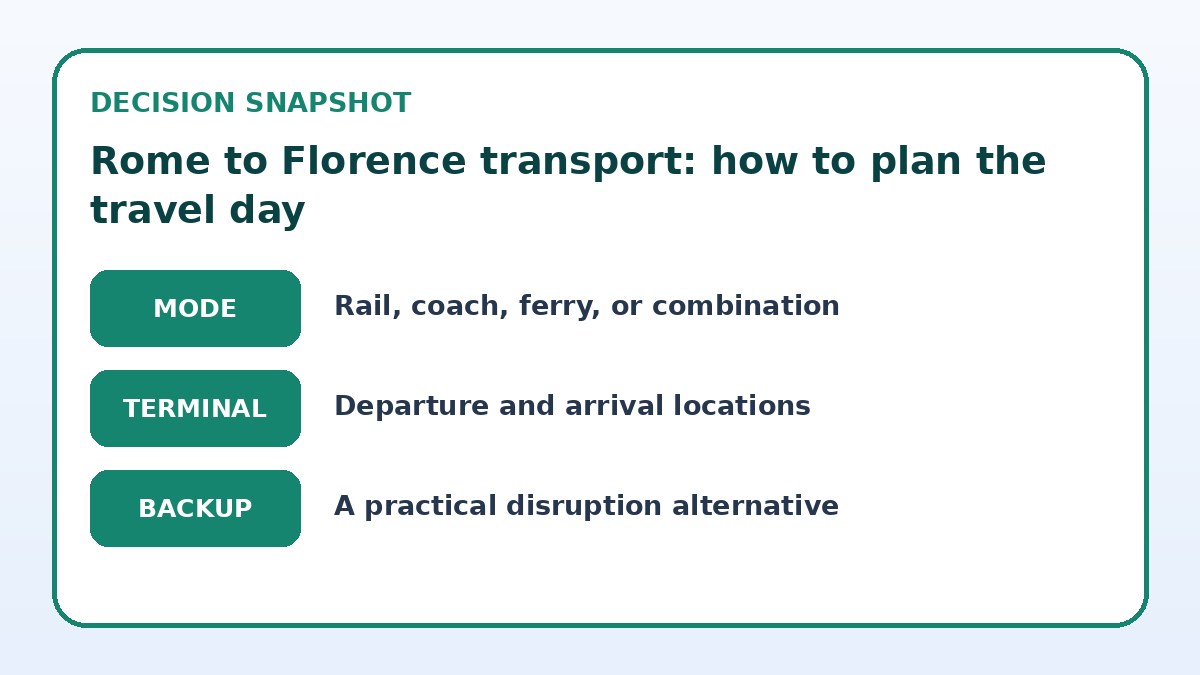
Decide by prioritising what matters most: if you want minimal transfer steps and faster city-centre access, trains are often the best match. If budget is the overriding concern and you can tolerate a longer ride, coaches could work. For groups, early-morning departures, or when you must reach a specific address in Florence without extra taxis, a private transfer or shared shuttle can be worthwhile. Note the tradeoff between predictable ride time and door-to-door convenience when you compare options.
Choose the end-to-end journey plan
| Journey approach | Best for | Friction to check |
|---|---|---|
| High-frequency intercity train | Travelers prioritising predictable city-centre access and low transfer friction. | Less flexible on luggage size policies and possible standing room on busy departures. |
| Long-distance coach | Budget-minded travelers who can accept longer door-to-door times. | Often requires extra transfer time to and from coach hubs and can be slower in traffic. |
| Private or shared car transfer | Groups, passengers with a lot of luggage, or those needing door-to-door convenience. | More expensive and subject to road traffic, which may make travel time less predictable. |
| Hybrid (train plus short taxi/shuttle) | Those balancing speed of rail with last-mile door-to-door needs. | Requires coordinating two services and may add time or cost if connections are tight. |
Check live intercity options
Look beyond the ride itself and compare terminals, transfers, luggage, and arrival fit.
Terminal fit and luggage/transfer friction
Check how each terminal fits your itinerary: Rome’s main train station is typically closer to central hotels than coach hubs or airports, which affects transfer time and taxi availability. Consider luggage handling rules: trains usually allow larger suitcases stored in overhead racks or designated areas, while coaches and private cars have different storage constraints. Measure friction by counting how many times you’ll handle bags between leaving your hotel and arriving at your Florence door—every extra lift is added stress on a travel day.
If you have oversized luggage, fragile items, or lots of bags, add more transfer time and consider a private transfer or a direct train with step-free access. Verify elevator or escalator availability at stations or coach terminals if mobility or heavy bags are a concern. At booking, check the operator’s stated luggage policy and platform access details; where provider specifics may have changed, verify the final booking page and confirmation email for up-to-date information.
Timing flexibility and day-of scheduling
Map the whole day rather than the ride: include hotel checkout, travel to the departure terminal, security or boarding times, the journey itself, and arrival transfer to your Florence accommodation. High-frequency train services give you more flexibility if your morning schedule shifts, while coach services with fewer departures lock you into a specific day plan. Factor in local traffic if you’re taking a taxi or private transfer; peak hours can add significant variability to door-to-door timing compared with rail.
Build buffer time for unexpected delays and aim to arrive at your departure terminal with at least 30–45 minutes before scheduled departure for regional procedures, longer if you must check luggage or find platforms. If you have a late arrival in Florence, check whether your accommodation can hold luggage or offer late check-in. Finally, consider splitting the day: an early departure leaves you with more afternoon hours in Florence, whereas a midday or evening journey might let you squeeze in a relaxed morning in Rome.
Compare the practical alternatives
Use the final page to confirm what is actually offered on your dates and save a workable fallback.
Intercity travel checklist
- Confirm departure and arrival station names and addresses, not just city names, on the final booking page.
- Pack a small carry bag with travel documents, phone charger, a water bottle, and any immediate medications.
- Arrange transfer from your hotel to the departure terminal with extra buffer time for traffic or delays.
- Verify luggage allowances and note any size or weight restrictions listed on the operator’s confirmation.
- Save alternative departure times and local taxi contact options in case your original service is disrupted.
- Share your estimated arrival time and terminal with your Florence accommodation so they can prepare for late arrivals.
Disruption backup and what to verify before booking
Every traveler should have a simple disruption plan: identify the next few rail or coach departures that day, download a local taxi or ride-hailing app, and keep your accommodation contact details handy for late arrivals. If you rely on a tight connection, purchase a ticket that allows exchange or a realistic refund option—always check the operator’s rebooking and refund terms on their booking page before committing. Keep digital and printed copies of confirmations, and note station names carefully to avoid arriving at the wrong terminal.
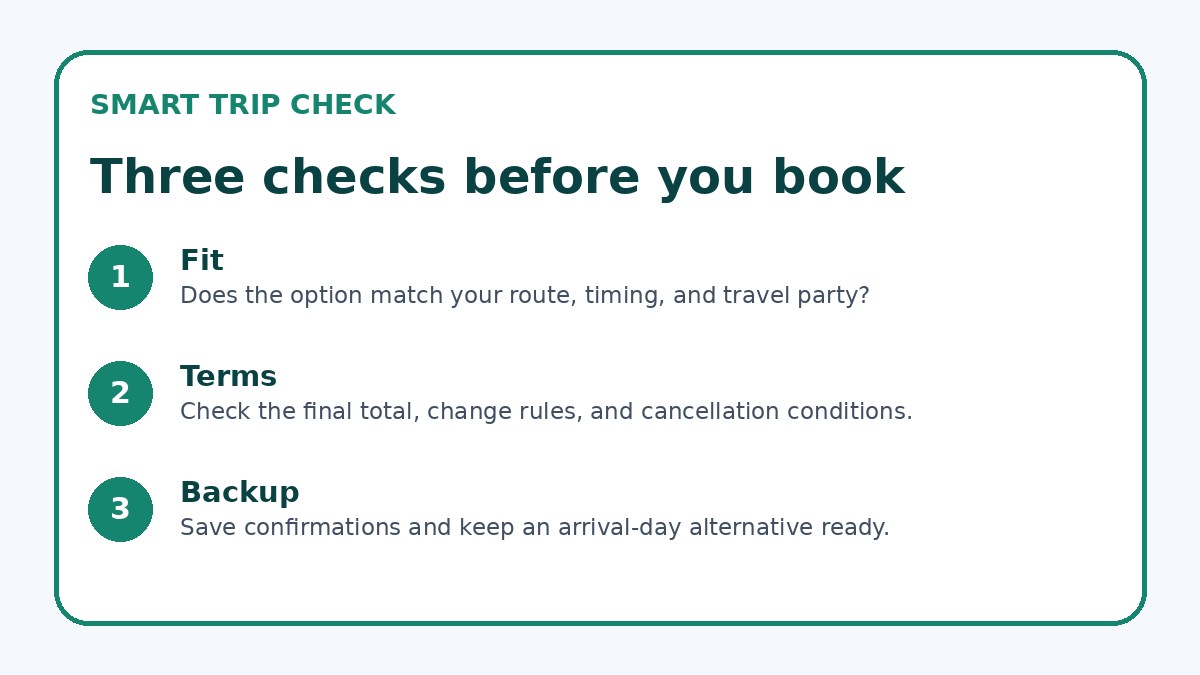
Before you book, verify three things on the provider’s final page: exact departure and arrival terminals, the allowed luggage size/count and any extra fees, and the rebooking/cancellation policy that applies to your ticket type. If you’re comparing options in one place, you can check Trip.com for current availability and conditions, but confirm any critical details on the operator’s own website or the booking confirmation you receive at purchase.
Rail & Intercity Transport questions travelers ask
Is taking the train from Rome to Florence the fastest way between city centres?
Trains typically offer faster and more predictable city-centre connections because they run between central stations, avoiding airport transfers and much city traffic. However, speed on the schedule is only part of the door-to-door picture: include transfer times to and from your accommodation, time needed for platform access, and how you will handle luggage. If you need absolute door-to-door control—for a large group or heavy bags—a private transfer can compete on convenience even if the on-paper journey time is longer. Always compare departure and arrival terminal locations when you decide.
How much time should I allow between hotel checkout in Rome and a train departure?
Plan conservatively: allow time to travel from your hotel to the station, plus at least 30–45 minutes at the station for ticket/boarding procedures and any luggage handling. If you are relying on a taxi during peak hours or need to drop bags at a service desk, add more buffer. For early-morning departures or when using an unfamiliar station, arriving earlier reduces stress and gives a margin for unexpected delays. If you are tight on time, consider asking your accommodation about earlier checkout options or luggage storage.
What should I do if my scheduled train or coach is cancelled or heavily delayed?
Start by checking the operator’s official updates and your booking confirmation for rebooking or refund options. If you can, rebook onto the next available service and keep any digital change confirmations. If alternatives are limited, use a local taxi app or prearranged private transfer as a fallback to reach Florence, and alert your accommodation about a late arrival. Keep receipts for extra expenses in case you can claim them later under the operator’s disruption policy. Always confirm details on the provider’s final booking page and retain contact numbers for support.
Final decision note
Preparing the travel day from Rome to Florence starts with a practical decision about how you want to travel door-to-door, not just the fastest timetable option. Trains usually win for city-centre convenience and frequent departures, coaches can help a tight budget, and private transfers simplify luggage and door-to-door needs at the cost of variability from traffic. Before you book, check terminal names, luggage rules, and the rebooking policy on the provider’s final page. Pack a small essentials bag, arrange transfers with buffers, and keep a simple disruption backup so your travel day feels controlled and relaxed rather than rushed.
Continue planning
Check current options and final conditions
Use the provider page to confirm live availability, the final total, cancellation terms, and every condition that matters to your trip.
This evergreen planning guide was created with AI-assisted drafting and a structured quality review. It does not display live prices, schedules, availability, visa guidance, or provider rankings. Verify current details before booking. Some links are affiliate links; we may earn a commission at no additional cost to you.