Practical answer first: set price alerts for flights and hotels, but pause and compare bundled packages versus separate bookings specifically for luggage costs, cancellations, and flexibility before you click buy. If you travel to Paris with extra checked bags, a cheaper headline fare often hides baggage fees, restrictive change rules, or nonrefundable hotel extras. Use alerts to learn typical price ranges and to time a deliberate comparison—not to trigger an impulsive reservation. Track the exact same dates, passenger count, and luggage allowance across options, and read the provider’s final booking page to confirm luggage rules, change fees, and cancellation terms. Trip.com can be one convenient place to compare live availability, but always confirm baggage allowances and final terms with the carrier or property before booking.

Test package value fairly
| Booking approach | Best for | Tradeoff to check |
|---|---|---|
| All-in-one package (flight + hotel + transfer) | Travelers who value convenience and bundled transfers with large, predictable luggage needs. | May hide higher change fees or strict baggage rules; verify the provider who issues the ticket and final baggage policy. |
| Separate flight and hotel bookings | Travelers who want maximum control over baggage allowances and selective flexibility. | Requires more time to compare and manage multiple providers but often avoids one-size-fits-all restrictions. |
| Flight bundled with airline add-ons (checked bag, seat) plus separate hotel | Those who prefer airline-enforced baggage rules and want to choose hotel flexibility independently. | You must balance the airline’s add-on costs against hotel rates; confirm add-on refund/change rules on the airline page. |
| Dynamic bundling marketplaces (third-party bundles) | Travelers hunting convenience and potential package pricing across several carriers and hotels. | Bundles may be bound by the marketplace’s terms—verify who handles refunds, baggage disputes, and final confirmations. |
Check current package and separate options
Use identical dates, travelers, room needs, baggage, and flexibility so the comparison stays meaningful.
What to compare before judging a package
Before deciding whether a bundle is worth it for travel to Paris, line up the exact elements you will compare. That includes the same travel dates, identical passenger names and ages, the number and weight of checked bags, airport transfers, and any included breakfasts or city passes. For flights, compare total landed costs after baggage fees and seat selection; for hotels, check whether the room rate includes porterage or an explicit luggage handling policy. Bundles sometimes advertise convenience, but convenience only matters if the included elements match what you actually need.
Put each option on a single comparison row: total price, baggage allowance and fees, change and cancellation terms, refund processing times, and any extras like transfers. Verify whether the bundle applies the same change penalties to both flight and hotel legs—sometimes the package’s change fee is higher than booking each element separately. Finally, note which supplier appears on the final confirmation (airline, hotel, or a third-party agency) because that determines who enforces baggage rules and who you contact for refunds or changes.
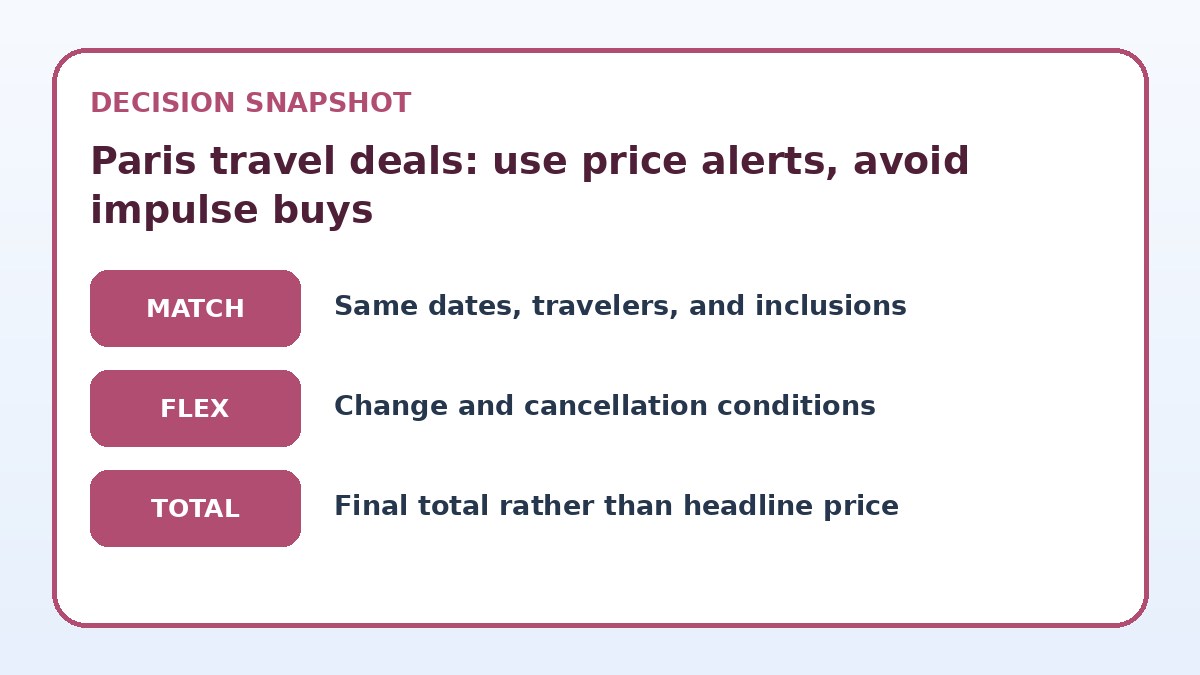
How to use price alerts without impulse booking
Set alerts with clear rules for yourself: different thresholds for flight fares and hotel rates, and separate notifications for bundled offers. Use multiple services if needed so you can cross-check the signals you receive. When an alert fires, do not immediately purchase; instead open a comparison worksheet and record the quoted total price, baggage allowance, seat and room specifics, and the explicit change and cancellation penalties visible on the final booking page. That small delay gives you time to spot false savings caused by low base fares plus expensive baggage or strict nonrefundable terms.
Build decision triggers into your alert routine. For example, only act on an alert if the total cost with your typical baggage configuration is below a personally acceptable threshold, and if the change/cancellation terms meet your flexibility needs. If the package looks appealing, call or read the provider’s fine print to confirm who issues the ticket and who processes baggage claims or refunds. This practice turns alerts into data rather than as a cue to buy immediately.
Look past the headline total
Compare inclusions and change conditions before deciding whether a package is genuinely useful for this trip.
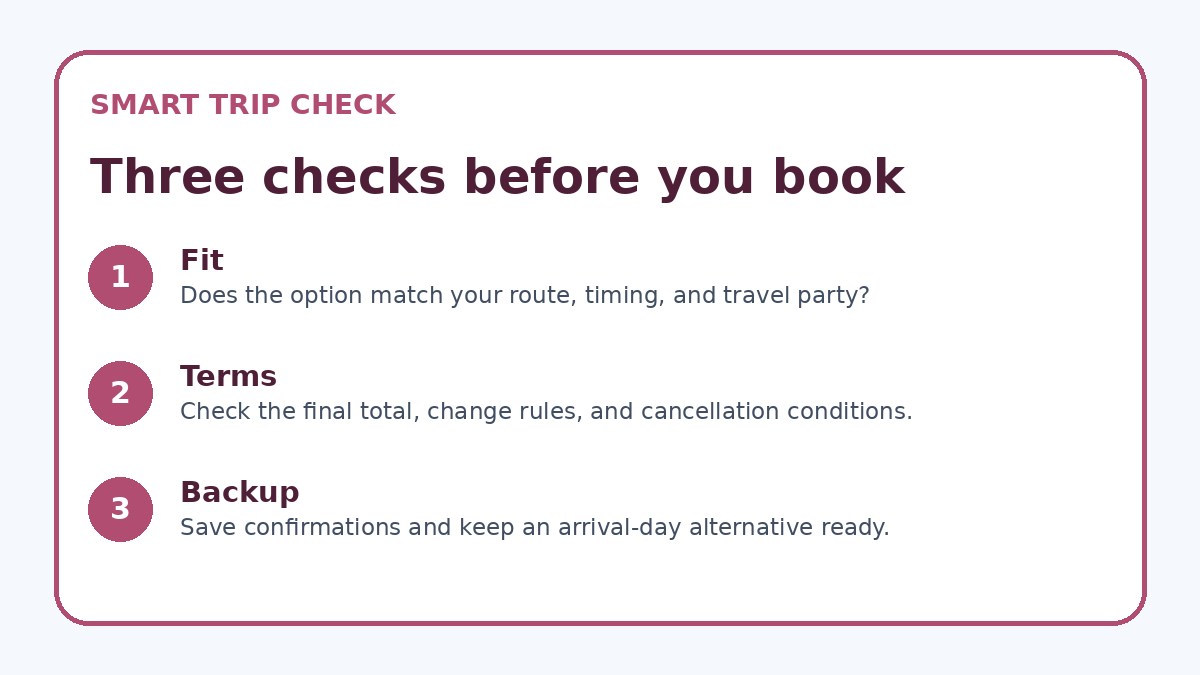
Deal comparison checklist
- Set separate price alerts for flights and hotels, and label each alert with your luggage profile (number and weight of checked bags).
- When an alert triggers, record the total landed cost after adding the exact baggage fees for your trip before comparing options.
- Compare the same dates, exact passenger details, and identical baggage allowances across bundle and separate options in a single table.
- Read the final booking page carefully to confirm who issues the ticket or reservation and the precise change and refund terms.
- Call the airline or property if baggage policies or transfer meeting points are not explicit—get the agent’s name and time of call.
- Keep screenshots or PDFs of the provider’s final terms and the alert email as proof of the published conditions at the time you considered booking.
Traveler-specific value: extra luggage scenarios
Different baggage profiles change which option is best. A traveler with one oversized bag may prefer an airline that includes a larger checked allowance even if the base fare is higher; the overall cost can still be lower once fees are included. Conversely, travelers with short stays and one small checked bag might find bundles that include transfers and breakfast better value. Estimate the total luggage fees for your exact itinerary—weight, number of pieces, and whether specialized sports or instrument cases need separate handling—and add those to the ticket or package price before deciding.
Also consider arrival logistics in Paris: if you rely on an included transfer because handling large bags on public transit would be difficult, a package that bundles a private transfer might be worth the premium. But confirm transfer meeting points and baggage handling policies on the provider’s booking page. For longer trips where plans may change, prioritize options with reasonable change fees; for fixed itineraries, slightly stricter terms may be acceptable if they reduce overall costs after including baggage charges.
Flexibility, cancellations, and the final booking check
Flexibility matters more for travelers with extra luggage because changing flights or hotels often incurs duplicate baggage charges or complex reissuance rules. Always check whether the fare class or package reservation allows name changes, date changes, or refunds, and ask how baggage is treated if you change only part of the journey. On the final booking page, verify who your contractual partner is (the airline, hotel, or third-party agency) and read the specific clauses about refunds, baggage liability, and help with rebooking. These operational details are what turn a seemingly cheap option into an expensive one if plans shift.
If you’re comparing a package to separate bookings, confirm the sequence of refunds and who handles disputes. For packages, find out whether flight and hotel changes are processed together and whether that increases penalties. For separate reservations, note that different providers mean separate policies—sometimes easier to manage. Before purchasing, take screenshots or print the provider’s final terms page so you have a timestamped record of baggage allowances, change fees, and cancellation windows should you need to contest charges later.
Travel Deals & Booking Strategy questions travelers ask
How do I set a price alert that accounts for my extra baggage?
Most alert tools notify you about base fares or package totals, not personalized baggage situations. To compensate, set a flight alert for the base fare and separately calculate your usual baggage fees for that airline and class. When an alert triggers, immediately add the airline’s published baggage fees to the quoted fare for the exact number and size of bags you plan to bring. Do the same for any package offers—check whether the package includes baggage, and if not, add the carrier’s fees. That gives you an apples-to-apples landed cost before deciding.
If a bundle looks cheaper, what checks should I run before booking?
Confirm four things on the provider’s final booking page: total price inclusive of taxes and fees, who your contractual partner is, the explicit baggage allowance and penalties for excess or overweight items, and the change and cancellation terms for each component. If transfers or extras are included, verify meeting points and baggage handling policies. If any of these items are unclear, contact the provider to get a written clarification. Only proceed when the bundle’s total landed cost and rules match the requirements recorded in your comparison.
Can I rely on third-party marketplaces to handle baggage disputes in Paris?
Third-party marketplaces often facilitate booking but may not be the ultimate authority on baggage enforcement, which usually rests with the operating carrier. If a baggage dispute arises, the airline’s published policy and the contract printed on your ticket determine liability. Use the marketplace for price discovery and convenience, but verify the carrier’s baggage rules on the airline’s own site and keep copies of all marketplace confirmations. If you need to escalate, having the original airline or hotel confirmation will speed resolution.
Final decision note
Travelers to Paris who carry extra luggage can use price alerts as a research tool without succumbing to impulse booking by enforcing a short decision routine: compare identical dates and baggage configurations across bundles and separate bookings, confirm operational terms on the final booking page, and prioritize flexibility if your luggage needs could change. Bundles can be convenient when they clearly include the luggage and transfers you require, but they can also conceal higher change penalties or restrictive rules. Take screenshots, call providers for clarifications when necessary, and treat alerts as signals to compare—not as commands to purchase—so your final booking fits both your budget and your baggage.
Continue planning
Check current options and final conditions
Use the provider page to confirm live availability, the final total, cancellation terms, and every condition that matters to your trip.
This evergreen planning guide was created with AI-assisted drafting and a structured quality review. It does not display live prices, schedules, availability, visa guidance, or provider rankings. Verify current details before booking. Some links are affiliate links; we may earn a commission at no additional cost to you.