If your trip to Da Nang includes side trips to Hoi An, the Marble Mountains, or the Hai Van Pass, a rented car can feel like freedom. But first-time visitors must choose: collect the vehicle straight at Da Nang International Airport (DAD) or pick it up at a downtown agency or hotel partnership? Practically, airport pickup wins for immediate departure and fewer transfers; city pickup can save money, offer more vehicle choice, and let you inspect the car at a staffed office. The right decision depends on your itinerary, how comfortable you are driving Vietnam’s mixed-traffic roads, how much time you’ll spend outside central Da Nang, and how picky you are about insurance and paperwork. This guide gives the short answer up front, then walks you through route value, insurance wording to verify, pickup/return friction, and a reliable non-driving fallback.
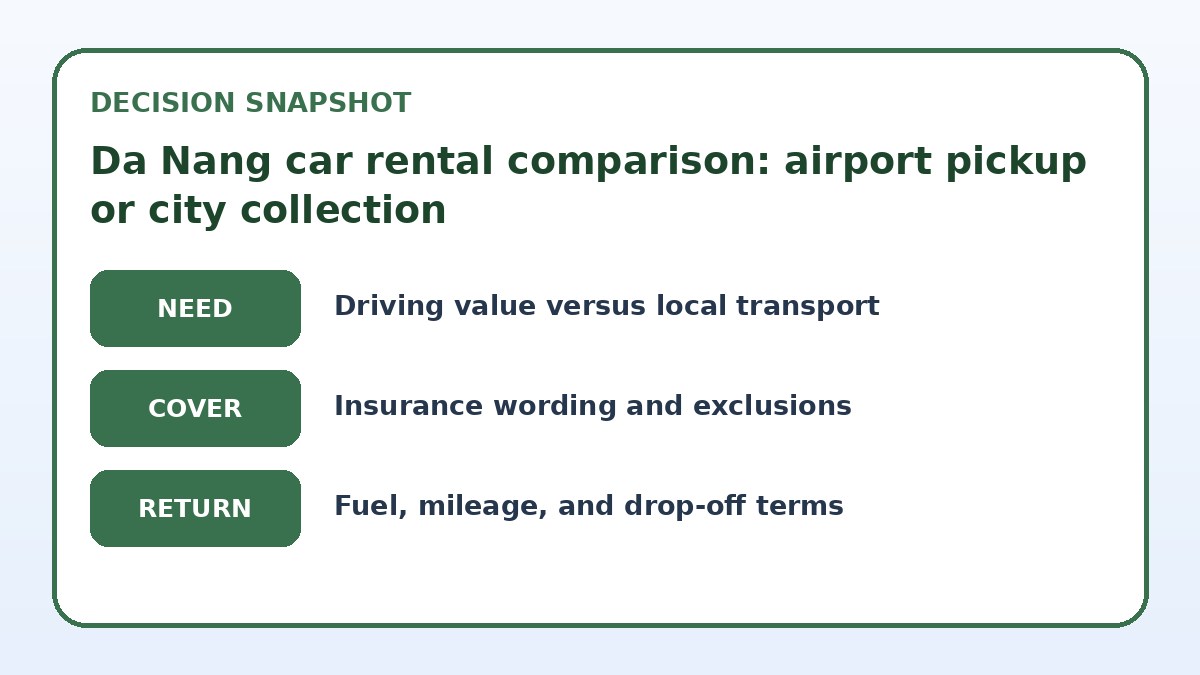
Does renting a car genuinely improve your Da Nang trip?
Start by testing whether driving adds real value to your plan. If you intend to stay inside Da Nang city and visit the beach, riverfront and local markets, rideshares and taxis usually handle those trips faster and without parking hassle. However, if your itinerary includes full-day drives to Hoi An, the Hai Van Pass, the Marble Mountains, or rural coastal spots where public transport is slow or sparse, a car gives schedule control and the ability to stop for views or roadside food. Count the number of full days where the car will replace multiple point-to-point transfers — that’s where the rental pays off.
Also factor in comfort and confidence. Vietnam’s roads vary: highways between cities are straightforward, but smaller roads can have mixed traffic, motorbikes, and variable signage. If you or your driver prefers predictable transit and the ability to relax instead of navigating, reassess whether hiring a driver or using guided transfers is preferable. Driving becomes more attractive for groups or families who value privacy, for photographers who need flexible stops, and for anyone carrying bulky gear or a lot of baggage.
Decide whether driving earns its place
| Mobility strategy | Best for | Cost or friction to check |
|---|---|---|
| Airport pickup and return | Arrivals with tight schedules, immediate departures, or one-way routings that start at DAD. | Potential airport surcharges, longer on-site queues, and limited inspection time before driving. |
| City office pickup and return | Travelers who want face-to-face inspection, broader vehicle choice, and flexible office help. | Requires an extra transfer into town and may close earlier than airport desks on some days. |
| Driver-for-day service (rental with local driver) | Visitors uncomfortable driving Vietnam’s roads or who prefer to sightsee without navigating. | Higher per-day cost than self-drive and less privacy; still check driver credentials and insurance coverage. |
| Non-driving mix (taxis, rideshares, private transfers) | Short stays, city-focused trips, or those who want to avoid parking and local driving rules. | Less flexibility for spontaneous detours and potentially higher cumulative costs for remote day trips. |
Check live rental choices only after the route test
Use the exact driver, dates, pickup point, and return plan to compare current conditions.
Route value: when airport pickup makes sense
Airport pickup is usually best when you arrive late, have tight timing on arrival day, or plan to leave Da Nang the same day or early the next morning. Collecting at the airport eliminates an extra taxi or shuttle into town and avoids waiting to be met at a downtown office. It’s particularly convenient for one-way trips where you intend to pick up at DAD and return elsewhere; just confirm the provider supports your intended return location before booking. Also consider flight schedules—if your first drive is to Hoi An or inland attractions soon after arrival, starting at the airport saves transit time.
However, assess the actual driving route you will use after pickup. Some visitors prefer to cross-check the initial drive against rush-hour patterns and expected traffic. If your arrival happens during heavy evening traffic, a short paid transfer into town followed by a city pickup the next morning may feel less stressful. For long coastal or mountain drives that start early the following day, weigh whether overnighting near town then collecting the car when roads are quieter gives a safer and more relaxed start.
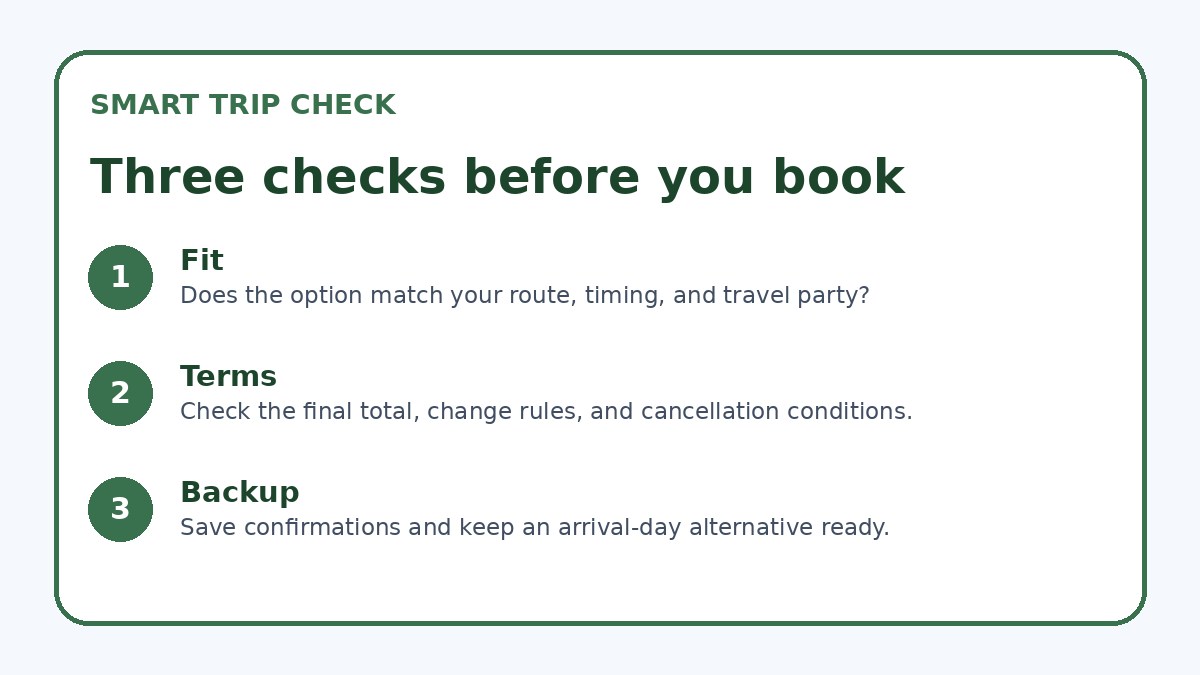
Compare the full rental conditions
Confirm insurance wording, exclusions, deposit, fuel, mileage, and return terms on the final page.
Insurance and paperwork: what to verify before you book
Read the rental contract’s insurance wording carefully and verify three things: the collision damage waiver (CDW) excess amount, whether third-party liability is included or sold separately, and what documentation the provider requires for international drivers (driver’s license plus an International Driving Permit when applicable). Don’t assume verbal promises—if an online quote lists 'full insurance', open the policy wording on the final booking page or request a copy by email. If local traffic laws or rental conditions require additional endorsements, the contract is where you’ll see them.
Also check what constitutes damage under the provider’s policy: windscreen, tires, undercarriage, and mirror coverage can vary. Confirm whether roadside assistance is included and how claims are handled—what local repair shops the company uses and whether you must pay upfront and claim reimbursement. If the insurer requires us to accept a damage reporting process that is time-bound, note those deadlines. Where wording is unclear, ask for an explicit written answer and save it with your booking confirmation.
Car rental terms to verify
- Confirm the rental company’s required documents for foreign drivers and whether an International Driving Permit is recognized.
- Open and save the rental insurance wording from the final booking page, noting CDW excess, third-party coverage, and excluded components.
- Ask the provider how final damage inspections are handled at your planned return location and whether they use drop boxes for keys.
- Compare the total transfer time from the airport to your first destination versus driving straight away from pickup.
- Take timestamped photos of the car’s condition during pickup (all sides, interior, and odometer) and email them to the rental company.
- If you prefer not to drive, prebook at least one private transfer or day tour to cover longer excursions like Hoi An or the Marble Mountains.
Pickup/return friction and a non-driving fallback
Pickup friction differs between airport and city locations. Airport desks can mean longer queues at peak arrival times, limited office hours outside flights, and possible shuttle transfers from remote lots. City offices often require a short taxi or shuttle but may provide more personal time to inspect the vehicle and take photos before you drive off. Similarly, returning at the airport can be quick if staff are present, but some companies ask you to leave keys at a drop box and accept condition checks later; confirm how final inspections are handled to avoid dispute risk.
If you decide not to drive, have a clear fallback: plan a combination of taxis, app-based rideshare services, and at least two organized day tours or private transfers for the longer legs. Taxis handle short hops and baggage; rideshares can be cheaper for repeated trips across town. For Hoi An, the Marble Mountains, or the Hai Van Pass consider pre-booked private transfers or a driver-for-the-day service that includes drop-off and pickup at your hotel. Keep receipts and contact details handy for transfers in case you need to adjust timing.
Car Rental & Road Trip questions travelers ask
How do I choose between airport and city pickup if my flight arrives late?
If you land late, airport pickup reduces the number of transfers and is often the less stressful option — you collect the car and leave quickly. But check the provider’s office hours and whether night collection is supported without extra fee. If the company closes shortly after your arrival time, consider a short taxi into town and collect the car the next morning when offices are fully staffed, allowing thorough inspection and clearer insurance explanations. Always verify late/after-hours collection terms on the provider’s final booking page.
What exactly should I verify about insurance before I drive?
Confirm the collision damage waiver (CDW) excess and whether an additional refundable security deposit is required. Verify third-party liability coverage limits and whether that is included or sold separately. Check which components are excluded—commonly glass, tires, undercarriage, and mirrors—so you can decide whether to buy extra coverage or accept an excess. Find out the claim process: who arranges repairs, whether you must pay upfront, and what documents are needed. Save all policy wording from the booking page for reference.
Can I avoid driving at all and still reach Da Nang area highlights?
Yes. Taxis and app-based rideshares handle most city and short-distance island or beach trips effectively. For day trips to Hoi An, the Marble Mountains, or mountain viewpoints, prebooked private transfers or guided tours are reliable and remove navigation stress. If you plan multiple long excursions, compare per-day driver-for-hire options against self-drive costs; drivers can offer local route knowledge and parking help. Keep contact details for transfers and tours on hand, and check pickup and cancellation terms before booking.
Final decision note
For first-time visitors, the simplest rule is this: choose airport pickup when you value time and immediate departure, but select a city pickup if you prefer to inspect the vehicle, want more vehicle options, or are booking a lower-cost rate. Always read the rental’s insurance wording on the final booking page and confirm how damage inspections, excesses, and roadside assistance work. If you’re unsure about local driving conditions, consider hiring a driver or using taxis and private transfers for long day trips. Trip.com can be used to compare current availability, but always verify contract wording directly with the rental provider before you finalize anything.
Continue planning
Check current options and final conditions
Use the provider page to confirm live availability, the final total, cancellation terms, and every condition that matters to your trip.
This evergreen planning guide was created with AI-assisted drafting and a structured quality review. It does not display live prices, schedules, availability, visa guidance, or provider rankings. Verify current details before booking. Some links are affiliate links; we may earn a commission at no additional cost to you.