
If you want the simplest itinerary between Berlin and Lisbon, a direct flight is usually the cleanest option: one check-in, one takeoff, one arrival. But connecting flights can unlock far more schedule choices, lower fares on some dates, and routes from different Berlin airports or at different times of day. For a first-time visitor, the right choice depends on what you value most — time in transit, potential savings, risk tolerance for missed connections, and how you handle airport changes. Below I give a short recommendation you can act on now, then walk through the practical tradeoffs and booking checks that make comparing direct and connecting options clear and repeatable.
Practical quick answer: when to book direct
Direct Berlin to Lisbon flights are the straightforward pick for first-time visitors who prefer predictability. A non-stop itinerary keeps your day simple: one security pass, no gate-to-gate sprint between terminals, and no intermediate arrivals to worry about. For travelers with tight schedules, early check-ins, or limited tolerance for travel-day disruption, direct routing reduces the number of variables that can go wrong and typically means you arrive with less travel fatigue.
That said, direct isn’t always strictly faster when you consider door-to-door travel time. If a non-stop departs at an inconvenient hour or requires a long drive to a particular Berlin airport, a connecting itinerary from a closer terminal or with a more favorable time could match or beat the total journey time. Use direct flights when simplicity and lower transfer risk outweigh any potential savings or marginal schedule benefits from connections.
When connecting makes sense for first-time visitors
Connecting flights open up more timetable flexibility and carrier choices. If you need a specific arrival time in Lisbon — for an early check-in, a late meeting, or a river cruise — a one-stop itinerary can offer departures that direct services don’t. Connections can also lower ticket cost on certain dates or allow you to collect frequent-flyer credit with a partner airline. For visitors who aren’t averse to an intermediate layover, connections can be a practical tool to optimize your schedule or budget.
Connections do add complexity: you’ll need to manage layover durations, ensure enough time to transfer between gates or terminals, and understand whether your baggage is checked through. Look for itineraries with comfortable minimum layover windows and single-ticket bookings where the carrier is responsible for missed connections. If your layover involves an airport change in Berlin or Lisbon, treat the route more like two separate trips and add plenty of transfer time.
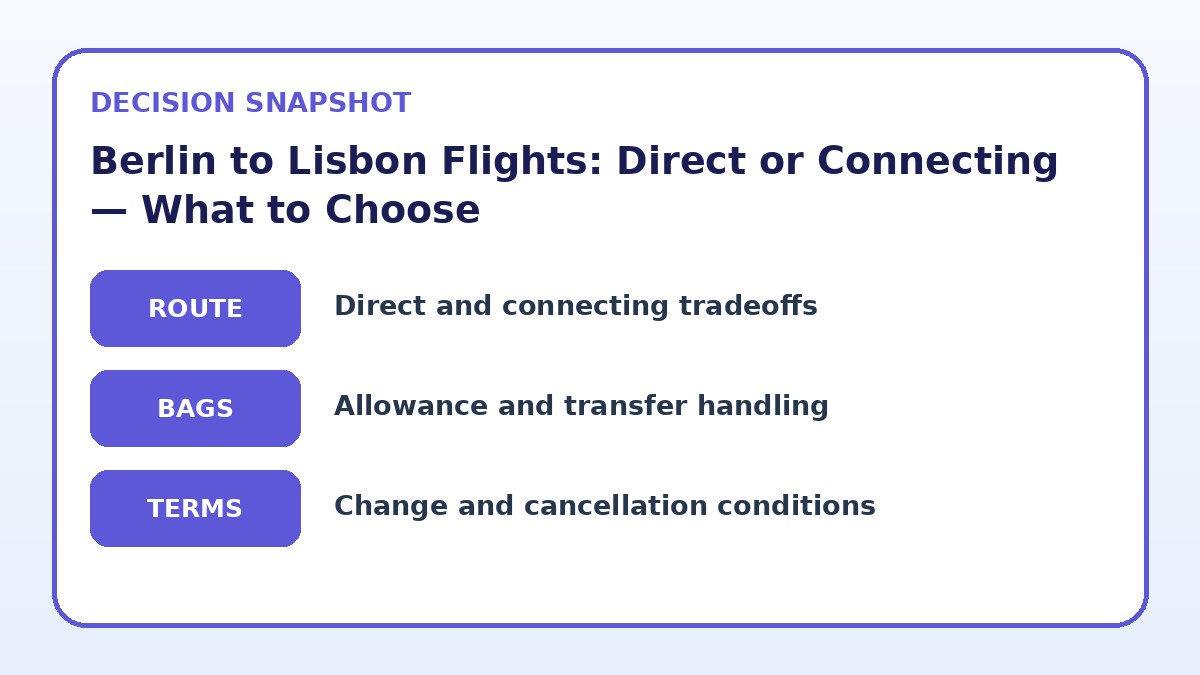
| Approach | Best for | Tradeoff to check |
|---|---|---|
| Direct flights | Travelers prioritizing simplicity, minimal transfer risk, and fastest airport-to-airport turn. | Fewer schedule choices and sometimes higher fares on specific dates. |
| Short single-connection itineraries | People needing a specific time or slightly cheaper fares while accepting a single transfer. | Requires careful layover timing and confidence in baggage transfer policies. |
| Multi-carrier or long-connection routes | Flexible travelers prepared to save money or combine destinations with longer layovers. | Greater chance of misconnection, separate baggage rules, and more day-of complexity. |
| Separate tickets (booked independently) | Budget-seekers who accept risk and can self-manage missed connections. | No protection for missed connections and often extra time or cost to move between airports. |
How to compare total travel time and costs
When comparing direct and connecting options, always calculate door-to-door time, not just scheduled flight hours. Include time to reach the departure airport from your Berlin accommodation, recommended check-in or security buffer, expected wait during a connection, and onward transfer time at Lisbon. Many connections look short in flight duration but require long layovers or hotel transfers that erase any airborne time savings. Use consistent assumptions for ground transfers and security times to compare apples to apples.
For costs, compare the full price including baggage, seat selection, and change or cancellation fees. Low-cost connecting options sometimes bill baggage separately or run on different fare rules across segments — what looks cheaper at first can become more expensive after add-ons. Also check whether the ticket is issued on a single booking reference; single-ticket itineraries protect you from missed-connection costs more effectively than separate one-way purchases.
Before you book
- Confirm which Berlin airport (BER or others) your flight departs from and factor transport time from your accommodation.
- Compare total door-to-door time including recommended airport arrival buffers and layover durations.
- Check baggage rules on the final booking page to know if bags are checked through on connecting itineraries.
- Verify the ticket type (single booking reference vs separate tickets) and read the change/cancellation policy.
- Allow extra time for airport terminal transfers if your itinerary requires moving between terminals or airports.
- Consider travel insurance or flexible tickets that cover missed connections and unexpected delays.
Risks, verification steps, and booking checklist
Connecting flights bring small but real risks: missed connections, delayed bags, and the need to navigate transfer procedures. Mitigate these by choosing single-ticket bookings, allowing comfortable connection windows (particularly when switching terminals), and confirming baggage-through policies. If an itinerary requires a separate re-check or airport shuttle, assume extra time and consider travel insurance that covers missed connections. For high-stakes plans, prefer carriers with coordinated schedules and clear minimum connecting times.
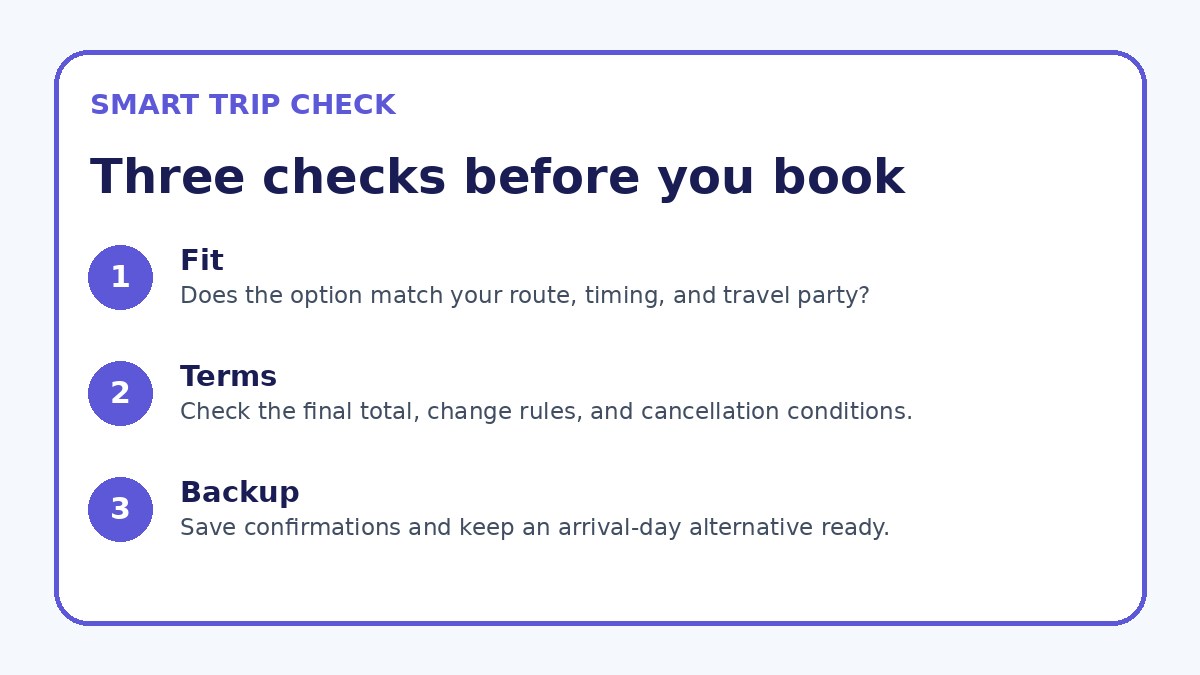
Before you complete a booking, verify three things on the provider’s final booking page: the total journey time and layover durations, the baggage allowance and whether bags transfer automatically, and the ticket’s change or cancellation conditions. If you want more options, compare availability on multiple search platforms — Trip.com can be one place to check current schedules and rules — but always rely on the airline’s official booking page for final terms and any operational advisories.
Frequently asked questions
Are direct flights between Berlin and Lisbon always faster overall?
Not always. Direct flights eliminate layovers and the risk of missed connections, which simplifies the trip, but overall door-to-door time can still be impacted by airport location and departure times. If a direct departs very early or late relative to your schedule, a connecting itinerary from a more convenient Berlin departure point or a better-timed connection may deliver similar or even shorter total travel time. Always compare the full travel timeline — from leaving your lodging to arriving at your Lisbon destination — rather than just airtime.
How much layover time should I allow when connecting in Europe?
Aim for a comfortable buffer that accounts for deplaning, security checks, and moving between gates or terminals. For domestic-style EU connections, a 60–90 minute layover can be sufficient in many airports, while transfers requiring terminal changes, passport control, or long transfer buses call for 90–150 minutes. If you’re unfamiliar with the connecting airport, prefer longer windows. On single-ticket itineraries with the same carrier or alliance, airlines often set minimum connection times that reflect routing complexity — use those as a baseline but add extra time if you’re risk-averse.
What should I verify on the airline’s booking page before choosing a connecting itinerary?
Check three key items: layover length and whether it requires a terminal or airport change; baggage policy to confirm whether checked bags are automatically transferred; and the ticket’s rebooking or refund rules if disruptions occur. Also confirm whether both legs are on one ticket (one PNR) because single bookings generally protect you from missed connections. If any portion is operated by a different carrier, read the operating carrier notes and ensure you understand seat assignments and loyalty credit rules.
Final planning note
For most first-time visitors deciding between Berlin and Lisbon, start with a clear priority: reduce stress and travel complexity, or maximize schedule and fare flexibility. If predictability and fewer moving parts matter most, book a direct flight. If you need a precise arrival time, a better departure from your neighborhood, or a lower fare on specific dates, a single-connection itinerary can be sensible — provided you verify baggage transfer, connection times, and ticketing terms. Use the checklist above before confirming any booking, compare options across search sites (Trip.com is one place to check availability), and always double-check final baggage and change rules on the airline’s page before you pay.
Continue planning
Check current options and final conditions
Use the provider page to confirm live availability, the final total, cancellation terms, and every condition that matters to your trip.
This evergreen planning guide was created with AI-assisted drafting and a structured quality review. It does not display live prices, schedules, availability, visa guidance, or provider rankings. Verify current details before booking. Some links are affiliate links; we may earn a commission at no additional cost to you.