For most families deciding how to travel from Paris to Amsterdam, the simplest practical answer is this: take the high-speed train if you prioritize speed, city-center drop-off, comfort, and straightforward baggage handling; choose a coach for the lowest-fuss, often cheaper option if you tolerate longer travel time; consider a car for flexibility or multi-stop itineraries; and treat ferries or combined ferry-plus-train routes as leisurely alternatives when you want a coastal experience. Which is right for you depends on your priorities—travel time, cost, luggage, mobility with children, and how important arriving in the city center is. Below you’ll find clear tradeoffs, decision criteria, and the exact booking checks families should do before committing to any mode of transport.
Why train travel often suits families best
Trains commonly win family trips when you want the best balance of speed, comfort, and minimal hassle. Trains between major European cities usually depart from central stations, which reduces or removes the need for airport transfers or long bus rides. Onboard space for moving around, room for a stroller, and more generous luggage carriage rules make trains easier with restless children. Sitting together is straightforward and platform-level boarding is often quicker than airports, which helps maintain routines and reduces stress before departure.
That said, trains vary: direct high-speed services offer the fastest door-to-door travel, while lower-tier or regional options can include transfers. When comparing tickets, check whether seats are reserved, whether children travel free or at a reduced fare, and whether family or group discounts exist. Verify exact station names and platform accessibility on the carrier’s booking page before you purchase. Also confirm baggage policies and whether you can bring bulky items like car seats without extra fees, because those details change by operator.
When a coach makes sense for family budgets
Coaches are straightforward for families who are budget-conscious and willing to accept longer travel times. Modern coaches often have seatbelts, Wi‑Fi, power outlets, and toilet facilities, making long journeys manageable if you plan stops and onboard activities for children. Because coaches can arrive at peripheral terminals, consider the onward transfer to central Amsterdam and how that impacts a child's routine. For families with very young kids, coaches eliminate airport check-in procedures and sometimes allow a more relaxed luggage allowance structure.
If you choose a coach, compare total door-to-door time rather than only advertised duration, and plan for scheduled or unscheduled rest stops. Ask each carrier what their luggage policies are for large items or sports equipment, and whether they store bags under the coach or in an external hold. Confirm pick-up and drop-off locations and whether there’s easy public transport or taxi access to your accommodation. Always check refund and change rules before booking, as those conditions determine flexibility when traveling with children.
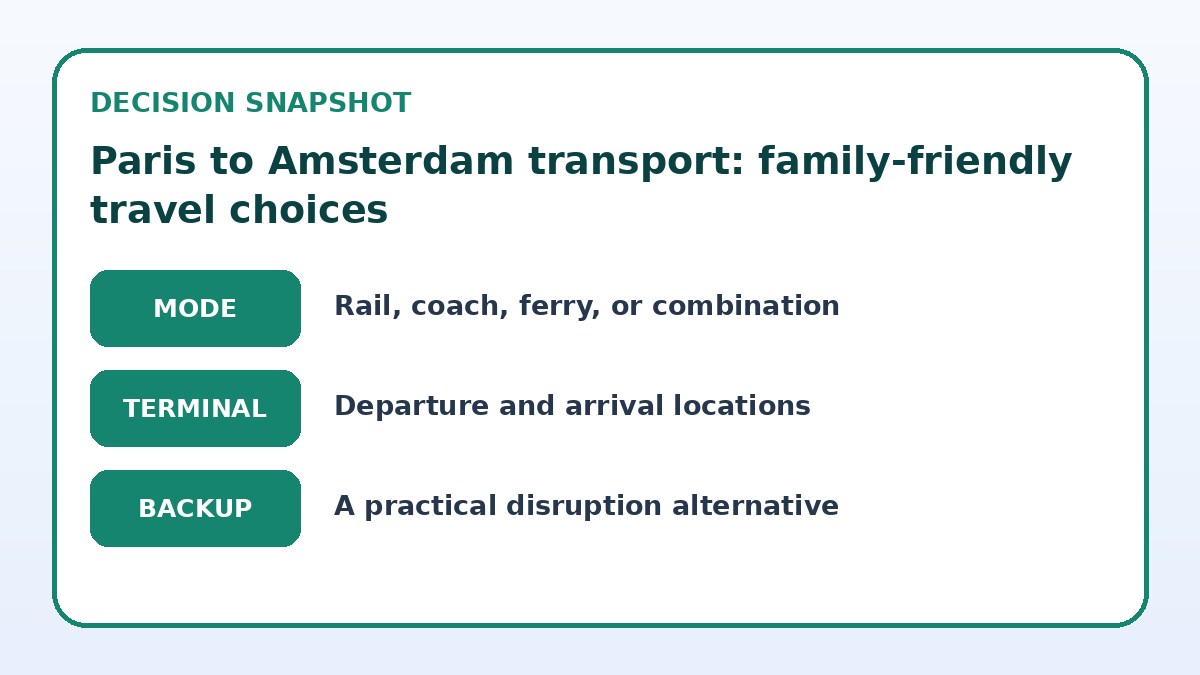
| Approach | Best for | Tradeoff to check |
|---|---|---|
| High-speed train | Families prioritizing short door-to-door time and onboard comfort | Typically higher ticket cost and varying seat reservation rules to check |
| Coach | Budget-conscious families who accept longer travel time | Longer journey and less space; peripheral arrivals may require extra transfers |
| Driving | Groups needing flexibility, multiple stops, or lots of equipment | City parking, tolls, and urban driving can complicate arrival in Amsterdam |
| Ferry or scenic combination | Families treating travel as part of the holiday and seeking a relaxed pace | Significantly longer travel time and added booking coordination across carriers |
Driving and combined car-plus-rail options
Driving gives families the most control over timing and route, which is handy for multi-stop itineraries or those carrying extra equipment. You can leave when children are ready, stop for breaks on demand, and carry bulky items without the same restrictions as public transport. But driving into Amsterdam introduces city parking, possible environmental zones, and narrow streets that may not be practical with large luggage or multiple car seats. Factor in fuel, tolls, and cross-border rules when you calculate true door-to-door costs.
An alternative is a mixed approach: drive to a convenient rail hub near the border, park there, and take a direct train into Amsterdam to avoid city driving. This splits the differences—keeping the convenience of a car for regional legs while using trains for the final urban approach. If you plan this, verify parking security and pricing at the station in advance and check train connections and luggage rules. Confirm any requirements for child seats, and remember that law and enforcement around child restraints differ by country, so verify on official transport or vehicle rental pages.
Before you book
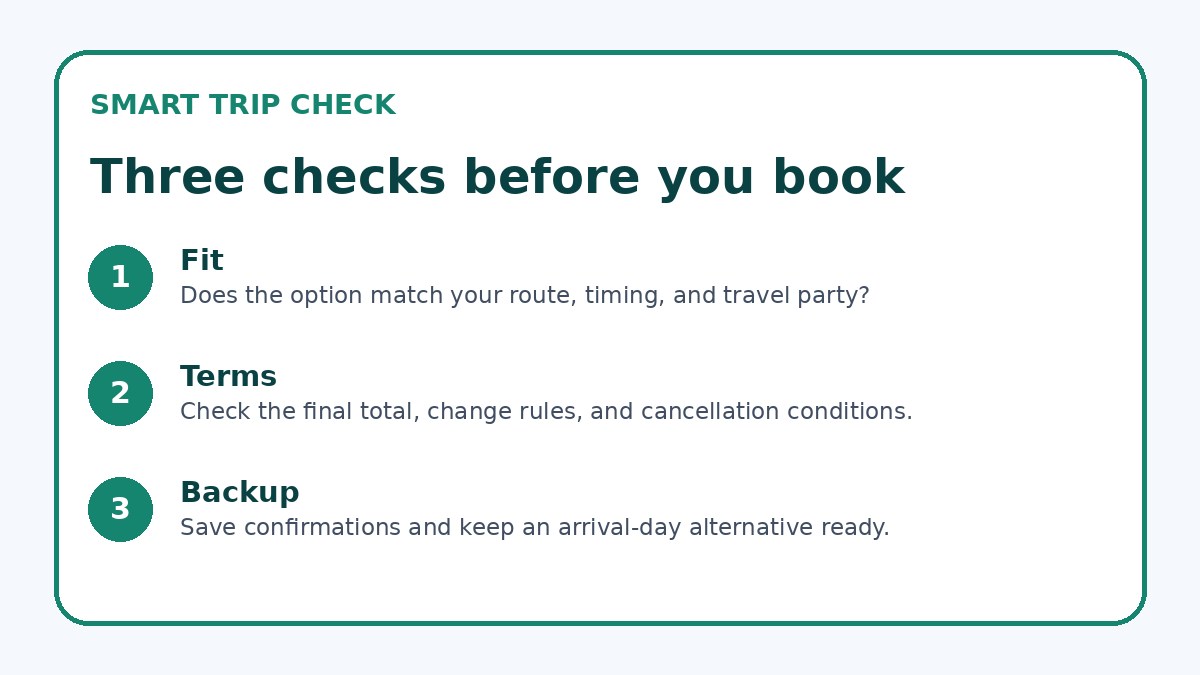
- Confirm whether your chosen train or coach requires seat reservations and whether children need separate tickets or ID at booking.
- Measure large items (stroller, car seat, pram) and verify the carrier’s luggage and oversized-bag policies before paying.
- Check station and terminal locations — ensure arrival/departure points are convenient for your accommodation or plan a transfer.
- If driving, check parking availability and cost at your Amsterdam destination and research low-emission zone rules.
- For ferry or mixed routes, verify check-in times, vehicle loading procedures, and whether transfers require separate tickets.
- Read the refund and change conditions carefully so you know your options if a child’s illness or schedule change forces a rebook.
Ferry and scenic combinations: for relaxed travel days
Ferries and routes that combine a ferry with rail or coach travel are not the fastest, but they convert travel time into part of the holiday—useful for families who enjoy the sea, want a break from continuous driving, or include ports as mini-destinations. Ferries often provide cabin or seating options, onboard dining, and open decks where children can burn energy. If you prioritize the journey experience and have flexible schedules, a ferry leg can be restful and memorable compared with airport waits or cramped vehicles.
However, ferries add complexity: you’ll need to coordinate arrivals and departures across different carriers, and you must verify luggage transfers and whether stroller storage is straightforward. If you plan a combined ferry-plus-train itinerary, check the final provider’s rules on check-in time for vehicles and passengers, and confirm whether transfers require separate bookings. When crossing borders by sea, confirm passport and document requirements for every passenger. For real-time availability and combined-route options, compare current listings (for example on Trip.com) but always verify details on each carrier’s official booking page.
Frequently asked questions
Is the train faster than driving or taking a coach between Paris and Amsterdam for families?
Generally, high-speed trains offer shorter door-to-door times than coaches and usually beat driving when you factor in city parking and traffic. Trains leave from central stations, which removes airport transfers and many parking hassles, and they let children move more freely onboard. However, driving can be faster for families who avoid peak traffic, travel with many stops, or need to carry lots of bulky items. To decide, estimate total travel time including transfers and parking, and compare the two against your family’s tolerance for longer stretches without breaks.
How should parents handle luggage and strollers on trains and coaches?
Before you book, check the carrier’s luggage allowances and where strollers are stored—some trains allow strollers in seating areas but others require folding and storing in designated zones. Coaches usually stow larger items in an undercarriage hold, so label bags clearly and keep essential items with you. If you need a car seat on board, verify whether the transport mode supports fixed child restraints or if you’ll use a harness or lap belt. Always factor in how easily you can manage luggage during platform changes or rest stops when traveling with kids.
What should families verify on booking pages to avoid surprises?
Look for seat reservation requirements, exact station names, baggage rules (including size or weight limits), and child fare policies. Confirm boarding and check-in deadlines, and read the carrier’s policy on changes, cancellations, and refunds. If you have special needs—such as a stroller, car seat, or reduced-mobility assistance—request that service in advance and get a written confirmation when possible. For combined itineraries (for example, coach plus ferry) verify whether one provider handles transfers or if you need separate tickets; compare live options on sites like Trip.com but always finalize details on each carrier’s official page.
Final planning note
For families traveling between Paris and Amsterdam, the right choice comes down to the tradeoffs you accept: choose high-speed trains for speed, central arrival, and child-friendly onboard space; pick a coach if your priority is lower upfront cost and you can handle longer travel time; drive for maximal control and multi-stop flexibility if you’re comfortable with city parking and cross-border rules; and opt for ferries or scenic mixes when the journey itself is part of the vacation. Before you book, verify seat reservations, luggage and child-seat policies, exact terminal locations, and refund/change rules with the provider. Doing those checks will keep the trip predictable and let your family focus on enjoying the time together.
Continue planning
Check current options and final conditions
Use the provider page to confirm live availability, the final total, cancellation terms, and every condition that matters to your trip.
This evergreen planning guide was created with AI-assisted drafting and a structured quality review. It does not display live prices, schedules, availability, visa guidance, or provider rankings. Verify current details before booking. Some links are affiliate links; we may earn a commission at no additional cost to you.