
If you’re bringing more bags to Tokyo, the fastest practical move is flexible dates: a one- to three-day shift often changes available flight routings, baggage allowance combinations, and hotel check-in flexibility. Start by searching flights and hotels with a ±3 day calendar or an “anytime” filter, and compare the total door-to-door cost including all checked-bag fees and transfers. Don’t focus only on base airfares: a slightly later arrival could mean a direct flight with higher luggage allowance or a connection with cheaper combined baggage pricing. Also check lodging policies for early/late arrivals, luggage storage, and hotel access from the main airport trains or buses. Below I’ll explain which tradeoffs to weigh—time, convenience, cost—and step-by-step decision criteria to help you pick the calendar that best suits big bags and a smoother arrival.
See current options before you compare the details
Availability and final conditions change. Open Trip.com now or keep reading for the practical comparison.
How flexible dates change what you pay and how you travel
Flexible dates affect more than airfare totals. Airlines vary baggage rules by fare bucket and routing; a different departure day may route you through an airline or airport with more generous free checked bags or longer layovers that make transiting with suitcases less stressful. Changing the date can also change whether you need an extra domestic connection within Japan, how many times you must handle luggage between aircraft, and the available arrival times that affect whether you use a direct airport train, an airport limousine bus, or a taxi to central Tokyo. When pricing, treat baggage fees, transfer costs, and time spent hauling bags as components of the true travel cost.
For hotels and short-term rentals, date flexibility can reveal nights with better luggage-related terms. Some properties allow early check-in or free luggage storage only on lower-occupancy nights; others restrict access to back entrances that are easier with wheeled suitcases. Shifting by a night could align your arrival with a front-desk schedule or an included airport shuttle, removing the need for an expensive taxi. Use flexible-date searching to find combinations where lower total hassle offsets any small fare increase, and always confirm luggage policies on the provider’s booking page before finalizing.
How to run a flexible-date search that reveals luggage-friendly options
Start broadly: pick a three-day window each side of your preferred travel dates and run parallel searches. Track the full cost for each option by adding standard checked-bag fees for each flight segment and any expected transfer fares in Tokyo. When you evaluate results, highlight departures that reduce the number of separate checked-bag allowances (for example, a single-carrier itinerary often treats baggage end-to-end) and arrivals that land at Narita or Haneda at times when trains are frequent or shuttle buses are on schedule. A small change in departure day can switch an itinerary from a multi-carrier routing with separate baggage rules to a through-ticket with simpler luggage handling.
Use filters to isolate flights that match luggage priorities: nonstop or one-connection routings, longer minimum connection times, or carriers known for including checked bags in mid-tier fares. For hotels, filter by luggage-friendly criteria—24-hour front desk, luggage storage, elevator access, and airport transfer service. Note: verify any luggage-related promises on the final booking page because policies and operational details can change; Trip.com is one place to compare current availability but check the provider for final baggage and check-in terms.
| Approach | Best for | Tradeoff to check |
|---|---|---|
| Move travel dates to get a through-ticket with included checked bags | Travelers prioritizing simplicity and fewer baggage handlings | May pay a slightly higher base fare but save time and avoid rechecking bags |
| Shift arrival by a day to match hotel early-check-in or luggage storage | Those who want to drop bags immediately and start exploring | Could require an extra night’s accommodation cost or altered sightseeing plans |
| Choose off-peak arrival times after adjusting dates | Travelers who prefer less crowded trains and easier taxi access | May face limited hotel reception or fewer shuttle services late at night |
| Keep original dates and pay for baggage-forwarding within Japan | Those who must stick to fixed dates but want to avoid hauling suitcases | Adds service fees and requires confirming delivery timing with provider |
Ready to check the option that fits your plan?
Use your exact dates and traveler details so the provider page can show the current total and conditions.
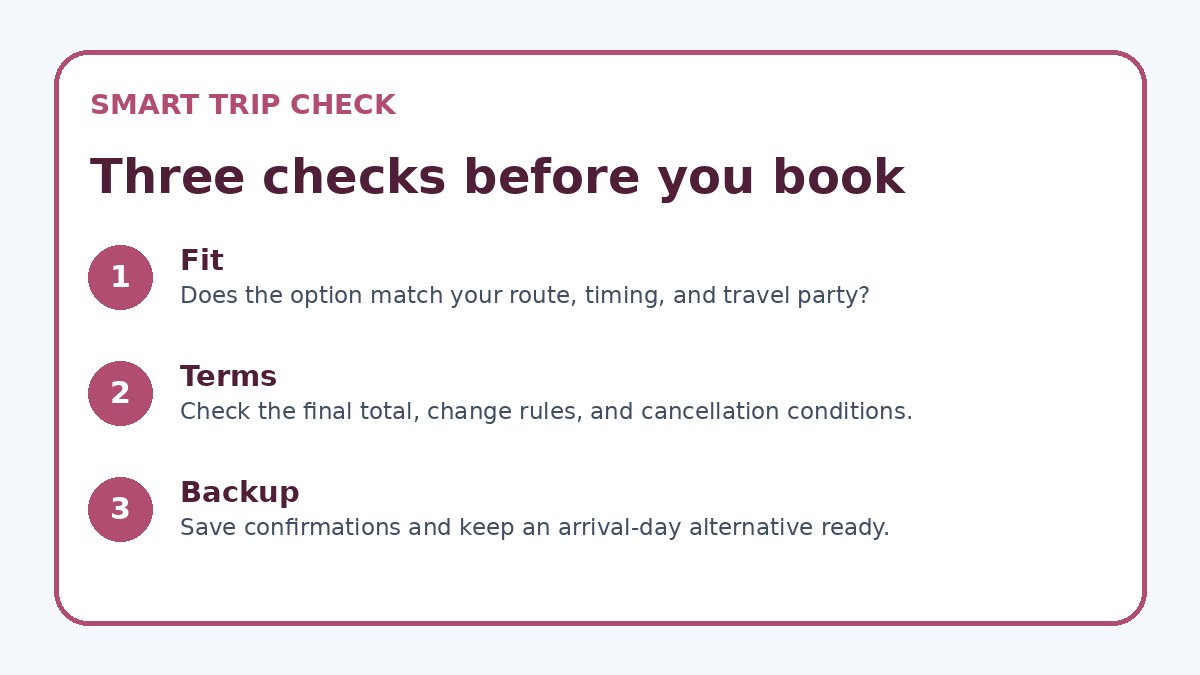
Decision tradeoffs: speed, cost, and the physical burden of bags
If you value door-to-door time and minimal handling, prefer itineraries that reduce transfers even if the ticket costs a bit more. A longer layover with a single carrier may be preferable to a cheaper routing with multiple separate tickets that require baggage recheck. However, if minimizing direct ticket cost is the primary goal, be prepared to handle extra baggage processing and accept more transfers. For hotels, early check-in options or a same-day luggage-hold can justify paying a premium night; if you can’t shift dates, choose lodging closer to major stations with elevators and luggage-friendly entrances to reduce physical strain.
There’s also a comfort-versus-cost tradeoff when changing arrival times. Off-peak arrivals can be easier for moving large bags on trains or finding taxis, but late-night arrivals may mean restricted hotel services or longer waits for official transfers. Consider how much extra handling you can realistically manage—stairs at smaller stations, crowded trains during rush hour, and elevators out of service are all real possibilities. Make a choice that balances your tolerance for physical effort against the money you save by being flexible.
Before you book
- Run flight searches with a ±3 day window and note total ticket plus baggage fees for each option.
- Open airline and hotel booking pages to confirm baggage allowances, check-in times, and luggage storage policies.
- Compare arrival airports (Narita vs Haneda) and likely ground-transfer costs and options for each candidate date.
- If needed, check availability and delivery schedule of Japanese baggage-forwarding services and confirm fees.
- Choose itineraries that minimize the number of times you must recheck or move checked bags between carriers.
- Contact the hotel or airline to request assistance or confirm special handling on your chosen travel dates.
Practical tactics for booking and arriving in Tokyo with heavy luggage
Before booking, list your non-negotiables: maximum number of transfers, latest acceptable arrival hour, and whether you must avoid stairs or can handle subway platforms. Use that checklist to filter flexible-date search results and eliminate options that add unacceptable steps. When you identify a promising combination of flight and hotel, open the airline and hotel booking pages to confirm baggage allowances, connection rules, check-in times, luggage storage policies, and any transfer schedules. If you need special assistance or oversized-bag handling, contact the airline or hotel directly to confirm operational details on your chosen dates.
On the travel day, pack and label luggage for easy movement: use wheeled bags, add bright tags, and keep a day-pack with essentials. If shifting dates produces an arrival at an inconvenient hour, arrange paid airport-to-hotel transfers or research baggage-forwarding services in Japan; these services allow you to send heavy suitcases ahead to the hotel, letting you travel lighter to your first night. Verify baggage-forwarding availability and costs on the service provider’s booking page before relying on it as part of your plan.
Frequently asked questions
How much can flexible dates realistically save when traveling to Tokyo with extra luggage?
Savings vary widely and depend on how date shifts change routing and baggage policies, not just base fares. A different day can move you from a multi-carrier itinerary to a single-carrier through-ticket that treats baggage end-to-end, or produce arrival times that use cheaper transfers. To estimate your own potential savings, compare the full out-the-door cost for each date: include checked-bag fees for every flight segment, expected transfer costs on arrival, and any extra hotel nights or early-check-in fees. Only the final booking pages and provider confirmations will show the exact baggage charges for your chosen dates.
Is it better to pay for an extra checked bag or use a luggage-forwarding service in Japan?
The right choice depends on timing, itinerary complexity, and comfort handling bags. Paying airline baggage fees keeps your suitcases with you through connections but can be costly per segment—especially on multi-ticket routings. Luggage-forwarding services within Japan let you travel light between cities or arrive in Tokyo and have bags meet you at the hotel, which saves physical effort but adds a service fee and requires reliable delivery timing. Compare the sum of airline fees plus transfer hassle against the forwarding cost and the risk tolerance for delivery timing before deciding.
What should I verify on booking pages after finding a flexible-date option I like?
Confirm the exact baggage allowance per passenger and per segment, any size or weight limits, and whether checked bags transfer automatically on connecting itineraries. For hotels, verify check-in hours, luggage storage availability, and whether airport shuttles operate at your expected arrival time. If you plan to use a transfer or baggage-forwarding service, check operational hours, pickup/drop-off locations, delivery guarantees, and total fees. Because rules and services can change, rely on the airline’s and hotel’s final booking pages or direct contact for the definitive terms.
Final planning note
Flexible dates are a practical tool when you’re traveling to Tokyo with extra luggage: small shifts can reduce the number of transfers, change baggage allowances, and align arrivals with better hotel access or shuttle schedules. Running parallel searches across a few days and always pricing the complete journey—air tickets plus checked-bag fees and transfers—keeps the decision honest. Remember to confirm final baggage rules and hotel luggage services on the provider pages, and weigh the physical burden of moving bags against modest fare differences. With those checks and a clear list of non-negotiables, you can use date flexibility to trade time, money, and effort in the combination that works best for you.
Continue planning
Check current options and final conditions
Use the provider page to confirm live availability, the final total, cancellation terms, and every condition that matters to your trip.
This evergreen planning guide was created with AI-assisted drafting and a structured quality review. It does not display live prices, schedules, availability, visa guidance, or provider rankings. Verify current details before booking. Some links are affiliate links; we may earn a commission at no additional cost to you.