
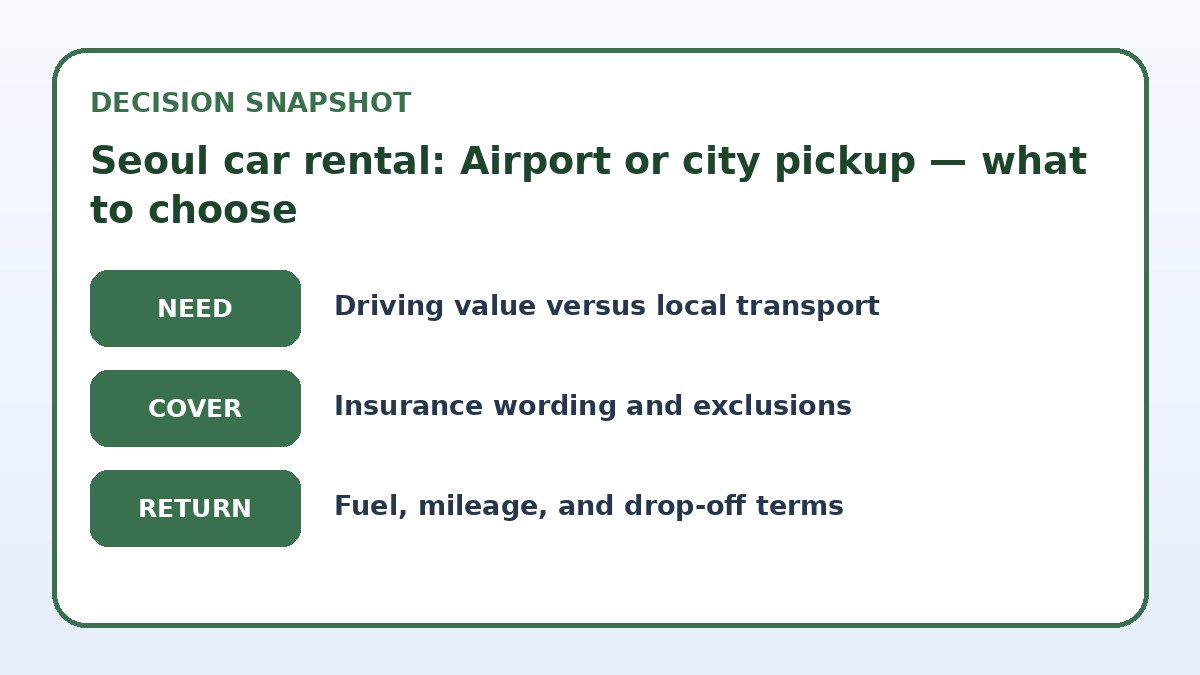
Practical answer first: if your Seoul trip starts or ends with long drives outside the city or you value getting on the road immediately after arrival, airport pickup usually makes more sense. If your plans center on central Seoul for the first days, and you prefer avoiding heavy highways, a city pickup near your hotel or a downtown rental desk can save time and stress. Either choice is valid; the right one depends on where you’ll spend most hours, whether you’ll travel beyond Seoul, how comfortable you are driving in dense traffic, and how much walking or public transit you want on arrival. Below I break down the tradeoffs and give decision checkpoints so you can compare options at the booking stage and avoid surprises at pickup.
See current options before you compare the details
Availability and final conditions change. Open Trip.com now or keep reading for the practical comparison.
Convenience and arrival logistics
Airport pickup is appealing because it lets you avoid additional transfers after a long flight: collect luggage, pass through immigration and baggage checks, then head to the rental desk or shuttle. Major Seoul airports have multiple terminal desks and off-site lots; some companies provide an on-airport desk while others use shuttle buses. Consider the size of your party and the amount of luggage—if you have bulky items, fewer moves mean less hassle. Also think about the timing of your arrival. Late-night arrivals may find fewer open downtown desks, while airport counters often maintain later hours to match flights. Verify operating hours and whether a shuttle is required on the provider’s booking page before committing.
City pickup works well if you plan to spend your first day exploring central Seoul on foot or by transit and want to avoid driving in unfamiliar urban traffic immediately. Many downtown rental desks are located near subway stations and hotels, making a short transit or taxi ride to the office a simple way to pick up a car when you’re rested. This approach also gives you a chance to test local transit for short hops without renting a car. However, factor in the extra time and step of getting to the rental location and the potential need to pay for inbound taxis or transit from the airport—check exact desk addresses and recommended transfer methods on the reservation page.
Cost tradeoffs and parking
Upfront rental rates between airport and city pickup can be similar, but fees and add-ons often differ. Airport pickups may include airport concession fees, shuttle charges, or higher mandatory taxes; city pickups sometimes avoid certain airport surcharges but could add delivery or after-hours service fees. Fuel and mileage terms are usually the same regardless of location, but the practical cost differences often show up through required one-way drop fees if you don’t return the car to the original pickup site. Before finalizing, compare the total cost shown at checkout, and, crucially, read the provider’s terms on whether fuel, tolls, and parking incidents are covered.
Parking is a major ongoing cost in Seoul and should influence your pickup choice. If you plan to base yourself in a centrally located hotel, check whether the hotel provides guest parking, whether it requires a reservation, and how much per night it costs. Free or affordable parking further out may make an airport pickup plus a short drive to the suburbs sensible. Conversely, if your itinerary keeps you inside Seoul’s dense districts, parking fees and the stress of finding space can negate any savings from selecting a lower-rate airport car. Confirm parking options with your accommodation and factor realistic daily parking costs into your decision.
| Approach | Best for | Tradeoff to check |
|---|---|---|
| Airport pickup | Travelers starting long drives from arrival, those with heavy luggage, or visitors leaving Seoul immediately. | May include airport surcharges and more highway driving; downtown parking and congestion come later in the trip. |
| City pickup | Visitors basing themselves in central Seoul who want to avoid immediate urban driving. | Requires an extra transfer from the airport and may involve limited pickup hours or higher downtown demand. |
| Hybrid approach (pick up later) | Sightseeing-first travelers who rent a car only for specific day trips outside Seoul. | Adds planning for pickup timing and may incur short-term rental or weekend pricing spikes. |
| One-way (different dropoff) | Itineraries that travel point-to-point, such as Seoul to Busan or the east coast. | Can save driving time but often costs extra in one-way fees; check dropoff locations and restrictions carefully. |
Ready to check the option that fits your plan?
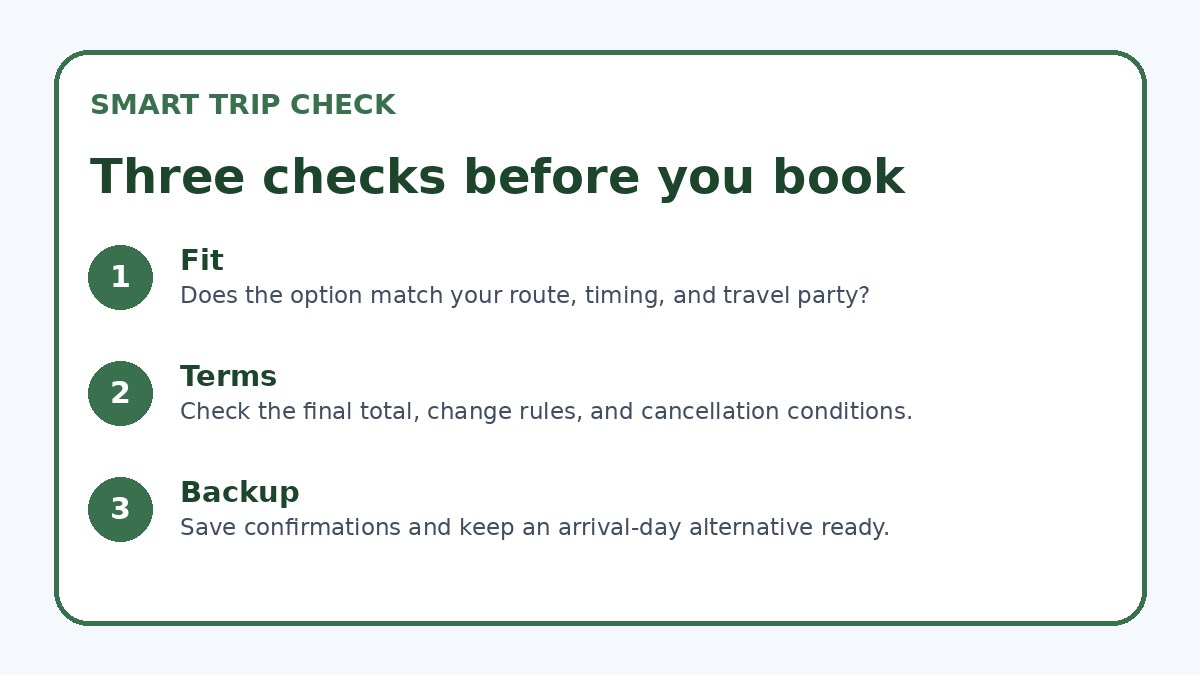
Use your exact dates and traveler details so the provider page can show the current total and conditions.
Driving, traffic, and navigation
If you’re uncomfortable driving in heavy urban traffic, collecting your car in the city when you’re rested and can practice on quieter streets might feel safer. Central Seoul has many one-way streets, bus-only lanes, and complex intersections, especially around downtown neighborhoods and university areas. Starting your driving experience on calmer suburban or outer-ring roads—often accessible immediately from airport pickups—lets you build confidence before entering the busiest zones. Decide how much urban driving you’ll do on the first day and whether you’d rather face highways or inner-city lanes first.
Navigation and tolling in Korea require preparation regardless of pickup point. Rental companies usually provide GPS units with English menus or smartphone-compatible navigation apps; verify what is included before you book. Highways use tolls and payment methods that may be handled by the rental company via preloaded devices, or paid manually; clarify toll payment procedures on the provider’s terms page. Also consider peak traffic hours: if you collect downtown during morning or evening peaks, you’ll experience delays that could make an airport pickup faster despite extra distance.
Before you book
- Confirm the exact pickup address and terminal/desk instructions on the rental provider’s final booking page.
- Verify operating hours and after-hours pickup or return options if your flight arrives or departs late.
- Check what ID, driver’s license format, and international driving permit (if needed) the provider requires.
- Ask the provider how tolls, fuel policy, and damage insurance are handled and note any exclusions.
- Compare total costs including airport surcharges, one-way fees, and estimated daily parking for your planned stops.
- Plan buffer time for vehicle inspection, paperwork, and potential shuttle waits in your arrival and departure schedules.
Itinerary fit: day-to-day priorities
Match pickup choice to the shape of your trip. If your plan is a ring trip from Seoul—Gyeonggi, Gangwon, or the southern coast—airport pickup is efficient because you leave the city immediately and minimize backtracking. For multi-day drives where you’ll cover long distances or cross provincial borders early, starting from the airport reduces inner-city exposure and can be the most time-efficient option. Equally important: consider your drop-off. If you fly out of the same airport, a one-way fee may be avoidable by returning the vehicle to the same terminal, so plan routes that align with your arrival and departure airports.
If your stay emphasizes museums, markets, nightlife, and short day trips from a Seoul base, city pickup makes more sense. It lets you avoid early unfamiliar motorway driving and park centrally for short periods. You can also delay pickup until you need a car for specific day trips, which can reduce parking costs and stress during sightseeing days. Whichever path you choose, build buffer time for pickups and returns into your schedule to handle paperwork, vehicle inspections, and any unexpected waiting.
Frequently asked questions
Do I need an international driving permit to rent a car in Seoul?
Many visitors do need an international driving permit (IDP) in addition to their home country license; requirements depend on your nationality and how long you will drive in Korea. Before booking, check the rental company’s documentation requirements on the provider’s confirmed booking page and verify South Korea’s entry and driving regulations with an official source. Carry original ID documents, your passport, and any required permits when you pick up the vehicle. If you’re unsure, contact the rental company directly to confirm what they will accept at the desk.
Is it hard to drive in Seoul if I’m used to Western cities?
Driving skills transfer, but Seoul’s traffic density, signage, and local driving patterns can feel different from many Western cities. Expect busy multi-lane roads, frequent buses and motorbikes, and areas with restricted lanes. GPS navigation in English is commonly available from rental firms and helps a lot. If you prefer a gradual introduction, consider picking up the car in the city after a day of orientation or choosing wider off-peak roads first. Assess confidence honestly and plan routes to avoid the most congested zones during rush hours.
How do tolls and parking payments work when I rent a car in Korea?
Tolls on Korea’s expressways are common and can be paid via onboard electronic toll devices or manually at booths depending on the rental company’s system. Some providers issue transponders and bill you later for tolls; others expect cash or card at the tolls. Parking in Seoul ranges from short-term metered lots to hotel garages that may require reservation. Always confirm with the rental company how tolls will be charged and check your hotel’s parking options so you’re not surprised by charges during the trip. The rental provider’s final booking page should explain toll payment methods and any administrative fees.
Final planning note
Choosing airport versus city pickup for a Seoul car rental hinges on how and where you’ll spend your first hours and days. If you need to get on the road quickly with luggage or begin a long regional drive, airport pickup saves transfers and starts the trip sooner. If your early itinerary is concentrated in central Seoul and you want to avoid immediate urban driving and parking hassles, a downtown pickup is likely calmer and more convenient. Whichever option you prefer, compare total costs, confirm pickup and dropoff locations and hours, and verify required documents on the rental provider’s final booking page. For a quick availability check, you can compare options on Trip.com, but always rely on the provider’s terms for final confirmation.
Continue planning
Check current options and final conditions
Use the provider page to confirm live availability, the final total, cancellation terms, and every condition that matters to your trip.
This evergreen planning guide was created with AI-assisted drafting and a structured quality review. It does not display live prices, schedules, availability, visa guidance, or provider rankings. Verify current details before booking. Some links are affiliate links; we may earn a commission at no additional cost to you.