If you and your partner want a practical, low-stress way to get from Brisbane to Sydney, pick the option that matches your priorities: speed, comfort, scenic value, or flexibility. For most couples focused on balancing comfort and convenience, rail or a direct flight combined with city-center transport is the most practical choice. Choosing becomes straightforward when you rank what matters—how long you’ll tolerate transit, whether you need private space, how much luggage you have, and whether you want to split the journey with stops. This article gives a clear recommendation up front, then walks through tradeoffs and decision criteria so you can compare train, plane, and driving options side-by-side. Verify final schedules, seat types, baggage allowances, and cancellation policies on the provider’s booking page before committing. You can also check live availability on Trip.com as one quick comparison source, but confirm details with the carrier before you pay.
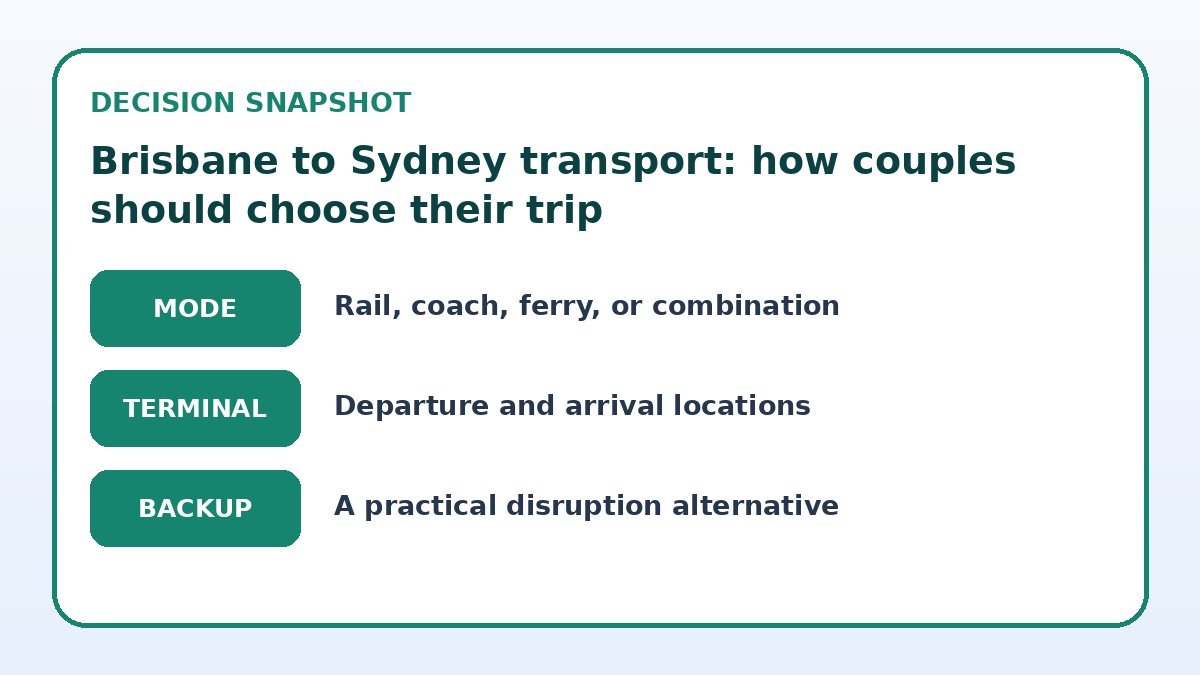
See current options before you compare the details
Availability and final conditions change. Open Trip.com now or keep reading for the practical comparison.
Practical recommendation: pick by priority, not prestige
Start by deciding which single factor most affects your experience: total travel time, comfort and privacy, scenic value, or flexibility. If both of you prize relaxed time together and dislike airport processes, the train is often the practical choice—it keeps you in city centers and avoids repeated security steps. If minimizing travel hours is the top priority because you have limited time at the destination, prioritize direct air options combined with efficient transfers. Couples with a rental car or who want side trips may find driving the most practical despite the extra planning.
Pick one primary priority and one secondary priority, then evaluate options against those criteria. For example, if comfort is primary and scenic experience is secondary, a premium rail seat or an overnight train (where available) fits better than a short flight. If speed is primary and cost predictability is secondary, compare direct flights and factor in transfer times to get a true door-to-door estimate. This priority-first approach keeps the decision practical, avoids overcommitting to a single metric like headline price, and helps couples book confidently.
Train travel: what couples gain and give up
Trains typically offer more space to sit together, walk around, and carry larger onboard luggage without gate constraints. For couples who want to talk, read, or work together, the rail environment can be more relaxed than airports. Trains also deliver easy center-to-center arrival and departure, meaning less time and cost on transfers at either end. The scenic coastal and hinterland stretches can add memorable shared moments without extra effort, which is often why couples choose rail for the journey itself rather than just as transport.
On the tradeoff side, trains can take longer than direct flights and services may run less frequently, so timetable planning is important. You may need to compare multiple departure times or consider breaking the trip into segments if direct services are limited. Also check seat classes, onboard amenities, and luggage rules on the carrier’s booking page because those details affect comfort. If privacy or dedicated space matters, look for options like first-class compartments or reservable tables where you can sit facing each other and enjoy uninterrupted conversation.
| Approach | Best for | Tradeoff to check |
|---|---|---|
| Daytime train | Couples valuing comfort, scenery, and center-to-center travel | Usually slower than flying; check departure frequency and seat options |
| Direct flight | Couples needing to minimize total travel time | Airport transfers and procedures can erode time savings |
| Driving together | Couples who want flexibility, stops, and private space | Requires planning for fatigue, fuel, tolls, and parking |
| Mixed itinerary (fly one way, train/drive return) | Couples balancing different priorities on the same trip | Introduces more booking complexity—verify providers’ rules |
Ready to check the option that fits your plan?
Use your exact dates and traveler details so the provider page can show the current total and conditions.
Flying: when speed and tight schedules matter
Flights win when total travel time is critical—think short weekend trips or business-constrained holidays—because airborne minutes often outweigh longer surface travel. For couples who value maximizing time at the destination, flying can be the most practical choice despite airport check-in and transfer time. When comparing flight options, look beyond flight duration to estimate door-to-door time: include travel to and from airports, recommended arrival windows, and any required transfer or security buffers. That fuller view avoids surprises and helps couples choose flights that truly save time.
Remember the tradeoffs: airport procedures, possible waits, and city-to-airport transfer costs can erode flight time advantages. Luggage rules, seat selection, and change/cancellation policies also strongly affect how practical a flight is for couples. If privacy and uninterrupted together-time are important, compare the experience of premium cabin seats or airlines that allow easy seat selection. Always verify final flight times, baggage allowances, and transfer options on the airline’s booking page before booking to avoid last-minute complications.
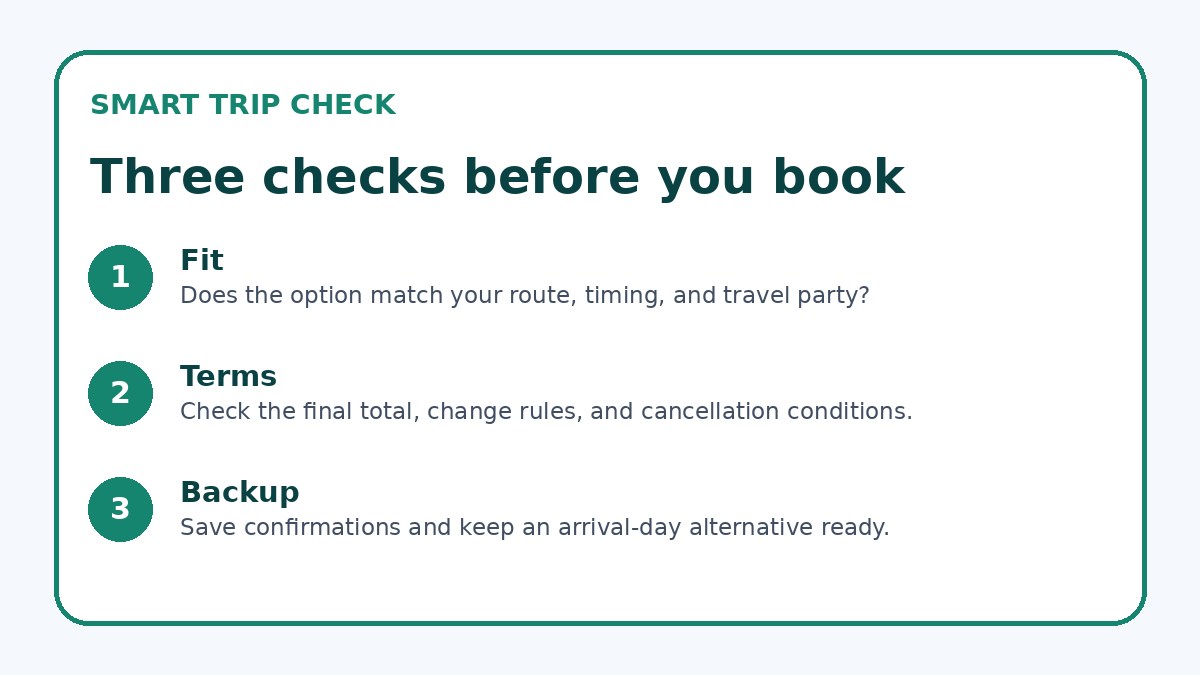
Before you book
- Decide your single top priority (time, comfort, flexibility, or scenery) and list one backup priority to guide booking choices.
- Estimate door-to-door travel time for each option by adding transfers, check-in buffers, and expected local transit at both ends.
- Confirm seat type, baggage allowance, and change/cancellation terms on the provider’s final booking page before payment.
- If driving, check rental terms, additional driver fees, and insurance coverage; confirm where you can legally return the vehicle.
- Compare both direct and connecting services where available—note total travel time, layover length, and transfer logistics.
- Book refundable or flexible options if your dates are uncertain, and save provider contact info for quick adjustments while traveling.
Driving and mixed itineraries: flexibility versus logistics
Driving offers control: stop where you want, alter your schedule, and carry more personal items without baggage fees. For couples who enjoy road-trip spontaneity—coastal viewpoints, national parks, or seaside towns—driving can convert transit into part of the holiday. A car also simplifies trips across regions with limited direct public transport and lets you pivot plans on the fly, which is especially helpful for couples who prefer slow travel and exploration over strict timetables.
The downsides are driver fatigue, navigation responsibility, potential tolls, parking costs, and the need to plan overnight rests on a long route. Compare single-driver versus shared driving plans and consider whether one partner prefers to rest while the other drives. If you’re splitting modes—driving one way and flying or taking the train back—check car hire return policies, cross-border rules if relevant, and cancellation flexibility. Confirm vehicle insurance coverage and any additional driver fees on the rental provider’s booking page before reserving.
Frequently asked questions
Should couples choose the train or a plane for comfort and privacy?
For comfort and privacy, many couples prefer trains because they often provide more legroom, the ability to walk and use shared space, and center-to-center travel without repeated security checks. Trains make it easier to sit together, converse without masks of noisy terminals, and carry a bit more luggage without strict gate restrictions. However, comfort depends on seat class and service type—verify seating layouts and class upgrades on the operator’s booking page. If you need a short travel day and can accept airport steps, some premium flight seats also offer privacy and comfort; compare both options before choosing.
Is driving between Brisbane and Sydney practical for a couple on a long weekend?
Driving gives flexibility but can be tight for a long weekend depending on how much time you want at your destination versus on the road. If you enjoy a scenic route with planned stops and both drivers are comfortable with driving shifts, it can be a rewarding option. Consider whether you will need overnight breaks and factor parking and potential toll costs into your plan. If the weekend is short and you want to maximize destination time, compare driving door-to-door times with flying or fast rail to see which option gives you the most usable time together.
How should couples compare mixed itineraries—like flying one way and returning by train?
Mixed itineraries can balance priorities: speed one way and a leisurely return, for example. To compare fairly, calculate total trip time including transfers, luggage handling, and time at terminals or stations for each leg. Check provider rules for one-way car hires if driving is part of the plan, and verify any package restrictions if combining tickets. Make sure connection timing allows for delays on either leg and that cancellation or change terms meet your flexibility needs. Finally, confirm booking and seat details directly on each provider’s final page before purchasing.
Final planning note
For most couples seeking a practical Brisbane to Sydney transport solution, choose the mode that aligns with your top priority—comfort and connection: train; speed and short stays: flight; flexibility and exploration: driving. Start by ranking what matters most to both of you, then tally true door-to-door times rather than headline trip durations. Check seating classes, baggage rules, transfer logistics, and cancellation policies on provider booking pages before you commit. If you want a quick comparison of current options, Trip.com can show availability, but always confirm details with the carrier or rental company when booking. With clear priorities and a few confirmations, couples can pick the travel style that turns the transit between cities into part of the shared experience.
Continue planning
Check current options and final conditions
Use the provider page to confirm live availability, the final total, cancellation terms, and every condition that matters to your trip.
This evergreen planning guide was created with AI-assisted drafting and a structured quality review. It does not display live prices, schedules, availability, visa guidance, or provider rankings. Verify current details before booking. Some links are affiliate links; we may earn a commission at no additional cost to you.