Your first hour after landing in Busan decides whether you stagger through crowded buses and stairs with heavy bags or arrive at your accommodation calm and on schedule. If you’re traveling with oversized suitcases, sports gear, or multiple check bags, the most practical move is to confirm pickup instructions before you book a transfer: how the driver meets you, where loading happens, what counts as ‘extra’ luggage, and whether help with lifting is included. That clarity saves time and stress when flights are delayed, connections are tight, or terminals are busy. This article gives the immediate decision—what to check now—and then walks through the tradeoffs between shared shuttles, private cars, taxis, and rail plus luggage services so you can pick the approach that fits your party size, arrival time, and final drop-off requirements.
Check options for your arrival details
Use your flight, luggage, party size, and accommodation address to compare current choices.
Luggage and party size: what to declare and why
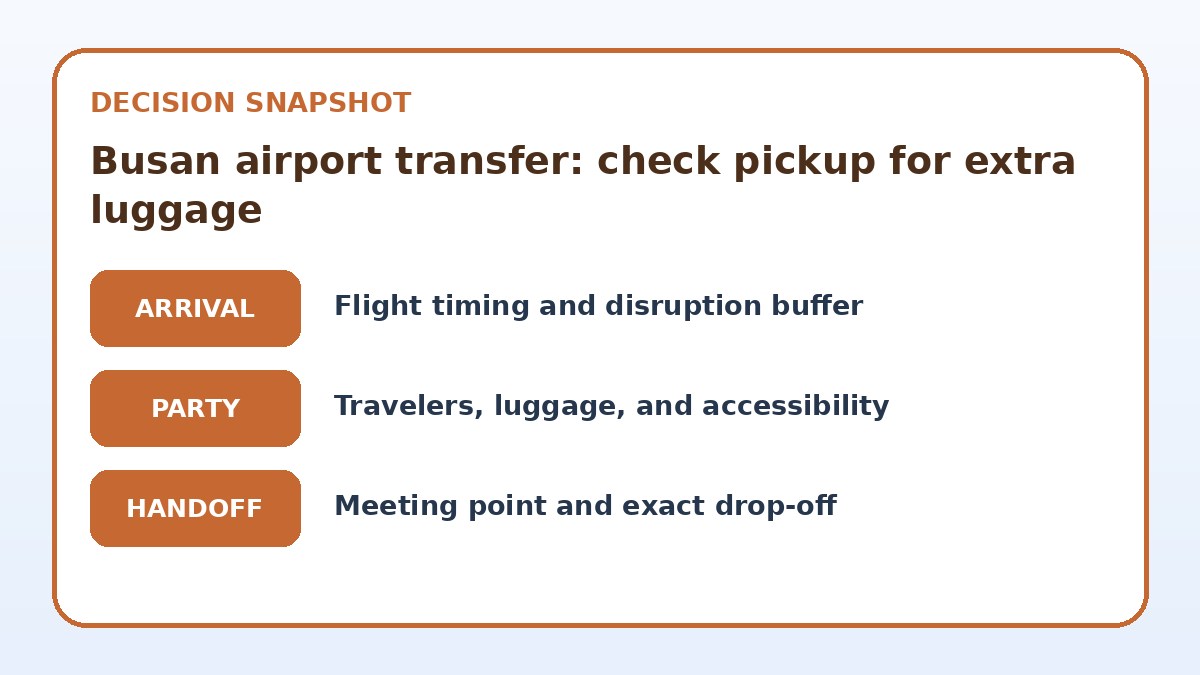
When you book a Busan airport transfer, be explicit about the number, size, and type of bags everyone is carrying. Transfer providers often price and plan vehicles based on passenger count and standard checked baggage numbers; anything beyond that—oversized skis, surfboards, extra suitcases—may require a larger vehicle or an extra seat. Say you are traveling with four people and six large suitcases: a standard sedan that can legally seat four might not have room for the luggage without putting bags on laps or in the passenger area, which most drivers won’t accept. Clear details let the operator reserve the right vehicle and avoid surprises at pickup.
Also consider how physically demanding loading and unloading will be. If your party includes older adults, infants, or anyone with mobility limits, request assistance and confirm whether porters or the driver will help carry bags between the terminal and the vehicle. If you plan to split into two cars, note that coordinating two separate pickups increases the chance of delay if one flight is late. If baggage is the central constraint, prioritize vehicle space over small cost savings—being able to stow suitcases securely and access them during the ride can matter more than a marginally lower fare.
Arrival details to have ready
- Record your flight number and send it to the transfer provider so they can monitor arrival time changes and adjust pickup automatically if supported.
- List every suitcase and oversized item with dimensions or general size notes in the booking comments and request vehicle confirmation in writing.
- Ask the provider to describe the exact meeting point (exit name, curb sign, or nearby landmark) and request a photograph or short map if possible.
- Confirm how long the driver will wait after your flight and the preferred method to reach them on arrival (call, local SIM, messaging app).
- Tell the operator your accommodation’s access constraints—narrow streets, steps, or pedestrian zones—and ask where they will actually drop you off.
- Save local taxi numbers, the nearest train/metro route, and your accommodation address in the local language as a backup if the transfer cannot meet you.
Late or disrupted arrival: how to confirm contingency plans
Delays, long immigration lines, and rebooked flights are common stressors. Before you finalize a transfer, check the provider’s policy for late or changed arrival times, and record clear contact methods. Ask whether they monitor flight numbers and adjust pickup times automatically, or whether you must message them if your arrival changes. If a provider uses a local dispatcher, confirm who the on-call person is and what language they use. If the operator does not monitor flights, factor in the need to send a live message on arrival so the driver waits or redirects accordingly.
Also verify how long a driver will wait at the agreed meeting point and whether they will reposition to a secondary meeting spot if necessary. Some pickups require meeting outside arrivals within a limited window; others will wait or offer a rebook for a fee. Have a backup plan: note local taxi numbers and the nearest public-transport options in case the transfer cannot be rescheduled, and keep your accommodation’s address and arrival instructions handy so you can still reach your final destination without dragging luggage through multiple transfers.
Match the transfer to your arrival
| Arrival approach | Best for | Detail to verify |
|---|---|---|
| Private airport transfer (prebooked car) | Travellers with lots of or bulky luggage and those wanting door-to-door service | Higher cost than shared options, and you must confirm vehicle size and exact pickup procedures ahead of time |
| Shared shuttle or minibus | Smaller excess luggage with flexible schedules and travelers comfortable with others | May have strict luggage limits and multiple stops that add time and transfers for bulky items |
| Taxi from the airport | Quick departures for small groups with standard luggage and irregular arrival times | Limited trunk space for oversized items; drivers may refuse very large or numerous bags without advance notice |
| Train or metro plus luggage delivery service | Lightweight bulky items and those who accept a walk at either end and flexible timing | Requires coordinating separate luggage pickup or porter services and can be impractical with many heavy bags |
Make the meeting plan clear
Check the final pickup instructions, waiting conditions, and exact drop-off coverage.
Meeting-point clarity: avoid the curbside confusion
Airport terminals have multiple exits, differences between domestic and international arrivals, and rules about curbside waiting. When you confirm pickup for Busan, ask the provider to describe the meeting point in actionable terms: which exit name, which gate number, nearby signage, or a recognizable landmark such as a café or specific terminal sign. If possible, get a photo or a small map from the provider showing where the vehicle will park and where the driver will stand. Written confirmation that cites the terminal side and a local-language phrase can save time when you step out of security.
Also ask whether the driver will display a nameboard, app notification, or phone call on arrival, and clarify how they’ll make contact if you have a delayed phone or limited roaming. If the pickup requires moving through a restricted arrivals hall, check whether the driver meets you inside or waits outside the public area. Some airports restrict drivers from entering the terminal; if that’s the case, confirm whether someone will help carry your luggage from inside to the curb. These small details determine whether you walk five meters or fifty with heavy bags.
Destination-side drop-off: fit the final approach to your room
Your drop-off point matters as much as your pickup. Hotels in hilly districts, guesthouses on narrow lanes, and properties with pedestrian-only entrances may not accept curbside vehicle access. Before booking, tell the transfer provider your accommodation type and ask where they will drop you: at the street entrance, the closest vehicle-access point, or a designated loading area. If your hotel requires a short walk from the vehicle to the front door, ask whether the driver will help with luggage and whether additional porter services can be arranged locally.
If you’re staying in an apartment, hostel, or a property listed with limited access, provide precise entry instructions and check whether the driver can enter private roads or needs to park and walk. For larger groups, splitting drop-offs into multiple spots can add time and cost—decide whether a single shared vehicle that stops multiple times is preferable to separate transfers that take guests directly to each front door. Confirming these details prevents a heavy, unplanned trek with suitcases through unfamiliar streets after a long flight.
Airport Transfer & Local Mobility questions travelers ask
How do I know if my extra luggage will fit a booked transfer vehicle?
The only reliable way is to provide exact or approximate luggage counts and descriptions to the provider before booking and request vehicle confirmation. Describe large items (surfboards, ski bags, boxed items) because these often need special vehicles. Ask the operator to specify vehicle model or capacity, or whether they will send a van instead of a car. If the booking platform shows vehicle images, verify that the trunk and passenger capacity match your needs. If uncertain, plan for a larger vehicle or arrange an additional seat to ensure space for both people and bags.
What should I do if my flight is diverted or I arrive at a different terminal in Busan?
Immediately notify the transfer provider using the contact method you received with your booking, and give the new terminal and estimated arrival time. If the operator monitors flights, they may reroute the driver; otherwise ask for a local dispatcher number. If you cannot reach them, use airport signage to locate an official taxi rank or information desk and keep the accommodation address handy in Korean for drivers. Bookstore or airport Wi‑Fi can help you message the provider if mobile data is restricted. Always confirm who will cover extra waiting or rerouting costs before assuming a free change.
Can I arrange help with carrying luggage between the terminal and vehicle?
Yes, but it depends on the provider and airport rules. Some transfer services include porter assistance; others only provide the vehicle and driver. When booking, explicitly request porter service or driver-assisted loading and ask whether that is included or an add-on. If the airport restricts non-staff from entering certain arrival areas, confirm whether staff will meet you inside the hall and guide the bags to the curb. If you need hands-on help due to mobility or heavy items, securing a confirmed porter ahead of time avoids having to manage the bags yourself in a busy terminal.
Final decision note
When you arrive in Busan with extra luggage, the fastest path to a calm first hour is clarity. Before you click confirm, get written answers about meeting points, vehicle type and capacity, wait times for delays, and how drop-offs work at your accommodation. Compare the practical tradeoffs: private cars give room and door-to-door service, shuttles save money but can restrict luggage, taxis are flexible but may not accept oversized items, and rail plus delivery is an option when timing and bag count allow. Keep backup contacts, local directions in Korean, and a contingency plan for late arrivals. With these checks, you’ll avoid the common pitfalls that turn an otherwise simple transfer into a heavy, stressful chore.
Continue planning
Check current options and final conditions
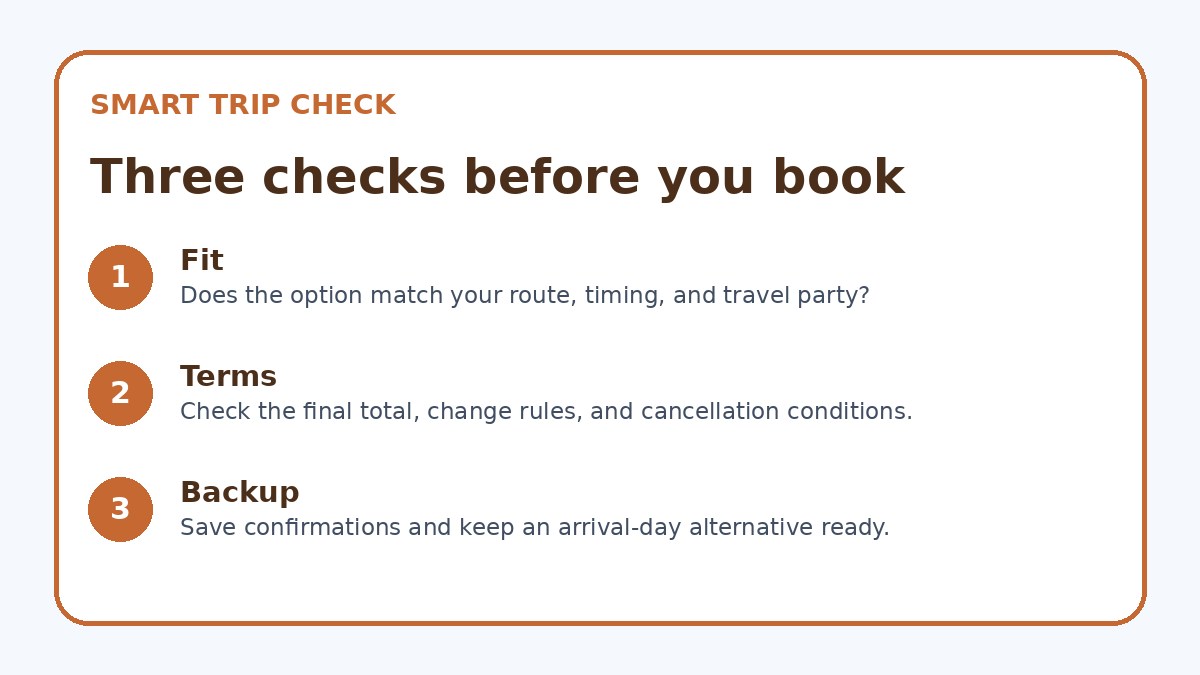
Use the provider page to confirm live availability, the final total, cancellation terms, and every condition that matters to your trip.
This evergreen planning guide was created with AI-assisted drafting and a structured quality review. It does not display live prices, schedules, availability, visa guidance, or provider rankings. Verify current details before booking. Some links are affiliate links; we may earn a commission at no additional cost to you.