
For couples traveling from Toronto to Vancouver, the practical decision often comes down to how easily you can change plans or cancel without a big penalty. Start by prioritizing the flight rules that matter most to both of you: refundable vs. nonrefundable fares, how change fees and fare differences are handled, and any partner or family-friendly allowances such as name-change or same-day standby options. Check the airline’s published conditions for your exact fare class and confirm them on the final booking page before paying. If you value flexibility, look for fares with low change fees and clear cancellation credit policies; if you value a lower upfront cost, plan a backup in case changes become expensive. Use this guide to compare tradeoffs, prepare verification steps, and pick the right approach for your relationship, schedule, and risk tolerance.
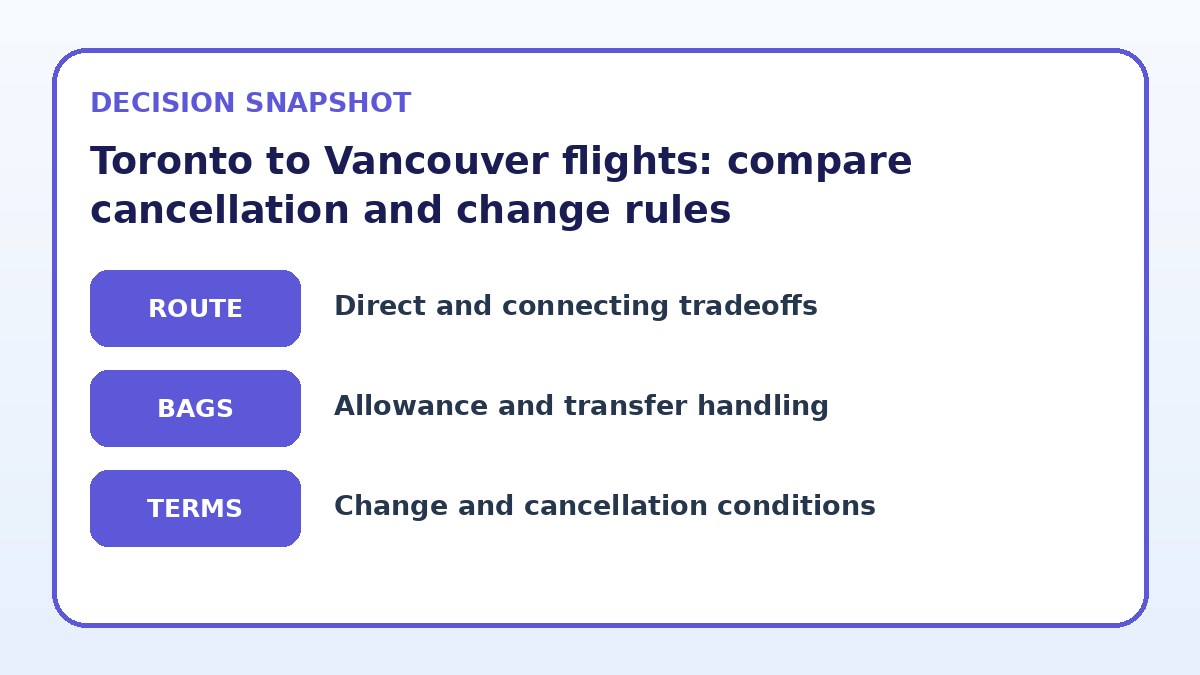
See current options before you compare the details
Availability and final conditions change. Open Trip.com now or keep reading for the practical comparison.
Understand the headline fare types and what they actually permit
Airlines typically sell several fare types—basic/economy, standard economy, and refundable/fully flexible—each with different change and cancellation rules. For couples, the distinction matters because one partner’s circumstances could force a change for both. When comparing options, note whether the fare allows free changes, charges a flat fee plus any fare difference, or only issues travel credit instead of a cash refund. Also check whether changes can be made online, require a phone call, or must be processed at the airport; the required channel can affect how quickly you can rebook if plans shift.
Pay attention to subtler rules often buried in the fare conditions: some fares allow same-day confirmed changes for a fee, some offer free name corrections within a short window, and others permit refunds only to the original form of payment or as a travel voucher. For couples who anticipate unpredictable scheduling, refundable or change-fee-waived fares reduce stress but usually cost more upfront. If you choose a lower-cost fare, plan which partner will be responsible for monitoring changes and confirm whether third-party bookings (OTAs) add restrictions or different procedures for managing changes and refunds.
Compare direct versus connecting options through the lens of changes
Direct flights simplify change and cancellation decisions because a single segment and carrier govern the ticket rules. If both partners value simplicity—less chance that a missed connection affects the return home—lean toward direct options when rules are similar. However, direct flights may carry higher base fares; if you’re comparing direct and connecting itineraries, put the total cost of potential change fees and the risk of missed connections against the up-front savings. When pricing connecting options, verify whether all segments are on one ticket and under one carrier’s control or sold separately; this determines who bears responsibility for rebooking if a delay causes a missed connection.
If you prefer a cheaper connecting itinerary, confirm how the airline handles re-accommodation for missed connections and whether partner carriers honor the same change policy. For couples, a practical tactic is to weigh the probability of needing a change—based on work, events, or health—against the inconvenience of rebooking multiple segments. Also check layover minimums and whether changes to one segment force reissue of the entire ticket, which can affect both passengers. Remember to verify the exact routing and the fare rules for each ticket on the provider’s final booking page before you commit.
| Approach | Best for | Tradeoff to check |
|---|---|---|
| Buy refundable/flexible fares for both passengers | Couples who want maximum schedule freedom and low rebooking hassle | Higher upfront cost but minimal stress and easy refunds or rebooking |
| One flexible ticket + one cheap restricted fare | Pairs with asymmetric flexibility needs or tight budgets | Saves money but requires clear responsibility for changes and more coordination |
| Both buy basic restricted fares and add insurance | Couples seeking lowest base fare with external protection | Insurance claims take time and may not cover all reasons for cancellation |
| Book mixed carriers/OTAs for lower price | Those prioritizing cost and willing to manage complexity | Risk of separate rules and harder re-accommodation if something goes wrong |
Ready to check the option that fits your plan?
Use your exact dates and traveler details so the provider page can show the current total and conditions.
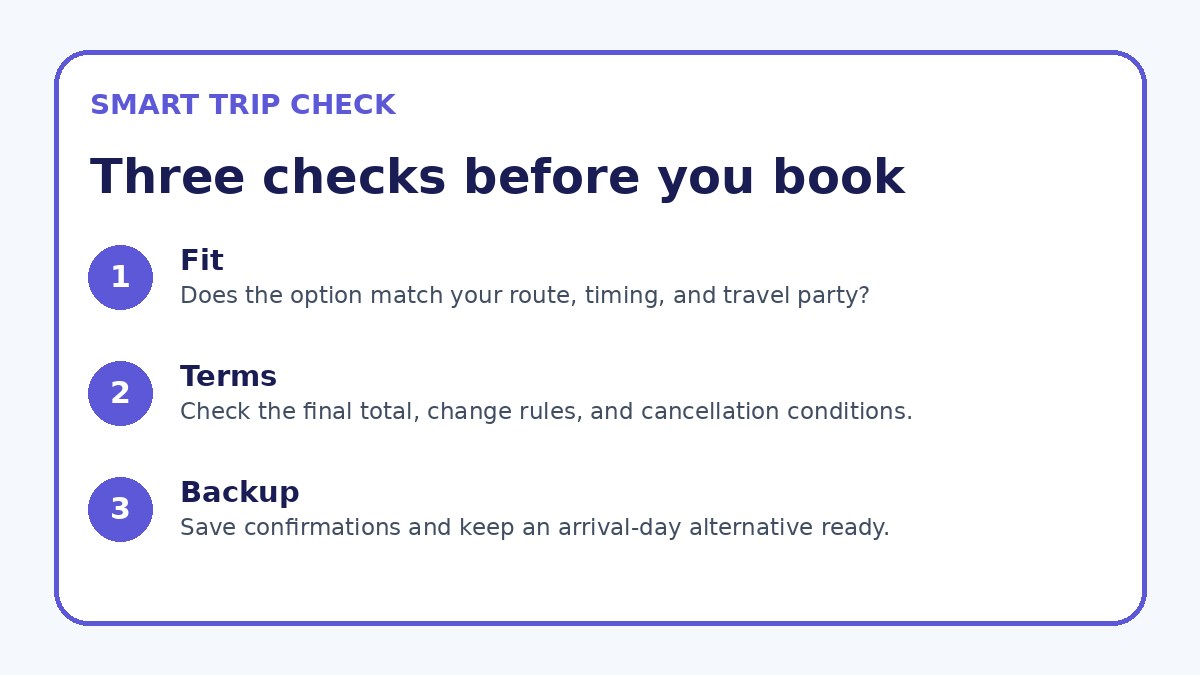
Using travel insurance, credit-card protections, and airline waivers
Travel insurance and travel-credit protections from some credit cards can shift the balance between buying a low-cost fare and protecting against unexpected cancellations. Read insurance policies carefully: many cover trip interruption or cancellation for covered reasons but exclude routine schedule changes or buyer’s remorse. For couples, determine whether one shared policy or two separate coverages make sense based on who paid and how refunds would be processed. Verify claim windows, required documentation, and whether the insurer reimburses change fees or only unused portions of nonrefundable tickets.
Credit-card protections sometimes offer trip delay or cancellation assistance and can reimburse certain fees, but coverage and eligibility vary by card and issuer. A practical step before booking is to confirm with your card issuer whether the purchase will be covered and what documentation is required to support a claim. Airlines sometimes issue discretionary waivers—seasonal or event-driven—that temporarily relax change and cancellation rules; if a waiver applies to your travel period, verify the exact text on the airline’s website and the final booking page since waivers can change quickly and may not apply retroactively to all fare classes.
Before you book
- Before paying, open and save the carrier’s full fare rules and change/cancellation policy shown on the final booking page.
- Confirm whether changes incur a flat fee, a fare difference, or both, and note how refunds are issued (credit, voucher, or back to the card).
- Verify whether your chosen fare allows online self-service changes or requires calls to the airline or travel agent.
- If using insurance or a credit card for protection, call the provider to confirm coverage specifics and required claim documents.
- For connecting itineraries, ensure all segments are on one ticket or understand which carrier is responsible if a connection is missed.
- Document who will manage a change on travel day—include contact numbers, booking references, and the airline’s change window.
How couples can split risk and still save money
Couples with different risk tolerance can adopt hybrid strategies: one partner buys a flexible ticket, while the other selects a cheaper, restricted fare with insurance or a separate change plan. This approach reduces the total upfront cost while creating at least one flexible option for unexpected events such as a work emergency or family need. Another practical choice is to book refundable or flexible tickets for the legs more likely to change—often the outbound—and cheaper nonrefundable returns. Before using mixed fares, confirm on the booking page whether separate tickets affect seating sync, checked baggage policies, and priority boarding.
When making joint decisions, document who will handle changes if they occur: which phone number or account is authorized, who will call, and who keeps booking references and receipts. If you book through an online travel agency, check its change and refund procedures in addition to the airline’s—OTAs sometimes have separate fees or processing steps. Finally, always confirm the final terms shown at checkout and on the confirmation email; those are the operative rules and the easiest place to find the deadline for fee-free changes or eligibility for a refund.
Frequently asked questions
Can I transfer my Toronto to Vancouver flight to my partner if plans change?
Most airlines do not allow full passenger name transfers; they typically permit minor corrections such as spelling changes. If you need to swap travelers, check the airline’s name-change policy on the fare rules and final booking page before purchase. Some carriers offer a paid option to change the passenger on the ticket, while others prohibit it entirely and require cancellation and rebooking. For couples, it’s often simpler to book both passengers on the same ticket or use refundable fares if you expect a change in who will travel.
If I book a cheap fare and later need to cancel, will I at least get a credit?
That depends on the fare class and airline policy: some nonrefundable fares are eligible for travel credit (often with an administrative fee), while others provide limited or no credit. Always read the cancellation terms on the booking page and the confirmation email to see how credits are issued and their expiry. If you anticipate uncertainty, compare the total effective cost of buying a flexible fare versus buying a restricted fare plus a potential credit, factoring in administrative fees and the likelihood you’ll need to cancel.
How should couples handle cancellations if they booked through an online travel agency?
If you booked through an OTA, understand both the OTA’s and the airline’s policies: some OTAs process changes and refunds themselves and may charge service fees, while others pass you through to the airline. Start by reviewing the OTA’s cancellation terms and the airline’s fare rules on the confirmation. Keep all booking references, check who issues any refunds, and be prepared for an extra layer of communication; if complications arise, contact the OTA first if it handled payment, but always verify the airline’s published policy as the final authority.
Final planning note
For couples planning Toronto to Vancouver travel, the best approach balances your shared tolerance for risk, schedule flexibility, and budget. Start by deciding whether you value the peace of mind of refundable or change-fee-waived fares, or whether you can accept lower-cost restricted tickets with insurance or a mixed strategy. Always verify the exact fare rules on the final booking page—including change fees, how fare differences are charged, and the form of any refund or credit—and save a copy of those terms. By dividing responsibilities, documenting who manages changes, and confirming protections from cards or insurers, you can choose a plan that fits both partners and keep surprises to a minimum.
Continue planning
Check current options and final conditions
Use the provider page to confirm live availability, the final total, cancellation terms, and every condition that matters to your trip.
This evergreen planning guide was created with AI-assisted drafting and a structured quality review. It does not display live prices, schedules, availability, visa guidance, or provider rankings. Verify current details before booking. Some links are affiliate links; we may earn a commission at no additional cost to you.