Practical answer up front: if you’re visiting Bali for the first time, open your calendar and search with at least ±3 days around your ideal travel window for flights and hotels, then compare those flexible-date results against fixed-date bundled packages. Flexible dates often reveal cheaper weekday flights, alternative arrival airports on Java or Lombok plus a short connection, and hotel availability that can change total trip cost substantially. Before you book, put the bundle and separate-booking totals side by side while matching dates, number of travelers, baggage and transfer needs, and cancellation terms. This article explains which parts of a package are worth the convenience premium, how to avoid false savings from mismatched conditions, and what to check on provider pages (final price breakdown, change/cancel policy, included transfers, and supplier names) before you hit purchase.
Test package value fairly
| Booking approach | Best for | Tradeoff to check |
|---|---|---|
| All-in-one package (flight + hotel + transfers + activities) | Travelers who prioritize one-vendor support and minimal day-to-day planning. | Often less date-by-date flexibility and possibly restrictive fare or hotel rules despite apparent convenience. |
| Flight + hotel bundled, extras booked separately | Travelers who want simple arrival logistics but want control over on-ground activities. | Bundles may lock you into specific arrival times; activities booked separately can be more flexible but require extra planning. |
| Separate bookings for flights, hotels, transfers, and activities | Experienced planners seeking cost optimization across carriers and properties. | More time-consuming to organize and higher coordination risk on arrival without a single support contact. |
| Flexible-date flight search with fixed hotel windows | First-timers open to shifting arrival or departure days to cut flight costs while keeping a stable accommodation plan. | Requires careful cross-checks to ensure transfer times and chosen hotel check-in windows align with flight changes. |
Check current package and separate options
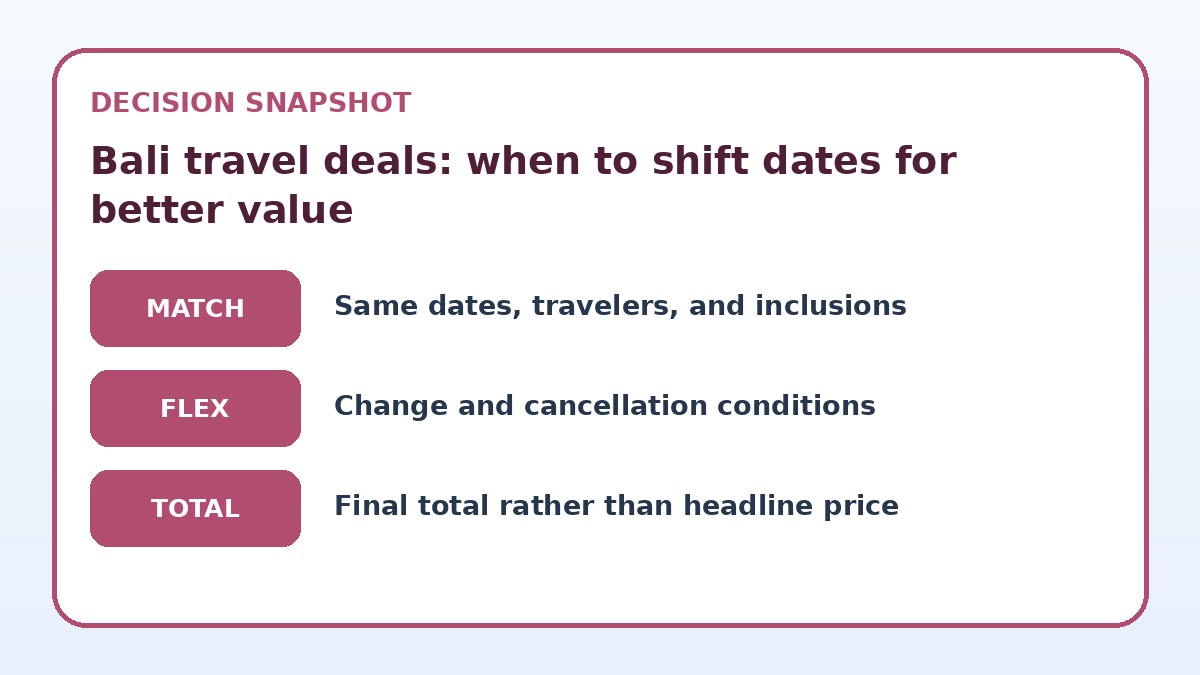
Use identical dates, travelers, room needs, baggage, and flexibility so the comparison stays meaningful.
What to compare before judging a Bali package
Start by listing the exact components any offer claims to include: outbound and return flights with class of service and baggage allowance, hotel nights with room type and board basis, airport transfers, internal flights or ferries, and any tours. Don’t accept a headline ‘package’ until you can map every element to an independent vendor or line item. Packages sometimes hide restrictive fare classes, nonrefundable hotel rates, or group transfers that only operate at specific times—these make a bundle less flexible than separate bookings even if the sticker price appears lower.
Next, set the variables you’ll fix for comparison: dates for each segment, number and ages of travelers, luggage needs, and preferred arrival times. Use those constants to run two parallel searches: the package as offered and separate bookings for the same dates and services. Only then will you spot where the bundle is shaving costs (or shifting costs via nonrefundable components). If a package requires a minimum stay or specific flight combination, verify whether those constraints are acceptable to your itinerary and budget.
Inclusions and the value of convenience
A package’s strongest selling point is convenience—one checkout, one contact for problems, and prearranged transfers. That matters in Bali when you land late or plan a multi-island itinerary and prefer not to coordinate ferries and local taxis. But convenience has measurable value only if the included components match what you would have booked yourself. For example, a package transfer that uses a shared van may be cheap but could add hours on the road; a private transfer costs more but saves time. Weigh the time cost against the money saved when deciding whether the included service is worth the premium.
Also consider schedule fit: some packages bundle fixed-time activities or group tours. If you like independent pacing, those inclusions could force an itinerary you don’t want. Conversely, if you prefer curated days—temple visits with guides, cooking classes, or snorkel trips—bundled activities can produce real savings in planning time. Make a short pros-and-cons list for each inclusion, and assign it a subjective value based on your travel style and how much time you’d otherwise spend organizing it.
Look past the headline total
Compare inclusions and change conditions before deciding whether a package is genuinely useful for this trip.
Deal comparison checklist
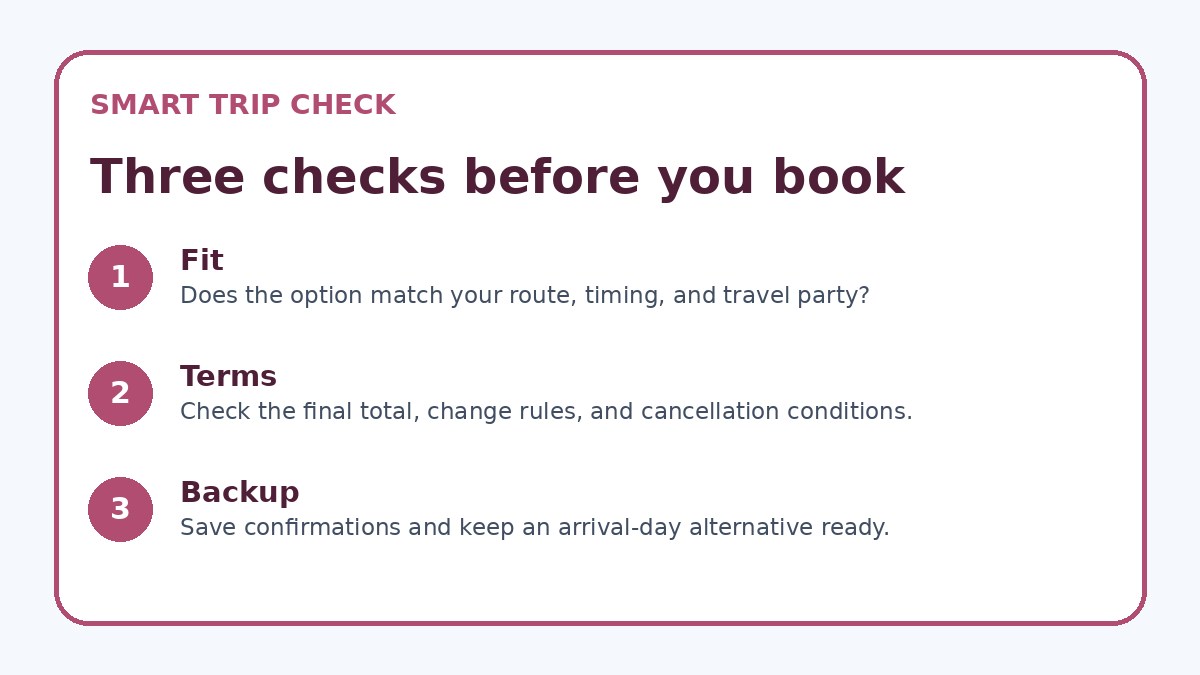
- Run parallel searches: package quote versus separate bookings for identical dates, passenger counts, and baggage rules.
- Confirm supplier names and expand fare and cancellation rules on the provider’s final booking page before paying.
- Verify baggage allowance, seat selection policy, and whether checked luggage incurs extra fees for included flights.
- Check hotel room type, board basis (breakfast only, half board), and exact check-in/check-out times.
- Ask about transfer details: private or shared, pickup windows, meeting point, and contingency plans for flight delays.
- Decide whether included activities match your pace; if not, price them separately to compare true value.
Flexibility, cancellation rules, and traveler-specific value
Flexibility is often the decisive factor for first-time visitors who may modify plans after booking. Compare change and cancellation rules line by line: check whether the package provider reissues airline tickets under the same fare class, whether hotel refunds are full or prorated, and how supplier contact works if you need an amendment. Remember that a single-package cancellation policy can be more restrictive than the sum of individual flexible air and hotel bookings. When in doubt, call the provider to clarify how changes are processed and whether third-party suppliers impose separate penalties.
Traveler-specific value varies: solo backpackers might prefer low-cost separate bookings, while families may favor packages that lock in transfers and family rooms. If you’re sensitive to timing—arriving after dark or needing a specific check-in time—verify how the package handles late arrivals. Also examine whether the package includes travel insurance or if you need a separate policy that covers flight disruptions and medical care in Indonesia. Precise, realistic expectations about your schedule will guide whether flexibility is worth the extra expense.
Final terms to verify on the provider’s booking page
Before committing, confirm the final price breakdown: base fares, taxes, booking fees, and any mandatory local fees. Look for the supplier names for each component (airline, hotel, transfer company). On the booking page, expand all fare rules and cancellation policies—don’t rely on summary text. If baggage allowances, seating selection, or room features are not shown in detail, contact the seller to get those specifics in writing. These are the facts that will determine whether the bundle truly matches your needs.
Also verify how changes are processed and who is the contract party for each service. Is the package sold as a single contract with the tour operator responsible for all refunds, or are air tickets issued by the airline and hotels contracted separately? Check payment timing, whether full payment is required immediately, and the process for refund requests. For live availability checks and alternative pricing, you can compare offerings on Trip.com, but always treat the provider’s final booking page as definitive for terms and conditions.
Travel Deals & Booking Strategy questions travelers ask
How much flexibility should I include in my Bali trip search to find meaningful deals?
Aim for a search window of at least three days either side of your preferred travel dates; for longer trips or high-season travel, broaden to seven days. This exposes weekday departures, alternate routing options, or flights arriving at different Bali airports and can significantly change available flight classes and hotel room types. When you adjust dates, always re-run the hotel search for the same stay nights, since shifting arrival by one night changes the nightly rates and availability. Keep one variable fixed at a time so you can see which date shift yields the best tradeoff between price and convenience.
If a package seems cheaper than booking separately, how can I be sure it’s a real saving?
Check that the package and your separate-booking comparison use the same exact conditions: same flights and fare classes, identical hotel room type and board, equal baggage allowances, and matching transfer services. Many apparent savings come from cheaper fare classes (no checked bag) or group transfers that you wouldn’t choose. Add any booking fees and check cancellation penalties—sometimes packages include nonrefundable components that increase risk. If possible, get the package provider to confirm the supplier names and fare codes so you can directly compare.
Should first-time visitors to Bali prioritize packages or individual bookings?
It depends on priorities: choose a package if you value a single point of contact, prearranged transfers, and included guided activities that remove day-to-day logistics. Choose separate bookings if you want maximum control over flight times, hotel choice, and change flexibility, and if you feel comfortable managing transfers and local connections. A hybrid approach—package for arrival logistics and independent bookings for excursions—often suits first-timers who want both reassurance on arrival and freedom to explore independently afterward.
Final decision note
Flexible dates are one of the simplest levers first-time visitors can use to improve Bali travel deals without sacrificing experience. Start by fixing the parameters that matter—number of travelers, baggage needs, room type—and then explore a multi-day search window for flights and hotels. Compare an all-in-one package to the sum of separate bookings using identical dates and inclusions, and focus on the contract details: supplier names, cancellation rules, and who handles refunds or changes. If convenience and a single support line matter to you, a package can be worth a modest premium; if you need changeable tickets and precise schedules, book components separately. Before booking, verify all final terms on the provider’s page and don’t hesitate to call for clarifications so the deal you choose works for real travel, not just a headline price.
Continue planning
Check current options and final conditions
Use the provider page to confirm live availability, the final total, cancellation terms, and every condition that matters to your trip.
This evergreen planning guide was created with AI-assisted drafting and a structured quality review. It does not display live prices, schedules, availability, visa guidance, or provider rankings. Verify current details before booking. Some links are affiliate links; we may earn a commission at no additional cost to you.