
For a business traveler in Singapore, the practical question is simple: where and how will you pick up and return the car so your meeting schedule stays intact and you avoid surprise charges? Start by choosing a pickup location that fits your itinerary — airport, downtown depot, or hotel delivery — and confirm the rental office’s exact address, contact phone, and hours for both pickup and return. Next, check the return conditions: after-hours drop-off procedures, fuel policy, inspection process, and any grace period for late returns. These four items (location, hours, inspection, fuel) will determine whether the car rental helps your trip run smoothly or creates stress when you’re racing to a meeting. The rest of this article explains the tradeoffs for each choice and gives decision rules so you can compare options quickly during booking.
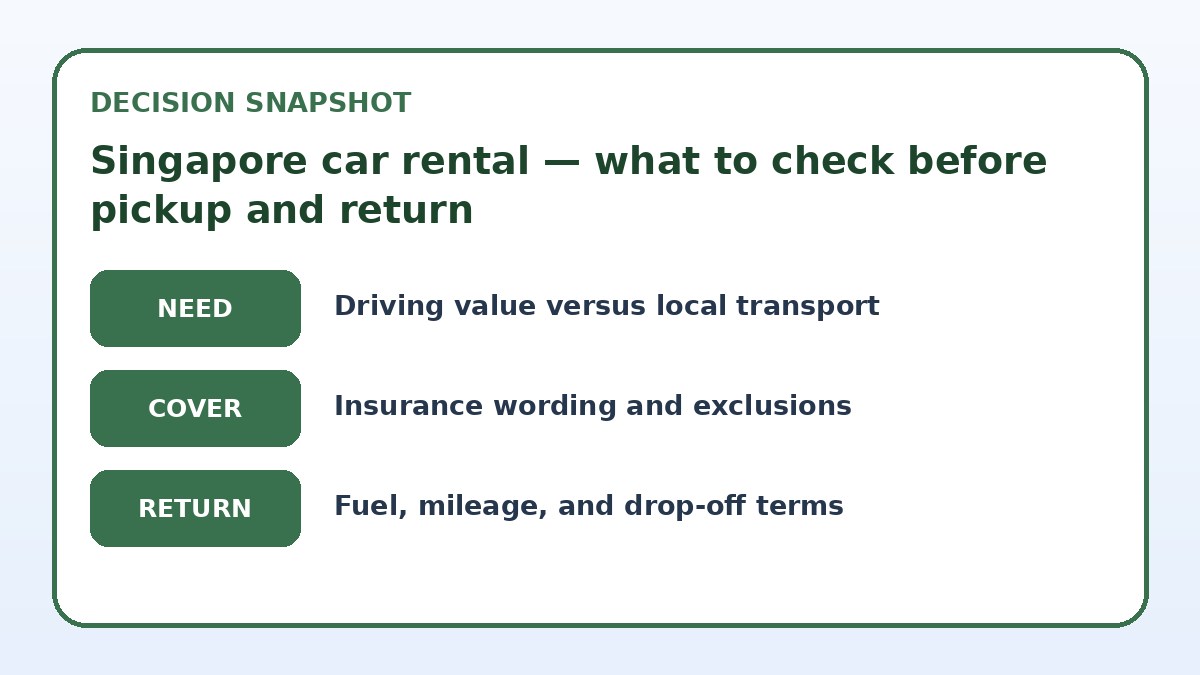
See current options before you compare the details
Availability and final conditions change. Open Trip.com now or keep reading for the practical comparison.
Choosing pickup location: airport, depot, or hotel
Airport pickup is attractive for business travelers who arrive and need a car immediately. It minimizes transfers and lets you leave the terminal with a vehicle in hand. However, airport desks often have limited evening hours and can be busy during peak arrival times; confirm the office’s exact opening and closing times for your flight. Also ask whether the provider uses an off-site lot with a shuttle — that can add 20–40 minutes. If your schedule is tight, factor that shuttle time into transit planning and ask the company for a contact number to call if your flight is delayed.
City depots or downtown pickup points can save time if your meetings are in the central business district. They may offer faster handover processes and more flexible vehicle choices, but check parking and access rules: some depots are in multi-storey car parks with height or clearance limits and may require pre-registration. Hotel delivery is the most convenient when available: the agent brings the car to the hotel lobby. For hotel delivery, verify whether the rental company will perform ID and payment verification at the hotel or require you to visit an office, and whether extra fees apply for the service.
Inspection, documentation, and avoiding disputes
Thorough inspection at pickup prevents later charge disputes. Always walk around the vehicle with the agent, note existing scratches, dents, and interior marks, and make sure these are recorded on the rental contract or damage report. Ask whether the company takes timestamped photos or video and whether you will receive a copy. If the provider does not routinely create a photographic record, take your own clear photos of all sides, close-ups of any blemishes, and the odometer and fuel gauge. Insist on a printed or digital handover receipt that lists the vehicle condition and fuel level.
At return, follow a similar procedure: return during staffed hours if possible so an agent can inspect the car with you present. If you must use after-hours drop, verify the exact process — where to leave keys, where to park the car, and whether you should complete a return form and leave photos. After-hours returns increase the importance of timestamped photographic evidence of condition and fuel level at drop-off. Keep copies of all communications and receipts, and check your card statements in the days after returning the car to spot any unexpected charges quickly so you can dispute them while documentation is fresh.
| Approach | Best for | Tradeoff to check |
|---|---|---|
| Airport pickup | Travelers arriving by air who need immediate mobility | Potential shuttle waits and limited evening desk hours |
| Downtown depot | Meetings in the central business district with predictable hours | May require finding the exact depot and handling parking rules |
| Hotel delivery | Door-to-door convenience between meetings and the hotel | Often carries additional delivery fees and timing windows |
| After-hours return | Flights or meetings that end outside normal office times | Higher dispute risk unless you document time-stamped photos and follow the provider’s process |
Ready to check the option that fits your plan?
Use your exact dates and traveler details so the provider page can show the current total and conditions.
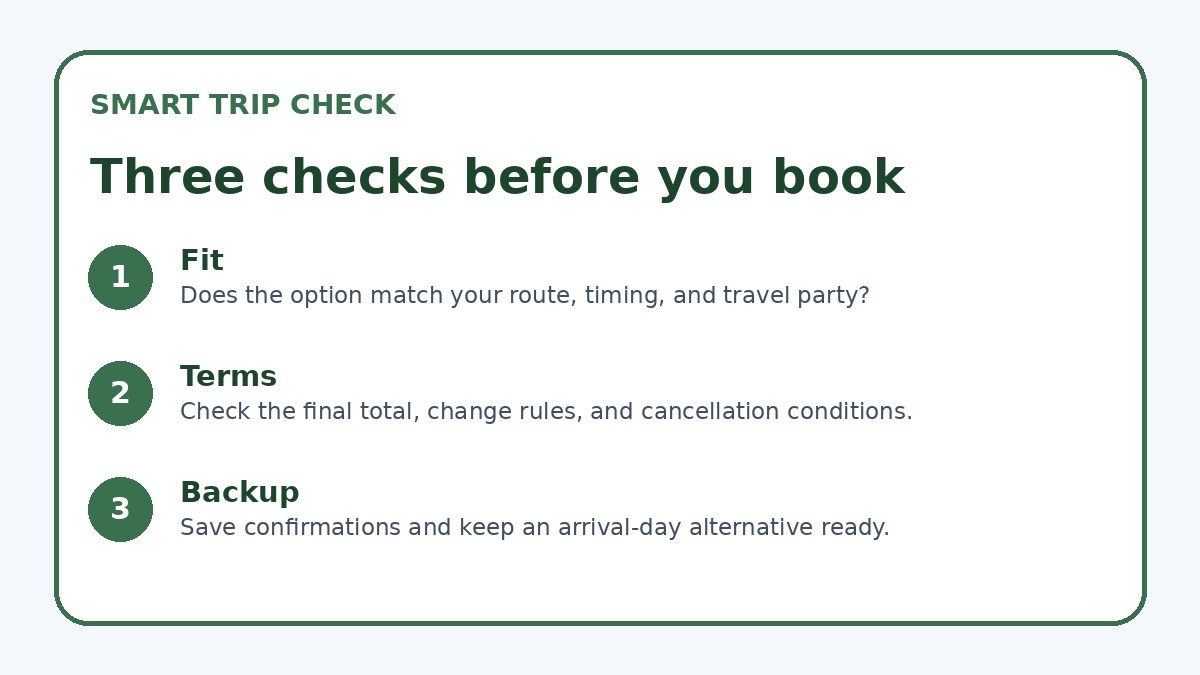
Fuel, mileage, and ancillary policies that affect returns
Fuel policy directly affects the return logistics for busy travelers. Common approaches include full-to-full (you pick up with a full tank and return full), pre-purchase fuel, or full-to-empty with a refueling charge. Full-to-full is easiest to manage: confirm the fuel level at pickup, note it in the contract and on your photos, and refuel near the depot before returning. If you’re offered pre-paid fuel, read the provider’s terms on unused fuel refunds — sometimes unused liters aren’t credited back, which can be less economical for short business trips.
Mileage allowances and toll handling are other return-related items to verify. Some corporate rentals have daily mileage limits or charge for excess kilometers; check any contract limits and choose unlimited mileage if your schedule may require extra driving. Singapore uses electronic tolling on expressways — ask how tolls are processed (via in-car transponder, pre-paid account, or post-trip billing) and whether the supplier adds administrative fees for processing tolls. Accurate toll receipts and transparent billing procedures simplify end-of-rental reconciliation with your company expense policy.
Before you book
- Confirm exact pickup address, phone number, counter hours, and whether an airport shuttle is required.
- Document vehicle condition with time-stamped photos and ensure the agent records any pre-existing damage on the contract.
- Verify fuel policy (full-to-full, prepaid, or other) and plan to refuel near the return location if required.
- Ask how tolls and parking charges are processed and whether administrative fees apply for corporate billing.
- Check the security deposit amount, acceptable payment methods, and the expected release timeframe after return.
- If using corporate billing, confirm account code, invoice details, and who to contact for post-rental billing disputes.
Insurance, deposits, and corporate billing considerations
Insurance coverage and the amount of the security deposit matter more for business travelers than leisure ones because corporate expense rules and liability preferences differ. Confirm whether your company’s corporate rate includes collision damage waiver (CDW), theft protection, and third-party liability, and whether the renter’s personal credit card needs to be presented to hold a deposit. If the deposit is required on a card, verify the hold amount and how long the hold will take to release after return. Also confirm whether the insurer requires you to buy additional cover at pickup and whether your company will reimburse that expense.
Corporate billing and invoicing can simplify expense reporting, but they need setup before pickup. If you expect the company to be charged directly, confirm that the rental has your corporate account or corporate discount code attached and that the invoice will list the correct cost centers or tax ID. If you will pay personally and seek reimbursement, get a detailed receipt showing daily rates, taxes, tolls, fuel charges, and any extra fees. Finally, verify procedures for reporting and resolving claims if damage occurs during a business trip — know the phone numbers and documentation required to file an incident report promptly.
Frequently asked questions
Can I return a rental car to a different location in Singapore?
Many rental companies permit one-way returns within the country, but terms vary. Before booking, check the provider’s one-way policy, any required advance notice, and whether a relocation fee applies. Verify the exact return address and hours for the receiving depot and ask how mileage and toll billing will be handled for a one-way drop. If your company requires central invoicing, confirm whether the change of drop-off location affects corporate billing or tax documentation.
What should I do if I find new damage on the car after pickup?
If you discover damage after leaving the depot, return to the pickup location immediately or call the rental office and report it with photos and timestamps. Request that the agent note the issue on the record and provide a written acknowledgment or updated rental agreement before you drive. If you cannot return, document the damage thoroughly, email the office with photos, and retain all correspondence. Early notification helps avoid being held responsible for damage you did not cause and supports any dispute that follows.
How do after-hours returns work and what paperwork should I keep?
After-hours returns often require you to park in a specified spot, lock the vehicle, and drop the keys and a completed return form in a secure box or at a designated location. Before using after-hours drop, confirm the exact process and obtain the address and drop-box instructions. Take time-stamped photos of the parked vehicle from multiple angles, the fuel gauge, odometer, and the key drop location as proof. Keep the booking confirmation, any return receipt, and follow up with the company the next business day to obtain an inspected return confirmation.
Final planning note
For business travelers in Singapore, the pickup and return terms you choose shape how smoothly a rental fits into a tight schedule. Prioritize pickup location and office hours that match your arrival and meeting times, insist on clear inspection documentation at handover and return, and understand fuel, toll, and deposit practices that affect final billing. If corporate billing is involved, get invoicing details confirmed before you collect the car. Before you complete the booking, verify hours, address, photo-inspection policies, deposit hold amounts, toll processing, and after-hours procedures on the provider’s final booking page. Trip.com can be used as one place to compare current availability and terms, but always read the provider’s contract before you commit.
Continue planning
Check current options and final conditions
Use the provider page to confirm live availability, the final total, cancellation terms, and every condition that matters to your trip.
This evergreen planning guide was created with AI-assisted drafting and a structured quality review. It does not display live prices, schedules, availability, visa guidance, or provider rankings. Verify current details before booking. Some links are affiliate links; we may earn a commission at no additional cost to you.