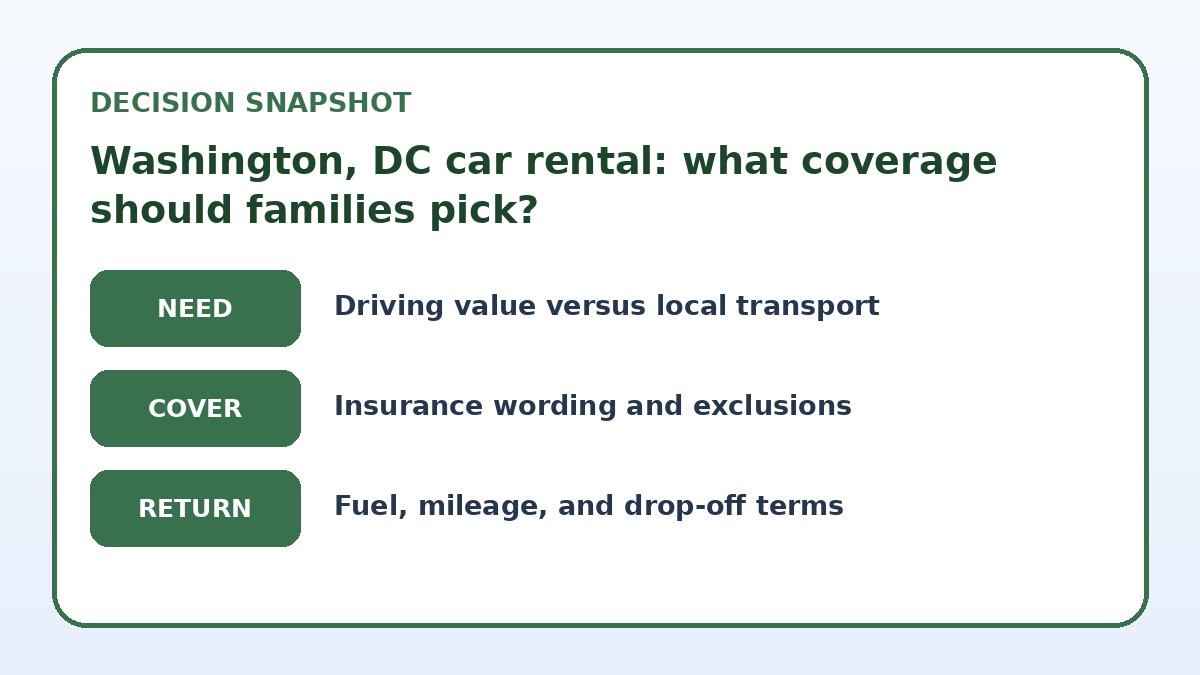
Short practical answer: for most families renting in Washington, DC, prioritize a collision damage waiver (CDW/LDW) or proof your existing auto policy covers rentals, adequate supplemental liability, and clear child-seat replacement or damage clauses. Decide whether to accept the rental company's waivers at the desk after confirming your personal auto policy or credit card primary/secondary coverage, because the desk sale is often convenient but sometimes redundant. Tradeoffs include out-of-pocket risk versus higher upfront rental charges, and whether a card-based secondary policy will leave you temporarily responsible for repair costs while your insurer processes a claim. Before you book, find the exact phrases the rental company uses for “damage waiver,” “loss of use,” “deductible,” and “supplemental liability” so you can compare word-for-word and know what you’d actually be paying or responsible for.
See current options before you compare the details
Availability and final conditions change. Open Trip.com now or keep reading for the practical comparison.
Know the common insurance terms and what they mean for families
Rental companies use several terms that sound similar but carry different responsibilities. Collision Damage Waiver (CDW) or Loss Damage Waiver (LDW) typically relieves you of financial responsibility for damage to the rental car, but they may not cover everything—loss of use, certain parts, or damage from negligence can be excluded. Supplemental Liability Insurance (SLI) increases the amount paid to other parties if you injure someone or damage their property, which matters when you’re driving with children on board and want peace of mind beyond basic state-required limits.
Personal auto insurance, if you have it, often extends to rental cars, but whether it is primary (pays first) or secondary (pays after the rental company or your credit card) matters for cash flow and potential claim surcharges. Many credit cards offer secondary coverage that can be helpful for minor damage but may leave you responsible for upfront costs and a deductible. For families, also check damage or loss clauses that apply to installed child seats, strollers, or other gear: some contracts treat interior stains or child-seat damage as the renter’s responsibility.
How to verify coverage before you travel
Start by calling your auto insurer and asking explicitly about Washington, DC car rental coverage. Request a written or emailed statement that names rentals, explains whether coverage is primary in the U.S., lists any deductibles, and clarifies exclusions such as “off-road use” or unauthorized drivers. For credit card coverage, confirm whether the card provides primary or secondary rental collision protection, whether driver age limits apply, and whether family drivers are covered when added to the rental agreement. Keep screenshots or PDFs of the card benefits page and the insurer’s response to bring to the rental counter.
When comparing rental companies online, look for downloadable protection summaries or policy PDFs and read the exact wording for “damage waiver,” “liability protection,” and “personal effects coverage.” If the wording is ambiguous, contact the rental company’s customer service and request clarification about common family scenarios—child-seat damage, towing, or lost keys—so that you have a recorded answer or written confirmation. You can also compare current offers on Trip.com as a quick check of available optional protections, but verify final policy wording on the rental company’s official booking page.
| Approach | Best for | Tradeoff to check |
|---|---|---|
| Buy the rental company’s CDW/LDW at pickup | Families wanting simple, immediate protection and no claim paperwork during the trip. | Higher daily cost and possible redundancy if personal policies already provide coverage. |
| Rely on personal auto insurance | Households with comprehensive policies that provide primary rental coverage in the U.S. | May require filing claims, paying a deductible, and risking premium increases after incidents. |
| Use credit-card rental coverage | Travelers with cards that offer collision protection and families who want waiver-like benefits without desk purchases. | Often secondary coverage, potential exclusions, and possible upfront payment by the renter. |
| Buy a third-party rental insurance policy | Families seeking a middle ground: broader coverage than card benefits at lower cost than desk waivers. | You must verify the policy’s language carefully and may still need to handle claims with the rental company first. |
Ready to check the option that fits your plan?
Use your exact dates and traveler details so the provider page can show the current total and conditions.
Tradeoffs: rental-waiver convenience versus using your own coverage
Buying the agency’s CDW/LDW at the desk is fast and usually eliminates worry about claims, but it increases the immediate daily bill. That convenience avoids paying upfront repair costs or the rental company’s “loss of use” charges that some insurers dispute, yet it can duplicate coverage you already have through your auto policy or credit card. Families should weigh the stress reduction—especially on busy arrival days with kids—against the financial cost, and consider whether they can handle a claim process later without causing undue disruption to their trip.
Using personal insurance or card-provided protection can save money but may bring administrative burdens: you might need to file a claim, provide documentation, and wait for reimbursement while potentially covering deductibles. There’s also the risk your insurer could raise premiums after a claim. For multi-driver family trips, check whether every driver expected to operate the vehicle is authorized under your insurer or the rental’s rules; adding drivers at the counter often increases daily rates but avoids voiding coverage by unauthorized driving.
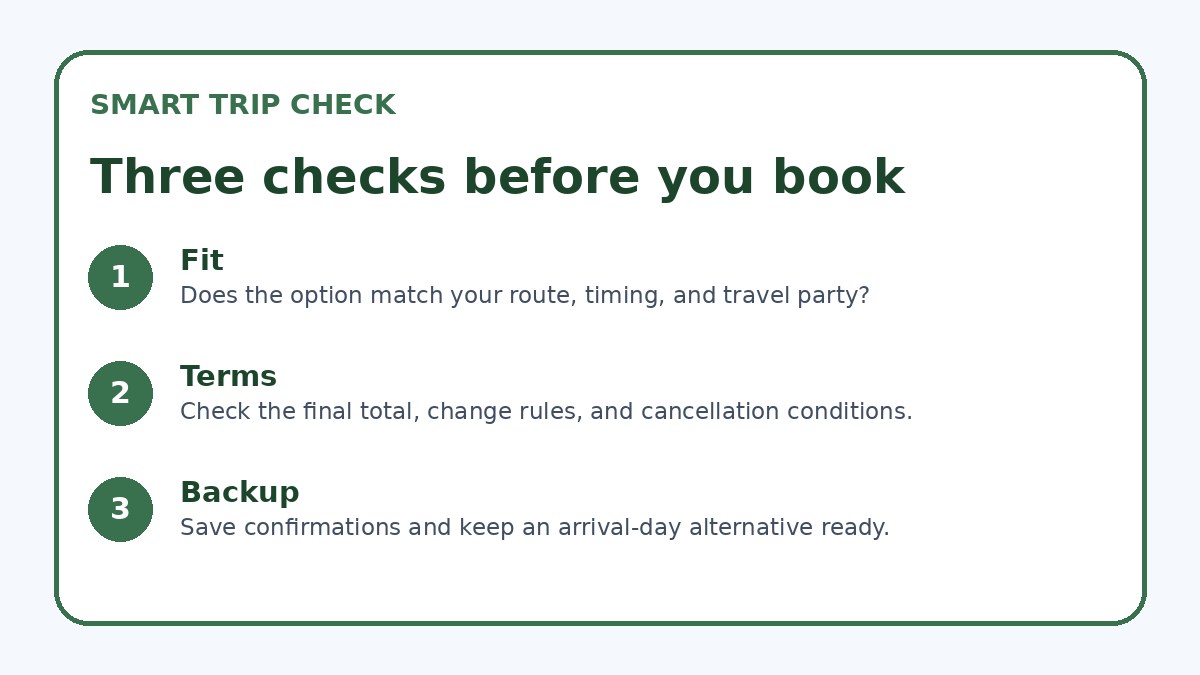
Before you book
- Call your auto insurer and request a written statement about whether rental coverage is primary in Washington, DC and what exclusions apply.
- Check your credit card’s benefits guide for rental collision protection, note whether it is primary or secondary, and save a screenshot or PDF.
- Read the rental company’s downloadable protection summary and photograph or save the exact contract wording for CDW/LDW, liability, and child-seat policies.
- At the rental counter, photograph the vehicle from all sides, note existing damage on the inspection form, and request a printed copy signed by the agent.
- If you buy coverage at pickup, get a one-page written summary of what is covered and what is excluded, including deductibles and any driver age limits.
- Keep all rental paperwork, receipts, and photos until your final return is confirmed and any potential claims are closed by the rental company and insurer.
Practical steps at pickup and during the rental
At pickup, inspect the car thoroughly with a phone camera and compare any existing scratches or dents to the rental inspection form. Ask the counter agent to point out items the rental considers pre-existing damage and request a signed, printed copy of the completed inspection if possible. If you buy any protection products, insist on a written summary of coverage, including exclusions like windshield, tire, or undercarriage damage, and confirm whether child-seat damage or interior stains are covered. Keep all paperwork and photos until you return the vehicle and receive confirmation that the return is recorded without claims.
During the rental, keep receipts for tolls, parking tickets, or any repairs if an incident occurs, and notify the rental company promptly if anything happens. If you must make a claim, follow your insurer’s and the rental firm’s reporting timelines exactly and provide clear documentation—photos, police reports if applicable, and the rental agreement. For families, plan safe, lower-risk driving routes in DC, and limit nighttime or unfamiliar neighborhood driving when possible to reduce exposure to incidents that might trigger insurance complications.
Frequently asked questions
Does my personal auto insurance cover a rental car in Washington, DC?
Many personal auto policies extend to rental cars, but coverage details vary: some provide primary coverage in the U.S., others are secondary. Call your insurer before travel and request a written statement specifying whether rentals are covered, any applicable deductible, permitted drivers, and exclusions such as business use or unauthorized drivers. Bring that written confirmation to the rental counter. If your policy is secondary, be prepared to use it only after a credit card benefit or the rental company’s protection has paid first.
Will my credit card’s rental protection cover family drivers and child-seat damage?
Credit cards that offer rental collision protection differ in rules: some cover only the cardholder and primary renter, others allow additional drivers if added to the rental agreement. Coverage for child-seat damage or interior stains is less common and often excluded. Read the card’s benefit terms carefully, note any driver age limits or location exclusions, and contact the card issuer to request clarification in writing. If the card’s benefits seem limited, don’t assume child-seat or interior damage will be paid without written confirmation.
What should I do if the rental company and my insurer disagree about a claim?
If there’s a dispute, document everything immediately: photos, the signed inspection form, receipts, and written communications. File the rental company’s incident report on their timeline and open a claim with your insurer, providing the same documentation. Ask both parties for written explanations of their positions and keep notes of phone calls. If necessary, escalate to a supervisor at the rental company and your insurer; you can also contact your state insurance regulator for guidance. Retain all records until the matter is resolved and reimbursements are completed.
Final planning note
For families renting in Washington, DC, the best approach is to clarify coverage before you arrive, compare the rental company’s exact wording to your personal auto and credit card protections, and then choose the option that balances peace of mind with cost. If you prefer simplicity and immediate protection, buying the desk waiver removes uncertainty—just get it in writing. If you want to save money, verify primary coverage and understand possible deductibles and claim processes. Always document the car’s condition, ask specific questions about child-seat and personal effects coverage, and keep copies of every relevant policy or rental document until your trip is fully closed out.
Continue planning
Check current options and final conditions
Use the provider page to confirm live availability, the final total, cancellation terms, and every condition that matters to your trip.
This evergreen planning guide was created with AI-assisted drafting and a structured quality review. It does not display live prices, schedules, availability, visa guidance, or provider rankings. Verify current details before booking. Some links are affiliate links; we may earn a commission at no additional cost to you.