If you have a meeting-heavy itinerary in Melbourne, the return trip to the airport deserves as much planning as your arrival. The practical choice depends on where you finish your day, how tight your schedule is, how many colleagues or devices you’re carrying, and whether you need uninterrupted work time on the road. Start by deciding the acceptable margin for delays, then narrow options to rideshare, taxi, private transfer, airport shuttle, or rail plus a short taxi. Business travelers often prioritize predictable door-to-door time and the ability to work en route. This guide gives a quick decision framework up front, then explains tradeoffs, what to check on provider pages, and a short checklist so you can make a confident booking without last-minute scrambling.
See current options before you compare the details
Availability and final conditions change. Open Trip.com now or keep reading for the practical comparison.
Start with the schedule: flight, meetings, and buffers
Begin planning by fixing the immovable: your flight check-in and boarding time. Business travelers should calculate backward from the latest reasonable check-in, leaving extra margin for Melbourne’s peak-hour traffic and possible security queues. Consider whether you need to drop off a rental car, return company equipment, or clear a final client meeting; each task adds a predictable block of time. Build a buffer for unexpected delays—if you can’t afford risk, add more slack. That buffer choice will quickly rule out options that look cheap but unreliable during rush hours.
Next, map where you’ll be at the end of your workday relative to your accommodation or meeting venue. A central CBD finish typically opens rail and short road options, whereas meetings in suburbs often remove rail as a practical choice. Use a simple visual timeline: flight time, check-in margin, travel estimate, and any pre-departure tasks. This timeline turns abstract preference—like wanting to work en route—into concrete tradeoffs: longer but more productive rides versus faster but less comfortable transfers.
Compare modes: time, predictability, cost tradeoffs
Broadly, choices fall into rail (train/light rail) plus last-mile taxi, rideshare or metered taxi, private meet-and-greet transfer, and shared airport shuttles. Rail offers consistent schedules and predictable journey times when services match your endpoint, but it usually requires a final taxi or walking stage and can be less private for calls. Taxis and rideshares provide door-to-door service and flexible pickup but can be susceptible to peak-hour surge pricing and variable wait times. Private transfers give the most controlled experience and are easier for teams or heavy luggage, though they typically cost more for that certainty.
Shared shuttles can be economical but add stops and unpredictable legs that risk tight connections—avoid them when timing is tight. For business travelers who need to work en route or protect equipment, prioritize options with guaranteed vehicle space and onboard charging. When comparing modes, focus on where uncertainties lie: variable traffic windows, multiple handoffs that increase missed-connection risk, or provider cancellation policies. For any chosen mode, read the provider’s booking page to confirm pickup points, baggage allowances, waiting-time rules, and how they handle flight delays.
| Approach | Best for | Tradeoff to check |
|---|---|---|
| Private transfer (prebooked car) | Travelers needing predictability, privacy, and workspace en route | Higher cost but minimal handoffs and direct door-to-door service |
| Taxi or rideshare on-demand | Flexible departures and short-notice pickups from central locations | Variable wait times and potential surge pricing during peak hours |
| Rail plus last-mile taxi | Predictable schedule and lower cost when endpoints align with stations | Requires a transfer and may reduce privacy or workspace options |
| Shared airport shuttle | Budget-conscious groups with relaxed schedules | Multiple stops and less reliable total travel time for tight connections |
Ready to check the option that fits your plan?
Use your exact dates and traveler details so the provider page can show the current total and conditions.
Practical booking tips and what to verify
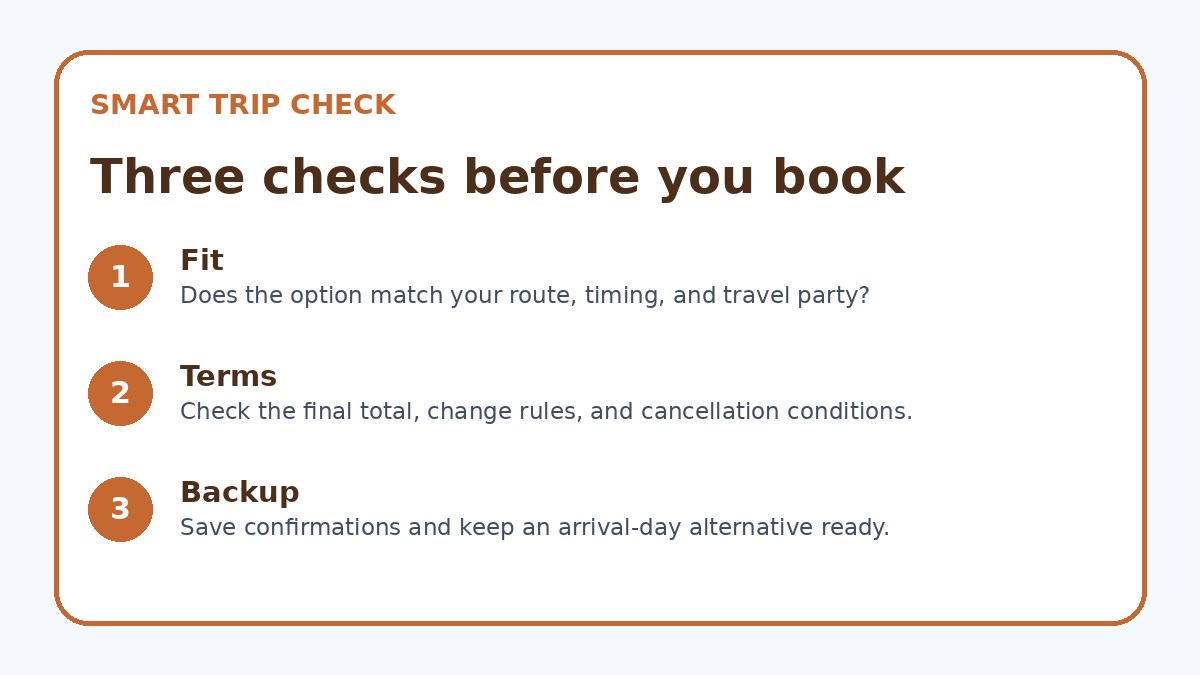
Before you click confirm, verify a short list of details that affect reliability. Check where the pickup point is described—CBD pickup zones and hotel front drives differ from rail station meeting points—and confirm whether the driver can enter hotel driveways or needs a street-side meeting. Look for waiting-time policies, especially if your return schedule could slip; some services charge for driver waiting beyond a short grace period. If multiple travelers or equipment are involved, verify vehicle size and baggage allowances on the booking page, and ensure you can add flight details so providers can track delays.
Also confirm payment and cancellation terms that matter to business travel expense processing: whether the booking supports corporate invoicing or requires a personal card, and how refunds or date changes are handled. If transfers advertise tracking or driver contact features, confirm they’re included rather than optional add-ons. For comparative checking, you can look at Trip.com to see current availability and options, but always trust the final provider page for the contract terms you’ll be charged under and their exact pickup instructions.
Before you book
- Set your target airport arrival time by working backwards from your flight's recommended check-in and boarding time.
- Decide whether uninterrupted work time or lowest transfer risk is your priority for the journey to the airport.
- Compare door-to-door options versus public-transport-plus-last-mile on provider pages for pickup location and baggage rules.
- Confirm vehicle size and luggage allowance if traveling with samples, presentation materials, or multiple bags.
- Save driver contact details and app booking references to share with colleagues or assistants before departure.
- Check cancellation and waiting-time policies on the final booking page and note how flight delays are handled.
Day-of logistics and small decisions that save time
On the day, perform a quick checklist about physical readiness and digital coordination. Confirm you have the driver’s contact or the app’s booking reference, ensure devices are fully charged or have battery packs, and pre-pack any items you’ll need during the ride. If you’re taking rail, know the platform and any transfer steps; if using road transport, ask the driver for an estimated arrival to the airport so you can adjust last-minute if needed. Communicate clearly with assistants or colleagues about pick-up points to avoid delays caused by missed meetups.
Minor choices often change the experience more than which provider you pick: request a quiet vehicle if you must work, choose a larger car if you have presentations or sample materials, and confirm whether the driver helps with luggage to speed entry at the terminal. If your flight is flexible, consider booking a slightly earlier transfer to reduce stress; if not, choose a service with strong flight-tracking and flexible rebooking. These small steps minimize friction and protect your time before departure.
Frequently asked questions
How early should business travelers book Melbourne airport transfer for the return trip?
Booking timing depends on your risk tolerance and travel window. For peak-hour departures or when you need a specific vehicle type (larger car for samples, quiet sedan for calls), book as early as possible to lock availability. If your schedule is more flexible and you’re comfortable with on-demand rides, you can wait until the morning, but verify wait-time and surge risk in the app. For prebooked private transfers, confirm pickup details and the provider’s flight-tracking or rebooking policies on their final booking page in case your day runs over.
Is rail a reliable option for getting to Melbourne airport on a workday evening?
Rail can be reliable if your end point is close to a station served by airport-bound services and the timetable aligns with your departure. It offers scheduled consistency and avoids road congestion during some periods, but it usually requires a final taxi or short walk and limits privacy for work calls. Check the service frequency for your planned time and plan the last-mile leg explicitly. If your schedule cannot tolerate transfers or you need privacy, a direct road option may be more appropriate despite potential traffic variability.
What should I check about luggage and corporate expense before booking a transfer?
On the booking page, verify baggage allowances and vehicle capacity to ensure all carry-on and checked items fit comfortably. For corporate expense processing, check whether the supplier issues company invoices, accepts corporate cards, or requires a personal card and post-trip reimbursement. Also review cancellation and change policies so you know how last-minute plan shifts will be handled. If billing or invoicing matters to your company, confirm that the payment methods and documentation meet your finance team's requirements before finalizing the booking.
Final planning note
Planning the return trip to Melbourne Airport as a business traveler means aligning your finish time, tolerance for risk, and need to work en route with a transfer mode that fits those priorities. Use a simple timeline to decide how much buffer you need, then choose between predictable door-to-door options and cost-efficient rail-plus-last-mile alternatives. Before booking, confirm pickup points, vehicle size and luggage rules, waiting and cancellation policies, and how the provider handles flight delays on their final page. With a clear decision rule and a short checklist, you’ll leave Melbourne with time to spare and one less thing to worry about.
Continue planning
Check current options and final conditions
Use the provider page to confirm live availability, the final total, cancellation terms, and every condition that matters to your trip.
This evergreen planning guide was created with AI-assisted drafting and a structured quality review. It does not display live prices, schedules, availability, visa guidance, or provider rankings. Verify current details before booking. Some links are affiliate links; we may earn a commission at no additional cost to you.